
India is taking another major step into the era of directed-energy warfare. DRDO’s 30 kW Laser Directed Energy Weapon (DEW), developed for countering drones and other aerial threats, is moving closer to an industrial production model after successful demonstrations.
The development is particularly significant as drone warfare increasingly relies on large numbers of relatively inexpensive UAVs and swarm attacks.
⚡ From Successful Trials to Production
The system was developed by DRDO’s Centre for High Energy Systems and Sciences (CHESS) along with other DRDO laboratories, academic institutions and Indian industry partners.
In April 2025, the 30 kW Mk-II(A) laser system demonstrated its capabilities at the National Open Air Range in Kurnool, engaging fixed-wing drones, multiple drone threats and surveillance sensors. The system uses concentrated laser energy to damage or disable targets with extremely rapid engagement.
Recent reporting indicates that DRDO is now looking to move the technology from trials towards production, with an industry partnership expected to be pursued in the coming months.
🎯 A Weapon Built for the Drone Age
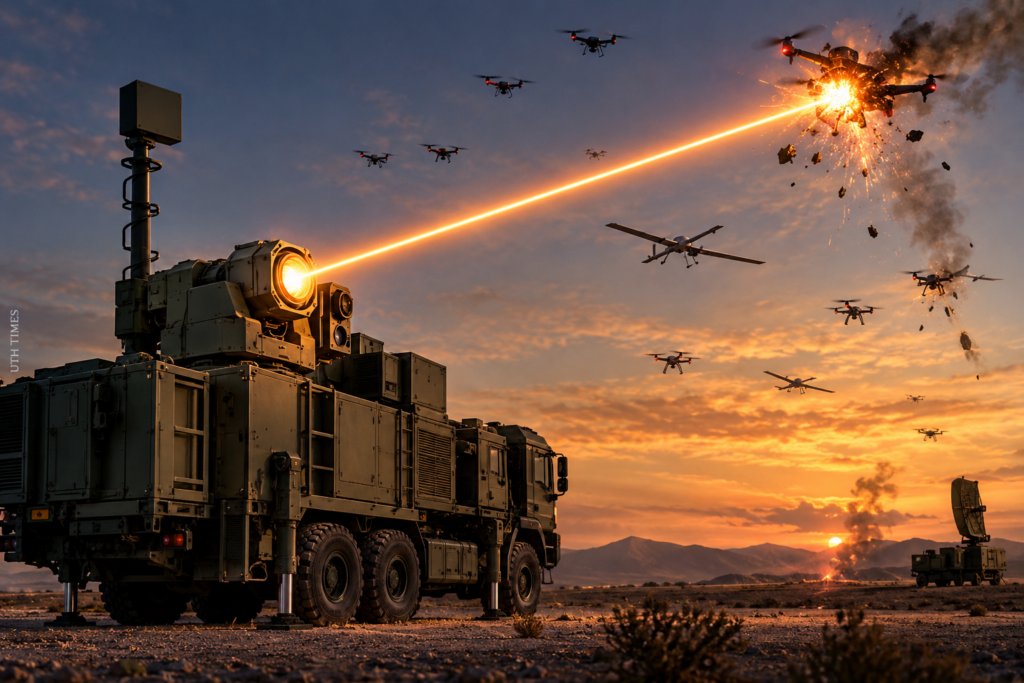
The biggest attraction of a laser-based counter-drone system is its ability to engage aerial threats without relying on conventional ammunition for every target.
🔹 30 kW-class laser: High-energy beam designed for hard-kill applications.
🔹 Up to 5 km: Recent reporting places the newer capability at around this distance, while earlier Mk-II(A) demonstrations publicly reported ranges around 4 km.
🔹 Fixed-wing UAVs: The 2025 trials demonstrated engagement against fixed-wing drones.
🔹 Drone swarms: The system demonstrated its ability to respond to multiple drone threats during testing.
🔹 Sensors and antennas: The laser can also target vulnerable surveillance and electronic components rather than necessarily destroying an entire platform.
🛡️ Hard Kill Meets Electronic Warfare
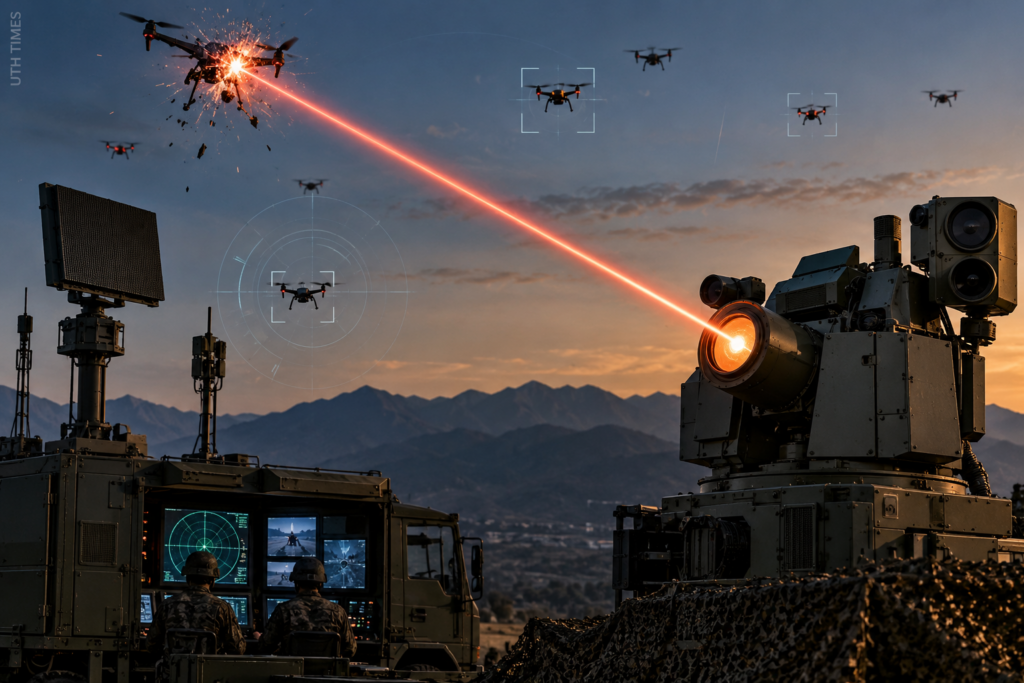
Directed-energy weapons offer more than one route to neutralising a threat. Laser systems can physically damage a target through concentrated energy, while India’s wider counter-drone architecture also includes detection, tracking and electronic-interdiction technologies.
DRDO has separately developed multi-channel laser DEW systems, including a 10 kW system designed for hard-kill engagement out to 2 km, showing the progression of India’s indigenous counter-drone ecosystem.
That progression—from detection to tracking and finally neutralisation—is crucial when confronting coordinated drone attacks.
🇮🇳 A Bigger Role in India’s Future Air Defence
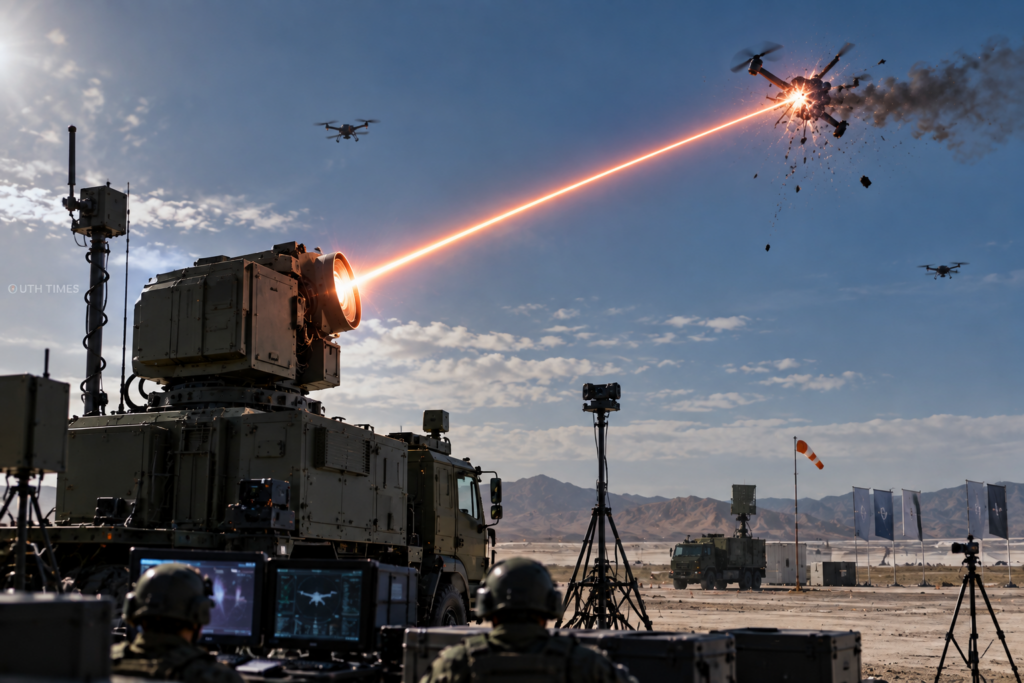
The significance of the 30 kW system extends beyond a single weapon. India is developing layered counter-drone and air-defence capabilities, while Mission Sudarshan Chakra is envisioned as a broader multi-layered national defence shield. Government statements in 2026 said work on the mission was progressing rapidly.
DRDO has also been exploring higher-power directed-energy systems, indicating that the 30 kW class could represent a stepping stone towards more powerful future applications.
The challenge now is no longer simply proving that the laser works—it is turning a successful prototype into a reliable, mobile, maintainable and scalable military system.
If the production transition proceeds as reported, India’s laser programme could mark an important shift from experimental directed-energy technology towards operational counter-drone capability.
The battlefield is changing. India is building weapons designed for that change.

