
Home Blog Page 63

Shashi Tharoor: A Maverick in the Corridors of Power

0

Not everyone can quote Shakespeare while debating foreign policy in Parliament.

🧠 The Scholar-Statesman in a Political World

Shashi Tharoor, an author, former UN diplomat, and Member of Parliament, is one of India’s most intellectually distinguished politicians. In a realm often dominated by populist rhetoric and political posturing, Tharoor stands apart with his eloquence, literary flair, and often unfiltered commentary.

Whether he’s discussing colonial reparations at Oxford or using 14-letter words on Twitter, Tharoor embodies a rare blend of academia and realpolitik. Yet, this same uniqueness has made him both admired and misunderstood.

🎯 Outspoken but Rooted

While Tharoor has never hesitated to voice his opinions—be it on surgical strikes, nationalism, or internal party dynamics—he maintains he is rooted in principles, not rebellion. He is a man who often finds himself at odds with both critics and comrades, but remains committed to reform rather than revolt.

🔹 “I am not a rebel; I am a reformist,” he said in an interview, clarifying his often-controversial stances.

🔍 Tension Within the Ranks

🧭 In recent times, Tharoor has made headlines for his subtle critiques of his own party’s decisions and messaging strategies. His remark about the 2016 surgical strikes being India’s first LoC crossing drew ire from colleagues, while his comments about being a viable Chief Ministerial face in Kerala added to speculation about his growing ambition—and possible isolation.

🔹 Some within his political space have labeled him “a misfit,” while others argue he’s the fresh voice the system needs.

📊 The Public Pulse: Admiration vs. Antagonism

🧠 Tharoor’s social media is a battlefield—some praise him for being a torchbearer of intelligent politics, while others accuse him of being too elite and disconnected from grassroots realities.

🔹 His recent Sensex comparison tweet led to a trolling spree, yet it also triggered conversations about economic literacy and political accountability.

🔮 Future in Flux, Voice Intact

As the 2024 general elections settle and Indian politics enters a new phase, Tharoor finds himself at a crossroads. Will he remain the maverick intellectual inside mainstream politics, or will he chart a more independent course? That remains to be seen.

But one thing is certain: love him or critique him, India cannot ignore Shashi Tharoor—the man who made Parliament sessions feel like TED Talks.

💡Challenging the Status Quo, One Idea at a Time

Challenging the status quo isn’t about chaos—it’s a quiet revolution sparked by one bold idea after another. Shashi Tharoor’s voice breaks through the noise, turning thoughtful insight into sparks that light the path to change. It’s in these moments of clarity that true transformation begins.

Mysterious Metal Ball Sparks UFO Frenzy in Colombia

0

🛸 When the Sky Dropped a Secret

In March this year, something truly strange lit up the skies over Buga, a quiet city in Colombia. Locals watched in awe — and confusion — as a glowing metallic sphere streaked across the sky before crashing to the ground. But this wasn’t just another fallen satellite or weather balloon. What followed was a scientific scramble, a wave of social media speculation, and, unsurprisingly, whispers of extraterrestrial activity.

⚙️ A Ball That Breaks the Rules

Once retrieved, researchers were stunned. The silver-gray orb was smooth, perfectly round — and eerily seamless. There were no welds, no joints, no screws. In fact, it looked like it had never been manufactured in the way humans typically build machines. Its surface bore strange engravings, cryptic symbols that seemed alien at first glance.

Some scientists initially believed it might be a piece of classified military tech. But no nation stepped forward to claim it. Others saw a much wilder possibility: Was this the first real evidence of a UFO?

🧪 Science vs Speculation

Investigators ran scans. No radiation. No known material anomaly. Yet the sphere’s seamless surface and unusual balance defied conventional explanation. The object didn’t match any known aircraft part or debris. Metallurgists noted that while the sphere’s engravings looked handmade, their symmetrical precision suggested either incredibly advanced tools or — as some put it — something not of this world.

👽 UFO or Human Hand?

Not everyone bought into the alien theory. Skeptics pointed to the engravings and said they resembled certain Indigenous symbols found in pre-Columbian Colombian art. Could this be a lost artifact, or perhaps an artistic hoax? Maybe a modern-day sculptor was seeking attention — and got more than he bargained for.

Still, the sphere’s flight path, glowing entry, and structural perfection left too many questions unanswered.

🌐 A World Watching

The incident has gone viral. UFO enthusiasts worldwide have latched onto the case, pushing hashtags like #ColombiaSphere and #SkyMystery. Whether alien, artifact, or advanced tech, the object has reignited public interest in the possibility of life beyond Earth — or secrets our own governments aren’t sharing.

Final Thought:

Real or not, this shiny sphere has definitely made us look up and wonder. And sometimes, the questions are more thrilling than the answers.

The Enchanted Chain of Gaurishvara: A Timeless Engineering Enigma

0

🛕 Where Itihaas Meets Mastery – The Gaurishvara Temple

Nestled in the serene town of Yelandur, Karnataka, the 16th-century Gaurishvara Temple appears like any other exquisite South Indian shrine. But look closer, and you’ll spot something extraordinary — a stone chain hanging from the temple ceiling, defying logic, gravity, and modern craftsmanship. Unlike anything you’ve ever seen, this chain is not built — it’s born from a single stone.

🔗 One Rock. No Joints. No Tricks. Just Pure Skill.

This chain isn’t assembled. There are no visible joints, no links attached later. It’s carved out of the same monolithic stone block as the surrounding structure. Each ring of the chain loops perfectly through the next, maintaining exact spacing, symmetry, and proportion. The result? A flexible-looking sculpture that’s actually solid rock — yet appears to sway gently like a real chain.

🛠️ Engineering Beyond Time – How Did They Do It?

Here’s where it gets truly bizarre: modern sculptors still can’t replicate it with ease, even using tools like laser cutters and 3D modeling software. Imagine having to predict each loop’s position before cutting — with no room for error. One mistake, and the entire stone would be ruined. This chain wasn’t made — it was pre-envisioned, reverse-engineered mentally, then chiseled with divine patience.

🐉 The Yali’s Secret – Where the Chain Begins

The top of the chain emerges dramatically from the mouth of a Yali, a mythical guardian beast often featured in Dravidian temples. This isn’t just artistic flourish — it symbolizes protection, strength, and transcendence. The chain flowing from its jaws could represent the unbroken bond between heaven and earth, the physical and the spiritual, or perhaps man and the cosmos.

🤫 No Records, No Blueprints – Just Mystery

What’s even more fascinating is that there are no ancient instructions explaining how this was created. No palm leaf manuscripts, no inscriptions, nothing in temple archives. It’s as if the sculptors deliberately left no clues, daring future generations to figure it out. It’s a silent message from history: “Not everything has to be explained — some things are meant to be experienced.”

🧠 More Than Art – A Challenge to Modern Thinking

This chain is not just an artistic detail — it’s a philosophical provocation. It challenges our belief that ancient civilizations lacked advanced knowledge. In fact, it hints that our ancestors may have mastered spatial intelligence, geometry, and material science in ways we still don’t fully understand. The Gaurishvara chain forces us to ask: What else have we overlooked in our rush to modernity?

🪨 A Message in Stone – Are We Listening?

In a world where we rely on machines to create, the stone chain of Gaurishvara stands as a monument to human intuition and unexplainable brilliance. It doesn’t just hang from a temple wall; it hangs between the realms of wonder and reality — asking us not just how it was made, but why it was made.

This isn’t just history. It’s heritage with a heartbeat — silently echoing the genius of those who once carved dreams into stone.

Top 10 Underrated Thrillers on Netflix You Shouldn’t Miss 

0

Catchy plots, mind-blowing twists, and thrill you didn’t see coming!

1. Dhamaka (2021)

🎙️ Breaking news ya breaking point?

An ex-TV anchor gets a second shot at fame when a mysterious caller threatens to blow up Mumbai — live on air. What starts as a ratings stunt quickly spirals into a deadly game. With Kartik Aaryan in a never-seen-before avatar, this one grips you till the very last second.

2. Trap (2024)

🎭 Ek pop concert, ek loving father… aur ek terrifying twist.

What begins as a regular night out with his daughter at a live concert turns into a sinister trap. The stadium is locked, the FBI is waiting, and he’s the real target. Directed by M. Night Shyamalan, this psychological thriller is full of shocking turns and moral dilemmas.

3. Khufiya (2023)

🕵️‍♀️ Spy thrillers jab Vishal Bhardwaj banaye, toh it’s always next level.

A RAW agent juggles her patriotism and personal demons while tracking a mole in the system. Tabu’s layered performance and the moody, atmospheric direction make it a must-watch for fans of intelligent espionage stories.

4. The Killer (2023)

🔫 He’s not the hero. He’s not the villain. He’s just… focused.

Michael Fassbender stars as a cold, methodical assassin who believes in zero emotion — until one job goes wrong. David Fincher gives us a haunting study of obsession, isolation, and the human slip-ups that cost lives.

5. Monica, O My Darling (2022)

🐍 Yeh murder mystery mein sab kuch hai — glamour, betrayal, aur ek robot arm bhi!

A nerdy genius, a seductive colleague, and a murder plan gone wildly wrong. This neo-noir crime caper mixes comedy with suspense in the most unexpected ways. Rajkummar Rao and Huma Qureshi shine in this wildly entertaining ride.

6. Rebel Ridge (2024)

🚓 Kabhi kabhi law se nahi, law ke against ladna padta hai.

An ex-marine takes matters into his own hands when the justice system fails him. This hard-hitting thriller tackles racism, corruption, and rebellion with explosive intensity. It’s high-octane and deeply thought-provoking.

7. Woman of the Hour (2024)

📺 Real life mein dar hota hai, aur yeh uska perfect example hai.

A serial killer appears on a 70s dating show — and wins. Based on a true story, this film explores how charm and danger can hide in plain sight. Anna Kendrick directs and stars in this slow-burning, deeply unsettling thriller.

8. Sector 36 (2024)

🔍 Kisi ka murder ek raaz hota hai, aur yeh case pura system hilake rakh deta hai.

A gritty cop drama with unexpected twists, this film sees Vikrant Massey’s character caught in a web of lies, politics, and moral conflict. The narrative keeps you guessing till the very end.

9. Carry-On (2024)

🛫 Socho ek airport mein aapke haath mein hai sab kuch — even someone’s life.

A TSA officer is forced to break protocol and let a deadly package through. What follows is a nerve-wracking race against time as secrets unravel mid-air. Taron Egerton is at his intense best in this tight thriller.

10. Don’t Move (2024)

🧪 Usne sirf ek injection lagayi thi… par ab uski zindagi daav pe hai.

A woman is drugged by a sadistic killer and has only a short time before she’s completely paralyzed. She must outthink her attacker and survive — all without being able to move. Claustrophobic, chilling, and brilliantly intense.

Revolution from the Rooftop: IIT Bombay’s Solar Innovation Set to Reshape India’s Energy Future

0

Imagine a world where your monthly electricity bill is no more than the cost of a cup of chai. That dream might not be too far away, thanks to a breakthrough by researchers at the Indian Institute of Technology Bombay (IIT-B). Their latest innovation in solar cell technology could potentially reduce electricity costs to as low as ₹1 per unit — a game-changer for India’s energy economy.

🌞 What is a Solar Power Plant?

A solar power plant is a system installed on your rooftop or land that captures sunlight using solar panels and converts it into electricity. This electricity can power your home, office, or even be fed back into the grid.

⚡ Why It’s a Game-Changer

  • Ultra Low-Cost Energy: Once installed, your cost per unit can drop as low as ₹1. This is a fraction of what traditional electricity costs.
  • Make Money, Not Bills: If your system produces more power than you use, you can sell the surplus back to the electricity board—turning your home into a mini power station.
  • One-Time Investment, Lifetime Benefit: Solar panels have a lifespan of 25–30 years. That means decades of free or minimal-cost electricity.
  • Eco-Friendly Living: Every unit of solar energy used is one less unit generated by burning fossil fuels. You’re not just saving money—you’re saving the planet.

🌱 How It Works (Simple Steps)

  1. Sunlight hits the solar panels.
  2. Panels convert sunlight into DC electricity.
  3. An inverter changes it into usable AC power.
  4. You use the power at home—or send it to the grid.
  5. You monitor usage and savings through smart apps.

💰 Real Value: Earn Through Energy

  • Many homeowners are now earning monthly credits from electricity boards.
  • Installing a 3kW–5kW system can cover all your home’s power needs.
  • Government subsidies and tax benefits make installation more affordable than ever.

🌟 Final Thought

A solar power plant isn’t just about saving energy—it’s about empowering your lifestyle. Whether you’re tired of high bills or looking to live greener, the sun has the solution.
Don’t just use energy. Own it.

From Soil to Success: The Inspiring Journey of Chhattisgarh’s ‘Herbal King’

0

When most people dream of a secure future, they think of a stable job and monthly paychecks. But for Dr. Rajaram Tripathi, the dream was rooted deeper — quite literally, in the soil. Today, he is celebrated as Chhattisgarh’s ‘Herbal King’, a title he earned not by inheritance, but by sheer determination, risk-taking, and an undying passion for farming.

Once holding a secure job, Dr. Tripathi chose to walk away from comfort to chase a life he truly believed in. He returned to his roots and began experimenting with organic farming at a time when it was not even widely understood in India. His gamble paid off. With a focus on cultivating black pepper and white musli — two highly valued medicinal plants — he not only carved out a niche for himself but revolutionised the herbal farming sector.

Through innovation and sustainable practices, Dr. Tripathi built a ₹70 crore empire, turning his vision into one of India’s most remarkable agribusiness stories. But his success didn’t stop with his personal gains. He made it a mission to uplift fellow farmers by sharing his knowledge, offering training, and helping them transition to organic and herbal farming. Today, hundreds of farmers credit him for changing their lives.

Dr. Tripathi’s journey is not just about earning wealth; it’s about creating value — for the land, for health, and for society. His leadership in the organic movement has earned him awards, admiration, and, more importantly, the respect of rural communities. He stands as a symbol of how innovation in tradition can build modern empires.

In an age where young people are constantly told that success lies in big cities and corporate offices, Dr. Rajaram Tripathi’s life proves otherwise. His story is a wake-up call that real growth doesn’t always come with a cubicle — sometimes, it comes with courage, soil under your nails, and a heart full of vision.

From giving up a cushy job to building a ₹70 crore legacy rooted in nature, Dr. Tripathi’s journey is a true inspiration for every dreamer who dares to take the road less travelled. After all, success grows best when it’s planted with passion.

India’s 6-Minute Charging Revolution: A New Era of Energy Begins

Imagine charging your electric vehicle while you grab a quick cup of coffee—and it’s already 80% charged by the time you’re done. Sounds futuristic? Well, the future has just arrived, and it’s made in India!

In a groundbreaking development, scientists at the Jawaharlal Nehru Centre for Advanced Scientific Research (JNCASR), Bengaluru, have unveiled a new sodium-ion battery that can charge up to 80% in just six minutes. Yes, you read that right—only six minutes! And what’s even more impressive is that these batteries can last over 3,000 charge cycles, making them not only fast but also highly durable.

This innovation holds immense promise, especially in a world hungry for sustainable and affordable energy solutions. Unlike lithium—which is expensive, imported, and resource-limited—sodium is abundant and available locally in India. By replacing lithium with sodium, these batteries dramatically cut costs and reduce dependence on foreign resources.

But the benefits don’t stop there. The sodium-ion batteries are designed for a wide range of uses: from powering electric vehicles (EVs) and drones to supporting solar energy grids and enabling rural electrification. Fast-charging and long-lasting, these batteries could help millions in remote villages access electricity for the first time, all while supporting India’s green energy goals.

What makes this even more inspiring is that this innovation has emerged from within the country—by Indian researchers, for Indian needs, using Indian resources. It’s not just a technological advancement; it’s a symbol of self-reliance, or Aatmanirbharta, in the truest sense.

This leap in energy storage technology might just be the push India needs to lead the global clean energy race. As the world searches for alternatives to lithium and fossil fuels, India has lit the way forward—with a battery that charges in six minutes and promises to change lives for decades to come.

So, the next time someone tells you innovation only comes from Silicon Valley, just smile and say, “Ever heard of Bengaluru?” 

Turning Tides: Kerala Fishermen Build Roads from Sea Plastic Waste

In an inspiring display of environmental responsibility and innovation, fishermen from Kollam, Kerala, have taken a groundbreaking step toward tackling marine pollution—by turning sea plastic waste into roads. This unique initiative not only addresses the critical issue of oceanic plastic pollution but also supports infrastructure development in a sustainable and eco-friendly manner.

The process begins when fishermen collect plastic waste from the sea while fishing. They use nylon bags to gather floating plastic debris, which is often harmful to marine life. Upon reaching the shore, the collected waste is handed over to a group of local women, who play a crucial role in the next phase of the project. These women carefully sort and wash the plastic, preparing it for recycling.

Once cleaned, the plastic is shredded into smaller pieces. These plastic fragments are then mixed with asphalt to form a composite material that is used for road construction. This blend not only offers a practical use for otherwise harmful waste but also enhances the durability of roads, making them more resistant to water and wear.

The initiative has seen tremendous success, with over 135 kilometres of roads already constructed using this recycled plastic blend. According to the latest figures, the community has collected a staggering 80,000 kilograms of plastic waste from the sea—plastic that would have otherwise continued to harm marine ecosystems.

This innovative approach is more than just a waste management strategy; it’s a community-driven environmental movement. It involves the active participation of fishermen, local women, and municipal authorities, all working together to clean up the seas and improve road infrastructure. Beyond environmental benefits, the initiative also provides employment opportunities, particularly for women who are engaged in sorting and cleaning the plastic waste.

The Kollam model serves as a shining example of how grassroots efforts can contribute significantly to global challenges like marine pollution and climate change. By combining traditional occupations with modern recycling techniques, this initiative is paving the way for a cleaner, greener future—literally.

As the world grapples with the plastic crisis, Kerala’s fishermen offer a blueprint of hope and resilience. Their work not only cleans the ocean but also redefines waste as a resource, showing that sustainability and progress can go hand in hand.

The Search for Alien Biosignatures: Lab Tech That Can Smell Life on Distant Worlds

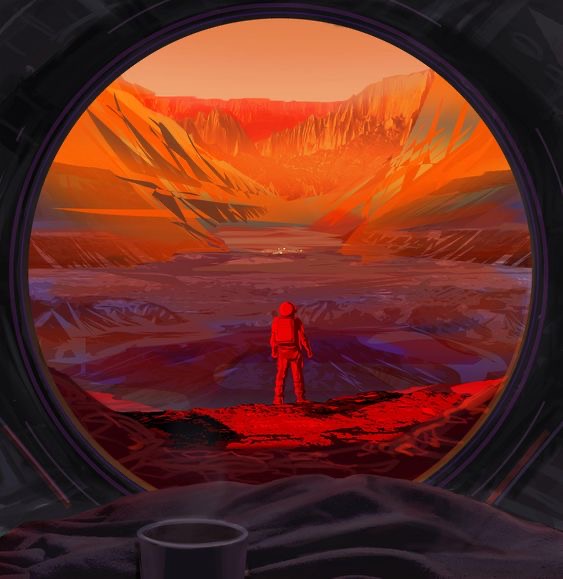
What if the scent of life on another planet isn’t green goo or glowing aliens — but a faint chemical trace floating in a Martian breeze?

In the 21st century, space exploration has shifted from simply finding planets to something far more thrilling: detecting life. But forget sci-fi monsters — scientists are now hunting invisible clues called biosignatures. These are subtle chemical hints — like methane plumes, unusual minerals, or complex organic molecules — that may suggest life is or was present. And to “sniff” them out, we’re inventing some seriously cool tech.

Take NASA’s Perseverance rover, now roaming Mars with an instrument called SHERLOC (Scanning Habitable Environments with Raman & Luminescence for Organics and Chemicals). It’s not just a fancy name — SHERLOC can analyze rock surfaces for organics that could indicate past microbial life. There’s also MOXIE, a toaster-sized lab that turns Martian air into oxygen. While it’s designed for future astronauts, it also proves how alien atmospheres can be chemically hacked.

But the next-gen tech is even more futuristic. The upcoming Europa Clipper mission, for example, is designed to fly by Jupiter’s icy moon Europa, believed to have a hidden ocean. Onboard instruments like MASPEX (Mass Spectrometer for Planetary Exploration) are built to detect bio signatures in Vapor plumes that shoot from Europa’s surface — as if we’re catching the moon’s sneeze and testing it for life.

Closer to home, scientists are building lab instruments that simulate alien environments and test whether Earth microbes could survive there. AI is also stepping in — learning how to recognize complex chemical patterns that the human eye (and nose) might miss.

Here’s the real twist: many of these life-sniffing tools are designed to find life unlike anything on Earth. That means scientists aren’t just searching for what they know — they’re preparing to recognise the unknown.

So, the next time a spacecraft sniffs a puff of gas from a distant world, it might not just be measuring atmosphere — it could be inhaling the breath of alien life.

The scent of discovery is in the air, and with every invention, we inch closer to answering humanity’s oldest question: Are we alone?

Five Years of Research in Seconds’: Google DeepMind’s Manish Gupta on Driving Scientific Innovation with AI

0

What once took scientists half a decade can now be done in seconds — thanks to artificial intelligence. At the forefront of this transformation is Manish Gupta, Senior Director at Google DeepMind, who recently spoke about the radical ways AI is reshaping scientific discovery.

At a high-profile tech event in India, Gupta highlighted how AI is no longer just a support tool but a driver of innovation across disciplines. “We are entering a new era,” he remarked, “where AI can compress years of research into moments — not just accelerating science, but redefining how it’s done.”

DeepMind, known for its groundbreaking AlphaFold project, has already proven this. AlphaFold solved one of biology’s toughest puzzles — predicting protein structures — something that stumped researchers for decades. With AI, DeepMind not only solved it but made its findings available to the global scientific community, opening new doors in drug development, disease understanding, and synthetic biology.

Gupta emphasized that AI’s role in science goes far beyond biology. “From climate modeling and quantum physics to material science and mathematics, AI is emerging as a universal research assistant — tireless, scalable, and shockingly precise,” he explained. Tools developed at DeepMind can simulate experiments, analyze patterns across massive datasets, and even propose hypotheses — tasks that once required large teams and years of effort.

But with great power comes great responsibility. Gupta also spoke about the ethical framework required for AI in science. Transparency, reproducibility, and collaboration, he said, are non-negotiables in this fast-paced field. “The goal is not to replace scientists, but to augment them — to give humanity a turbocharged engine for curiosity.”

The Indian tech community received his message with enthusiasm. Gupta’s presence was not only a nod to India’s growing contribution to global AI research but also an inspiration to young developers and scientists looking to make an impact.

As Gupta summed it up: “AI is not the end of human inquiry — it’s a new beginning. When machines think with us, not for us, that’s when real discovery begins.”