Home Blog Page 62

The God Formula of 1960: Why the CIA Hid Itzhak Bentov’s Mind-Bending Discovery

0

🚪The Man Behind the Veil of Reality

In the 1960s, a soft-spoken Czech-born inventor named Itzhak Bentov made a discovery so powerful, the CIA buried it for decades. His work hinted at something unthinkable:

That the past is fluid, the future is already here, and you are not in the universe—

The universe is in YOU.

And when his ideas were finally declassified in 2003, they shook the foundation of what we know as reality.

🧬 The Holographic Model of Consciousness: Reality Reimagined

Bentov’s central idea was explosive: Consciousness isn’t produced by the brain. Instead, your brain is a receiver for a much larger cosmic intelligence.
🔹 He proposed that the entire universe is a hologram—a projection of vibrational frequencies.

🔹 Just like a 3D image appears from a 2D hologram, reality appears from pure consciousness.

🔹 Your mind isn’t inside your head—your head is inside your mind.

This concept—the holographic model of consciousness—later influenced quantum physicists like David Bohm and even inspired elements of NASA’s Gateway Process.

🕳️ The CIA’s Gateway Obsession

In a shocking 1983 classified report, later declassified in 2003, the CIA explored “The Gateway Experience”—a process to reach altered states of consciousness using sound waves.

What did they find?

🔸 Bentov’s model was central to understanding time travel, astral projection, and reality manipulation.

🔸 The report confirmed: “Time is an illusion… Past and future exist simultaneously.”

🔸 They admitted that consciousness transcends space and time.

So why did the CIA bury it?

Because if the average person realized they could reshape their reality, go beyond time, and access universal intelligence, the power structures of the world would collapse.

🛠️ Bentov: The Inventor Who Looked Within

Most people knew Bentov as the quirky genius behind the first remote cardiac catheter. But few knew he spent his nights studying kundalini energy, vibrational physics, and meditation.

He believed spiritual awakening wasn’t “woo-woo.” It was science.

Through controlled meditation, Bentov said you could:

🌌 Alter your timeline

🌌 Access universal memory (Akashic Records)

🌌 Transcend physical death

He even built devices to measure these altered states—devices later studied by NASA and the Monroe Institute.

🔚 Conclusion: Why You’ve Never Heard of Him

Itzhak Bentov died in a mysterious plane crash in 1979. Some call it coincidence. Others? Convenient silence.

His legacy? Hidden in a vault for decades.

But now it’s resurfacing—reminding us that we’re not just beings in the cosmost

We are the cosmos… becoming aware of itself.

🌀 Final Thought:

What if everything you’ve been told about reality is just a shadow on the cave wall?

Bentov didn’t just challenge science.

He redefined what it means to be alive.

Mount Kailash: Russian Scientists Claim It’s a Nuclear Power Pyramid🤯

0

🔮The Forbidden Peak That No One Dares to Touch

High in the icy silence of the Himalayas, Mount Kailas rises like a perfect pyramid — untouched, unclimbed, and unexplainable. Worshipped across faiths and feared across centuries, this isn’t just a mountain. It’s a puzzle of power, mythology, and maybe — just maybe — ancient technology that modern science still can’t decode.

⛰️ The Axis Mundi: Navel of the Earth or Engine of Power?

  • 🌍 Known by many names — Meru, Swastika Mountain, Kang Tisé, Astapada — Mount Kailas is seen as the cosmic axis, the world’s spiritual center.
  • 🧲 Despite being dwarfed by nearby peaks, its pyramid-like shape and magnetic energy fields have drawn global interest from mystics and scientists alike.
  • 💥 Some Russian researchers claim Kailas may actually be a gigantic human-made pyramid — the hub of an ancient power grid spanning the Earth.

☢️ The Nuclear Theory: Ravana, Radiation & Rakshas Taal

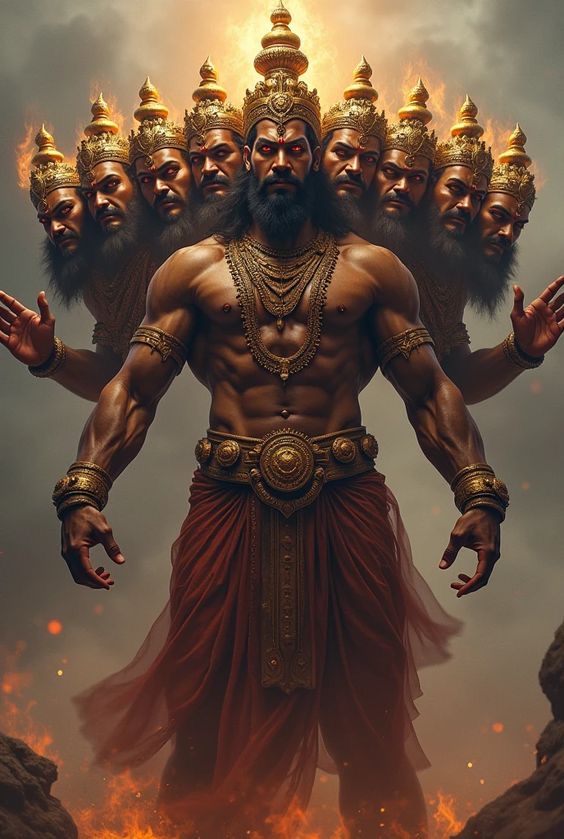
  • 👑 Legends say Ravana, the King of Lanka, tried lifting Mount Kailas — not for ego, but perhaps for its energy.
  • 🧪 He bathed in Rakshas Taal, the crescent-shaped saltwater lake near the mountain, now said to be radioactive.
  • 🧬 Locals believe anyone who bathes in that lake becomes deformed or cursed — possibly due to nuclear residue left by Ravana’s contact.
  • 🔬 Modern Tibetan pilgrims continue to avoid the lake, despite its proximity to the sacred Manasarovar, the freshwater lake symbolizing purity and mind.

🔁 Khora: The Ritual That Rewrites Destiny

  • 🚶‍♂️ Pilgrims walk 52 km around the base of Kailas — clockwise for Hindus, counterclockwise for Bön.
  • 🌀 One circumambulation erases all sins of this life.
  • 🔄 12 brings karmic cleansing for all past and future lives.
  • 🕉️ 108? That’s the doorway to enlightenment itself.
  • ⚰️ The journey is brutal — freezing temperatures, high altitude, and spiritual exhaustion — but still, thousands do it every year.

🧭 The Swastika Shadow & The Lost Kingdom of Bön

  • 🔱 From the south face, a perfect swastika is visible — ancient symbol of cosmic order.
  • 🧘‍♂️ The Bön religion speaks of Yungdrung Gutseg — the “nine-story swastika mountain” — possibly Mount Kailas itself.
  • 🗺️ Bön texts describe a hidden kingdom called Olmo Lung Ring, said to be a land of immortals and spiritual science, dominated by this mysterious peak.

🌐 Shambhala, Shangri-La & the Secret Grid

  • 🔍 Mount Kailas is also tied to Shambhala, the hidden land said to house higher intelligence and advanced beings.
  • 🌐 Russian studies suggest a planet-wide pyramid network — with Kailas as the power node, linking Egypt, Easter Island, and even Teotihuacan.
  • ⚠️ Chinese scientists dismissed these claims — but offered no proof to refute them. Why?

🚫 Why No One Has Ever Climbed Kailas — And Never Will

  • ⛔ Climbing Mount Kailas is forbidden by both Tibetan law and spiritual taboo.
  • 🧙 Only Milarepa, an 11th-century Tibetan yogi, is said to have “reached the top” — through meditation, not mountaineering.
  • 🎭 Some believe the ban hides a truth too powerful to reveal — or too dangerous.

🧠 Conclusion: Sacred Mystery or Suppressed Truth?

Mount Kailas is more than a holy site — it’s a living enigma.

A place where myth meets mystery, where the sacred may also be scientific, and where the past might still be pulsing with power we can’t explain.

Maybe it’s just a mountain.

Maybe it’s not.

But one thing is certain — Kailas was never meant to be conquered. Only understood.

Shanchul Mahadev🔱: The Fierce 🔥Guardian of Himachal’s Sacred Hills🏔️

🔱 The Awakening in Thini: A Divine “Yes” to Destiny

Deep within the mystic forests of Thini, a celestial voice once echoed—heard only by a humble man brave enough to respond with a simple “Yes.” That fearless affirmation wasn’t just an acceptance; it was a divine invitation. In that moment, Shanchul Mahadev descended—not merely as a deity but as a guardian force, a spirit that would come to dominate the spiritual skyline of Kullu, Mandi, and Shimla. Born of ether, carved by devotion, and feared by many—Shanchul is no ordinary devta. He is the Gadhpati (chief guardian) of Fatehpur Garh, a protector whose presence is felt in thunder, silence, and tradition.

🥁 18 Nagaras and an Unseen Army: The Devta’s Eternal Procession

Wherever Shanchul Mahadev moves, the roar of 18 sacred nagaras (drums) follows. These drums aren’t mere instruments—they’re ritual sentinels, alerting the lands of his divine arrival. His chariot, led by devotees, carries an aura so fierce that even other deities refuse to step into Fatehpur Garh without his divine consent. Shanchul doesn’t just protect—he commands reverence through sound, silence, and sacred rhythm.

🌪️ The Silent Protector of Himachal

Amidst the pine-covered slopes of Himachal, Shanchul Mahadev stands as a fierce yet silent sentinel—watching over the land with divine authority. Unlike other shrines, his temple echoes with raw energy, where winds carry whispers of ancient power. Locals believe he doesn’t bless with words but with protection—protecting the righteous and punishing the unjust through the elements themselves. Devotees approach not with demands, but with deep surrender, for here, faith isn’t spoken—it’s felt in the stillness, in the storm, and in the unshakable presence of the mountain god.

🕉️ Pharaut Yatra: The Sovereign Tour of a Spiritual Ruler

Every third year, Shanchul Mahadev undertakes the “Pharaut”—a majestic spiritual march through his dominion. It’s not just a journey, but a pilgrimage of power, where villages prepare months in advance. With every beat of the nagaras and every chant of his name, the mountains awaken. And once every 18-20 years, the energy multiplies—thousands of devotees walk alongside him to sacred sites like Sheshar, Shangarh, Jogni Pathar, and Shikari Mata. These processions are living epics, blending myth, devotion, and mountain lore.

📅 Festivals of Flame & Faith: Saawan, Vaishakh, Maagh

Shanchul Mahadev’s energy peaks during Saawan, Vaishakh, and Maagh. These months transform the hills into a realm of echoing chants, trance-like drumming, and fulfilled vows. Temples become alive with offerings, the air fills with incense and belief, and locals speak of dreams blessed by the Devta himself. During these times, no one eats or prays without first remembering Shanchul. He is not just worshipped—he is lived.

⚔️ The Deity That Deities Fear

What makes Shanchul Mahadev unique is his divine authority. In a land teeming with devtas and rituals, he stands apart as the only deity whom others must seek permission from before entering his land. He isn’t just a guardian of Fatehpur Garh—he is its undisputed sovereign, feared, loved, and eternally invoked.

🔚 Final Echo: A Devta Beyond Devotion

In the highlands of Himachal, gods walk among mortals. But Shanchul Mahadev doesn’t walk—he marches. With fire in his eyes, drums in his wake, and stories etched in thorns and thunder, he remains a timeless guardian. Not just a god—but a legend carved in rock, ritual, and reverence.

Breaking Limits: Differently-Abled Ashok Parmar Wins Gold in Gujarat Powerlifting Championship🏋️‍♂️

0

💥 Starting Strong: One Man, One Dream, One Gold

In a world where many search for reasons not to try, Ashok Parmar chose to find the one reason to win. A differently-abled athlete and an Adani Group employee, Ashok stunned the state by clinching Gold in the Gujarat State Bench Press & Deadlift Championship — and not in a special category, but by competing against able-bodied athletes in the general division.

🦿 Ashok Parmar: The Man Who Refused to Be Defined by Limitations

Ashok Parmar’s journey is not just about lifting weights — it’s about lifting barriers. Despite having a prosthetic leg, he trained alongside the strongest lifters in Gujarat, choosing sweat over sympathy and grit over grief.

💪 Prosthetic Power, Not a Limitation

Ashok’s prosthetic leg wasn’t a crutch — it was his symbol of resilience. Each rep in the gym, each drop of sweat, each moment of doubt overcome — sculpted him into a true champion.

🏢 The Adani Spirit Runs Deep

An employee at the Adani Group, Ashok represents a culture where inclusion fuels ambition. Known internally as an “Adanian,” his company not only supported his dream but celebrated his success. For Adani, inclusion isn’t a checkbox — it’s a redefinition of possibility.

🏆 Gold in the General Category — No Special Treatment, Only Special Grit

In the Gujarat State Sub-Jr Junior Senior & Masters Classic Benchpress & Deadlift Championship, Ashok didn’t ask for a separate category. He competed head-to-head with non-disabled athletes and emerged victorious — clinching the Gold Medal and etching his name in the hall of champions.

📣 Gautam Adani Applauds the Champion

Soon after the win, Gautam Adani, Chairman of Adani Group, shared Ashok’s story with a heartfelt message. His words echoed inspiration, applauding Ashok’s unwavering willpower and the breaking of perceived limits.

🗨️ “Ashok didn’t just lift weights — he lifted the spirits of millions.”

The post quickly gained traction, resonating deeply across social media platforms and corporate corridors alike.

🔥 No Excuses, Just Reasons to Rise

Ashok Parmar is more than a gold medallist. He is a living testament to courage, commitment, and capability. In a world full of reasons to give up, he chose the one reason to keep going: purpose.

🧠 His story is not about disability. It’s about determination.

🧭 Not about special categories. But about equal footing and exceptional grit.

⚡ Not just a lift of weights — but a lift of hope for generations to come.

🎯 Ending Note: From Gym Floors to Glory

Ashok didn’t just change the scoreboard — he rewrote the rules. In doing so, he proved that gold medals aren’t won by limbs — they’re won by heart. 

Pindaki Bahubalendra: Odisha’s First Rebel Who Defied the British Before 1857⚔️

0

Long before 1857 set India ablaze, a lesser-known warrior from Odisha had already drawn his sword against the British Empire. His name? Pindaki Bahubalendra—a man whose defiance, bravery, and betrayal-born martyrdom remain buried beneath the dust of forgotten history.

🐘 The Lion of Daruthenga: A Warrior Is Born

📍 Origin & Lineage:

Born in 1768 in Daruthenga, Khordha, Pindaki Bahubalendra hailed from a proud Khandayat warrior family—traditional defenders of Odisha’s cultural and territorial integrity.

⚔️ Training Grounds:

He was not just a warrior, but a Dalei (commander) under the Gajapati king of Khurda. Trained in indigenous warfare, sword combat, and rural defense strategy, he carried the legacy of resistance in his blood.

⚔️ The Paika Rebellion: Odisha’s Forgotten Uprising

🔥 1817—The Precursor to 1857:

While history calls 1857 the “First War of Independence,” Odisha had already erupted 40 years earlier. The Paikas, Odisha’s militia warriors, rose against exploitative British land revenue systems, disbandment of native armies, and cultural erosion.

🛡️ Pindaki’s Role:

Bahubalendra led from the front—planning ambushes, raiding British cantonments, and building local resistance networks across Khurda, Nayagarh, and Cuttack. He was among the top commanders along with Krushna Chandra Bhramarbar Ray and Gopal Chhotray.

💰 Bounty on His Head:

As the rebellion spread like wildfire, British officials placed a ₹1,000 bounty on Bahubalendra—a rare recognition of his tactical brilliance and threat level.

🕵️ The Betrayal That Shook Khurda

💔 A Friend Turns Traitor:

In a twist straight from a Greek tragedy, Dhruva Harichandan, once Bahubalendra’s childhood friend, betrayed him. He drugged Bahubalendra during a meal and handed him to the British while he lay unconscious.

🏰 The Great Escape: Barabati Fort Breakout

🌩️ Chains, Rain & Courage:

I in Barabati Fort, Bahubalendra refused to kneel. One stormy night, he broke free, jumped into the turbulent Kathajodi River, and swam with bleeding wrists and shackled legs. It was not just a jailbreak—it was a message.

💥 Death at Baranga, Legacy Forever

🗡️ Final Stand in 1818:

In his third and final escape attempt at Baranga, near Cuttack, British bullets struck him down. At 50, Pindaki Bahubalendra embraced death standing—not surrendering.

📜 Immortal in Odisha:

Though absent in national history books, he lives on in Odisha’s folklore, ballads, and memory—as the original flame of freedom, burning decades before the national uprising.

🏹 Conclusion:

Pindaki Bahubalendra wasn’t just a man; he was a movement, a prophecy of rebellion yet to come. While India remembers 1857, Odisha had already bled for its freedom in 1817. And at the heart of it stood a forgotten lion—unchained, undefeated in spirit.

The Woman Who Heard corn 🌽 Speak: How Barbara McClintock Transformed Genetics Forever🧬🤯

0

🔬 A Silent Revolution: The Beginning

In 1931, Barbara McClintock did something that shook the foundation of science—she listened to corn. Not metaphorically, but biologically. While most scientists saw maize as a simple crop, Barbara sensed a deeper, silent intelligence within its cells. What she discovered was so radical, the world wasn’t ready. They laughed, ignored, and blacklisted her. Decades later, the same world awarded her the Nobel Prize in Physiology or Medicine in 1983. Why? Because Barbara had uncovered the true language of life.

🌽 The Corn That Spoke Back: Where It All Began

🧪 Cold Spring Harbor, New York—Barbara’s lab was a cornfield.

📊 Scientists saw genetic patterns as fixed. But Barbara saw…conversations.

🌿 She noticed color patterns on maize kernels that didn’t follow traditional genetic laws. It was as if the corn was reacting, changing its own DNA in real time.

Her bold claim:

  • 🌱 Cells can sense their environment
  • 🔄 DNA can change itself dynamically
  • 🧠 Genes are intelligent systems, not fixed blueprints

This was biological heresy in 1951.

🚫 Rejected by Science, Accepted by Nature

💼 When she presented her data, the room went cold.

🧓 One top geneticist said, “Genes don’t move.”

🌽 Barbara simply replied, “I’m only telling you what the corn told me.”

The result?

  • ❌ Blacklisted from major conferences
  • 💸 Denied research funding
  • 📭 No invitations, no applause

Yet she never fought back. She chose silence over the noise.

💡 Jumping Genes: The Hidden Code of Adaptation

🔬 Her discovery? Transposable elements, now known as jumping genes.

🔁 These are segments of DNA that literally move within the genome, turning other genes on or off, enabling organisms to rapidly adapt to stress, threats, and change.

🧩 She proved:

  • 🧬 DNA is not fixed
  • 🤖 Genes behave more like AI—adapting, learning, shifting
  • 🌐 Life is a living, breathing code—constantly rewriting itself

This shattered the idea of genes as lifeless instruction manuals. She uncovered an organic intelligence.

🧘 The Woman Who Listened to Life

While others chased publications, Barbara chose solitude.

📖 She called her connection to cells “a feeling for the organism.”

🫀 It wasn’t data—it was intuition fused with empathy.

👩‍🔬 She could feel what the cells were trying to do even before microscopes revealed it.

In 1983, the world finally caught up. At age 81, Barbara McClintock received the Nobel Prize, not just for genetics—but for changing the way we understand life itself.

🌟 Final Note: A Legacy Beyond Science

Barbara didn’t just study corn—she decoded the soul of biology.

She taught us that life listens. That it responds.

And sometimes… it just takes one person crazy enough to hear it.

1610 Mughal Attack That Halted Rath Yatra for 8 Months: The Forgotten Assault on Jagannath’s Sacred Chariot🔥

🔱 When Chariots Burned, But Devotion Didn’t

In the heart of Puri, where chants of Jai Jagannath echo across centuries, a forgotten chapter of resistance and faith lies buried beneath history books. In 1610, the grand Rath Yatra didn’t end in celebration—it ended in smoke, ashes, and silence.

⚔️ Mughal Deceit: Soldiers in Pilgrims’ Clothing

The year 1610 witnessed one of the darkest chapters in Odisha’s spiritual legacy. Subedar Hashim Khan, a Mughal officer under Jahangir’s regime, dispatched his soldiers disguised as devotees during the annual Rath Yatra. The deception was deadly.

  • 🕌 The Mughal troops blended into the crowds, concealing weapons beneath traditional attire.
  • 🔥 Once the Rath Yatra commenced, they attacked the chariots, setting them ablaze.
  • 💰 The sacred Jagannath Temple was partially looted, and Mughal soldiers attempted to seize it.

The deities were fortunately safe—they had already reached the Gundicha Temple, where Lord Jagannath stays during the Yatra period.

🛑 Eight Months of Silence: The Halt of a Legacy

Following the attack, the festival that once drew lakhs into devotion came to a devastating halt. The sacred chariots were turned to ashes, and the idols could not return to the sanctum due to Mughal occupation.

  • 🕰️ For 8 long months, the sanctum sanctorum of the temple remained desecrated.
  • 🙏 The local kings, priests, and devout villagers refused to compromise on ritual purity.
  • 🧹 Only after thorough cleansing and re-consecration, did the idols return.

This episode became one of the rare occasions in Jagannath’s history when the Rath Yatra was interrupted, but never extinguished.

✨ Why the Chariot Pauses Near a Muslim Saint’s Mazar

A spiritual twist in this tale is the customary pause of Lord Jagannath’s chariot near a Muslim man’s samadhi (mazar) on the Yatra route.

  • 🕌 The legend speaks of a Muslim devotee, Salabega, whose unwavering love for Lord Jagannath was so pure that even the gods respected it.
  • 🛑 To this day, the chariot halts near his mazar, a symbol of communal harmony—even after centuries of conflict.

🪔 What is Navakalebar? The Soul Renewal Ritual

In contrast to the attack, Navakalebar is a festival of spiritual rebirth. It means “new body” and happens when the wooden deities of Jagannath, Balabhadra, Subhadra, and Sudarshan are replaced with new sacred neem wood every 12–19 years.

  • 🌳 The event is marked by secret rituals, ritual burial of the old idols, and the transfer of the divine soul (Brahma padartha) to the new ones.
  • 🔁 It signifies eternal continuity, much like how faith endured the Mughal tyranny.

🙌 Conclusion: The Chariot That Rolls Through Time and Tyranny

The 1610 Mughal attack may have charred the festival, but it couldn’t burn the spirit of millions. Rath Yatra rolled again—not just on wheels, but on the unbreakable devotion of those who believed that divine will always finds its way back home.

99 & Still Flipping: The Unstoppable Legacy of Johanna Quaas🤸‍♀️

0

🔰 Age is Just a Number—Passion is Timeless

While most people slow down with age, Johanna Quaas does handstands. At 99 years old, she isn’t just breaking records—she’s breaking stereotypes, flipping her way into the hearts of millions, proving that the human spirit knows no expiry date.

🤸‍♀️ Meet the Living Legend

🌟 “Johanna Quaas isn’t just the oldest gymnast—she’s the boldest.”

Born on November 20, 1925, in Hohenmölsen, Germany, Johanna Quaas first stepped into the world of gymnastics in 1935 at the age of 10. What began as a childhood interest turned into a lifelong passion. Even as wars came and went, regimes changed, and decades passed, Johanna kept returning to the mat. By the time she reached her 80s, she wasn’t just practicing—she was competing.

🏆 Guinness World Record Holder

📖 “The mat doesn’t care how old you are—it respects how hard you try.”

In 2012, at the age of 86, Johanna Quaas earned her rightful place in the Guinness World Records as the “Oldest Active Competitive Gymnast.” Videos of her performing on parallel bars and floor routines went viral, shocking the world with her strength, agility, and grace. What amazed people most wasn’t just her ability—but her consistency.

She competed in Germany’s Landes-Seniorenspiele (State Senior Games) and often outperformed gymnasts decades younger. Her routine wasn’t a watered-down version—it was authentic, disciplined, and daring.

🧠 The Secret Behind Her Energy

💪 “Discipline, movement, and mindset—the trinity of eternal youth.”

Johanna credits her longevity to three things: regular physical activity, a positive attitude, and sticking to a routine. She exercises daily, follows a healthy diet, and stays socially active. She once said, “If you are fit, it is easier to master life.” She didn’t just live life—she trained for it.

🌍 A Global Inspiration

🚀 “One backflip at a time, she redefined what’s possible.”

Johanna Quaas has inspired a movement across generations. She reminds young athletes that discipline has no shortcuts, and teaches older generations that dreams don’t have deadlines. From TEDx stages to international magazines, her story travels across the globe as a beacon of hope.

🏋️‍♀️ Training at 99: No Excuses, Only Commitment

🔥 “When most slow down, she gears up.”

Even at 99, Johanna Quaas doesn’t take shortcuts. Her daily routine includes strength exercises, balance drills, and stretches that many younger athletes find challenging. She trains not in a high-tech gym, but in a modest space with parallel bars, a mat, and sheer determination. Johanna believes consistency beats intensity. Her philosophy? “If you rest, you rust.” It’s this relentless commitment to movement, not magic, that keeps her body agile and her spirit unshakable.

🔚 Not Just a Gymnast—A Philosophy

Johanna Quaas isn’t defying age—she’s rewriting what age means.

And as long as she moves, the world watches in awe.

Why the British💂 Feared Jagannath🛕: The God Who Shook an Empire😱

🔰 When Power Wasn’t in the Palace, But in the Temple

To the British, ruling India meant controlling its kings. But in Odisha, they encountered a kingdom where the true sovereign wasn’t a man—it was a deity. Lord Jagannath of Puri wasn’t just worshipped—He was followed. And that frightened the East India Company more than any sword.

🕵️‍♂️ The Spies Who Entered Puri—And Were Never the Same

📍 “They came as conquerors but left as believers—or broken.”

In the early 1800s, British officers, missionaries, and spies infiltrated Puri to “understand” the influence of the Jagannath Temple. But what they found was beyond comprehension. The Lord’s annual Rath Yatra moved millions—literally. The sea of humanity that gathered obeyed no British order, feared no colonial gun. The power didn’t lie in Fort William or London—it pulsed from the Grand Road of Puri.

🕉️ Jagannath: The Living King of Odisha

👑 “In Puri, God didn’t live in stories. He ruled the streets.”

Unlike temples where deities are worshipped in silence, Jagannath was treated as a living monarch. His temple had 6,000 servitors, a code of conduct stricter than any British regiment, and lands richer than most zamindars. Kings bowed before Him, decisions awaited His nod, and rulers—both Hindu and Muslim—avoided interference with His domain.

🏰 The Temple That Couldn’t Be Colonized

🚫 “They ruled the country—but not the chariot.”

The British tried everything: labeling rituals as “barbaric,” sending Christian missionaries, even trying to seize control of temple funds. But nothing worked. The Bada Danda (Grand Avenue) turned into a battlefield of faith. Every attempt at interference sparked mass resistance. Even loyal colonial officers warned their superiors: Don’t touch Jagannath.

They feared a mass uprising powered not by politics—but by pure belief.

🔱 Rath Yatra: A Political Earthquake Every Year

🛕 “One chariot. Lakhs of people. Zero colonial control.”

Rath Yatra wasn’t just a religious procession—it was an ungovernable mass movement. Imagine a festival where soldiers, saints, kings, beggars, and the common folk all pulled the same rope—without caste, creed, or command. British intelligence reports called it “a dangerous display of unmonitored influence.”

🔚 The Deity Who Outranked the Empire

The British conquered armies. But in Puri, they faced something far stronger—faith. Jagannath Mahaprabhu wasn’t afraid of the British. They were afraid of Him.

And even after centuries, His chariot still rolls, unstoppable.

Back to Pixels: Top 10 Video Games 🎮from the ‘80s & ‘90s That Still Give Us nostalgia

🔁 Once Upon a Cartridge…

Before 4K graphics and open-world madness, there lived 8-bit heroes and pixel legends. These iconic games from the ‘80s and ‘90s weren’t just games—they were pure emotion. Let’s rewind to the golden era of gaming where nostalgia still hits like a power-up.

1. 👾 Super Mario Bros. (1985)

🌟 “The Plumber Who Jumped into Our Hearts!”

Nintendo’s mustached mascot redefined platform gaming. Running through Mushroom Kingdom, stomping Goombas, and saving Princess Peach wasn’t just a quest—it was the childhood ritual. The pixel-perfect soundtrack and warp zone secrets made every playthrough a fresh adventure. It wasn’t just a game—it was an entire generation’s entry into gaming.

2. 🧠 Tetris (1984)

🌈 “Falling Blocks, Rising Obsession!”

Invented in the USSR and embraced worldwide, Tetris blended simplicity with infinite depth. Its addictive puzzle gameplay, hypnotic music, and increasing speed made it impossible to put down. This Game Boy classic made even adults sneak in a game between meetings.

3. 🕹️ Pac-Man (1980)

👻 “The Dot-Muncher Who Started It All!”

Pac-Man revolutionized arcades. The thrill of chasing fruits, escaping ghosts, and mastering mazes gave it a timeless charm. With Ms. Pac-Man following close behind, this yellow chomper became an immortal pop culture icon.

4. 🐢 Teenage Mutant Ninja Turtles: Turtles in Time (1991)

🥷 “Heroes in a Half-Shell, Full-On Arcade Mayhem!”

Cowabunga! This beat-’em-up arcade game let us become Leonardo, Michelangelo, Donatello, or Raphael—time-traveling, pizza-powered ninjas smashing Shredder’s army. With slick animations and co-op play, it turned every living room into a dojo.

5. 🧝 The Legend of Zelda (1986)

🔮 “It’s Dangerous to Go Alone—Take This Game!”

Link’s journey through Hyrule blended sword-fighting, puzzles, and open-world freedom long before “open-world” was a buzzword. Hidden dungeons and mystical music made it feel like you were truly living an epic quest.

6. 💣 Contra (1987)

🔥 “Up, Up, Down, Down—The Code of Legends!”

One of the toughest games ever. Whether on NES or in arcades, Contra gave you relentless enemy waves, side-scrolling chaos, and co-op madness. That 30-lives cheat code? It’s etched into gamer DNA.

7. 🐉 Street Fighter II (1991)

🥋 “Hadouken Your Way to Glory!”

Arcade showdowns reached a new high with Ryu, Chun-Li, and Guile. Mastering combos, pulling off finishing moves, and taunting rivals—SF2 created legends and launched the global fighting game scene.

8. 🔫 Doom (1993)

🧟 “Hell Opened, and We Had Shotguns!”

One of the pioneers of the FPS genre, Doom was raw, loud, fast, and terrifying. Shooting demons in pixelated corridors with heavy metal beats gave a brutal thrill—like an adrenaline overdose in 640×480.

9. 🏎️ Mario Kart 64 (1996)

🚥 “Friendships Were Tested on Rainbow Road!”

Nothing beat hitting your friend with a red shell right before the finish line. With slick 3D tracks, chaos-filled items, and tight controls, Mario Kart 64 turned racing into riotous fun. The laughter (and screaming) echoes even today.

10. 🐍 Snake (Nokia, Late ‘90s)

📱 “Before Apps, There Was Only Snake!”

For mobile gamers, Snake was the OG. Played on indestructible Nokia phones, it made waiting rooms and long bus rides strangely addictive. The goal was simple: don’t eat your own tail—yet it was harder than it looked!

🔚 Game Over… But Never Forgotten

These games weren’t just digital fun—they were pure magic. With every 8-bit sound, cartridge blow, and joystick click, we built memories that still press start in our hearts.

Ready to plug in again?