
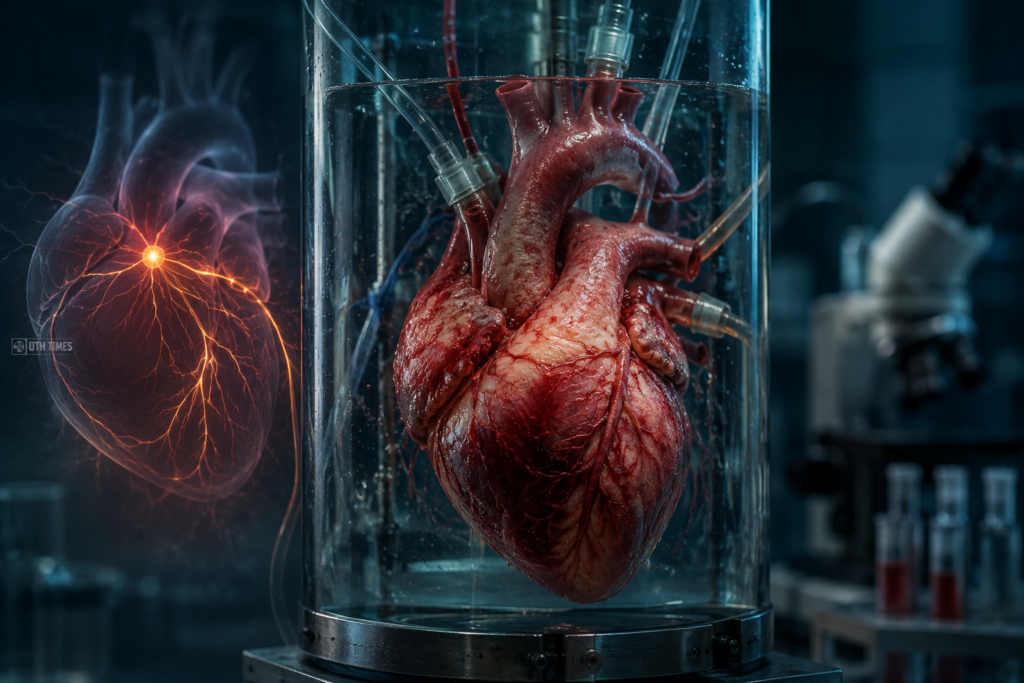
Inside a laboratory at the University of Minnesota, something extraordinary is happening. A real human heart — removed from the body — continues to beat rhythmically on its own, connected to a sophisticated system that supplies oxygen and nutrients. No chest. No pacemaker. No simulation. Just a living organ refusing to stop.
What sounds like science fiction is now one of the most astonishing breakthroughs in modern biomedical science.
❤️ The Heart That Refused to Fall Silent
The human heart is often described as the body’s engine, but researchers are now revealing just how independent that engine truly is.
Unlike many organs, the heart possesses its own intrinsic electrical conduction system — a built-in network of electrical impulses that controls every beat. Even outside the body, the heart can continue pumping if it receives oxygen and the right biochemical environment.
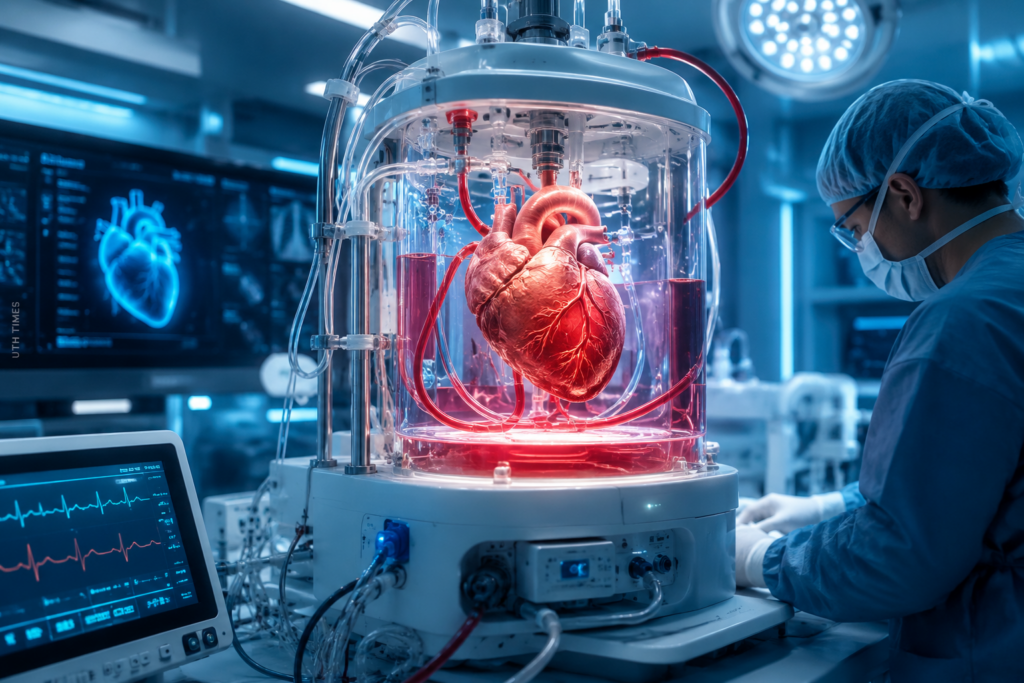
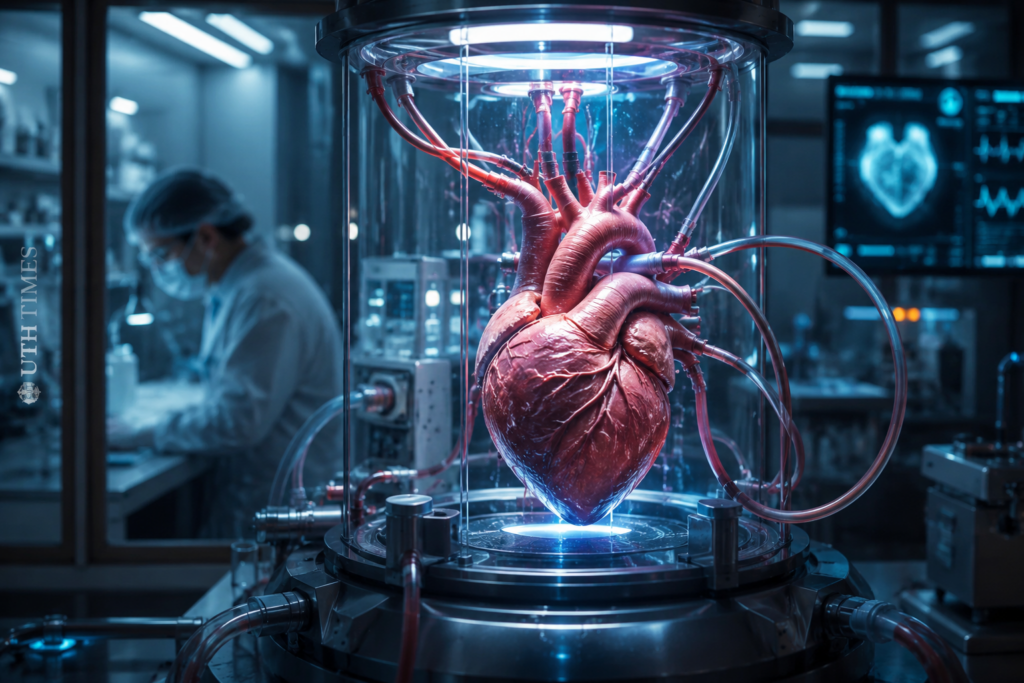
At the University of Minnesota lab, scientists connected the donated human heart to a highly advanced perfusion system. This machine continuously circulates oxygen-rich fluid through the organ, recreating conditions similar to the human bloodstream.
🔹 The heart receives oxygen and nutrients
🔹 Temperature and pressure are carefully regulated
🔹 Electrical activity is monitored in real time
🔹 The organ continues beating naturally — without external stimulation
This isn’t a robotic replica or an artificial construct. It is living human tissue functioning independently outside the chest cavity.
🧠 Why This Breakthrough Matters
This achievement is not merely a dramatic scientific display — it could transform the future of medicine.
For decades, donor hearts had an extremely limited survival window after removal from the body. Traditionally, surgeons relied on ice preservation, racing against time before the organ became unusable.
Now, ex-vivo heart perfusion systems may completely redefine transplantation.
🚑 Potential Medical Impact
🔸 Longer preservation times for donor hearts
🔸 Better transport across longer distances
🔸 Real-time assessment of organ quality before surgery
🔸 Reduced transplant rejection risks
🔸 Possibility of repairing damaged hearts before implantation
Researchers can also study how human hearts react to diseases, drugs, and therapies in ways previously impossible.
This technology opens doors to personalized cardiac treatment, regenerative medicine, and even future bioengineering innovations.
⚡ The Science Behind the Beating
What makes this moment so hauntingly beautiful is the realization that the heart carries its own rhythm.
At the center of this process lies the sinoatrial node — often called the heart’s natural pacemaker. It generates electrical signals automatically, allowing the heart to contract without conscious control from the brain.
As long as cells remain alive and oxygenated, the rhythm can continue.
That means the heartbeat witnessed in the lab is not mechanical imitation — it is biological autonomy in its purest form.
🌍 A Glimpse Into the Future of Human Survival
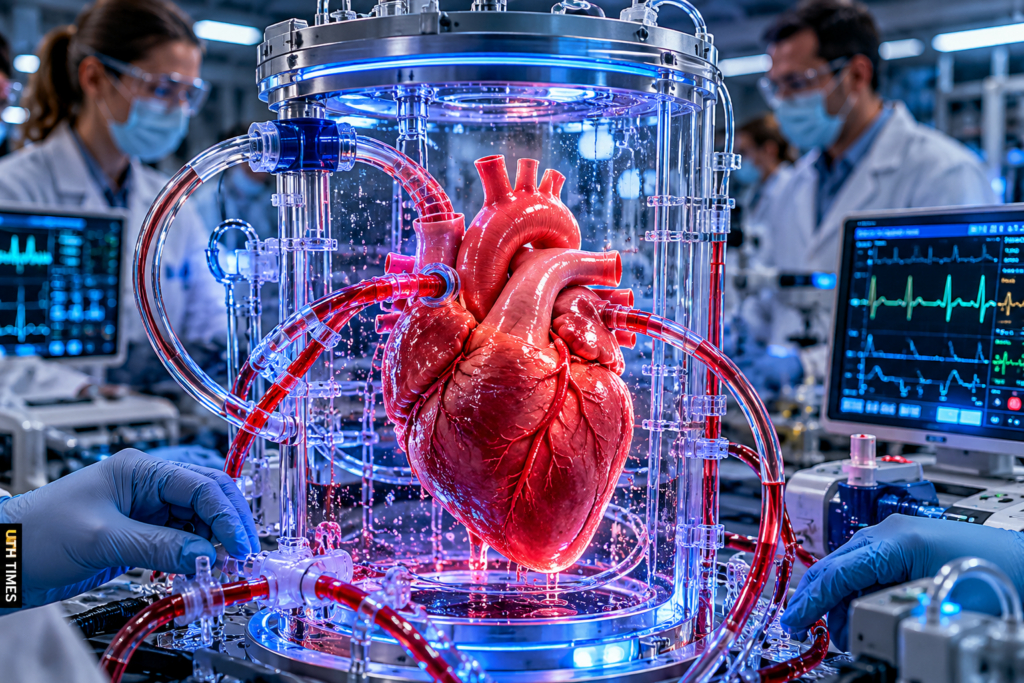
The image of a human heart beating outside the body challenges something deeply emotional and philosophical: where exactly does life begin and end?
Today, this technology is helping scientists save lives. Tomorrow, it may reshape organ transplantation entirely.
And somewhere in a Minnesota laboratory, a silent heartbeat is already echoing into the future.

