
The idea of controlling computers with thoughts once belonged to science fiction. Today, Neuralink is turning that vision into reality by building implantable brain–computer interfaces (BCIs) that directly connect the human brain to digital devices. Founded in 2016 by Elon Musk and a team of scientists, the company aims to treat neurological disorders while pushing humanity toward a future where humans and artificial intelligence coexist.
The Vision Behind Neuralink
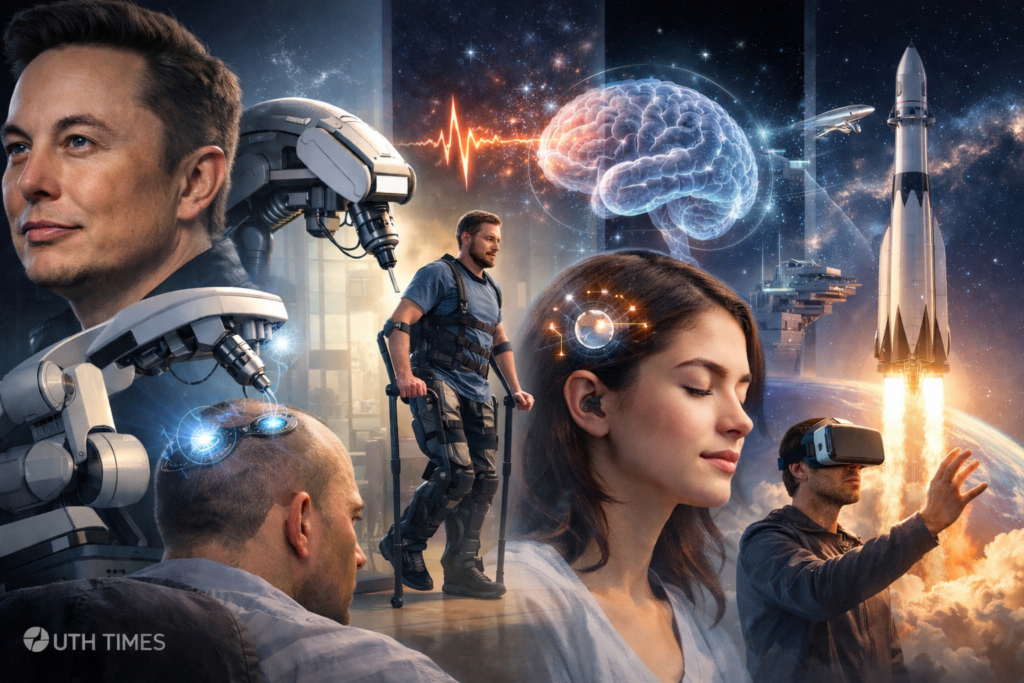
Neuralink was founded by Elon Musk and a team of neuroscientists and engineers with a long-term mission: to create a direct communication channel between the brain and computers.
Key goals include:
🔬 Restoring mobility for paralyzed patients
🧠 Treating neurological disorders like Parkinson’s and epilepsy
💻 Allowing people to control devices using only thoughts
🚀 Preparing humans for an AI-driven future
Unlike traditional medical implants, Neuralink’s technology is designed to be minimally invasive, highly precise, and scalable for mass use.
How the Neuralink Implant Works
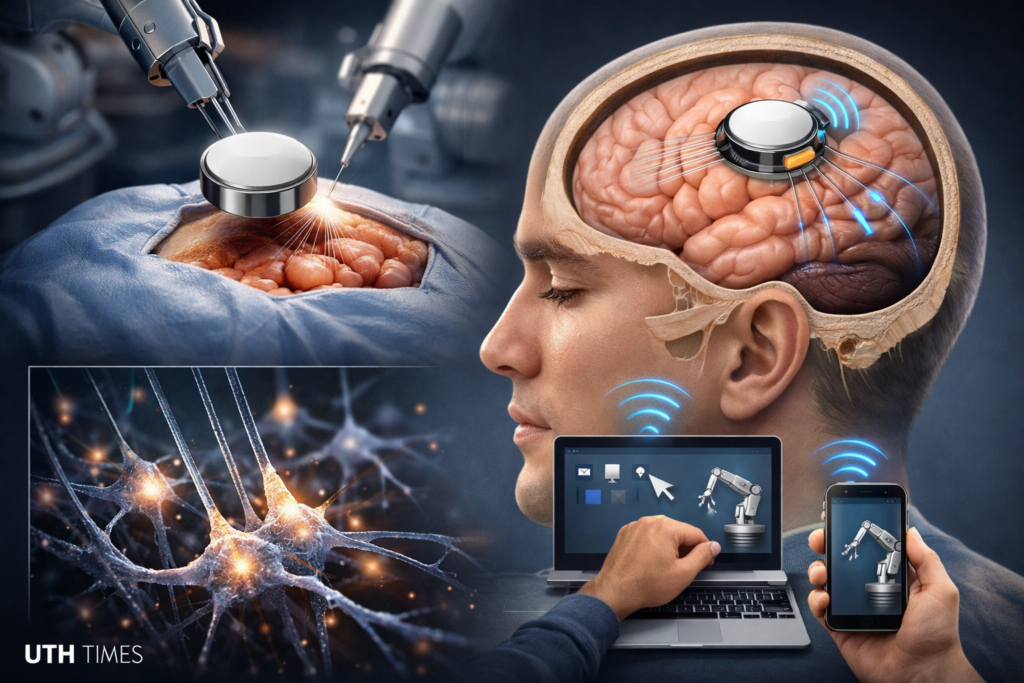
At the heart of Neuralink’s innovation is a coin-sized implant called the Link, placed inside the skull by a specialized surgical robot.
Core technology features:
⚙️ Ultra-thin threads thinner than human hair
📡 Wireless brain signal transmission
🔋 Rechargeable battery system
🤖 Robot-assisted precision surgery
These flexible electrodes detect electrical signals from neurons and transmit them wirelessly to a computer or smartphone. The system translates neural activity into commands, allowing users to type, move cursors, or control devices using thoughts alone.
Human Trials and Breakthroughs
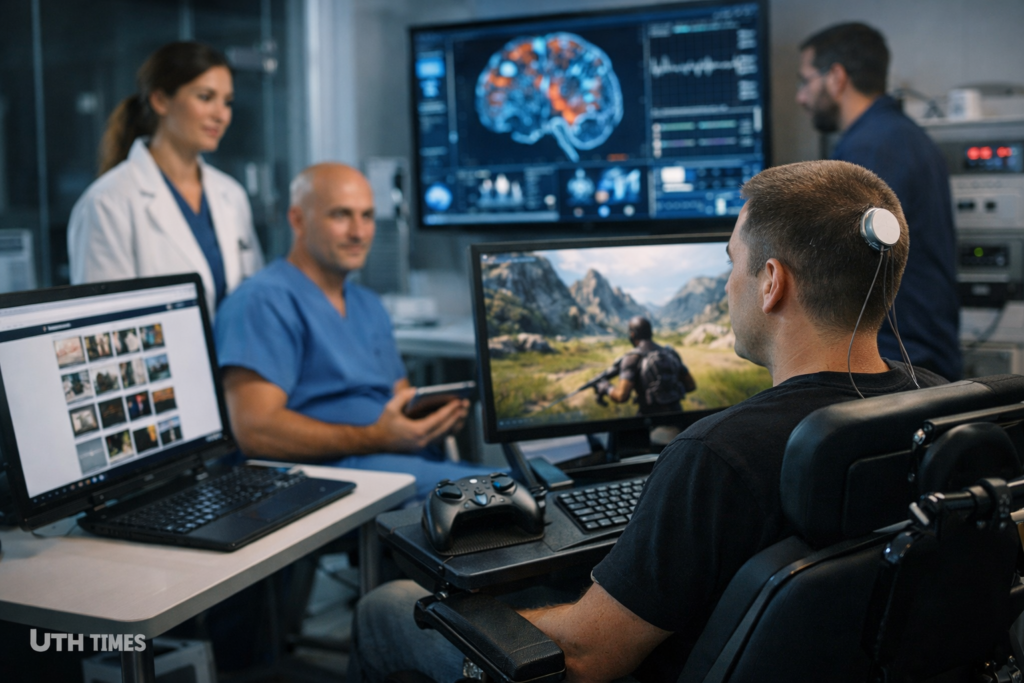
Neuralink entered a historic phase when it began human clinical trials in 2024.
Major milestones:
🧪 First human implant enabling thought-based cursor control
🦾 Paralyzed patients controlling computers independently
📊 Improved accuracy in decoding brain signals
🏥 FDA-approved early feasibility studies
Participants with spinal cord injuries have reportedly been able to browse the internet and play games using brain signals alone, demonstrating the real-world potential of BCIs.
Future Possibilities
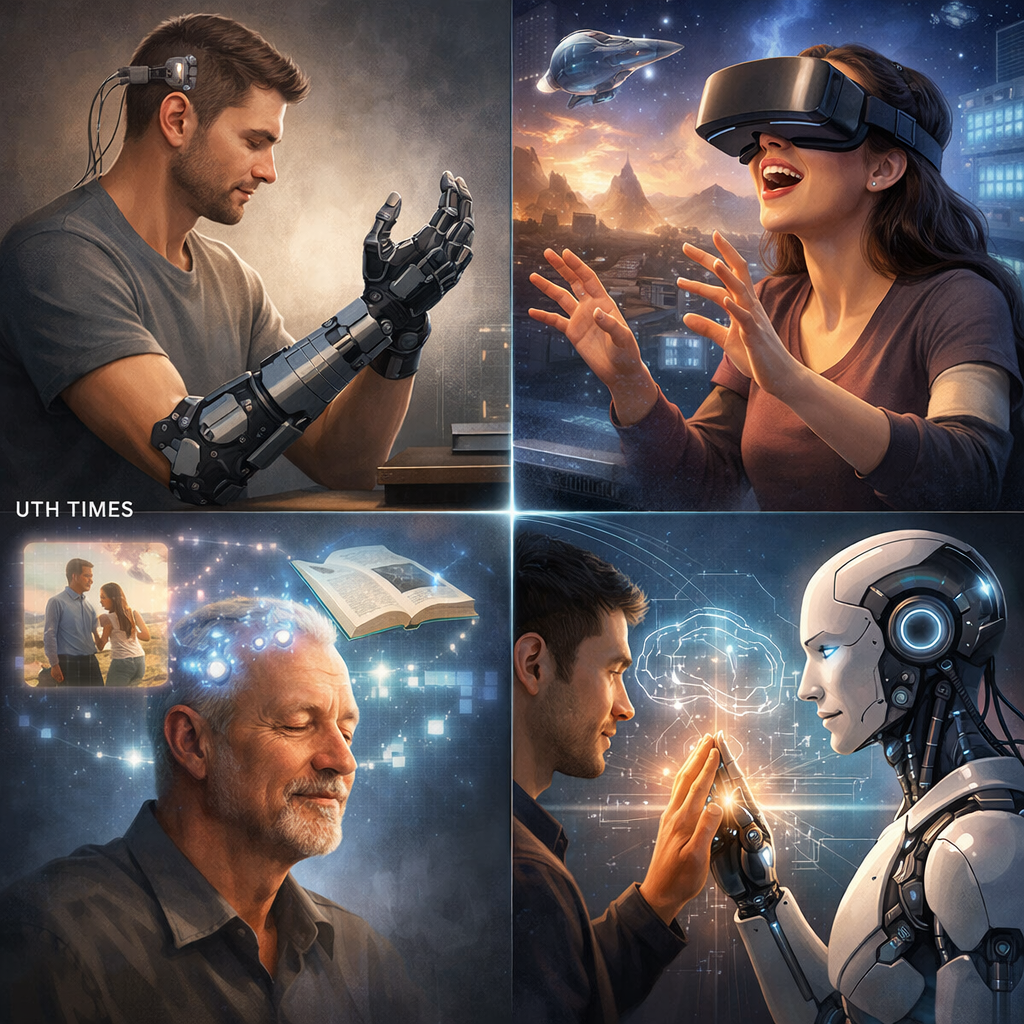
Neuralink’s long-term ambitions extend far beyond medical treatment.
Potential applications include:
🚗 Controlling prosthetic limbs naturally
🎮 Immersive virtual reality experiences
🧠 Memory enhancement technologies
🤝 Human-AI integration
If successful, Neuralink could transform medicine, communication, and even human cognition itself.
The Ethical Debate

The technology also raises serious questions.
Major concerns include:
⚖️ Data privacy of brain signals
🔐 Risk of neural hacking
🧬 Long-term safety of implants
🌍 Inequality in access to enhancement technologies
Balancing innovation with ethics will determine how society adopts brain–computer interfaces.
Neuralink represents one of the boldest technological experiments of the 21st century. By bridging biology and technology, it is redefining what it means to be human — and may soon allow thoughts to become actions in the digital world.

