
What if yesterday has never truly disappeared… and tomorrow already exists?
More than a century ago, Albert Einstein introduced an idea so revolutionary that it continues to challenge scientists, philosophers, and even our everyday understanding of reality. According to his theory of relativity, time may not “flow” at all. Instead, the past, present, and future could all coexist simultaneously, making our experience of time a deeply personal illusion.
🌀 Einstein’s Radical View of Time
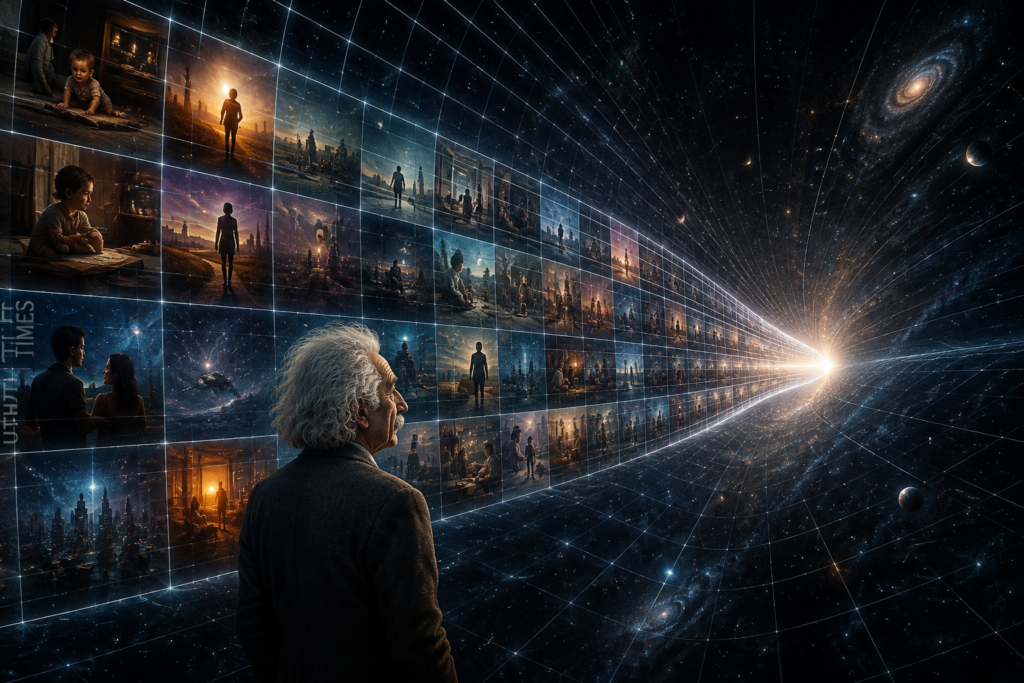
Most people imagine time as a river flowing from the past into the future. Einstein’s theory paints a completely different picture.
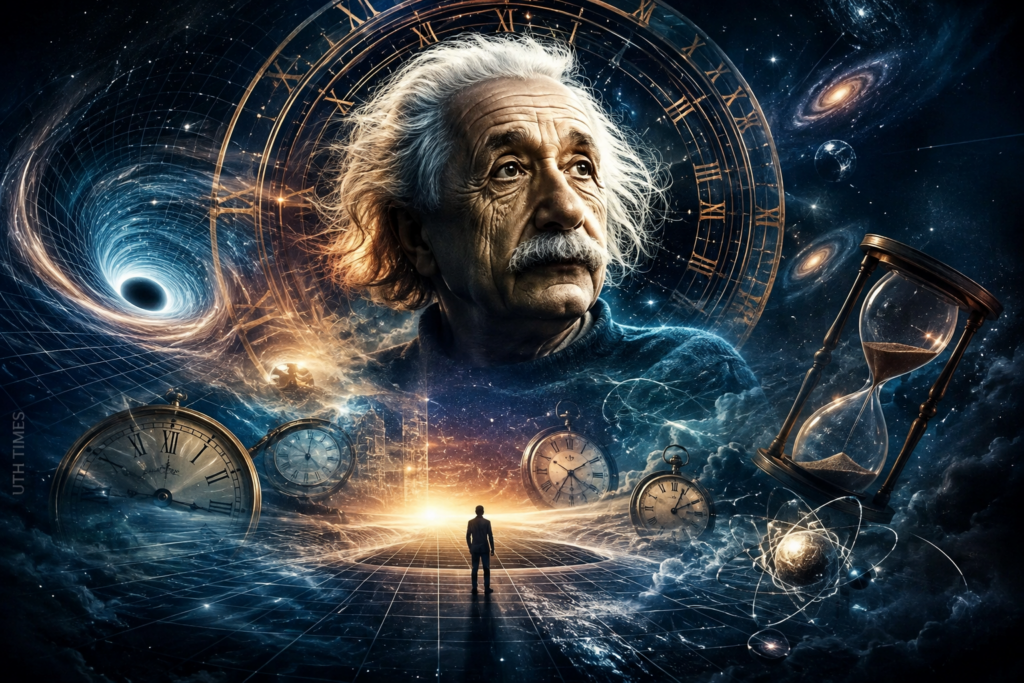
🌌 Space and time are woven together into a four-dimensional structure called space-time.
🌌 Every event—from your first birthday to humanity’s distant future—occupies its own location within this cosmic fabric.
🌌 Instead of reality constantly being created moment by moment, every event may already have its place in the universe.
This concept is often called the “Block Universe” theory, where the universe resembles a completed book rather than one still being written. We experience only one page at a time, but every page already exists.
⏳ Why Does Time Feel Like It’s Moving?
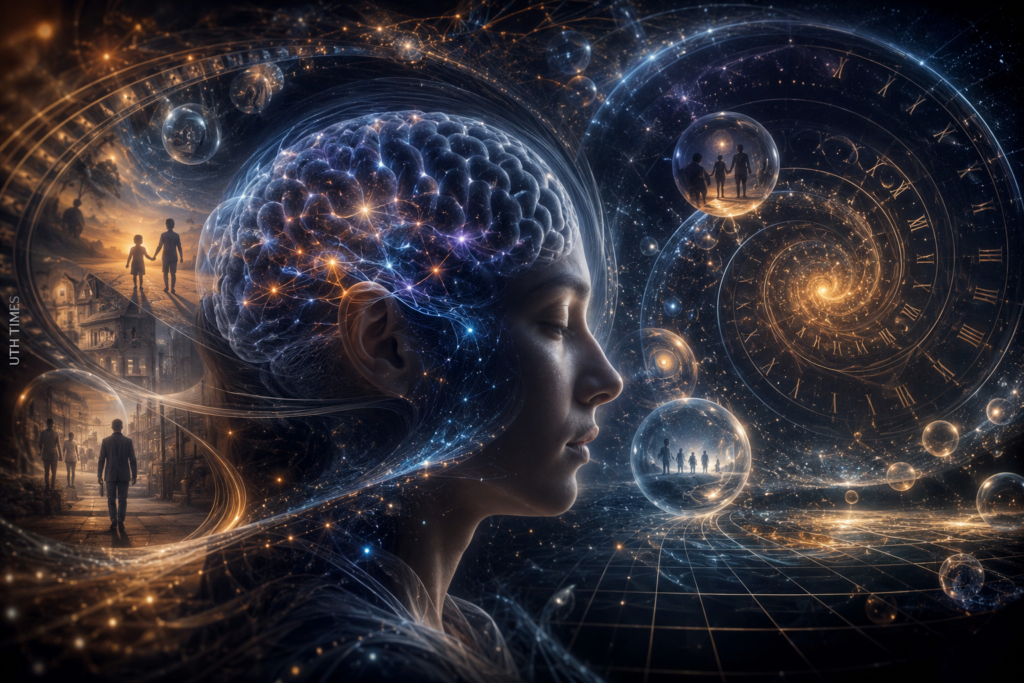
If all moments already exist, why do we only experience “now”?
🧠 Neuroscientists and physicists suggest that the human brain processes memories of the past while continuously receiving new information, creating the sensation of moving through time.
🧠 In this view, the passage of time may not be a property of the universe itself but a feature of human consciousness.
🧠 Einstein himself once wrote after the death of a close friend that “the distinction between past, present and future is only a stubbornly persistent illusion.” While this reflected his interpretation of relativity, it was not proof that time is literally unreal.
In other words, our experience of time may be psychological, while the universe operates according to deeper physical laws.
🚀 Relativity Already Proves Time Isn’t Absolute
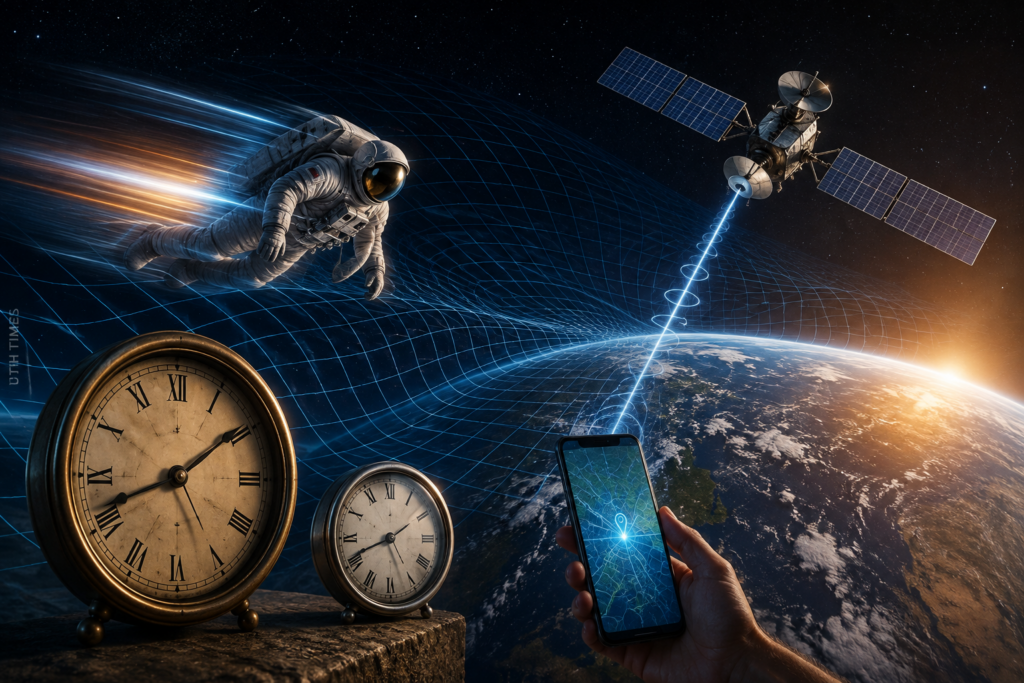
Einstein’s theories transformed time from a universal constant into something flexible.
✨ Clocks move at different speeds depending on gravity and velocity.
✨ Astronauts traveling at extremely high speeds age ever so slightly slower than people on Earth.
✨ GPS satellites must constantly correct for these relativistic effects; without Einstein’s equations, navigation systems would quickly become inaccurate.
These are experimentally confirmed consequences of relativity, demonstrating that time behaves differently under different conditions.
🔬 Does Modern Science Agree?
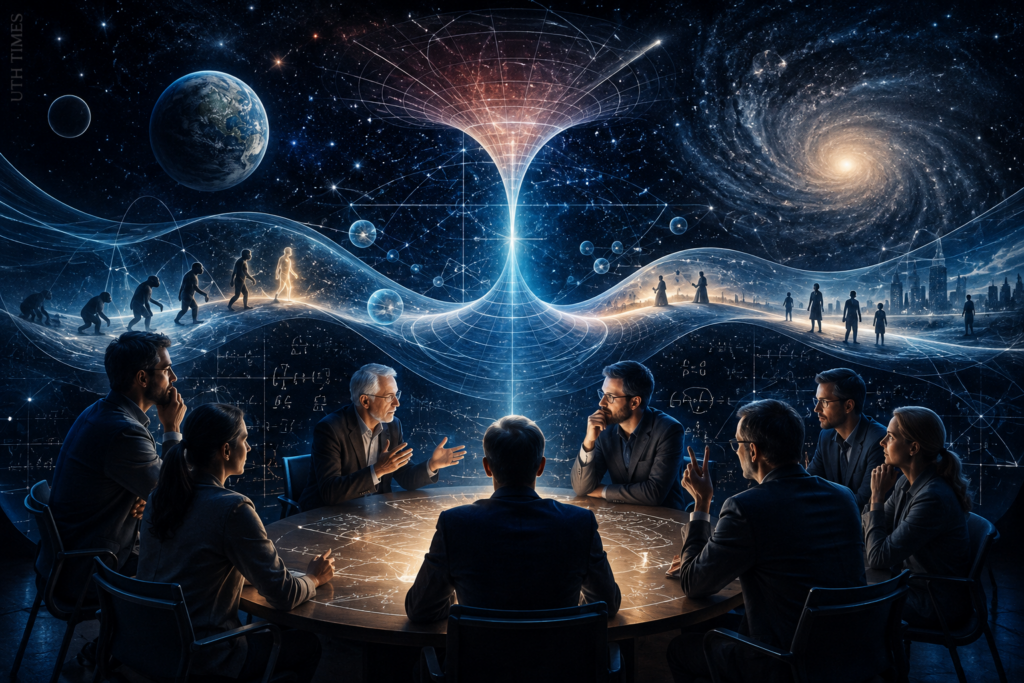
The scientific community agrees that relativity fundamentally changed our understanding of time, but there is no universal agreement that the Block Universe is the only correct interpretation.
🔹 Some physicists support the idea that all moments coexist.
🔹 Others argue that the future may not yet be fixed and that quantum mechanics could play a role in how reality unfolds.
🔹 Researchers continue exploring whether consciousness, quantum physics, and gravity can be unified into a deeper theory that explains the true nature of time.
The debate remains one of the greatest unanswered questions in modern science.
🌍 Why This Idea Still Captivates Humanity
Einstein’s vision forces us to reconsider nearly everything we believe about existence.
✨ Is the future already written?
✨ Do all moments of your life exist forever within space-time?
✨ Or is our experience of time revealing only a small part of a much larger reality?
Although science has not settled these questions, Einstein’s revolutionary ideas continue to inspire discoveries that push the boundaries of physics and human imagination.
Whether time truly flows or whether every moment already exists, Einstein permanently transformed humanity’s understanding of the universe. More than a century later, his ideas remain at the heart of some of the deepest scientific mysteries ever explored—reminding us that reality may be far stranger than our senses allow us to perceive.

