
India’s ambition to become a global aerospace powerhouse has received another major boost. In a landmark achievement, Indian scientists have successfully manufactured advanced bimetallic superalloy structures using additive manufacturing (3D printing) for the first time in the country. Coming soon after India’s breakthrough in indigenous single-crystal turbine blade technology, this achievement marks yet another critical step toward developing completely homegrown jet engines for both defence and civilian aviation.
The breakthrough has been accomplished by the International Advanced Research Centre for Powder Metallurgy and New Materials (ARCI), Hyderabad, an autonomous institute operating under the Ministry of Science and Technology.
Why This Achievement Is So Important 🚀
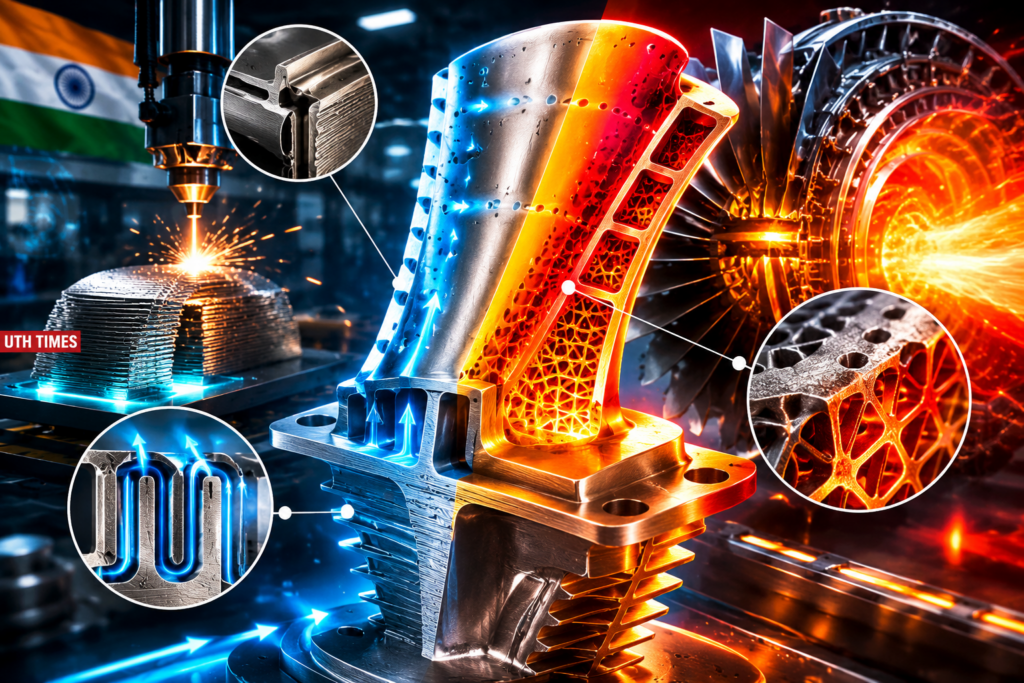
Modern jet engines operate under some of the harshest conditions ever created by humans. Temperatures inside turbine sections can exceed 1,500°C, while components must endure enormous mechanical stress, pressure and repeated thermal cycles.
✨ This new achievement allows Indian engineers to manufacture bimetallic superalloy structures, where two different high-performance alloys are combined into a single component.
🔹 Each alloy contributes its own strength, enabling one section to withstand extreme heat while another provides superior mechanical durability.
🔹 Such optimized designs improve efficiency, increase component lifespan and reduce overall engine weight.
🔹 These complex structures were previously extremely difficult to manufacture using conventional methods, making additive manufacturing a game-changing solution.
How Additive Manufacturing Changes Everything 🏭
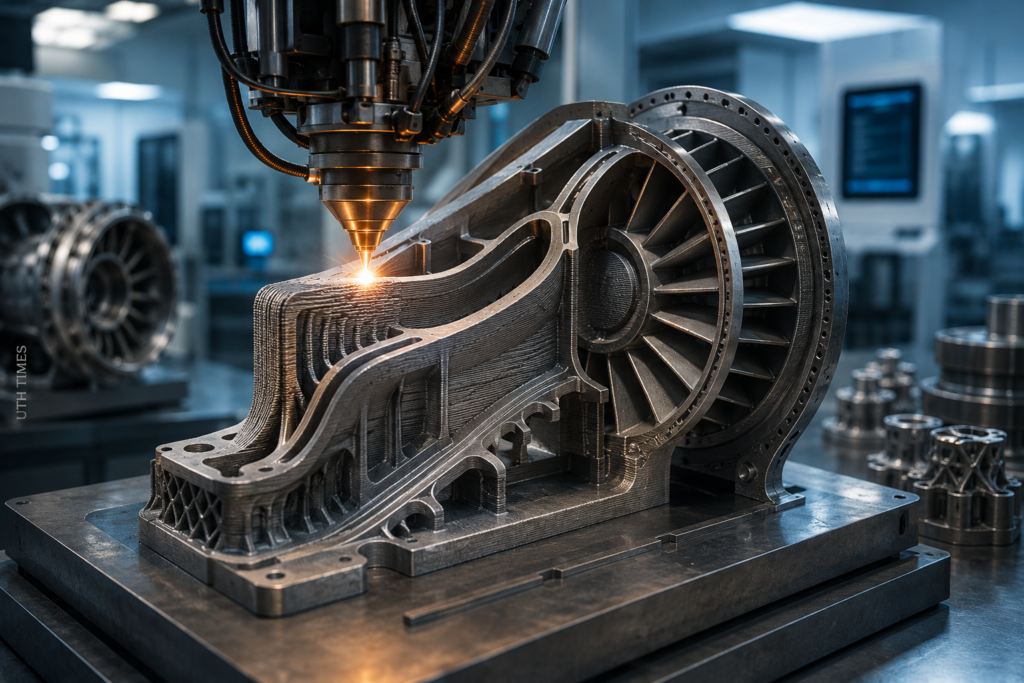
Unlike traditional manufacturing, which removes material through machining, additive manufacturing builds components layer by layer using precisely controlled metal powders.
✨ This offers several strategic advantages:
🔹 Enables highly complex internal cooling channels essential for advanced turbine components.
🔹 Reduces material wastage, lowering production costs for expensive aerospace-grade superalloys.
🔹 Shortens development and prototyping cycles dramatically.
🔹 Produces lightweight yet extremely strong components with exceptional precision.
🔹 Makes rapid customization possible for future indigenous aero-engine programs.
For high-performance jet engines, this manufacturing approach represents one of the most advanced technologies available worldwide.
A Strategic Boost for India’s Indigenous Engine Program 🇮🇳
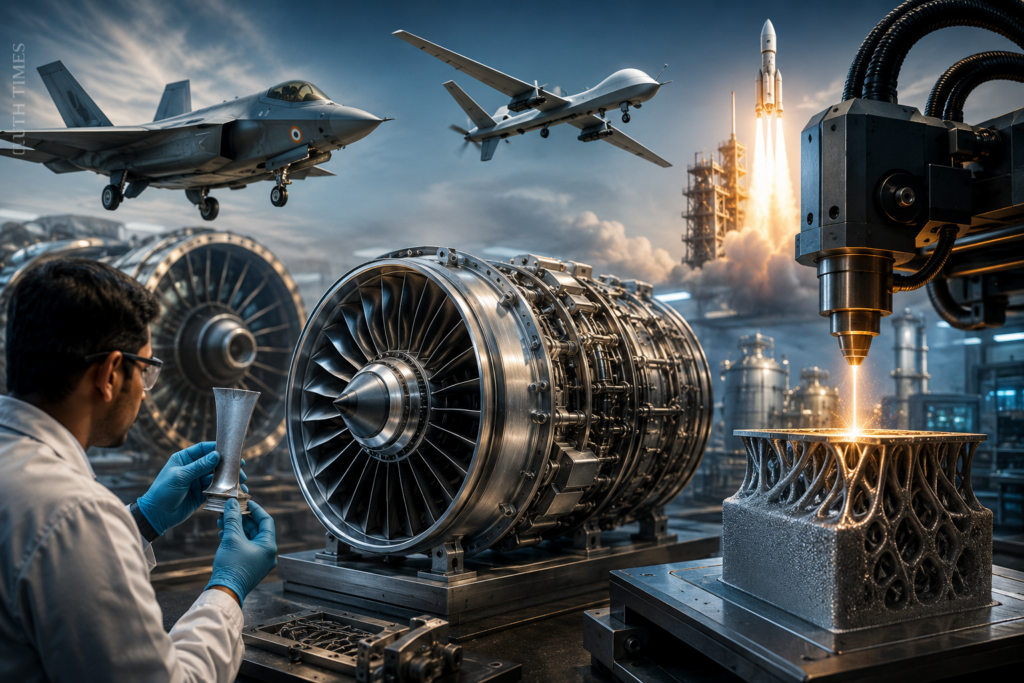
This breakthrough is far more than a laboratory success—it strengthens India’s long-term aerospace independence.
India has historically relied on imported engine technologies for several critical defence platforms. Mastering advanced superalloy manufacturing and additive manufacturing significantly expands India’s capability to design and produce sophisticated turbine components domestically.
✨ The achievement is expected to benefit:
🔹 Indigenous fighter aircraft engine development.
🔹 Future UAV and drone propulsion systems.
🔹 Space and launch vehicle technologies.
🔹 Gas turbines used in defence and power generation.
🔹 High-temperature industrial applications requiring advanced materials.
Together with recent advances in single-crystal blade technology, this development brings India closer to establishing a complete indigenous jet engine manufacturing ecosystem.
A Future Forged in Indian Innovation 🌍
India’s successful manufacturing of advanced bimetallic superalloy structures demonstrates that the country is steadily mastering some of the world’s most challenging aerospace technologies. As indigenous materials science, precision engineering and advanced manufacturing continue to converge, India is not merely reducing dependence on foreign technologies—it is laying the foundation for a globally competitive aerospace industry capable of powering the nation’s future from the skies to space.

