
The internet is once again flooded with dramatic headlines claiming that an American scientist mathematically predicted the end of the world on Friday, 13 November 2026. The claim has sparked millions of discussions, videos, and conspiracy theories across social media. But is there any scientific evidence behind this prediction, or is it another misunderstood mathematical theory that has gone viral?
🌍 Where Did the 2026 Doomsday Prediction Come From?

The prediction is commonly linked to Dr. Heinz von Foerster, an Austrian-American scientist and pioneer in systems theory. In 1960, he and his colleagues published a mathematical model studying the rapid growth of the world’s population.
📌 Their calculations suggested that if population growth continued unchecked, it would reach an impossible “infinite” value around Friday, 13 November 2026. This theoretical point became known as the “Doomsday Equation.”
However, the study never claimed that Earth would be destroyed or that humanity would suddenly disappear. The mathematical result simply indicated that exponential growth cannot continue forever because real-world systems always encounter limits.
📊 What Did the Mathematics Actually Mean?
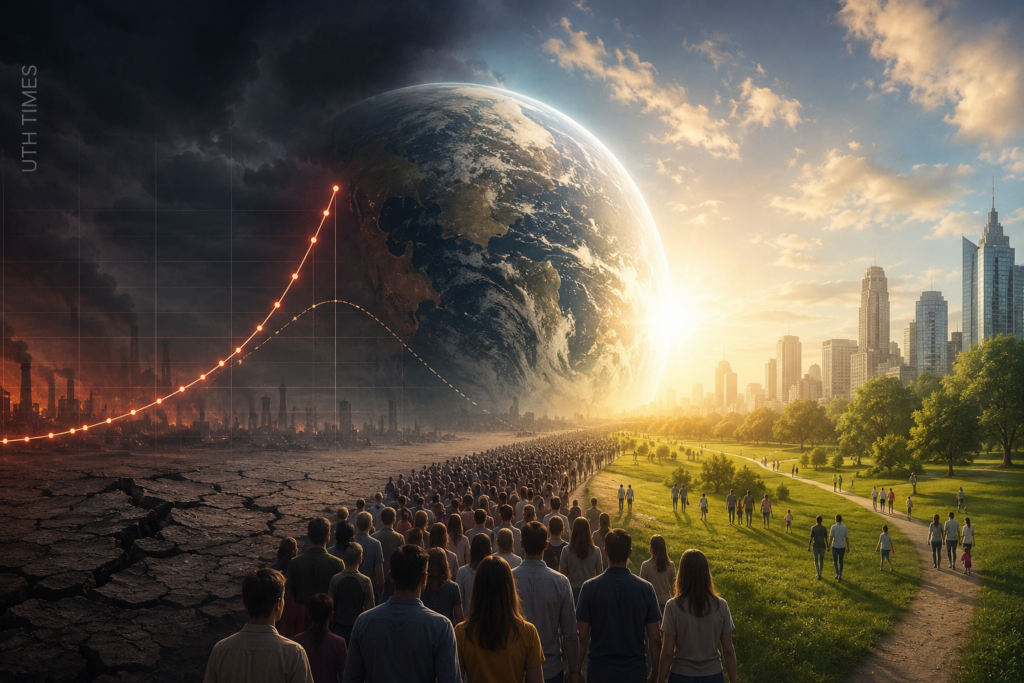
The famous date emerged from a mathematical extrapolation, not from astronomy, geology, or physics.
🔹 The model assumed population would keep increasing at the same extraordinary rate.
🔹 In mathematics, exponential curves eventually reach unrealistic values, signalling that the assumptions behind the model can no longer hold.
🔹 The “doomsday” represented the collapse of the mathematical model—not the collapse of civilization.
Ironically, only a few years after the paper was published, global population growth rates began slowing due to improved education, healthcare, urbanization, and lower birth rates in many countries.
This means the original assumptions no longer matched reality, making the predicted date scientifically obsolete.
🔭 What Does Modern Science Say?
Today’s scientific community does not recognize 13 November 2026 as a legitimate doomsday prediction.
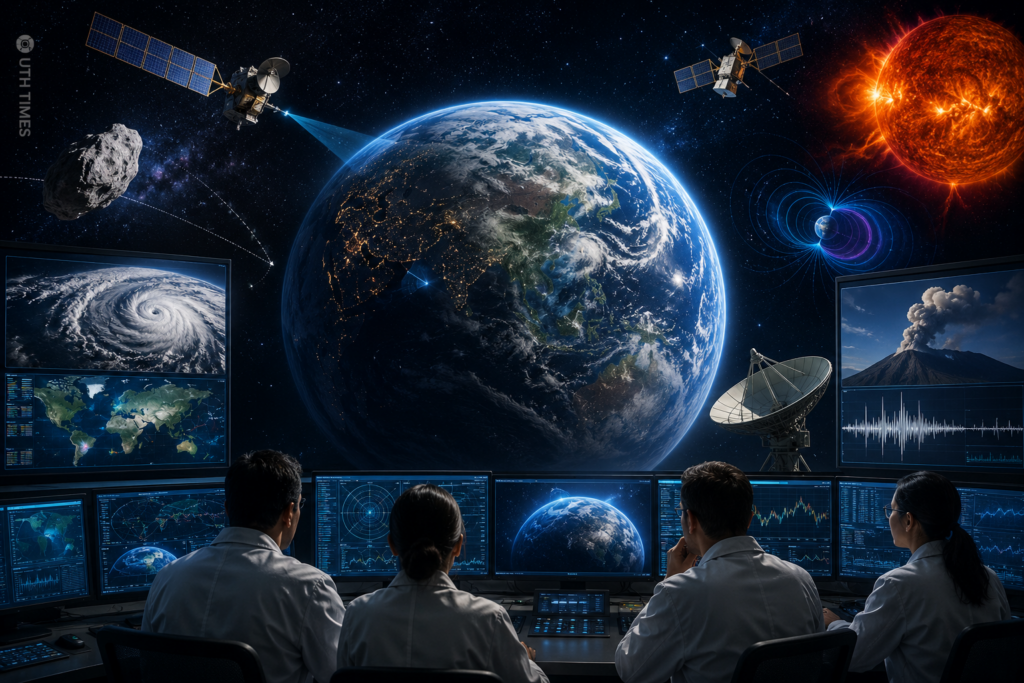
🌎 Organizations such as NASA and leading scientific institutions continuously monitor:
🔹 Near-Earth asteroids
🔹 Solar activity
🔹 Climate systems
🔹 Geological hazards
🔹 Space weather
None of these indicate that Earth faces a guaranteed global catastrophe on that specific date. While scientists acknowledge genuine long-term risks—such as climate change, pandemics, or asteroid impacts—these are studied using observational evidence rather than numerology or viral internet claims.
📱 Why Does the Story Keep Going Viral?
The prediction combines three elements that naturally attract attention:
🔹 A precise calendar date.
🔹 The mysterious reputation of Friday the 13th.
🔹 The phrase “mathematical prediction,” which gives the claim an appearance of scientific certainty.
As the story spreads online, the important context is often removed, leading many people to believe the equation forecasted humanity’s final day rather than highlighting the limits of exponential growth.
The 13 November 2026 prediction is not a scientifically accepted forecast of Earth’s destruction. It originated from a population-growth model whose assumptions no longer reflect reality. Rather than predicting the end of the world, the equation serves as a reminder that mathematical models depend entirely on the assumptions used to build them.
The real lesson isn’t that the world will end in 2026—it’s that science evolves with new evidence, while sensational headlines often outlive the facts.

