
For decades, astronomers believed our Solar System was surrounded by an enormous cavity of hot, low-density gas known as the Local Bubble. Now, an extraordinary discovery suggests that this bubble may not be isolated at all.
Researchers have identified what appears to be an interstellar tunnel—a gigantic channel of extremely low-density gas that stretches beyond the Local Bubble and connects it to neighboring cosmic cavities created by ancient stellar explosions. Rather than being a solid “space tunnel” that spacecraft could fly through, it is a vast region where matter is exceptionally sparse, allowing energy and hot gas to flow across different parts of our galactic neighborhood.
The finding is changing how astronomers understand the architecture of the Milky Way.
What Exactly Is the Interstellar Tunnel?
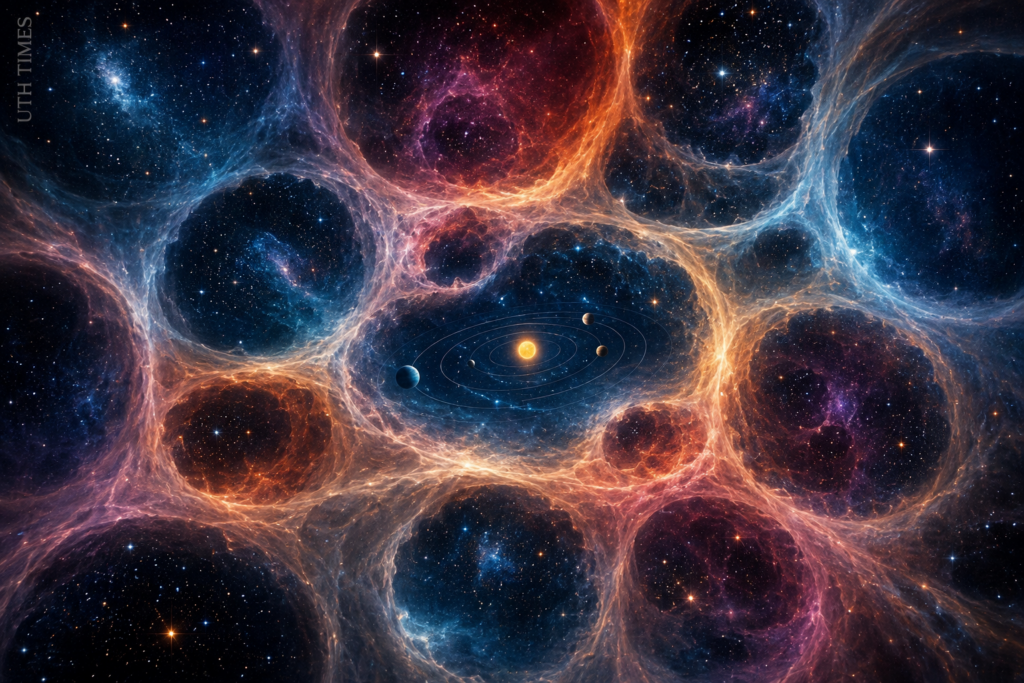
Imagine the Milky Way as a giant block of Swiss cheese.
Throughout the galaxy, massive stars explode as supernovae, carving enormous bubbles into the surrounding interstellar medium. These bubbles are not isolated forever. Over millions of years, some merge together, forming long, connected passages.
🌌 Scientists believe the newly identified tunnel:
🔹 Extends outward from the Local Bubble.
🔹 Connects multiple neighboring stellar cavities.
🔹 Contains extremely thin, hot ionized gas.
🔹 May allow energy, magnetic fields and cosmic particles to travel between regions.
🔹 Reveals that our Solar System is part of a much larger interconnected galactic network.
Instead of existing inside a single bubble, humanity may actually reside within a vast cosmic labyrinth stretching across hundreds of light-years.
How Did Scientists Find It?
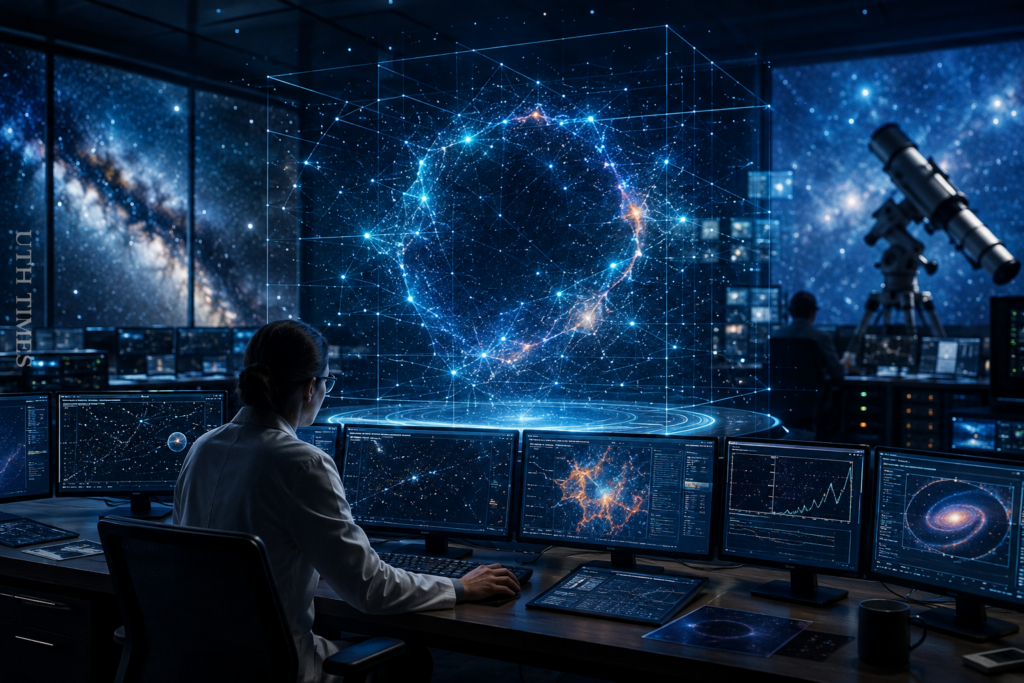
The discovery became possible through advanced three-dimensional mapping of the interstellar medium.
Rather than observing stars directly, astronomers measured how starlight changes as it passes through clouds of gas and dust. By combining observations from thousands of stars with sophisticated computer models, they reconstructed the hidden structure surrounding our Solar System.
🔭 The research relied on:
🔹 High-precision stellar distance measurements.
🔹 Spectroscopic observations of interstellar gas.
🔹 Three-dimensional density mapping.
🔹 Computer simulations of the Local Bubble.
🔹 Large astronomical datasets collected over many years.
These techniques allowed scientists to visualize regions of space that are normally invisible.
Why This Discovery Matters
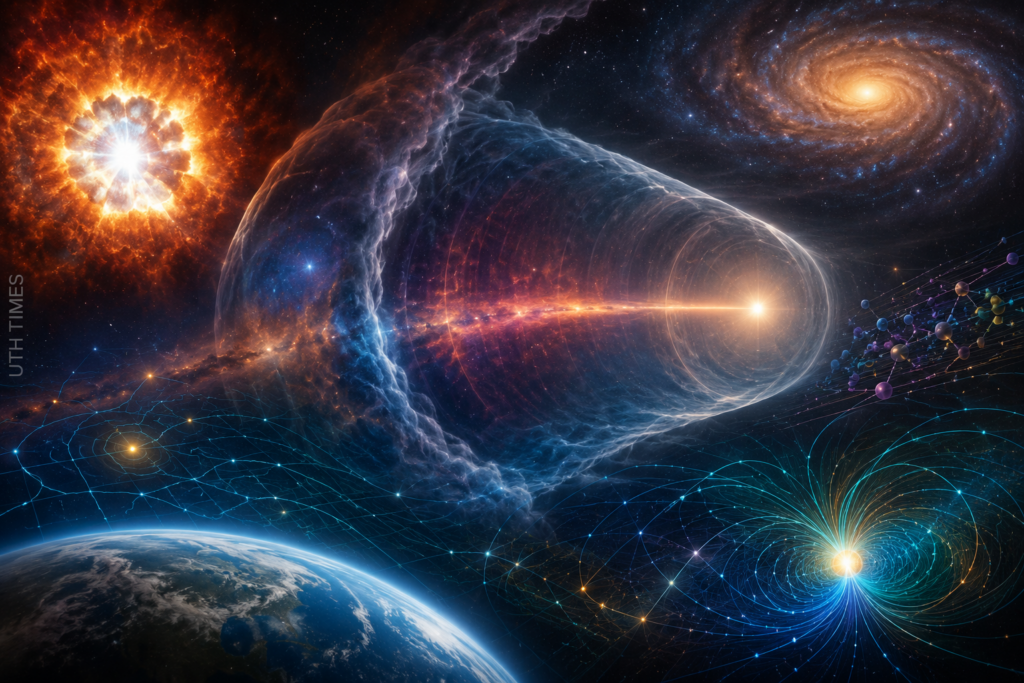
The tunnel is far more than an astronomical curiosity—it provides important clues about the history and evolution of our galactic environment.
⭐ Its scientific significance includes:
🔹 Improving our understanding of how supernova explosions reshape the Milky Way.
🔹 Explaining how hot gas moves between different stellar neighborhoods.
🔹 Helping scientists model the movement of cosmic rays.
🔹 Refining maps of the interstellar medium surrounding Earth.
🔹 Providing new insights into how future generations of stars may form.
The discovery also helps explain why our local region of space has its unique temperature, density and magnetic environment.
Can Spacecraft Travel Through It?
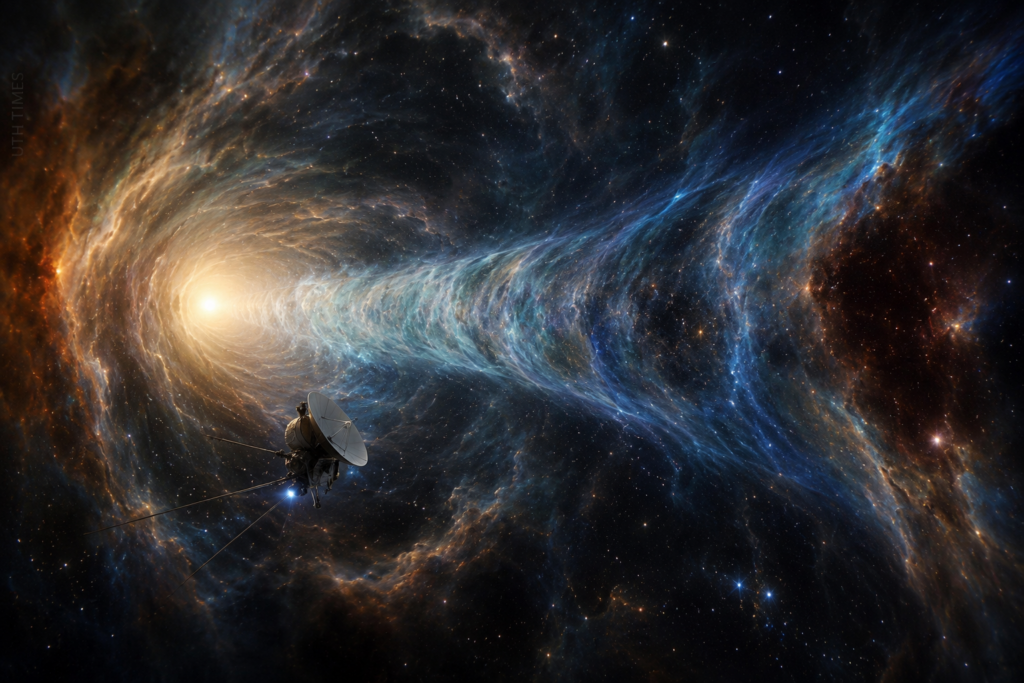
Although the word “tunnel” sounds like a cosmic highway, it is not a physical passage with walls or a shortcut between stars.
🚀 In reality:
🔹 It is made of extremely diffuse gas.
🔹 It stretches across hundreds of light-years.
🔹 No spacecraft can currently reach or travel through it.
🔹 It does not function as a wormhole or science-fiction portal.
Instead, it represents a natural structure within the interstellar medium that links different regions of our galaxy.
A New Map of Our Galactic Neighborhood
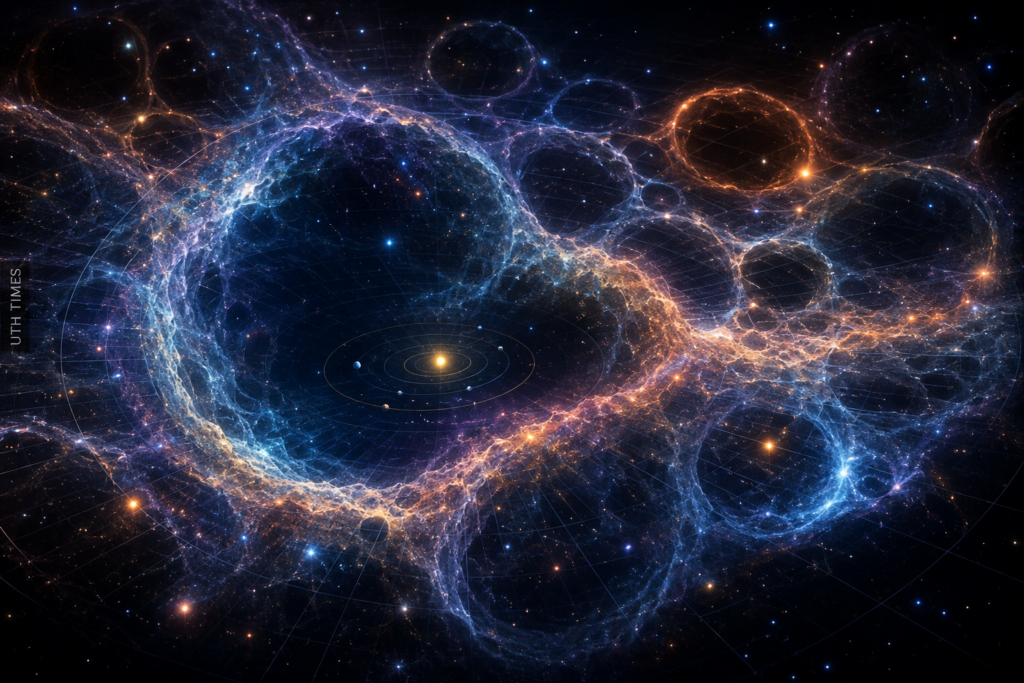
This remarkable discovery reminds us that space is far more interconnected than once imagined. The Local Bubble, long thought to be an isolated cavity, now appears to be just one chamber in a much larger network sculpted by countless ancient supernovae. As astronomers continue refining three-dimensional maps of the Milky Way, these hidden interstellar tunnels could reveal how matter, energy and the legacy of dying stars have shaped the cosmic environment surrounding our Solar System for millions of years.

