
India’s space ambitions are entering a completely new era. While ISRO has earned global recognition for cost-effective and reliable missions, the country’s private space industry is now preparing to tackle one of the most difficult engineering challenges ever attempted in modern rocketry. Bengaluru-based Astrobase Space is developing India’s first indigenous 800 kN Full-Flow Staged Combustion (FFSC) rocket engine—a technology so advanced that only a handful of countries have ventured into this domain. If successfully demonstrated, this breakthrough could redefine India’s position in the global space race.
🚀 Why This Rocket Engine Is So Special
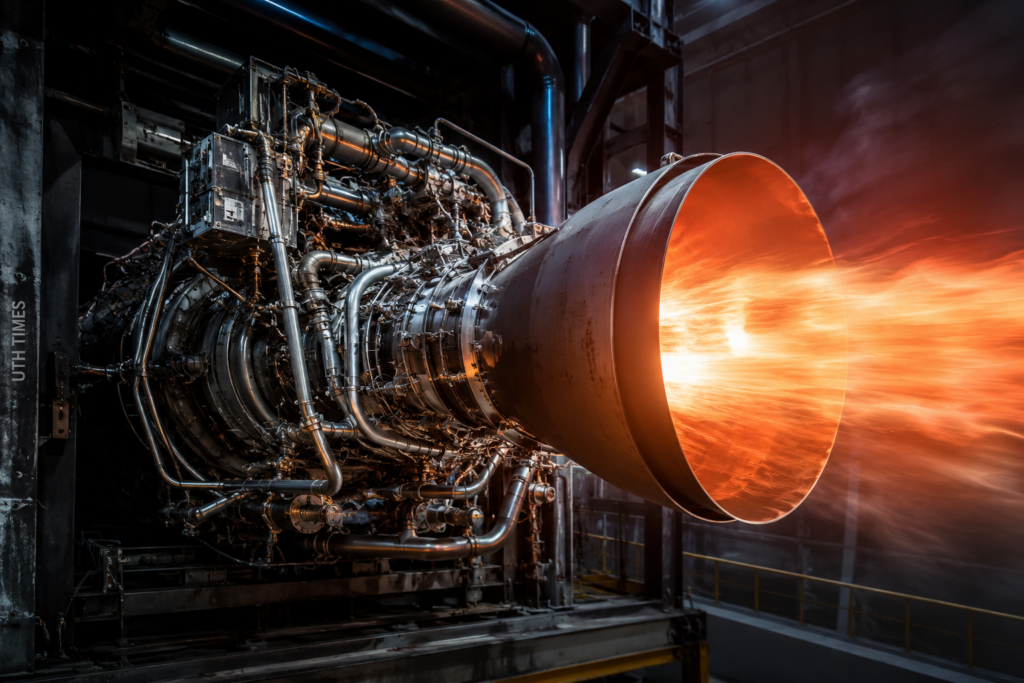
A rocket engine is the heart of every launch vehicle, but not all engines are created equal. Astrobase Space’s upcoming engine is based on the Full-Flow Staged Combustion (FFSC) cycle, widely regarded as one of the most sophisticated propulsion architectures ever developed.
Unlike conventional engines that waste part of the fuel during operation, FFSC routes both the fuel-rich and oxygen-rich propellants through separate preburners before entering the main combustion chamber. This enables the engine to extract maximum energy from every kilogram of propellant while operating at extremely high efficiency.
🔹 Around 800 kN of thrust, making it suitable for medium and heavy launch vehicles.
🔹 Higher fuel efficiency compared to traditional rocket engines.
🔹 Lower thermal stress on engine components.
🔹 Improved reliability for repeated launches.
🔹 Designed with long-term reusability in mind.
This is the same broad propulsion philosophy that powers SpaceX’s Raptor engines, highlighting the technological complexity of Astrobase’s achievement.
⚙️ Built in India, Powered by Advanced Manufacturing
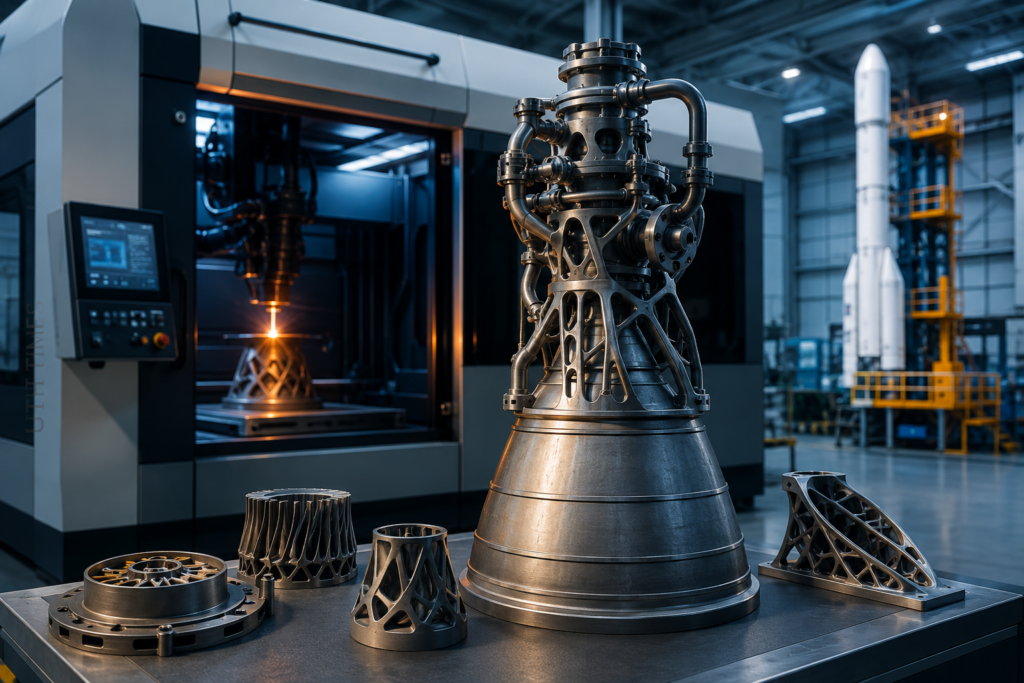
What makes this project even more remarkable is that it has been designed, manufactured and integrated entirely in Bengaluru.
Astrobase operates India’s largest industrial metal 3D printer dedicated to rocket propulsion components, allowing engineers to manufacture highly intricate engine parts that would be extremely difficult using conventional machining.
🔥 Advanced metal additive manufacturing offers several advantages:
🔹 Faster production cycles.
🔹 Reduced component count.
🔹 Lighter engine structures.
🔹 Greater design flexibility.
🔹 Improved manufacturing precision.
This approach mirrors the future of aerospace manufacturing, where complex components are printed rather than assembled from hundreds of individual parts.
🏗️ Testing Infrastructure for the Next Generation
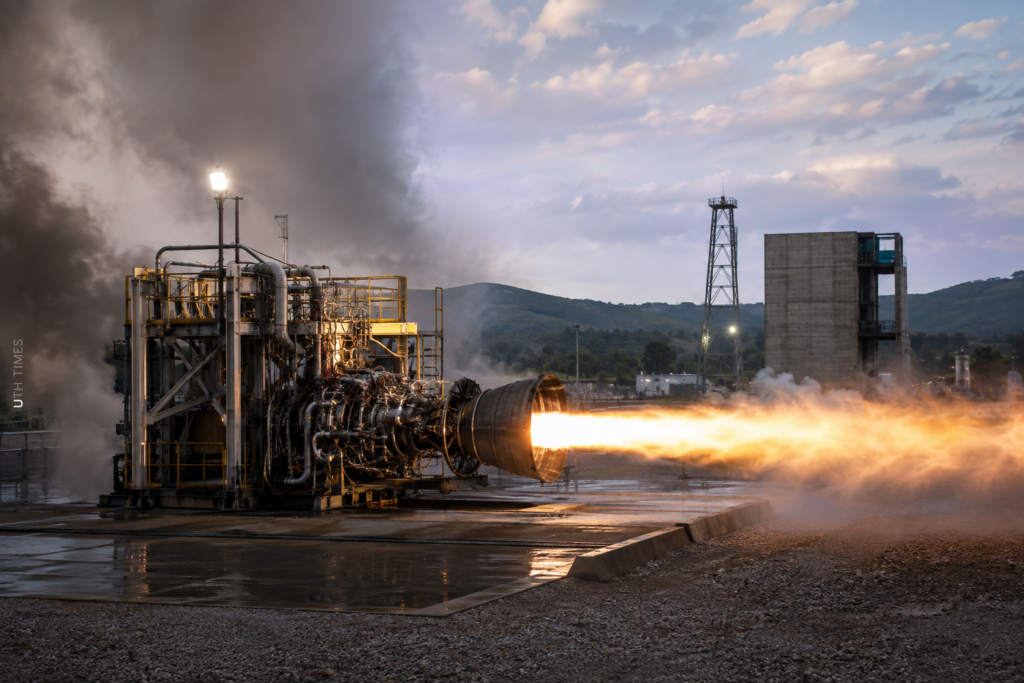
Developing an advanced rocket engine requires far more than designing hardware—it demands world-class testing facilities capable of safely handling extreme temperatures, pressures and combustion forces.
To support this effort, Astrobase is developing a 21.5-acre propulsion testing facility in Andhra Pradesh.
The company has already achieved several important milestones:
🔹 Successful sub-scale engine testing.
🔹 Turbopump development and validation.
🔹 Progressive hardware qualification.
🔹 Infrastructure for full-scale hot-fire testing.
Each milestone significantly reduces technical risk before the complete engine enters demonstration.
🌍 A Milestone for India’s Private Space Industry
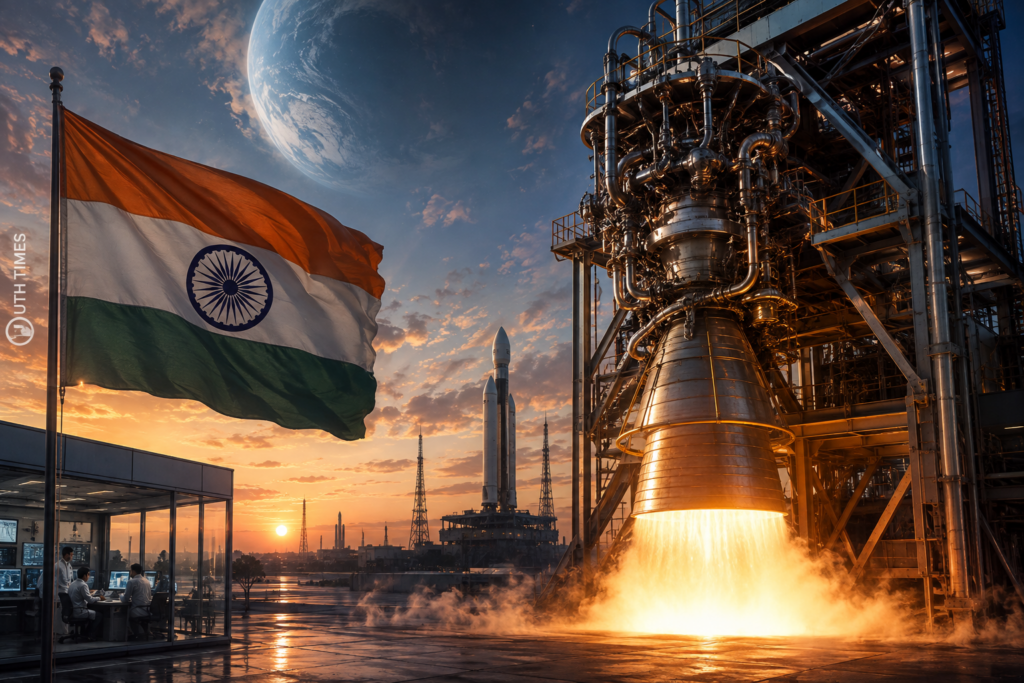
India’s space ecosystem is rapidly evolving from satellite manufacturing and small launch vehicles toward technologies traditionally dominated by major global space powers.
An indigenous FFSC engine would represent a major leap because it enables future launch systems to become more powerful, efficient and potentially reusable.
Its long-term applications could include:
🔹 Reusable orbital launch vehicles.
🔹 Heavy satellite deployment.
🔹 Commercial launch services.
🔹 Deep-space exploration missions.
🔹 Future human spaceflight support.
Rather than competing only in low-cost launches, Indian companies are now beginning to compete in cutting-edge propulsion technologies that define the future of global space transportation.
India’s first Full-Flow Staged Combustion rocket engine is more than an engineering project—it’s a statement of technological ambition. If Astrobase successfully demonstrates this 800 kN engine, India will join an elite league of nations mastering one of aerospace engineering’s most demanding propulsion systems. It marks the beginning of a future where India’s private space industry doesn’t just participate in the global space race—it helps shape its next chapter.

