
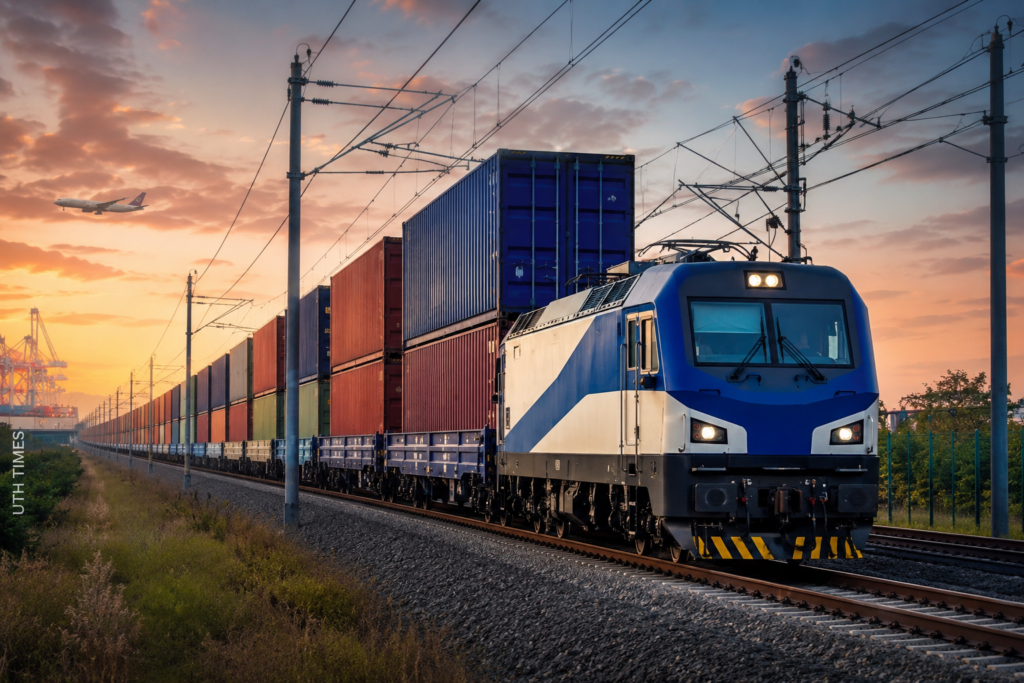
While many countries operate double-stack container trains using diesel locomotives, India has achieved something no other nation has managed—successfully operating double-stack container trains powered entirely by electric locomotives. This breakthrough is not just a railway achievement; it is a major engineering milestone that strengthens India’s position as a global leader in sustainable freight transportation.
India’s Historic First: A Global Engineering Achievement
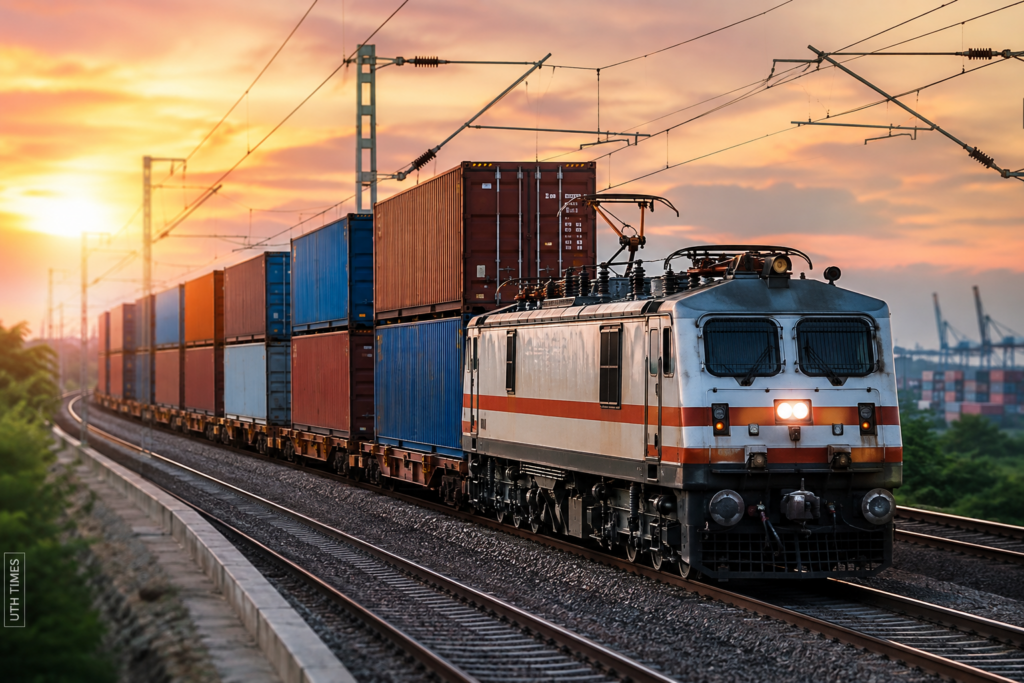
India has become the first and only country to operate double-stack container trains entirely under electric traction. This feat was made possible by Indian Railways through years of infrastructure modernization, particularly on the Western Dedicated Freight Corridor (DFC).
Unlike conventional railway networks, the Dedicated Freight Corridor was specially designed with high-rise overhead electric equipment (OHE), allowing electric locomotives to safely haul two stacked shipping containers simultaneously.
🔹 World’s first fully electric double-stack container train operations.
🔹 Powered by high-capacity electric freight locomotives.
🔹 Designed specifically for high-speed, heavy freight movement.
🔹 A major leap towards greener logistics and lower transportation costs.
This achievement demonstrates India’s capability to solve engineering challenges that many advanced railway systems have yet to overcome.
Why This Achievement Is So Difficult
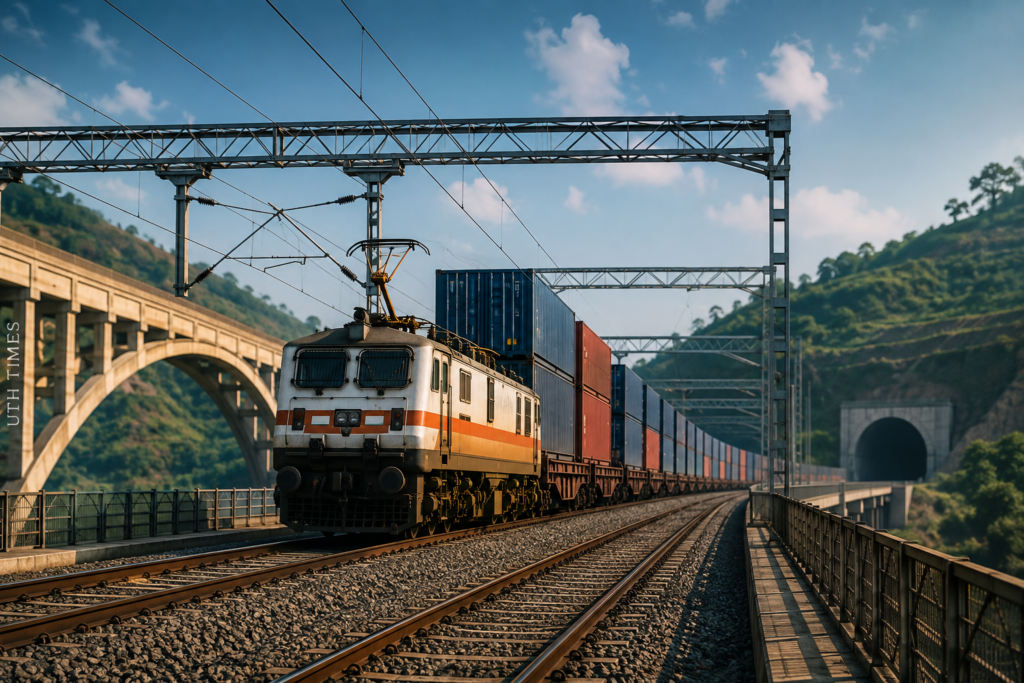
Running double-stack container trains under electric wires sounds simple—but it requires overcoming a major engineering obstacle.
The combined height of two stacked containers is significantly greater than ordinary freight wagons. In most countries, this creates a conflict with overhead electric wires, forcing operators to rely on diesel locomotives instead.
India solved this challenge by redesigning the railway infrastructure itself.
🚆 Key innovations include:
🔹 Higher overhead electric lines specially engineered for double-stack operations.
🔹 Modern bridges, tunnels and station clearances.
🔹 Powerful electric locomotives capable of hauling extremely heavy freight.
🔹 Dedicated freight tracks separated from passenger traffic.
The result is a railway system capable of transporting massive cargo volumes efficiently without sacrificing safety or speed.
Transforming India’s Logistics Network
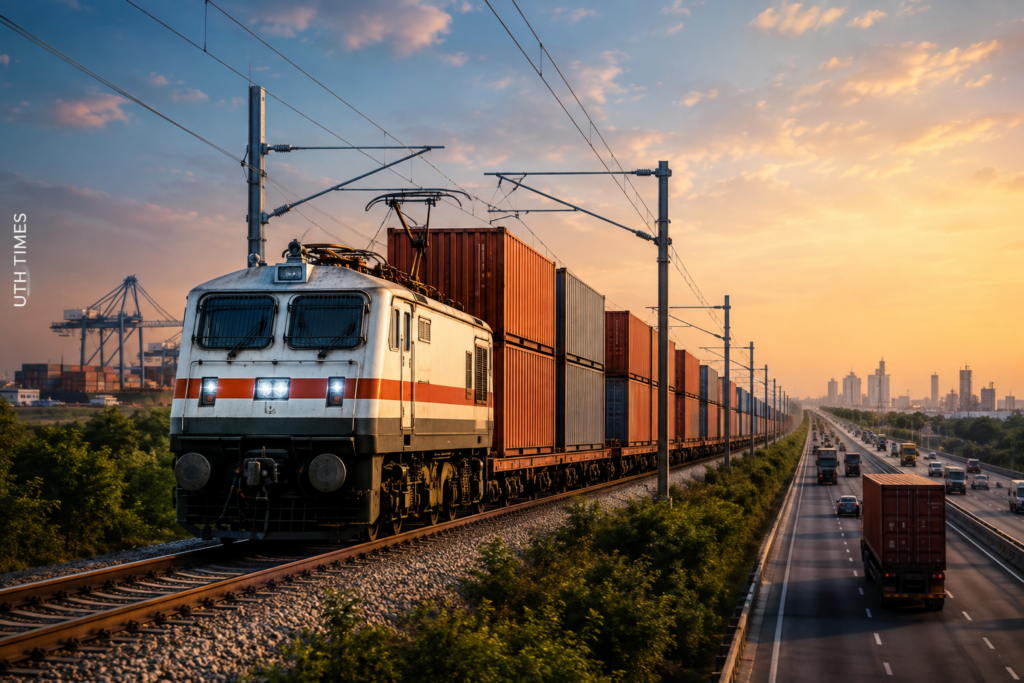
Double-stack electric freight trains significantly increase transportation efficiency.
📦 Their advantages include:
🔹 Carrying nearly twice the number of containers in a single journey.
🔹 Reducing congestion on highways.
🔹 Lowering logistics costs for industries and exporters.
🔹 Faster delivery between ports, industrial hubs and inland terminals.
🔹 Improving supply chain reliability.
By moving more cargo with fewer trains, Indian Railways can transport larger freight volumes while consuming less energy per container.
A Major Win for Green Transportation
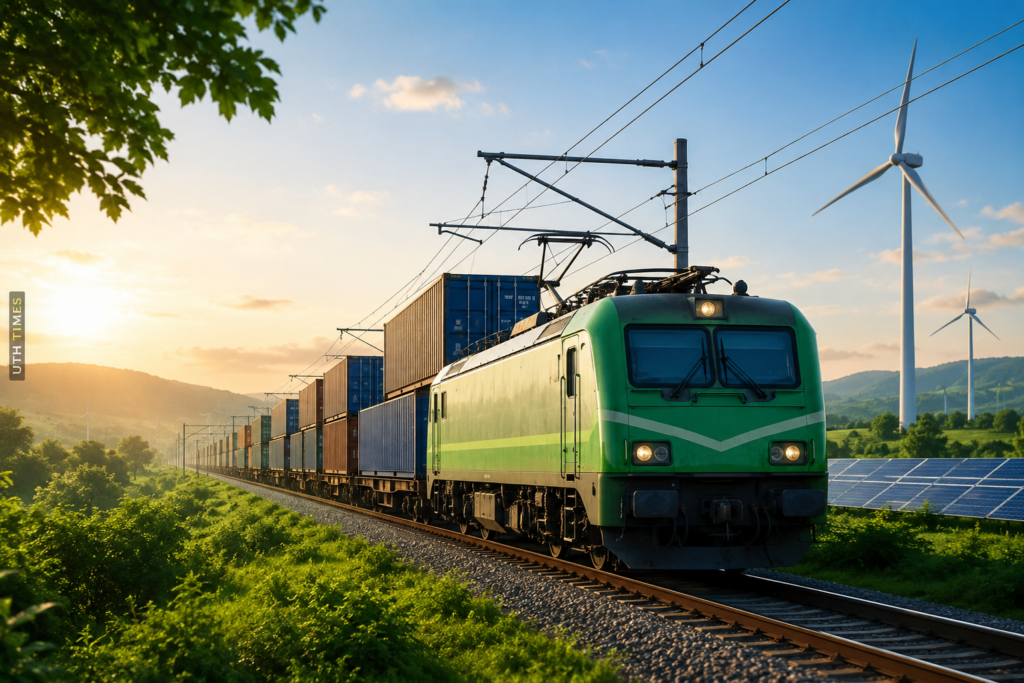
Electrification makes this achievement even more significant.
🌱 Environmental benefits include:
🔹 Zero diesel consumption during operations.
🔹 Lower greenhouse gas emissions.
🔹 Reduced dependence on imported fossil fuels.
🔹 Improved energy efficiency.
🔹 Support for India’s long-term net-zero ambitions.
As India’s electricity mix increasingly incorporates renewable energy, the environmental advantages of electric freight transport will continue to grow.
Strengthening India’s Global Trade Competitiveness
The Dedicated Freight Corridor is transforming how goods move across India.
🚢 Industries benefiting include:
🔹 Manufacturing.
🔹 Automotive.
🔹 Steel.
🔹 Cement.
🔹 Agriculture.
🔹 E-commerce.
🔹 Export-import businesses.
Faster freight movement reduces turnaround time at ports, enhances export competitiveness and strengthens India’s role as a global manufacturing and logistics hub.
India’s fully electric double-stack container trains represent far more than a railway innovation—they showcase world-class engineering, sustainable infrastructure and long-term strategic planning. As freight demand continues to grow, this pioneering achievement positions India at the forefront of efficient, green and future-ready rail transportation.

