
India has taken another major step towards strengthening its defence capabilities. The Defence Research and Development Organisation (DRDO) has formalised a partnership with Adani Defence Systems and Technologies to jointly develop indigenous airborne surveillance and battle management suites for the Indian Air Force (IAF). More than just another defence agreement, this collaboration signals a strategic shift in how India plans to build its future military technologies.
🇮🇳 DRDO and Adani Join Hands for Indigenous Airborne Defence Systems
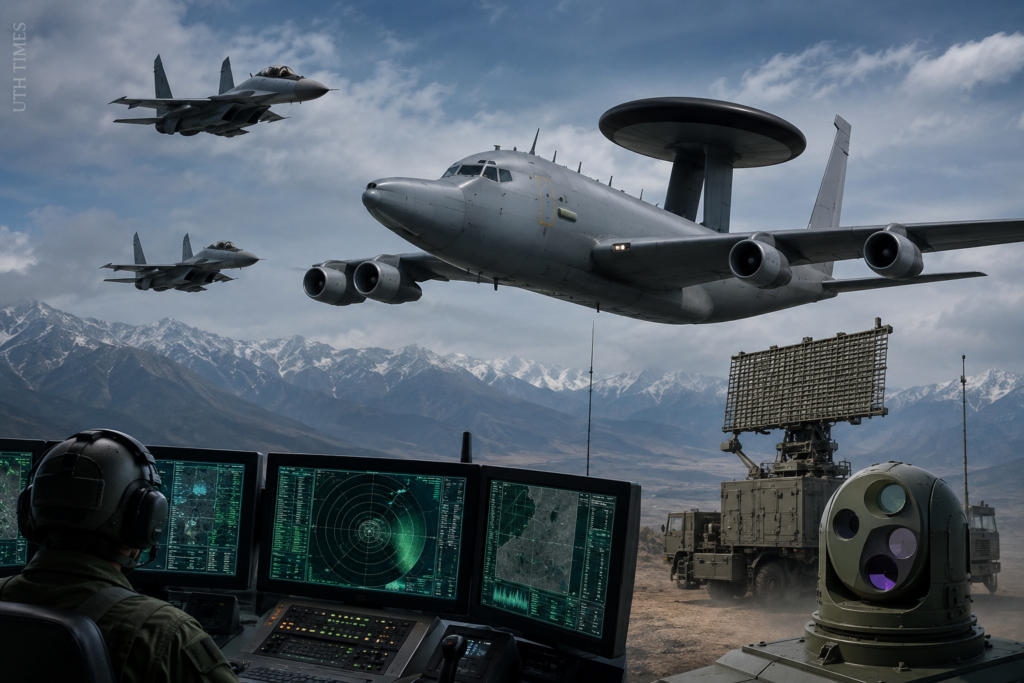
Airborne Surveillance and Battle Management Suites are among the most sophisticated military technologies used by modern air forces. These systems integrate advanced radars, communication networks, sensors, electronic intelligence, and command-and-control software into a single platform, enabling real-time monitoring of aerial threats and seamless coordination during combat operations.
✨ This partnership aims to:
🔹 Develop advanced indigenous surveillance technologies.
🔹 Strengthen airborne command-and-control capabilities.
🔹 Reduce India’s dependence on imported military systems.
🔹 Support the Indian Air Force with next-generation battlefield awareness.
By combining DRDO’s decades of research expertise with Adani Defence’s industrial capabilities, India is attempting to build an ecosystem capable of producing world-class aerospace defence solutions within the country.
🚀 Why This Partnership Could Be a Turning Point

For decades, India’s defence manufacturing ecosystem was largely dominated by government organisations, while private companies had limited participation in high-end aerospace and defence programmes. This often resulted in lengthy development timelines, limited production capacity, and dependence on foreign suppliers for critical technologies.
The DRDO–Adani collaboration represents a shift towards a more integrated public-private model.
✨ The expected advantages include:
🔸 Faster product development through private-sector manufacturing efficiency.
🔸 Greater investment in cutting-edge defence technologies.
🔸 Improved scalability for large production requirements.
🔸 Better integration of research, manufacturing, and deployment.
🔸 Stronger supply chains supporting the Government’s Aatmanirbhar Bharat vision.
This approach allows innovation to move from laboratories to operational deployment much more rapidly.
🛰️ Strengthening the Indian Air Force’s Future Battlefield Edge

Modern warfare increasingly depends on information superiority rather than firepower alone. Airborne surveillance platforms act as the “eyes in the sky,” detecting hostile aircraft, missiles, drones, and other threats long before they reach Indian airspace.
The indigenous battle management suites being developed under this partnership are expected to improve:
✨ Key operational capabilities:
🔹 Real-time situational awareness.
🔹 Secure communication between multiple military assets.
🔹 Faster command and decision-making.
🔹 Coordinated operations across air, land, and maritime forces.
🔹 Enhanced network-centric warfare capabilities.
Such systems will significantly improve mission effectiveness while reducing dependence on imported technologies during critical operations.
🏭 A Bigger Push for India’s Defence Manufacturing Ecosystem

Beyond military capability, this partnership carries major industrial significance. Large-scale indigenous defence programmes create opportunities for Indian MSMEs, component manufacturers, electronics companies, software developers, and aerospace suppliers.
As private participation expands, India can accelerate defence exports, generate high-skilled employment, encourage innovation, and establish itself as a globally competitive aerospace manufacturing hub.
The DRDO–Adani partnership is more than a collaboration between a government research organisation and a private company—it reflects India’s evolving defence strategy. If successfully executed, it could reshape indigenous aerospace manufacturing, strengthen the Indian Air Force, and move the country closer to becoming a global leader in advanced defence technology.

