
In a landmark achievement that places India at the forefront of global clean-energy innovation, the country has commissioned the world’s first hydrogen production facility powered by nuclear process heat at the Indira Gandhi Centre for Atomic Research (IGCAR) in Kalpakkam, Tamil Nadu. Rather than relying on electricity, the facility uses heat generated by the Fast Breeder Test Reactor (FBTR) to produce hydrogen through an indigenously developed Copper-Chlorine (Cu-Cl) thermochemical cycle. This technological milestone is expected to redefine the future of sustainable hydrogen production while strengthening India’s ambition to become a global clean-energy powerhouse.
🔬 A World-First Technology That Changes the Rules
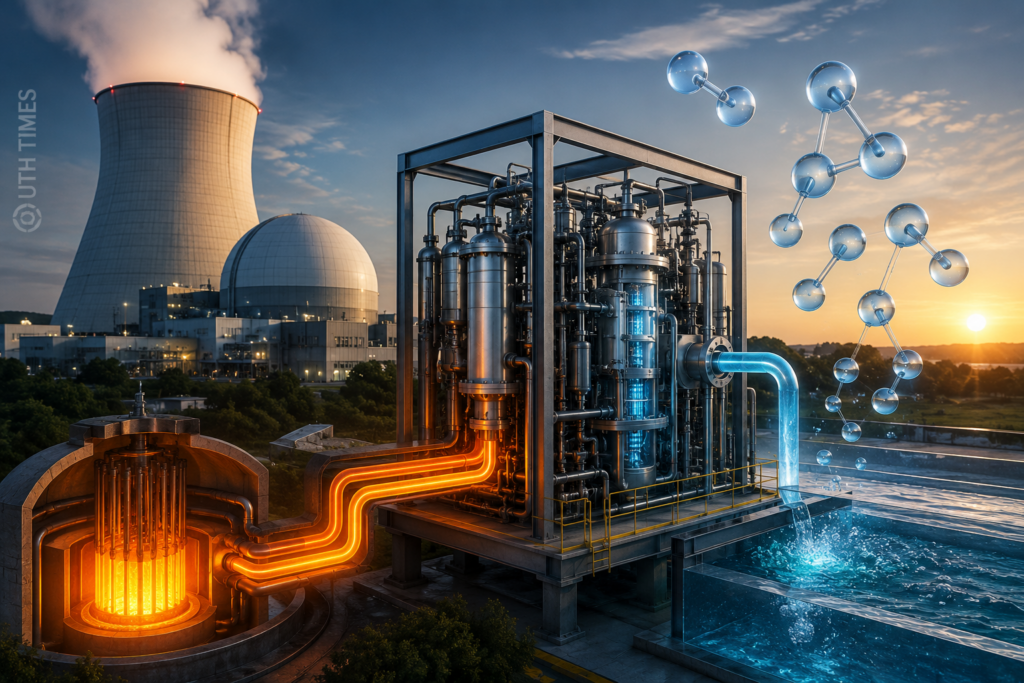
Unlike conventional hydrogen production methods that consume enormous amounts of electricity or depend on fossil fuels, India’s new facility directly harnesses high-temperature nuclear process heat to split water into hydrogen and oxygen.
✨ What makes this breakthrough exceptional?
🔹 It is the world’s first facility to integrate nuclear reactor heat with the Copper-Chlorine thermochemical process.
🔹 The technology has been jointly developed by the Department of Atomic Energy through collaboration between IGCAR and the Bhabha Atomic Research Centre (BARC).
🔹 It serves as a technology demonstrator that will validate large-scale hydrogen production using advanced nuclear reactors.
🔹 The innovation opens an entirely new pathway for producing hydrogen without greenhouse gas emissions, making it one of the cleanest production methods available today.
⚡ Why the Copper-Chlorine Process Is a Game-Changer
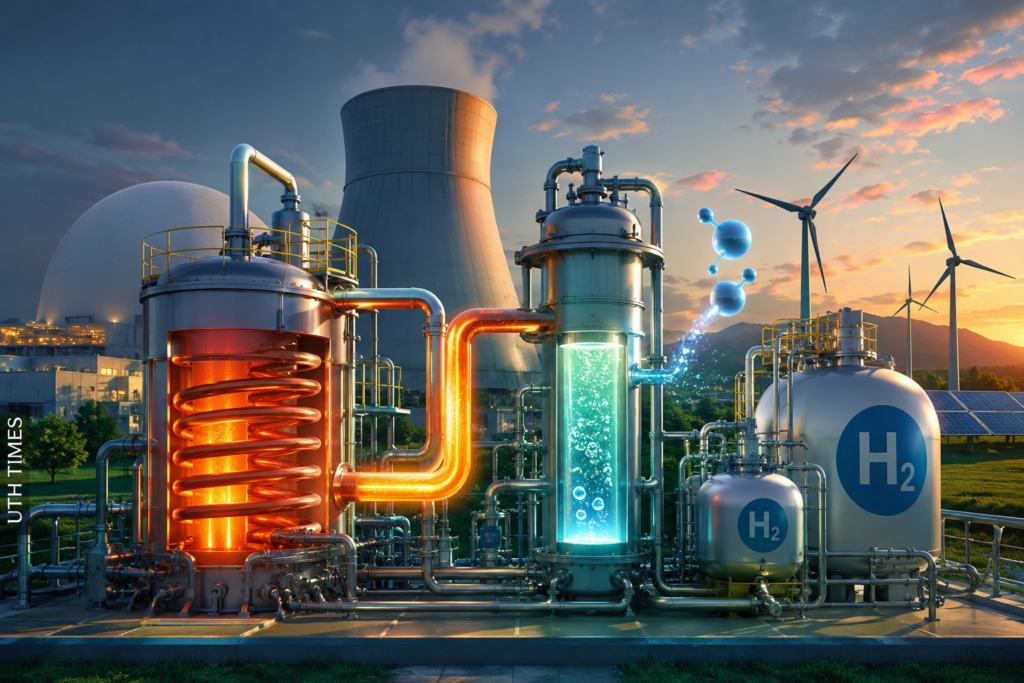
Hydrogen is often called the fuel of the future, but producing it efficiently has always been a challenge.
India’s indigenous Copper-Chlorine thermochemical cycle changes that equation.
✨ Its advantages include:
🔹 Requires temperatures of around 530°C, significantly lower than many competing thermochemical processes.
🔹 Uses substantially less electricity because most of the energy comes directly from nuclear heat.
🔹 Produces carbon-free “pink hydrogen”, generated using nuclear energy instead of fossil fuels.
🔹 Offers higher overall efficiency while reducing engineering complexity, making future commercial deployment more practical.
🌍 Why This Matters Beyond India
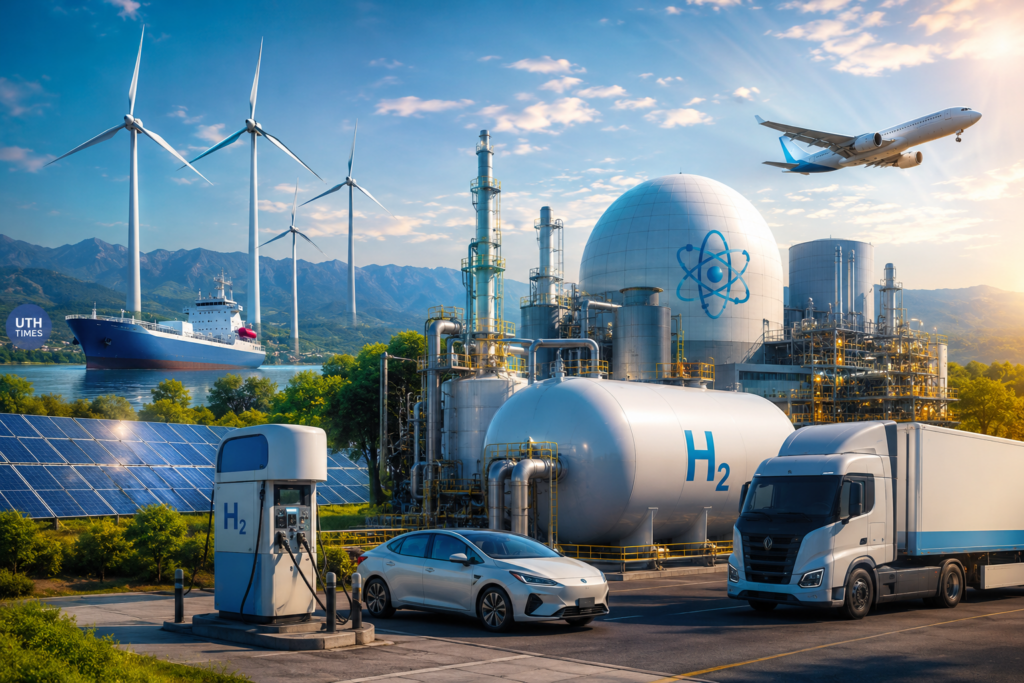
This achievement extends far beyond a scientific demonstration.
Hydrogen is expected to play a central role in decarbonising industries that cannot easily switch to electricity, including steel manufacturing, fertilisers, refineries, shipping, aviation and heavy transport.
With this technology, India demonstrates that advanced nuclear reactors can become continuous sources of clean hydrogen, reducing dependence on imported fossil fuels while strengthening long-term energy security. The project also aligns with India’s clean-energy transition and its vision of becoming a global leader in advanced nuclear and hydrogen technologies.
🚀 A Milestone That Signals India’s Technological Confidence
For decades, India has invested in indigenous nuclear research. The commissioning of this facility represents the successful convergence of reactor engineering, advanced chemistry and clean-energy innovation. It showcases India’s ability not just to adopt emerging technologies, but to pioneer entirely new ones that could influence global hydrogen production in the years ahead.
India’s world’s-first nuclear heat-based hydrogen production facility is more than a scientific success—it is a strategic statement. By transforming reactor heat into clean hydrogen through indigenous technology, India has demonstrated how innovation can simultaneously advance energy security, industrial decarbonisation and technological self-reliance. As the global race for clean hydrogen accelerates, Kalpakkam has positioned India at the very forefront of the next energy revolution.

