
Imagine a spacecraft that never runs out of fuel.
That futuristic vision has suddenly moved into the spotlight after a remarkable claim by former NASA engineer Charles Buhler, who says his team has discovered a previously unknown force capable of generating thrust without propellant. If verified, the breakthrough could become one of the most significant developments in aerospace technology since the invention of the rocket.
🚀 A Claim That Challenges Modern Physics
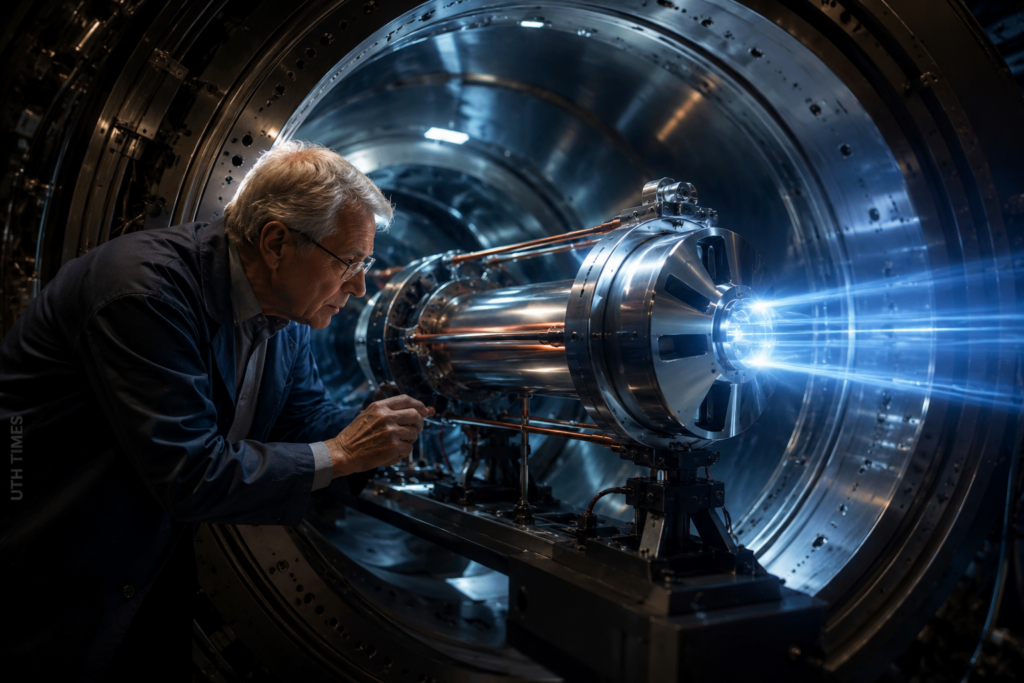
For more than a century, every rocket, satellite, and spacecraft has relied on the same fundamental principle: expelling mass to generate thrust.
Charles Buhler, who previously led NASA’s Electrostatics and Surface Physics Laboratory at Kennedy Space Center, now heads Exodus Propulsion Technologies. His company claims to have developed a propulsion system that creates force using only electric fields.
According to Buhler, vacuum chamber tests showed the device producing measurable thrust strong enough to counter Earth’s gravitational pull—without burning fuel, releasing gas, or ejecting any form of propellant.
If confirmed, the discovery would challenge long-standing assumptions about how motion is generated in space.
⚡ How the Technology Allegedly Works
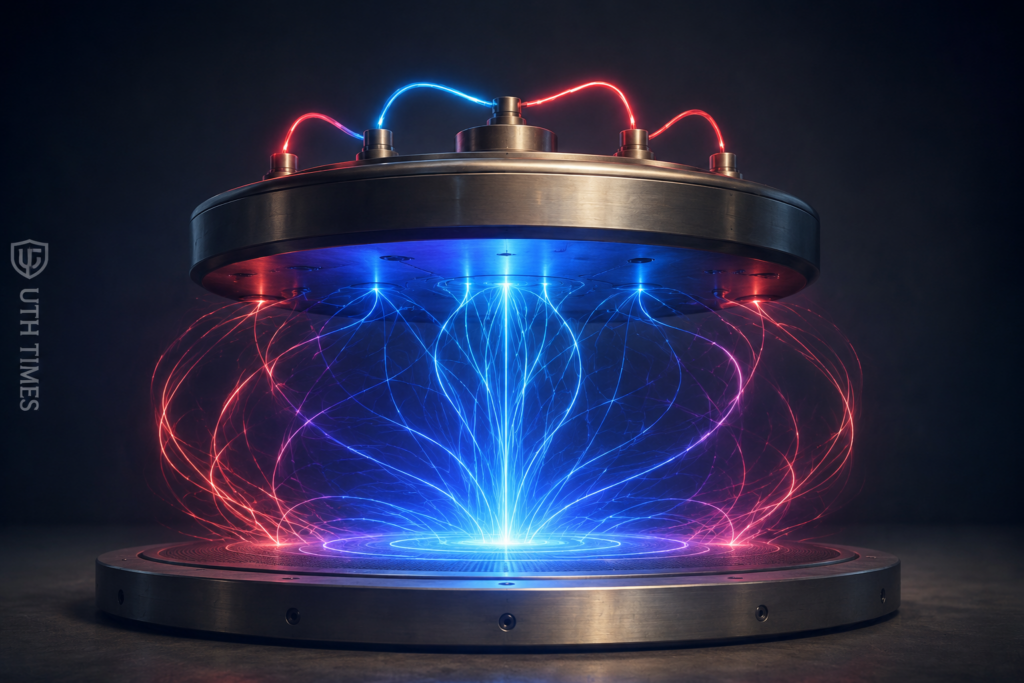
While the company has not yet revealed every technical detail, the system reportedly uses carefully controlled electrostatic fields to generate force.
🎯 No rocket fuel
🎯 No combustion
🎯 No moving mechanical parts
🎯 No mass expelled into space
Instead, the device relies entirely on electrical energy.
This has led some researchers to describe the concept as a potential “new force”—a phenomenon not fully explained by existing propulsion models.
The scientific community remains cautious, however. Similar propellantless propulsion claims in the past have failed independent testing. That is why external verification will be the ultimate test.
🌌 Why This Could Transform Space Exploration
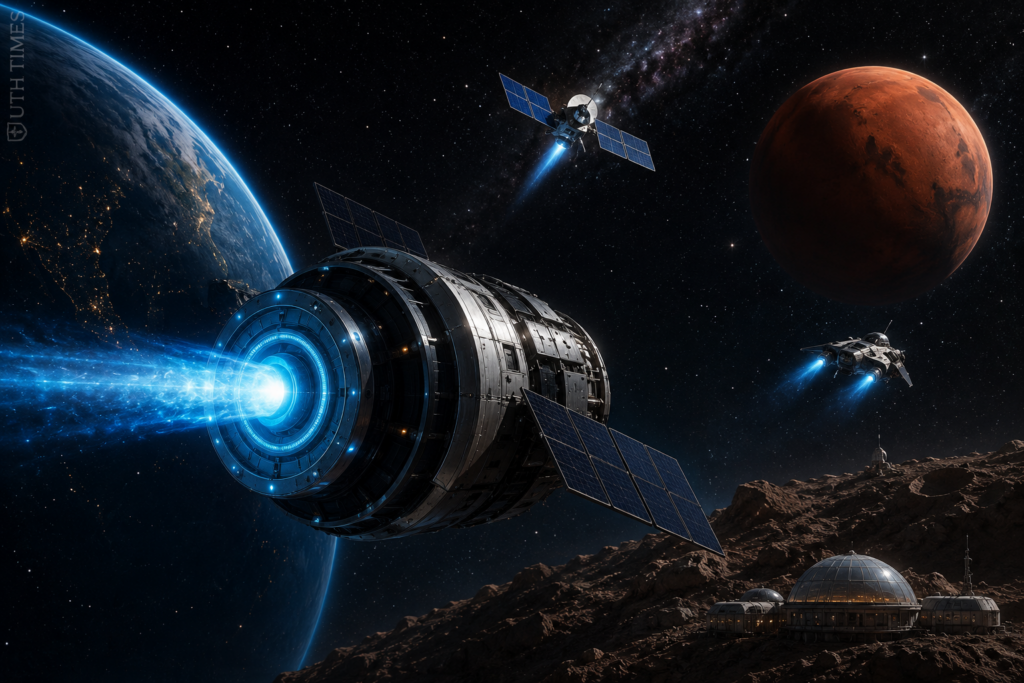
If the technology performs as claimed, its impact could be revolutionary.
🚀 Deep-space missions could travel farther without carrying enormous fuel reserves.
🛰️ Satellites could maintain their positions for years while using minimal energy.
🌍 Launch costs could eventually decline as spacecraft become lighter and more efficient.
🔬 Future missions to Mars and beyond could become significantly more practical.
Perhaps most importantly, spacecraft could maneuver continuously without worrying about fuel depletion—a limitation that currently defines every mission.
🔍 The Scientific Hurdle Ahead
Extraordinary claims require extraordinary evidence.
At present, the technology has not yet undergone broad independent replication by outside laboratories. Scientists will want to determine whether the observed thrust is genuinely new physics or the result of experimental effects that have not yet been fully understood.
Until then, excitement remains balanced by skepticism.
✨ A Turning Point—or Another Scientific Mystery?
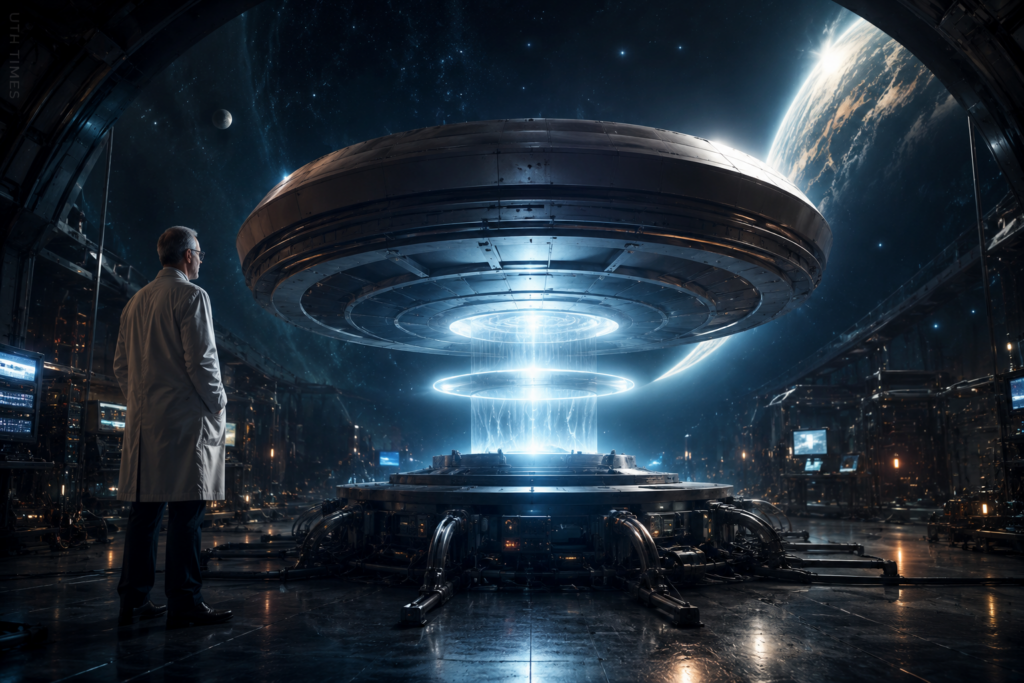
History remembers moments when impossible ideas became reality. Today, Charles Buhler’s claim sits at that crossroads.
Whether this “new force” becomes a revolutionary breakthrough or a fascinating scientific puzzle, one fact is certain: it has reignited one of humanity’s oldest dreams—moving through space without limits.
The next chapter will depend on what the evidence reveals.

