
As artificial intelligence continues to reshape the future of mobility, RAI Institute has unveiled a remarkable demonstration of what next-generation robotic vehicles can achieve. Its Ultra Mobility Vehicle is no ordinary machine—it is a highly agile, AI-powered platform capable of performing movements that seem more suited to extreme sports athletes than autonomous vehicles.
A Machine That Moves Like a Living Athlete
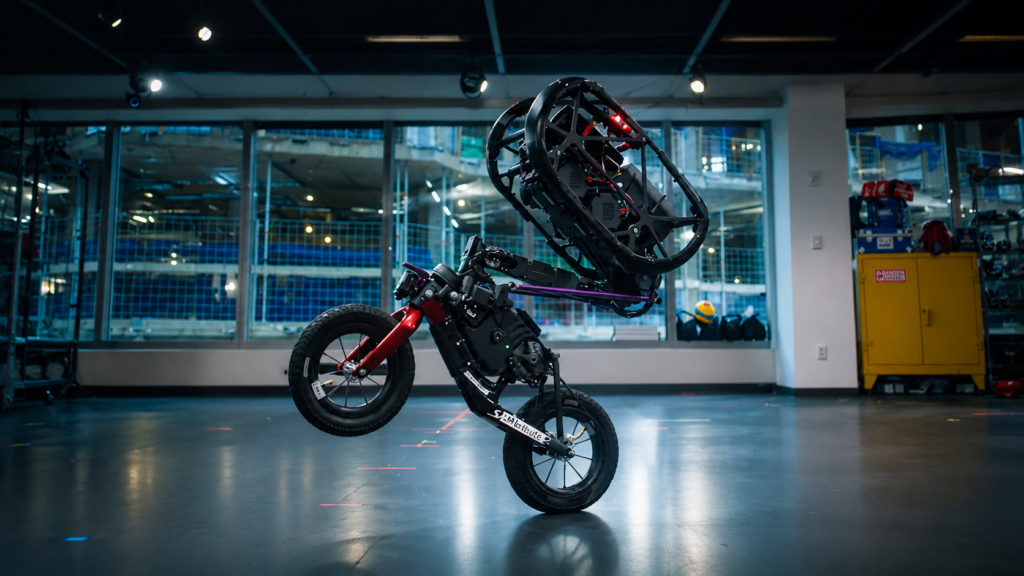
The latest demonstrations showcase the vehicle executing an extraordinary range of dynamic maneuvers with confidence and precision.
🔹 Smooth 360-degree spins with seamless control
🔹 High-powered kip jumps that launch the vehicle into the air
🔹 Full flips that demonstrate advanced aerial stability
🔹 Bunny hops that allow rapid obstacle negotiation
🔹 Sharp turns and quick directional changes without losing balance
What makes these movements remarkable is not merely the visual spectacle. Each maneuver requires the vehicle to continuously process vast amounts of data, predict its own motion, and make split-second adjustments while maintaining stability.
The AI Brain Behind the Performance
At the heart of the Ultra Mobility Vehicle lies a sophisticated artificial intelligence system designed to understand terrain, vehicle dynamics, and motion planning in real time.
🚀 The AI constantly monitors balance and orientation.
🚀 Advanced control algorithms calculate optimal movement trajectories.
🚀 Real-time sensors provide continuous environmental awareness.
🚀 Machine learning enables the vehicle to adapt to changing conditions.
This allows the machine to perform complex actions that would traditionally challenge even highly skilled human operators.
Redefining What Mobility Means
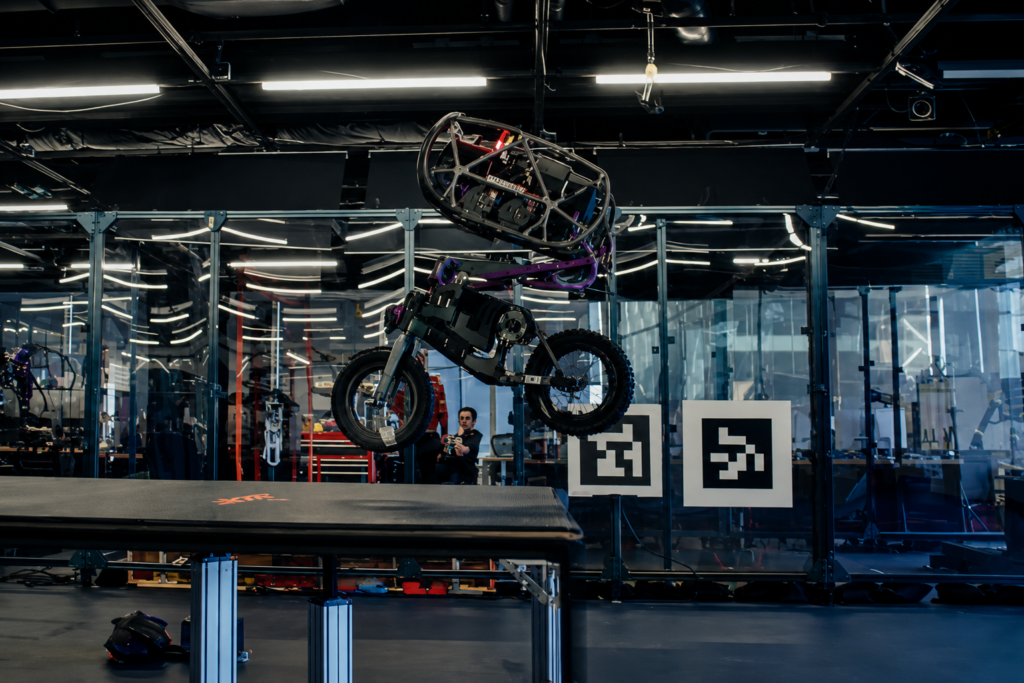
The vehicle represents a significant shift in how mobility platforms are designed. Traditional vehicles focus primarily on transportation, while the Ultra Mobility Vehicle emphasizes adaptability, agility, and intelligent movement.
Its ability to jump, rotate, recover from disturbances, and navigate difficult terrain suggests future applications far beyond conventional mobility.
Potential use cases include:
🎯 Military reconnaissance in challenging environments
🎯 Search-and-rescue missions after disasters
🎯 Exploration of hazardous or inaccessible terrain
🎯 Industrial inspections in complex locations
🎯 Advanced robotic logistics operations
The technology demonstrates how future autonomous systems may be able to move through environments that are currently difficult or impossible for standard vehicles.
A Glimpse Into the Future of Robotics
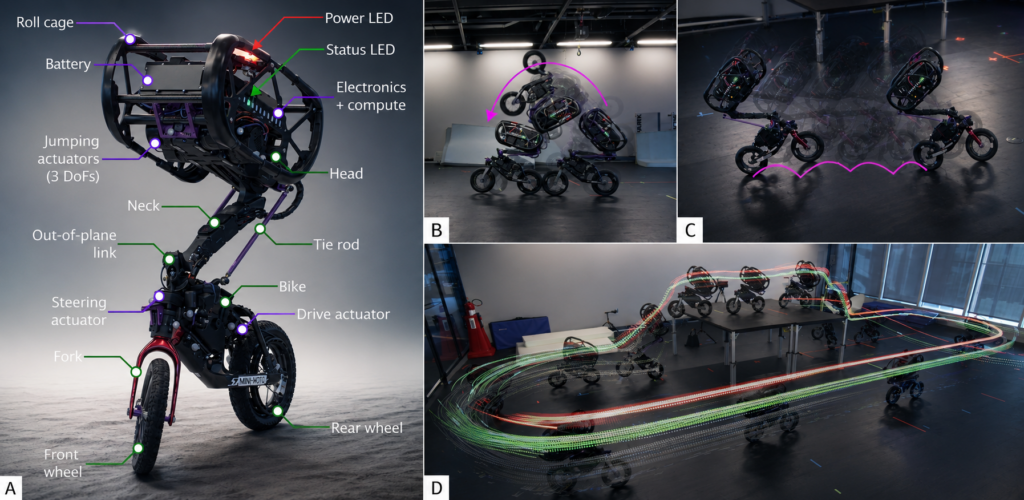
Perhaps the most exciting aspect of the demonstration is that it represents only an early stage of development. The vehicle’s current capabilities already blur the line between robotics and athletic performance.
As AI, sensing technologies, and mobility systems continue to evolve, machines like the Ultra Mobility Vehicle could transform how humans interact with difficult environments. What appears today as a collection of impressive stunts may soon become practical capabilities that redefine transportation, robotics, and autonomous operations.
The Ultra Mobility Vehicle is not simply showcasing tricks—it is offering a glimpse into the future of intelligent movement itself.

