
What if the energy inside you is not just chemical—but luminous? Emerging research suggests that mitochondria—the “powerhouses” of our cells—may communicate through ultra-weak light signals. This discovery doesn’t just tweak biology; it challenges how we define life itself.
The Science of Cellular Light
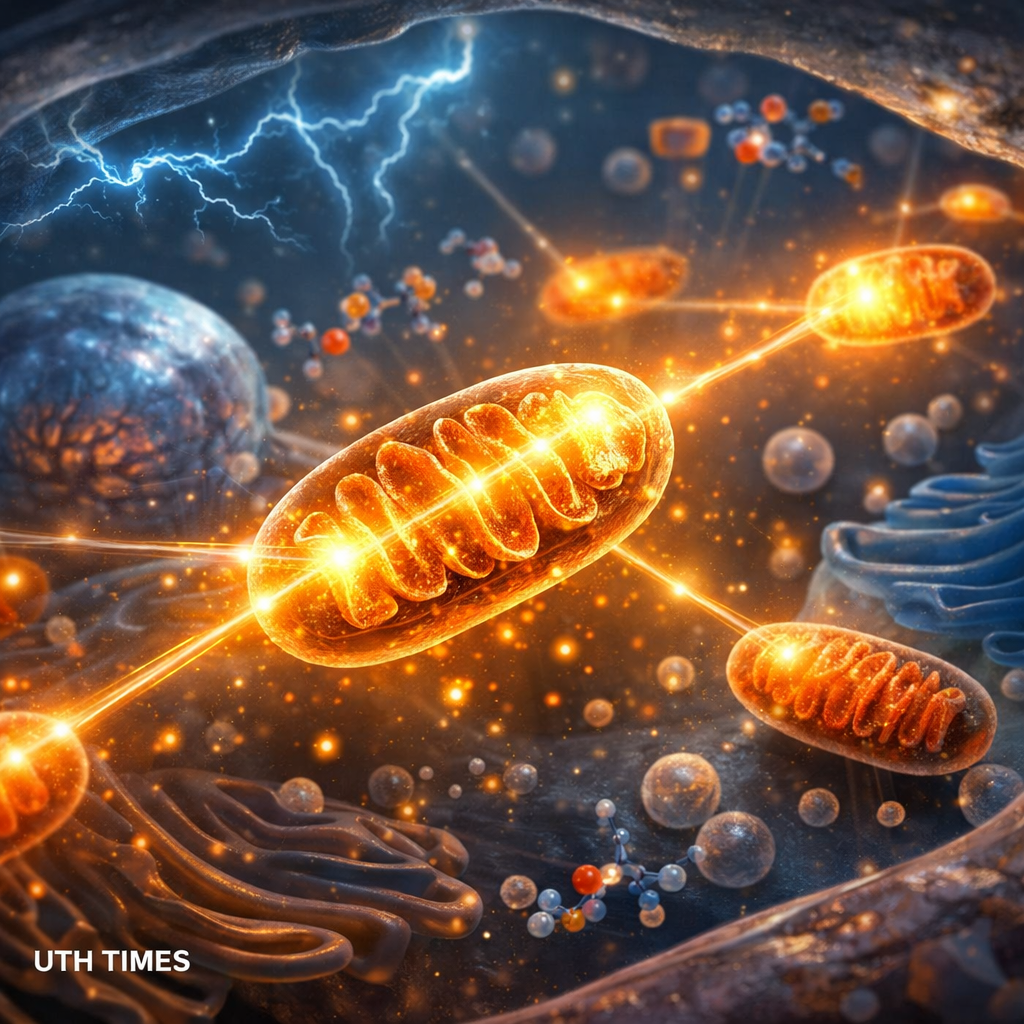
Scientists studying biophotons—tiny packets of light emitted by living cells—have uncovered a fascinating possibility:
✨ Cells don’t just rely on chemical signals
✨ Mitochondria emit photons during metabolic activity
✨ These photons may act as ultra-fast communication signals
Unlike electrical impulses or molecular diffusion, light-based signaling is nearly instantaneous. This means your body could be operating on a dual system: chemical + photonic communication.
Traditionally, mitochondria are known for producing ATP (energy currency). But new insights reveal a deeper role:
⚡ They generate reactive oxygen species (ROS), which trigger light emission
⚡ Their internal structure amplifies and regulates photon release
⚡ They may synchronize cellular behavior through light pulses
This transforms mitochondria from energy factories into information hubs, coordinating cellular activity at the speed of light.
Are We Literally “Beings of Light”?

The phrase “beings of light” has long belonged to philosophy and spirituality. But science is now catching up:
🌌 Every living cell emits faint light continuously
🌌 The human body produces measurable biophoton emissions
🌌 This light may play a role in consciousness, healing, and coordination
While not visible to the naked eye, this glow suggests life is not just biochemical—it’s bio-luminous.
Implications That Could Redefine Medicine
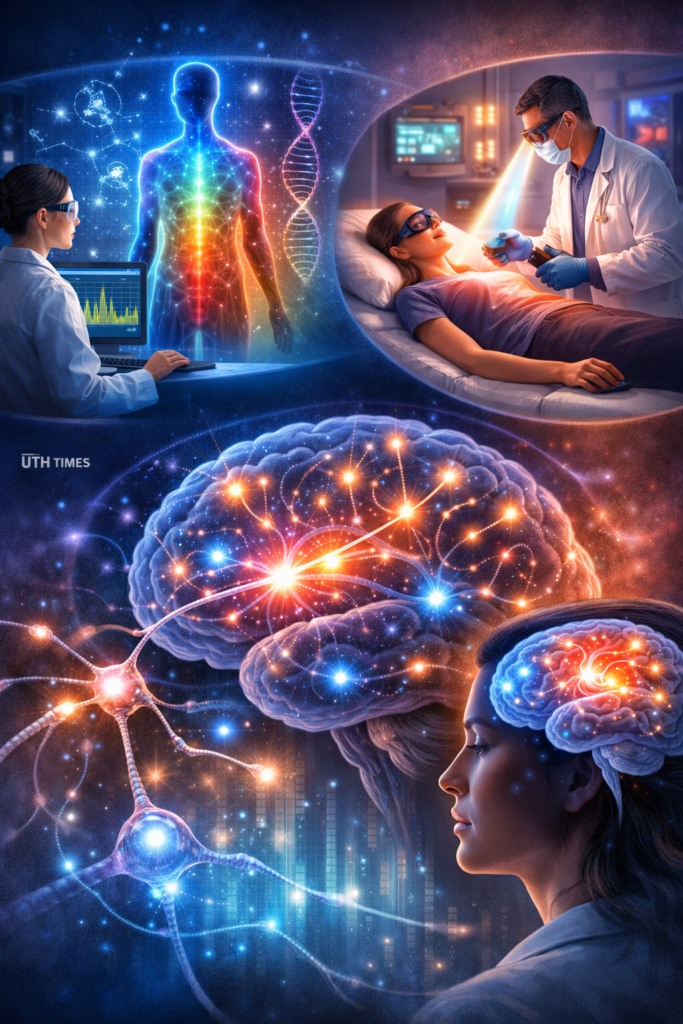
This discovery could open revolutionary pathways:
🧬 Diagnostics: Detect diseases by analyzing light patterns
💊 Therapies: Use light-based treatments to restore cellular balance
🧠 Neuroscience: Explore links between biophotons and brain function
If validated further, medicine may shift from chemistry-driven to light-informed healthcare.
Are we machines powered by molecules—or dynamic systems orchestrated by light?
This research doesn’t give a final answer. But it opens a door to a profound possibility: that life, at its core, may be written not just in chemistry—but in light itself.

