
For centuries, humanity has wondered whether life began only on Earth or if its ingredients came from the depths of space. A groundbreaking discovery from asteroid samples has now added a powerful piece to this cosmic puzzle. Scientists studying material collected from the asteroid Ryugu have confirmed the presence of all five nucleic acid bases, the fundamental components that form DNA and RNA, the molecules responsible for storing and transmitting genetic information in living organisms.
This discovery suggests that the essential ingredients of life might not be exclusive to Earth—they could be widespread across the universe.
The Historic Mission That Brought Space to Earth
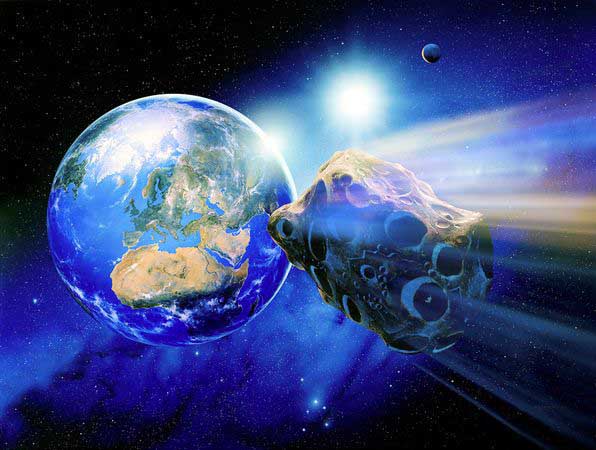
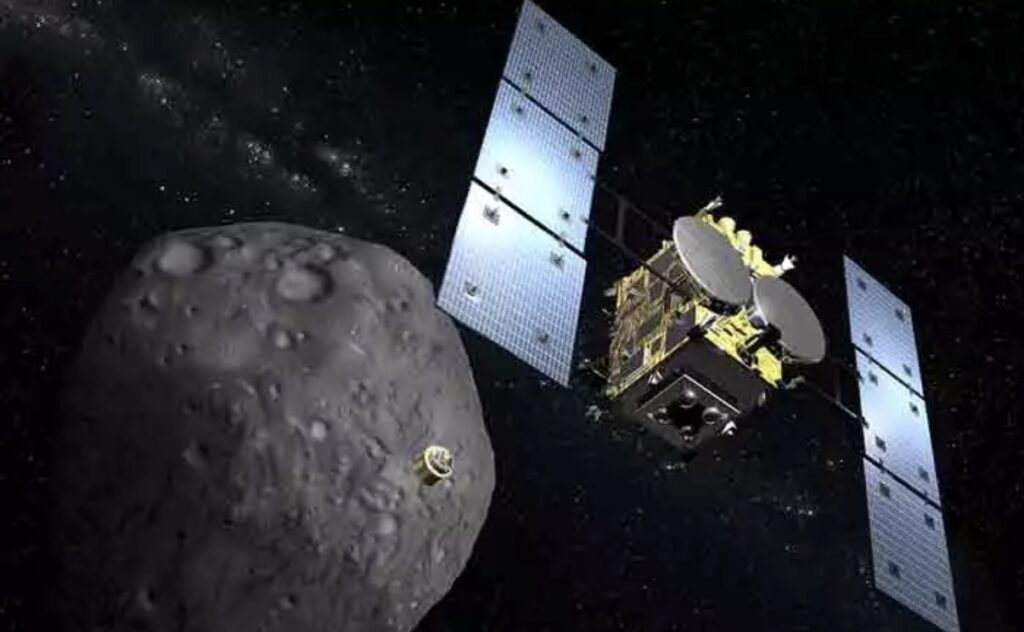
The samples were collected by the Japanese space mission Hayabusa2, launched by Japan Aerospace Exploration Agency (JAXA).
🚀 The spacecraft travelled more than 300 million kilometers to reach Ryugu.
🚀 It successfully collected pristine material from the asteroid’s surface.
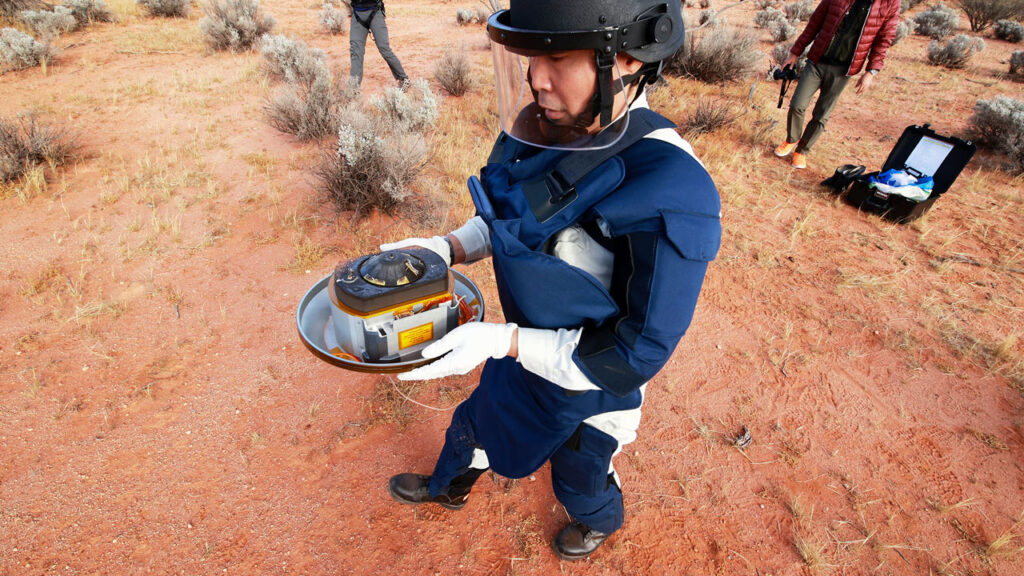
🚀 In 2020, the mission returned the samples to Earth inside a sealed capsule that landed in the Australian desert.
What makes these samples incredibly valuable is that they were collected in a contamination-free environment, meaning scientists can study them as untouched remnants of the early Solar System.
Discovery of the Five Genetic Bases
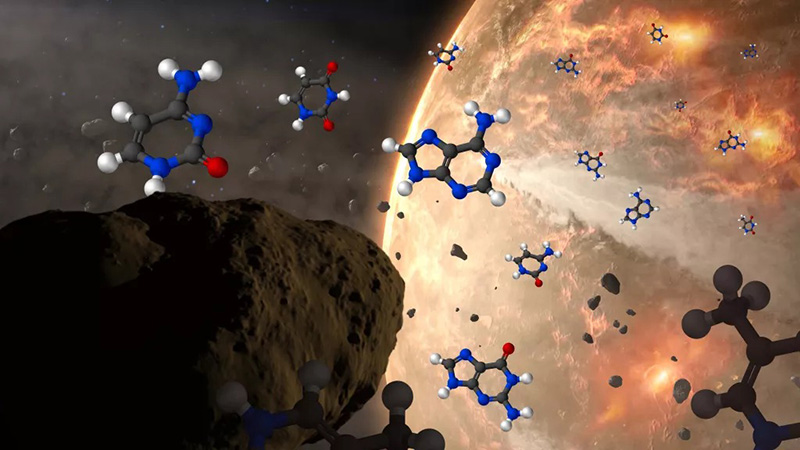
Researchers analyzing Ryugu samples discovered the five nucleobases that form the foundation of genetic material:
🧬 Adenine
🧬 Guanine
🧬 Cytosine
🧬 Thymine
🧬 Uracil
These molecules are the alphabet of life. In living organisms:
- DNA uses adenine, guanine, cytosine, and thymine.
- RNA replaces thymine with uracil.
Finding all five bases in an asteroid strongly indicates that the chemistry necessary for life can form naturally in space, long before planets develop.
Scientists believe these molecules formed through chemical reactions triggered by water, minerals, and radiation in the early Solar System.
What This Means for the Origins of Life
The discovery strengthens the theory of cosmic chemical evolution, which suggests that asteroids and comets may have delivered organic molecules to early Earth.
🌍 Billions of years ago, Earth experienced intense asteroid bombardment.
☄️ These impacts may have carried organic compounds, amino acids, and nucleobases.
🧬 Over time, these molecules could have assembled into the first primitive life forms.
This means the building blocks of life might have arrived from space, turning asteroids into cosmic couriers of biology.
A Universe That Might Be Biologically Rich
The presence of nucleobases on Ryugu suggests something profound: the ingredients of life may be common across the cosmos.
If asteroids naturally produce and transport these molecules, then planets throughout the universe could receive the same chemical toolkit that helped life emerge on Earth.In other words, life’s recipe may already be scattered throughout the Solar System—and perhaps the galaxy itself.
The discovery of all five nucleic acid bases on asteroid Ryugu transforms our understanding of life’s origins. It hints that the story of biology may not have begun on Earth alone—but in the vast chemical laboratories of space, billions of years ago.
The universe might not just host life—it may be quietly preparing it everywhere.

