
Technology often draws boundaries between air, land, and water. But a breakthrough innovation from Bengaluru is proving that the future of robotics may not follow those limits. AquaAirX, an emerging deep-tech startup, has introduced “Avataar” — India’s first hybrid drone capable of both flying in the air and diving underwater.
This cutting-edge invention is not just another drone; it represents a new generation of multi-environment robotics designed for exploration, defense, and disaster response.
🚀 The Birth of a Dual-Environment Drone
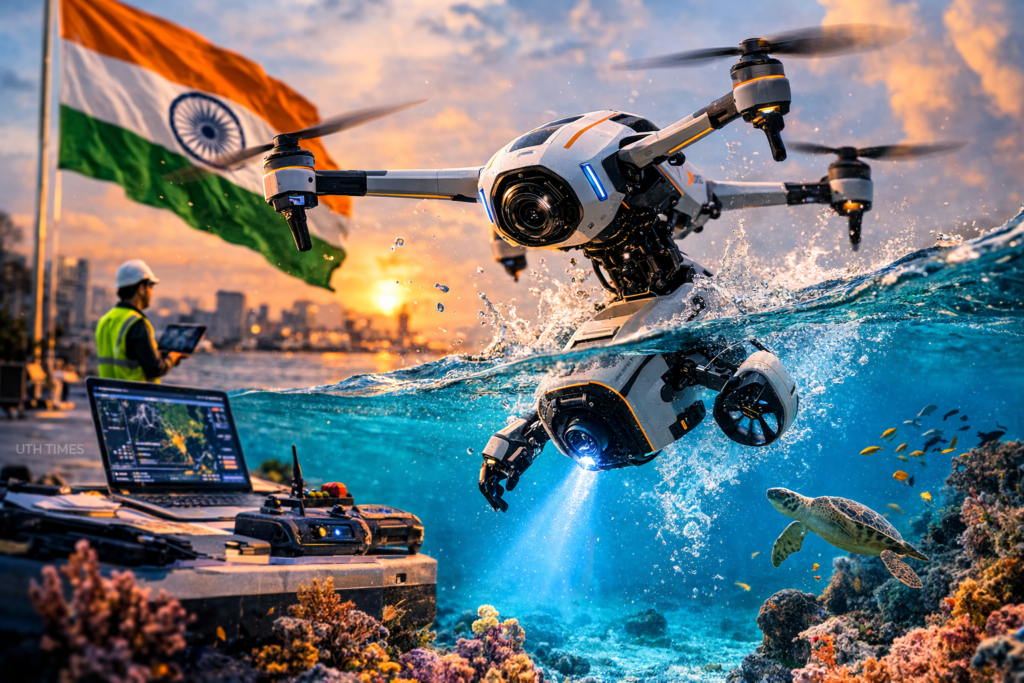
Traditional drones are engineered exclusively for aerial operations. Underwater exploration, on the other hand, requires specialized submersible vehicles.
AquaAirX’s Avataar bridges this technological gap.
🔹 It can take off like a conventional drone, navigating aerial landscapes with precision.
🔹 Within seconds, the same drone can enter water and operate as an underwater exploration vehicle.
🔹 It can later resurface and relaunch into the air, completing a seamless transition between two extreme environments.
This dual-capability system required engineers to redesign propulsion, waterproof electronics, pressure resistance, and buoyancy control — challenges that most drone developers avoid due to their complexity.
🌊 Engineering the Air-to-Ocean Transition
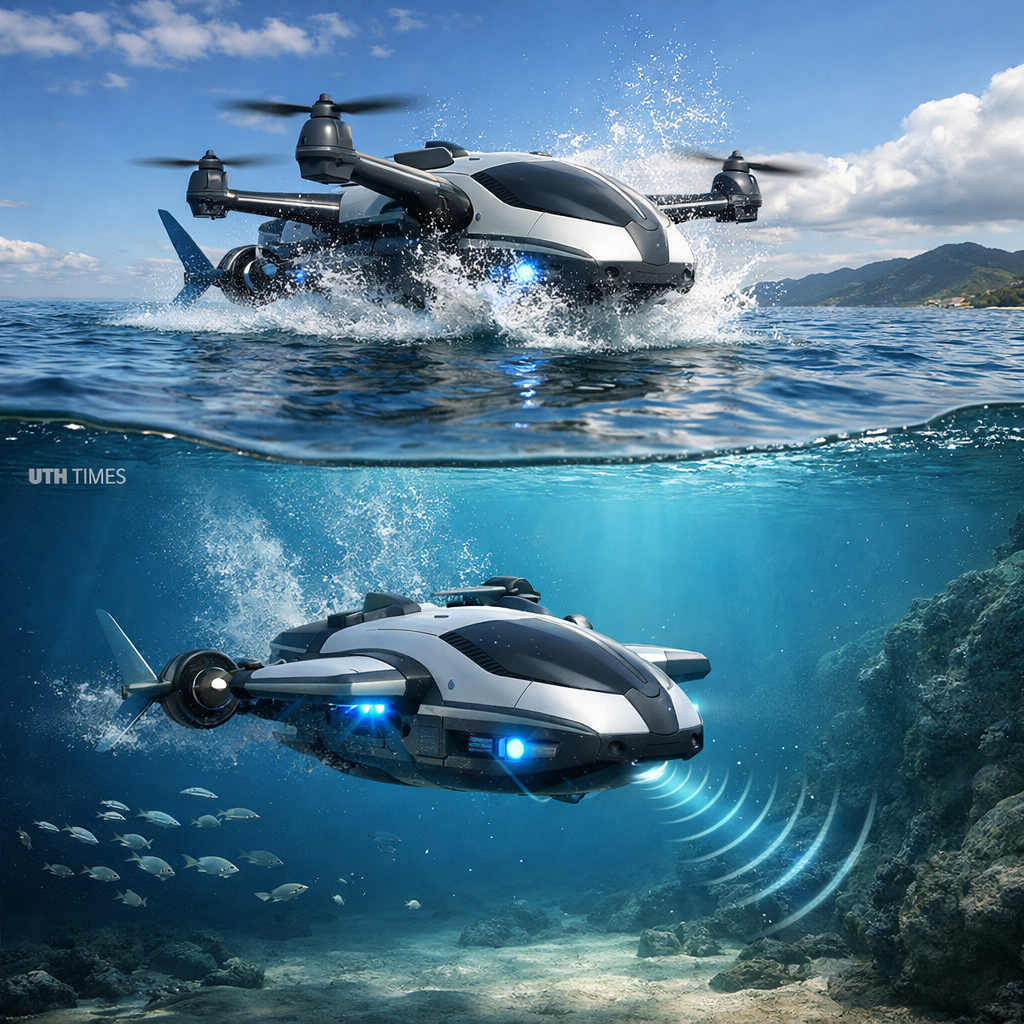
What truly sets Avataar apart is the technology enabling the air-to-water transformation.
🔹 Hybrid propulsion system allowing efficient thrust both in air and underwater.
🔹 Advanced waterproof architecture protecting sensitive electronics during deep dives.
🔹 Adaptive navigation sensors capable of switching between GPS-based aerial navigation and sonar-assisted underwater mapping.
🔹 Pressure-resistant materials ensuring structural integrity during submersion.
When Avataar hits the water surface, it doesn’t simply sink. Instead, it smoothly transitions into underwater mode, adjusting its propeller dynamics and navigation algorithms for aquatic mobility.
This level of engineering precision makes it one of the most sophisticated robotic platforms developed in India’s drone ecosystem.
🛰️ Strategic Applications Across Industries
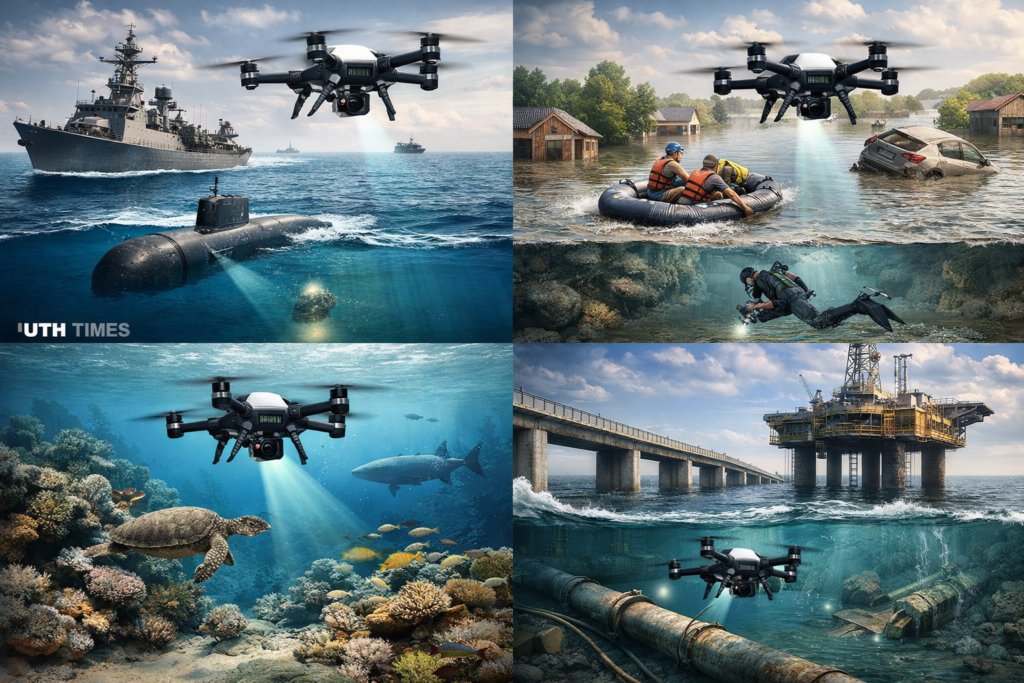
Avataar’s hybrid design opens doors to multiple high-impact applications.
🔹 Defense & Maritime Security
Monitoring coastlines, inspecting naval assets, and detecting underwater threats.
🔹 Search and Rescue Operations
During floods or maritime accidents, the drone can scan both surface and underwater environments.
🔹 Ocean Research & Environmental Monitoring
Scientists can study coral reefs, underwater ecosystems, and marine pollution without deploying expensive submersibles.
🔹 Infrastructure Inspection
It can inspect bridges, dams, offshore pipelines, and underwater cables — critical infrastructure often difficult to access.
Such versatility dramatically reduces operational costs and improves efficiency for agencies working across land and sea.
🇮🇳 A Leap for India’s Deep-Tech Innovation
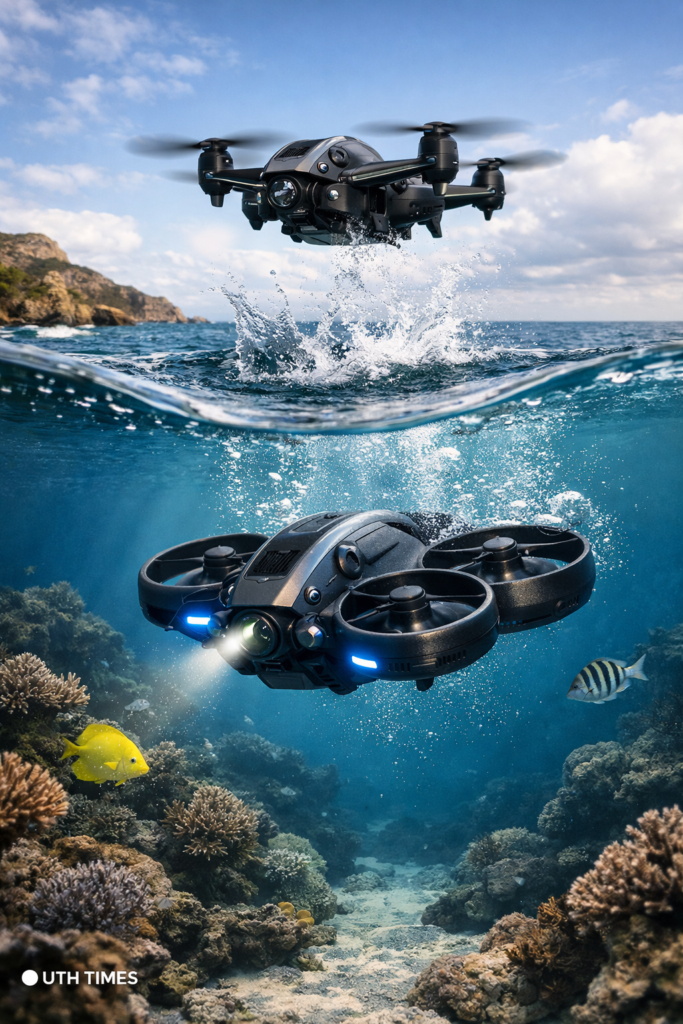
India’s drone ecosystem has been growing rapidly, but Avataar represents something more profound — a technological leap into hybrid robotics.
By combining aerial autonomy with underwater exploration, AquaAirX is positioning India among the few nations experimenting with cross-environment drones.
The innovation reflects how Indian startups are moving beyond basic drone manufacturing toward high-end robotics and deep-tech engineering.
Avataar hints at a future where robotic systems will operate across multiple environments without human intervention.
From ocean exploration to disaster management, hybrid drones like Avataar could redefine how humans observe and interact with the planet’s most inaccessible regions.
In many ways, this drone doesn’t just fly or dive — it expands the horizon of what drones can truly become.

