
India is preparing to enter a new era of maritime self-reliance. Kirloskar Oil Engines has announced that India’s first fully indigenous marine engine will be ready for delivery by April 2028, marking a major milestone in the country’s industrial and naval capability.
This project represents more than a technological achievement — it signals India’s determination to reduce dependence on imported propulsion systems and strengthen strategic autonomy at sea.
A Breakthrough in Indigenous Engineering
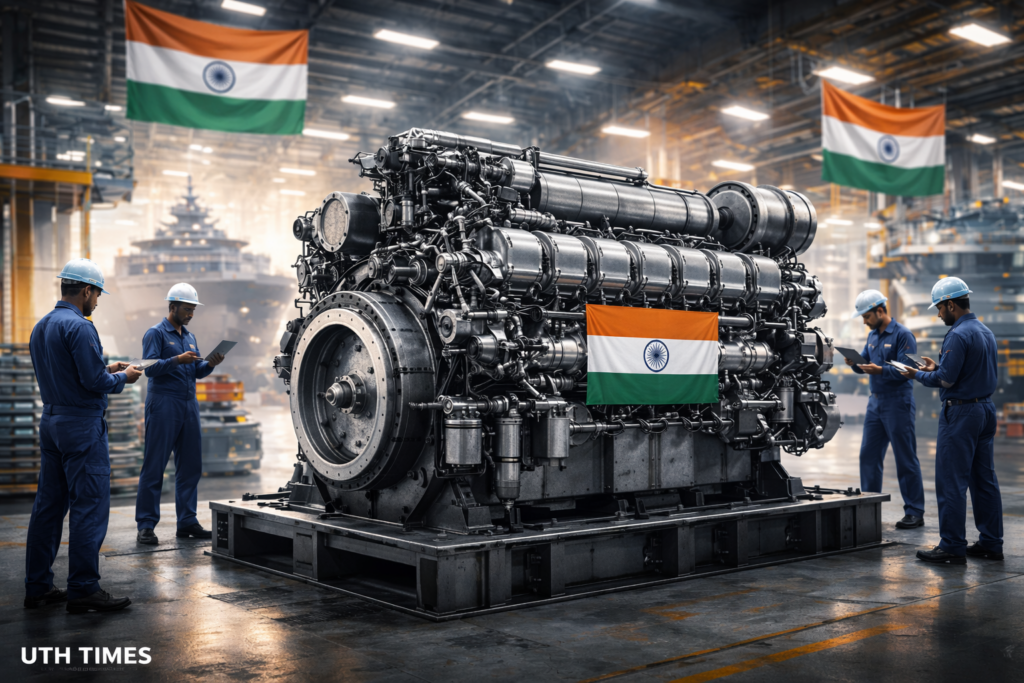
For decades, India has relied heavily on foreign suppliers for marine propulsion systems used in naval vessels, commercial ships, and offshore platforms. The upcoming indigenous marine engine will change this equation.
🚢 Core Highlights
🔹 Fully designed and manufactured in India
🔹 Built to meet global marine certification standards
🔹 Suitable for naval and commercial vessels
🔹 High fuel efficiency and optimized performance
🔹 Designed for long operational life in harsh marine environments
Kirloskar Oil Engines aims to produce a high-performance diesel marine engine capable of supporting a wide range of vessels including patrol boats, cargo ships, and coastal defense platforms.
Unlike earlier licensed manufacturing efforts, this engine will be entirely Indian-designed, ensuring full control over intellectual property and future upgrades.
Strategic Importance for India
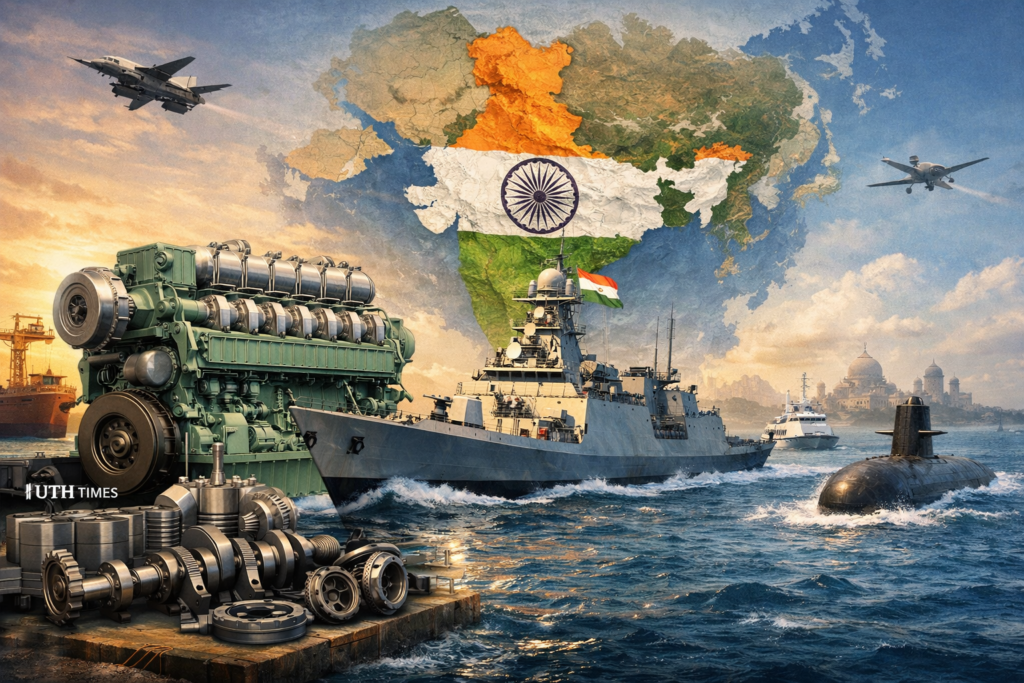
Marine engines are among the most critical components of any vessel. Dependence on imports has historically created vulnerabilities in supply chains and defense preparedness.
⚓ Why This Matters
🔹 Reduces dependence on European and East Asian suppliers
🔹 Strengthens naval self-reliance under Make in India
🔹 Supports domestic shipbuilding industry
🔹 Enhances export potential for Indian vessels
🔹 Improves maintenance and spare-parts availability
This initiative aligns with India’s broader push for defense and industrial indigenization, ensuring that critical technologies remain under national control.
Experts believe indigenous propulsion technology will significantly strengthen India’s maritime security in the Indian Ocean Region.
Engineering Challenges and Innovation
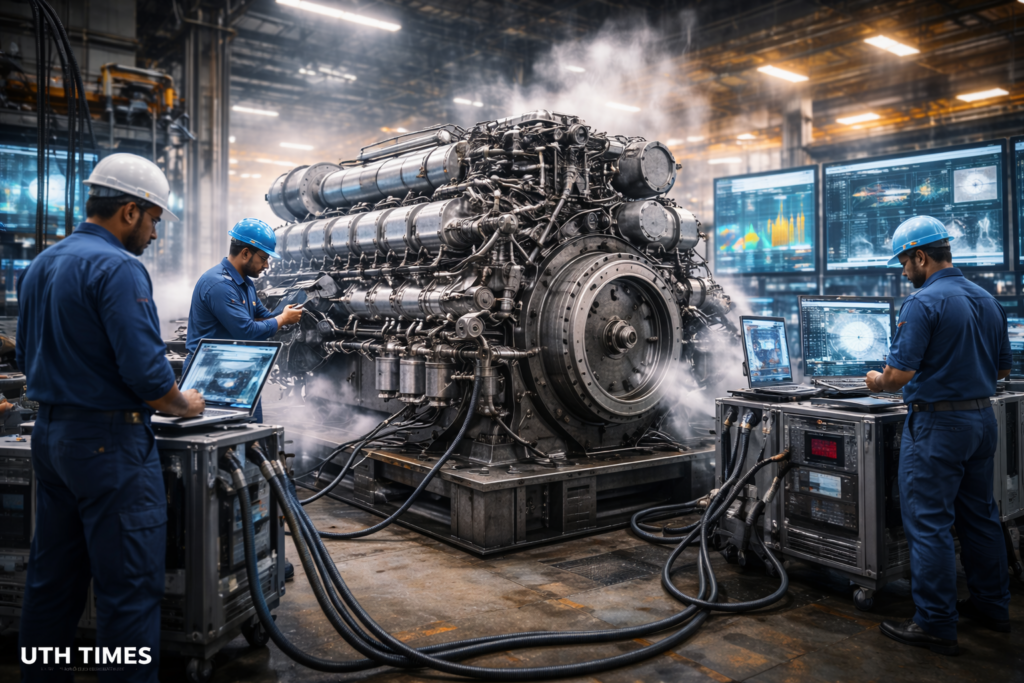
Developing a marine engine domestically is an extremely complex task requiring precision engineering and advanced testing.
⚙️ Development Focus Areas
🔹 High torque output for heavy vessels
🔹 Corrosion-resistant materials
🔹 Low vibration and noise levels
🔹 Compliance with emission norms
🔹 Advanced cooling systems
Kirloskar engineers are working on a design optimized for tropical and high-salinity environments, conditions where imported engines often require modifications.
The project also involves collaboration with shipbuilders and certification agencies to ensure seamless integration into future vessels.
Future of India’s Maritime Industry
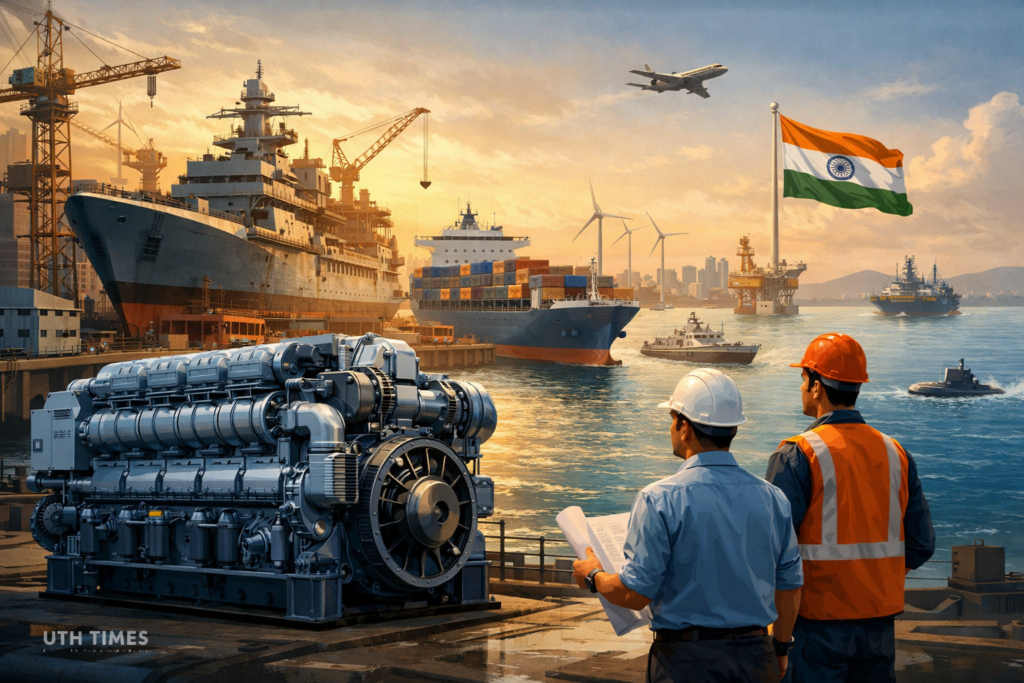
The indigenous marine engine could become a cornerstone for India’s maritime manufacturing ecosystem.
🌊 Long-Term Vision
🔹 Indigenous propulsion ecosystem
🔹 Boost to shipbuilding sector
🔹 Reduced lifecycle costs
🔹 Export-ready marine technology
🔹 Strategic maritime independence
If successful, India could join the small group of nations capable of designing and producing complete marine propulsion systems domestically.
The 2028 delivery timeline represents a decisive step toward maritime technological sovereignty. India is not just building an engine — it is building the foundation of an independent maritime future.

