
Every so often, science delivers a shock so profound it forces textbooks to be rewritten. That shock just arrived. In the labs of graphene research, electrons have staged a rebellion against the most trusted rule in electricity — Ohm’s Law. For the first time in 200 years, the foundations of physics have cracked open.
⚡ The Moment Physics Shook
Researchers working with ultra-pure graphene noticed something that shouldn’t exist: electrons flowing without resistance — but not through superconductivity, not through tricks of temperature or magnetism. Instead, they flowed like a perfect, coordinated fluid, sidestepping every rule electrical engineers have relied on for centuries.
This wasn’t a glitch. It was a discovery: electrons refusing to scatter, refusing to obey Ohm’s sacred formula of V = IR.
🌌 Why Ohm’s Law Mattered — Until Now
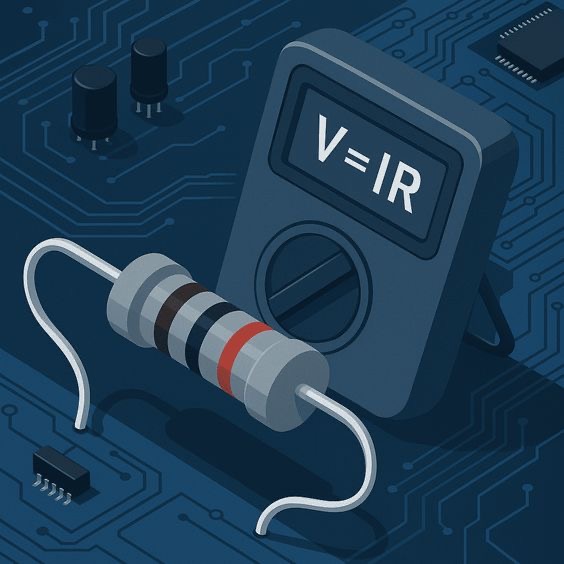
- For nearly two centuries, Ohm’s Law has been the cornerstone of electrical science.
- It says: apply a voltage, get a current, and the resistance is predictable.
- From light bulbs to supercomputers, this law has powered modern civilization.
But graphene laughed in its face. Instead of resistance building up as expected, electrons teamed up and moved in a synchronized, frictionless flow — an electron “superfluid” unlike anything seen before.
🔬 The Secret of Graphene’s Rebellion
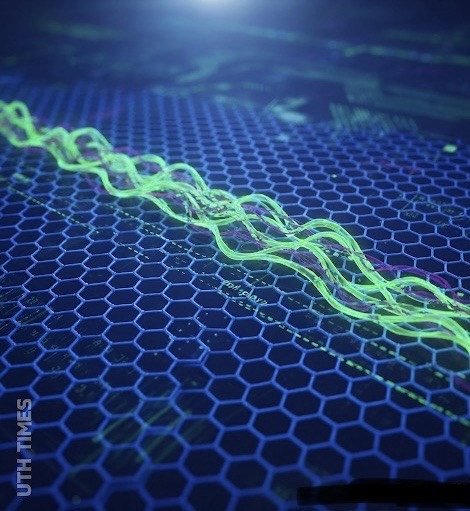
So how did this miracle material manage it?
- One-Atom Perfection: Graphene is a single sheet of carbon atoms, arranged in flawless hexagons. No material defects, no electron “traffic jams.”
- Ballistic Highways: Electrons don’t bounce around. They shoot through the lattice like cars on an empty expressway.
- Collective Motion: Quantum effects force electrons to “talk” to each other, creating a river-like flow instead of random scattering.
In simple terms: graphene created a world where electrons don’t behave like particles of matter — but like waves of pure energy.
🚀 The Future After Ohm’s Law
If this discovery holds, the consequences are nothing short of revolutionary:
- Energy Loss Could Vanish: Circuits with near-zero resistance would waste no power as heat.
- Superfast Chips: Electronics could break free from overheating limits, pushing speeds beyond silicon.
- Quantum Breakthroughs: A new category of matter could reshape computing, sensors, and communication tech.
We may be staring at the dawn of a post-Ohm era — where electricity flows not by the rules of the 19th century, but by the strange, fluid logic of graphene.
For 200 years, Ohm’s Law defined certainty in physics. Graphene just ended that certainty. And if electrons can rebel, the future of science — and technology — may be wilder than we ever imagined.

