
When wars stop being fought with missiles and start being won with physics, you know the battlefield has changed. 🇮🇳
India has just stepped into that future.
The Defence Research and Development Organisation (DRDO) has unveiled a High-Power Microwave (HPM) Directed Energy Weapon—a system designed not to shoot drones down, but to kill them electronically. No fireballs. No debris. Just instant silence in the sky.
🚀 What Exactly Has DRDO Built?
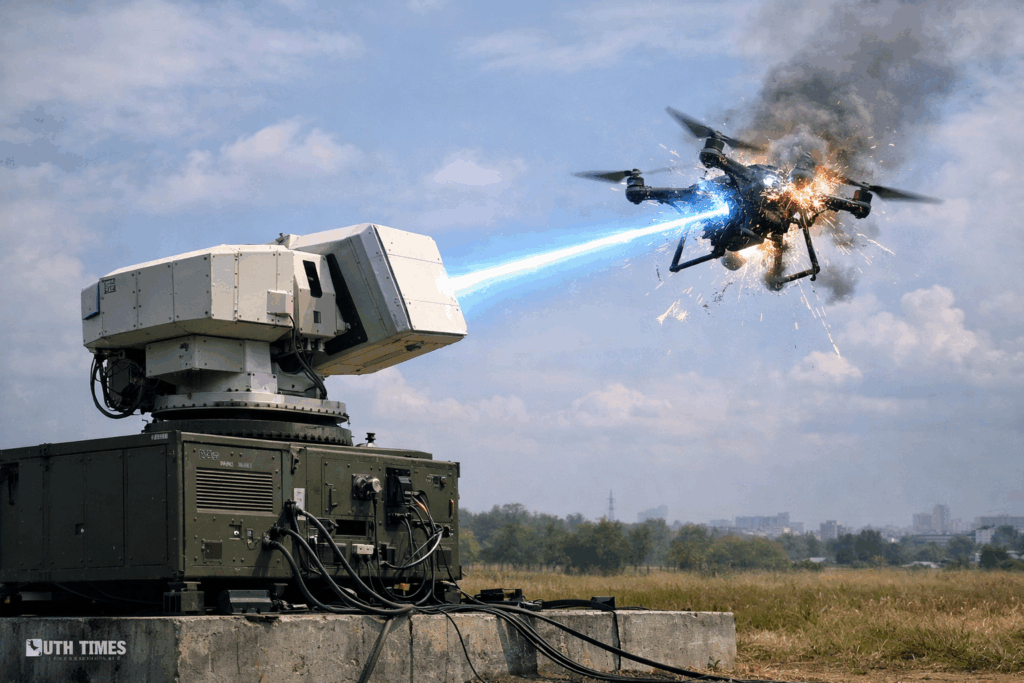
This system has been developed at MTRDC, Bengaluru, and it represents a fundamental shift in air defence philosophy.
Instead of targeting the airframe, the weapon attacks the brain of the drone—its electronics.
🔹 Operates in the S-band microwave spectrum
🔹 Generates up to 450 MW peak power
🔹 Fires ultra-short microwave pulses
🔹 Prototype already neutralised quadcopters at 1 km range
Once hit, the drone doesn’t explode—it simply dies mid-air, its circuits irreversibly damaged.
⚡ Why High-Power Microwaves Change Warfare
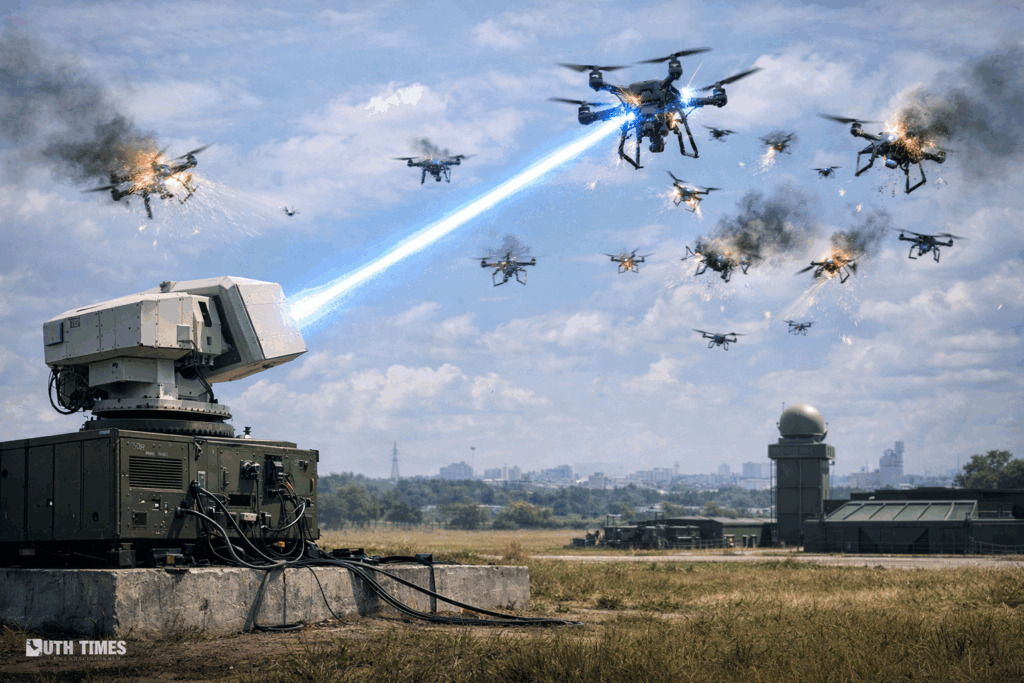
Traditional air defence systems struggle against drone swarms. Missiles are expensive, limited, and inefficient against dozens of low-cost UAVs.
HPM weapons flip the equation:
🧠 Targets electronics, not metal
💥 Can disable single drones or entire swarms
♻️ Reusable—no ammunition reload
💸 Extremely low cost per engagement
⚡ Instantaneous effect
This makes it ideal for defending:
- Military bases
- Airports
- Strategic infrastructure
- Border zones
Against mass drone attacks, energy beats explosives.
🎯 From 1 km to 5 km: What Comes Next?
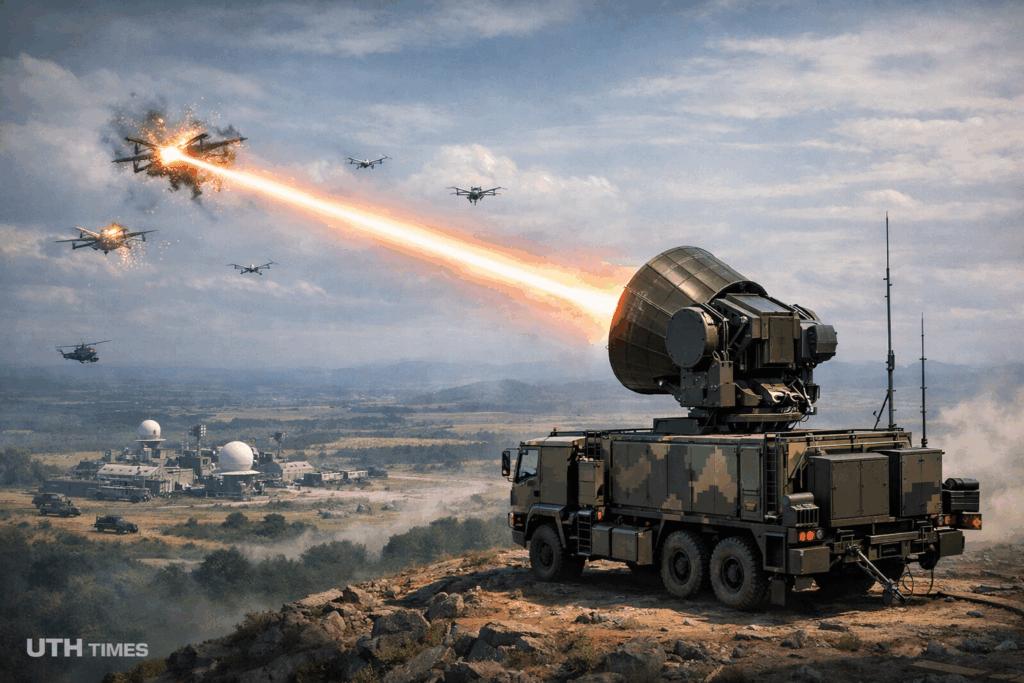
DRDO isn’t stopping at demonstrations.
👉 Target kill range: 5 km by June 2026
Achieving this would place India among a very small club of nations capable of deploying operational microwave weapons for battlefield use.
At that range, the system becomes a true area-denial shield, capable of sanitising the airspace before drones even approach critical assets.
🧬 Why This Is a Strategic Leap for India

This weapon signals three things clearly:
🔐 India is investing in non-kinetic warfare
🌐 Defence strategy is adapting to AI-driven drone threats
🛡️ Future conflicts will prioritise speed, scale, and sustainability
Drone swarms are cheap. Microwaves are cheaper.
That asymmetry is what makes this system so powerful.
No missiles. No ammunition. No noise. Just invisible energy rewriting the rules of defence. India isn’t just countering drones—it’s reshaping how wars will be fought in the decades ahead.

