
India is taking another step toward understanding the energy that powers the Sun. A new high-powered heating system for the SST-1 tokamak in Gujarat is expanding the country’s capabilities in nuclear fusion research.
☀️ India’s Artificial Sun Explained
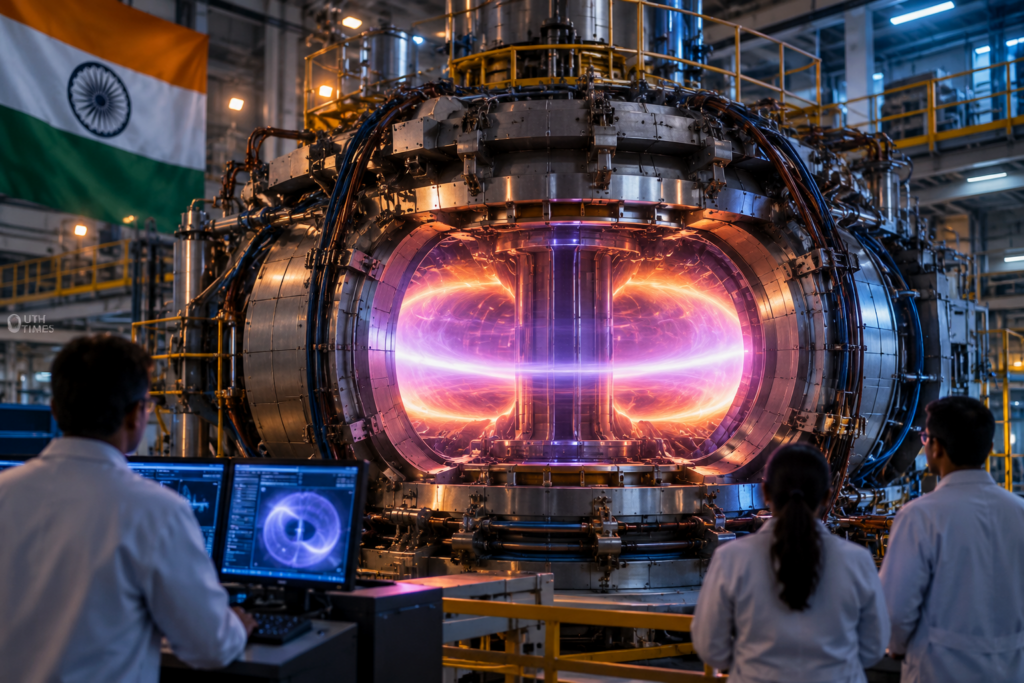
India’s “artificial Sun” is not a miniature star. It is a scientific experiment designed to recreate the extreme conditions required for nuclear fusion, the process that powers the Sun and other stars.
At the centre of this research is the Steady State Superconducting Tokamak-1 (SST-1), operated by the Institute for Plasma Research in Gandhinagar, Gujarat. The tokamak uses powerful magnetic fields to confine plasma inside a doughnut-shaped chamber. Scientists study how this ultra-hot, electrically charged gas can be heated and controlled without touching the reactor walls.
Unlike the Sun, which relies on immense gravitational pressure, a tokamak uses magnetic confinement to hold plasma in place.
⚡ The Powerful New Heating System
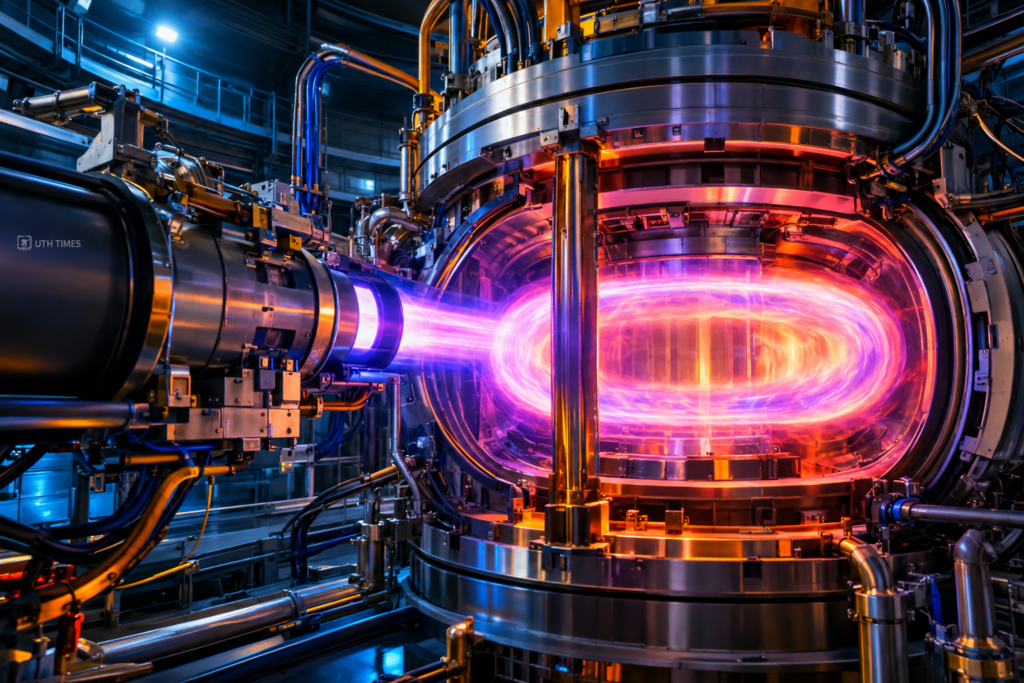
The latest development involves an advanced gyrotron designed to deliver high-frequency microwave energy into the plasma. This technology supports electron cyclotron resonance heating, a method used to transfer energy to plasma electrons.
🔹 82.6 GHz frequency: The new system operates at a microwave frequency of 82.6 gigahertz.
🔹 400 kW heating power: It is designed to deliver up to 400 kilowatts of heating power, supporting high-intensity plasma experiments.
🔹 Ultra-hot plasma research: The system helps scientists investigate plasma heating, breakdown, and control, all of which are essential for advancing fusion technology.
🔬 Why Plasma Heating Is So Important
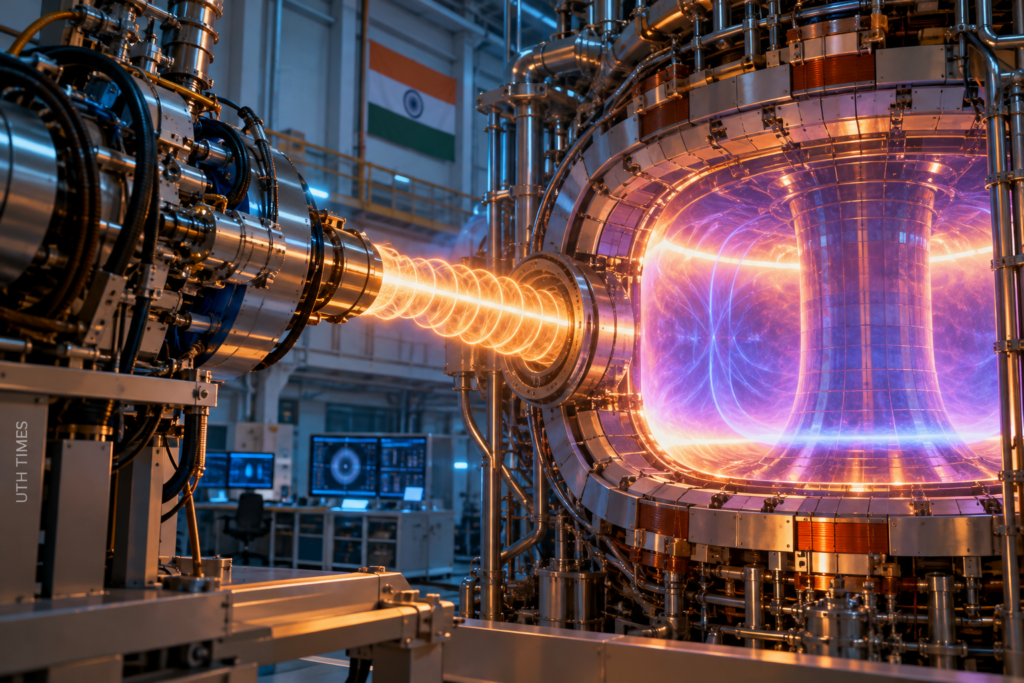
Producing plasma is only the beginning of the fusion challenge. Scientists must heat it to extremely high temperatures and maintain stability while confining it inside a magnetic field.
The new gyrotron strengthens India’s experimental capabilities by providing another powerful heating source for SST-1. Researchers can use such systems to explore how plasma responds to different heating conditions and how its behaviour can be controlled more effectively.
These experiments are important because fusion requires precise coordination between heating, magnetic confinement, plasma stability, and reactor engineering.
🇮🇳 India’s Fusion Energy Ambition
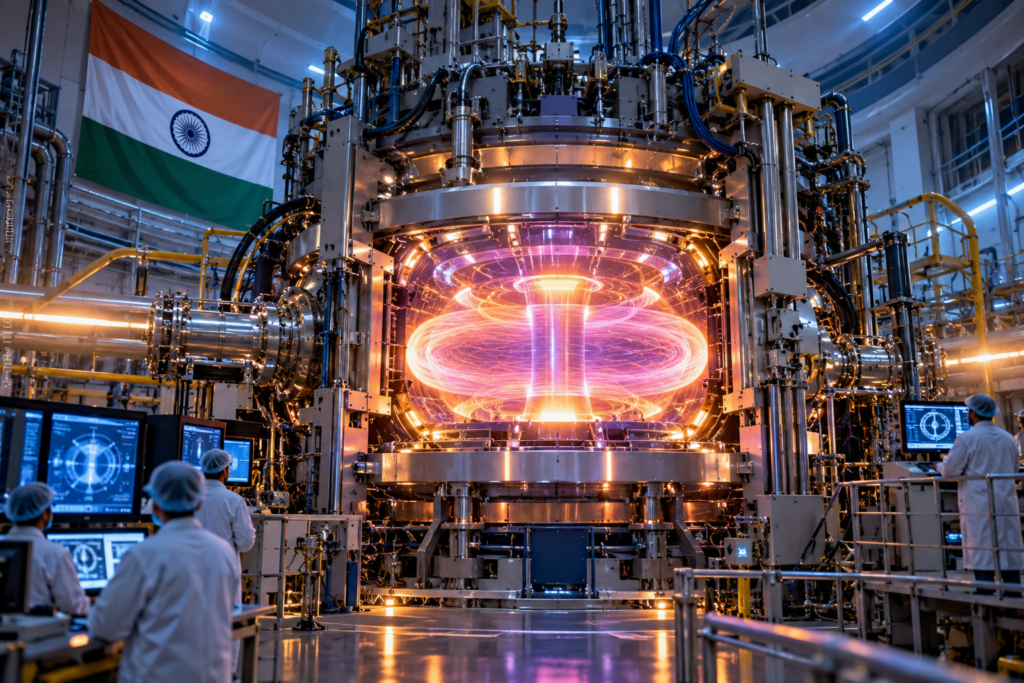
India has been developing expertise in magnetic-confinement fusion through facilities such as SST-1. The new 82.6 GHz system complements existing heating technologies and expands the range of experiments available to researchers.
Nuclear fusion has the potential to produce energy by combining light atomic nuclei under extreme conditions. However, commercial fusion electricity remains a major engineering challenge. Scientists must achieve sustained plasma confinement, efficient energy production, reliable reactor materials, and economically viable operation.
The new heating system is therefore an important research advancement, not evidence that India has already built a commercial fusion power plant.
India’s artificial Sun project represents a long-term scientific effort to understand and control one of nature’s most powerful energy processes.
Every improvement in plasma heating and confinement contributes to the knowledge required for future fusion reactors. The journey from laboratory experiments to practical fusion electricity is still ongoing, but developments like this help strengthen India’s position in advanced energy research.
India is not creating a real Sun—but with powerful new technology, it is moving closer to understanding how stellar energy could one day be harnessed on Earth.

