
For decades, software was something organizations used. Artificial Intelligence is something they now build around. This shift marks a fundamental transformation: AI is no longer a standalone application or feature—it is becoming infrastructure.
Just like electricity, the internet, and cloud computing, AI is evolving into a foundational layer that underpins systems, decisions, and economies.
From Tools to Foundations

Traditional software operates on explicit instructions. AI systems, especially large models, operate on learned patterns at scale. This difference changes how they are deployed.
- Software is installed.
- Infrastructure is embedded.
AI models now sit beneath applications—powering search, recommendations, fraud detection, logistics, content moderation, healthcare diagnostics, and financial systems simultaneously. Multiple services draw intelligence from the same model layer, much like multiple devices draw power from the same grid.
The Rise of Foundation Models

The emergence of large foundation models has accelerated this transition. These models are not built for single tasks; they are trained once and adapted everywhere.
This mirrors infrastructure economics:
- High upfront cost
- Massive scale advantages
- Broad downstream usage
As a result, AI development is consolidating around shared model platforms rather than isolated software products.
AI Requires Compute, Not Just Code

Software scales by copying code. AI scales by consuming compute.
Training and running modern AI models demands:
- Specialized chips
- High-bandwidth data centers
- Continuous energy supply
This physical dependency anchors AI closer to infrastructure industries like power, telecom, and cloud—not traditional software development.
Embedded Across Sectors

AI is no longer optional or vertical-specific. It is becoming horizontally embedded:
- In finance, AI underwrites risk.
- In manufacturing, it optimizes supply chains.
- In governance, it monitors compliance.
- In media, it shapes visibility and reach.
Once embedded, removing AI becomes as disruptive as removing internet access from a business.
Economic and Strategic Implications
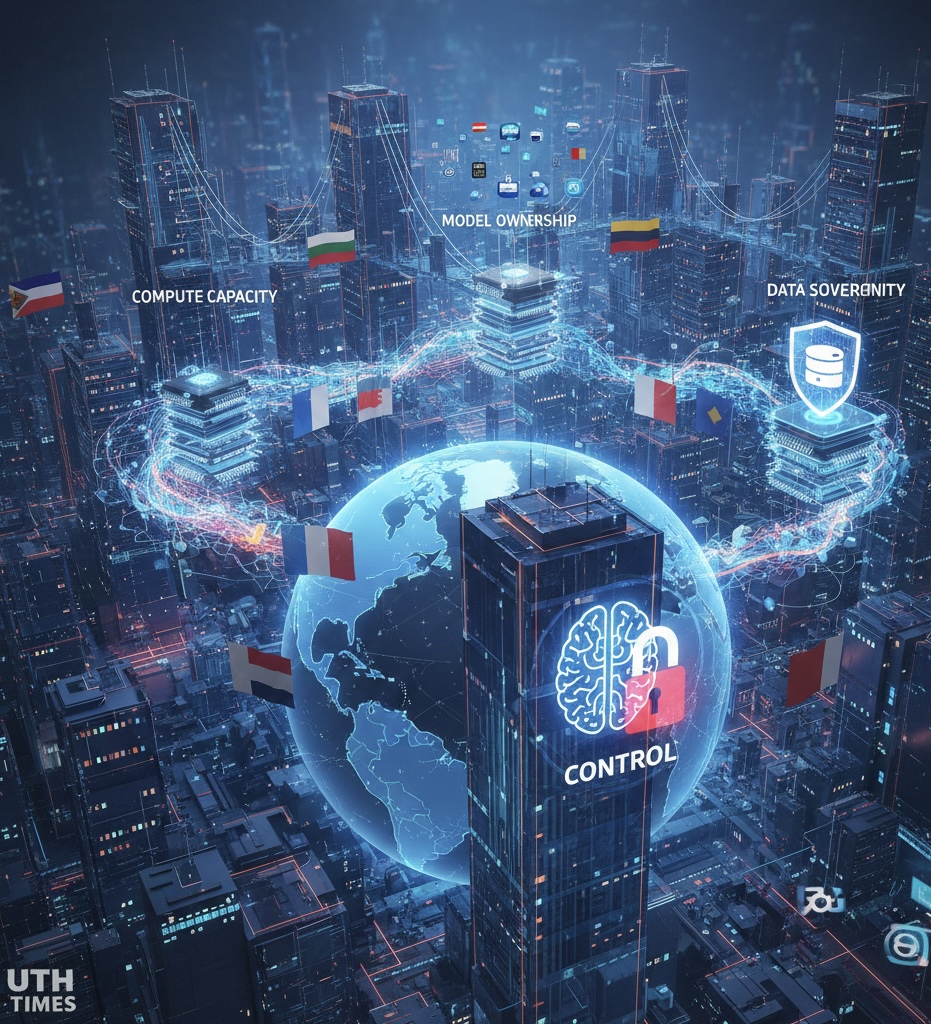
When intelligence becomes infrastructure, control matters more than features.
Countries and corporations are now competing over:
- Compute capacity
- Model ownership
- Data sovereignty
This explains the rapid rise of national AI strategies and regulatory focus on model access and deployment rather than just applications.
Software Can Be Replaced. Infrastructure Cannot.

Applications change quickly. Infrastructure endures.
Organizations that treat AI as a plug-in risk dependence. Those that treat it as infrastructure design resilience, adaptability, and long-term advantage.
The AI era is no longer about who builds the best app.
It is about who owns the intelligence layer everything else depends on.

