
For more than a century, scientists believed that electrostatic forces were far too weak to power practical motors. Now, researchers at the Institute of Science Tokyo have shattered that assumption by developing a working plastic motor driven entirely by a long-overlooked electrostatic phenomenon—potentially opening the door to a revolutionary new era of lightweight, magnet-free machines.
🚀The Breakthrough: A Motor Without Magnets or Metal
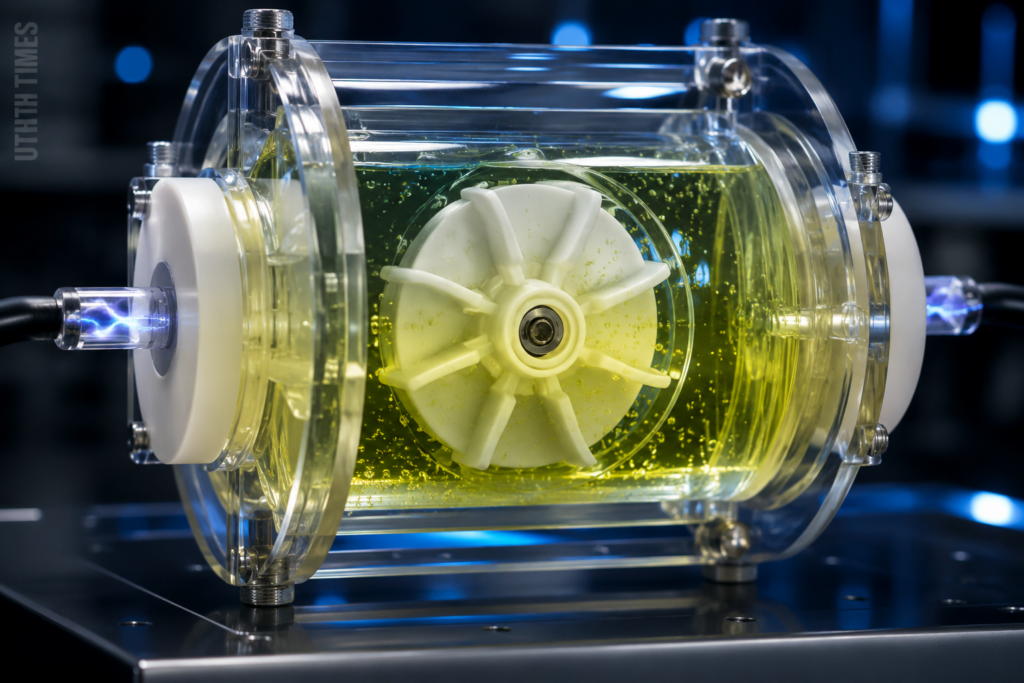
In a remarkable engineering achievement, Japanese researchers have successfully demonstrated a prototype motor that operates without conventional components such as magnets, copper coils, or rare earth elements.
Instead, the motor relies on:
🔹 A specially designed ferroelectric fluid
🔹 Strong electric fields
🔹 A phenomenon known as transverse Maxwell stress
The motor’s rotor, which can be manufactured entirely from plastic resin, rotates as the electrically responsive fluid generates a powerful sideways force. Astonishingly, this force is strong enough to move liquid against gravity and produce continuous rotational motion.
This is the first practical demonstration showing that electrostatic forces—once dismissed as scientifically interesting but technologically useless—can perform meaningful mechanical work.
⚡Reviving a Century-Old Scientific Theory
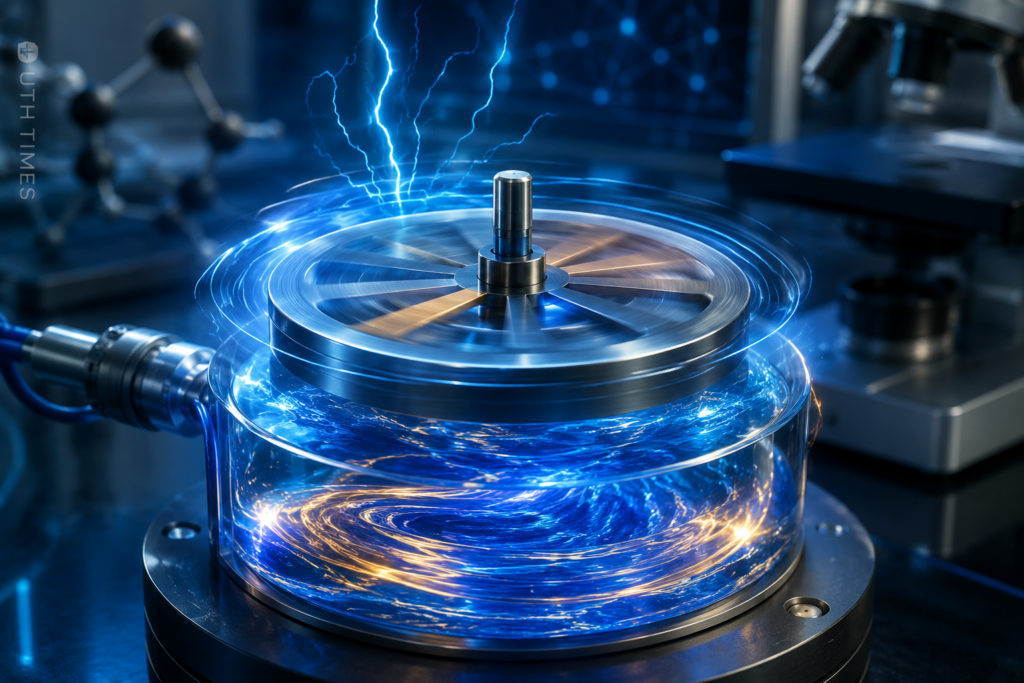
The underlying principle behind this innovation was theoretically predicted more than 100 years ago.
Physicists had long known that electric fields could create lateral mechanical stresses inside certain materials. However, these forces were considered too weak to be useful in real-world devices.
The Tokyo research team overturned that belief by introducing a carefully engineered ferroelectric liquid capable of dramatically amplifying the effect.
🧪 The result?
✅ Stable rotational motion
✅ Lower operating voltages compared to previous electrostatic systems
✅ Efficient conversion of electrical energy into mechanical movement
This breakthrough transforms a forgotten scientific curiosity into a potentially disruptive engineering platform.
🌍Why This Discovery Could Be a Game-Changer
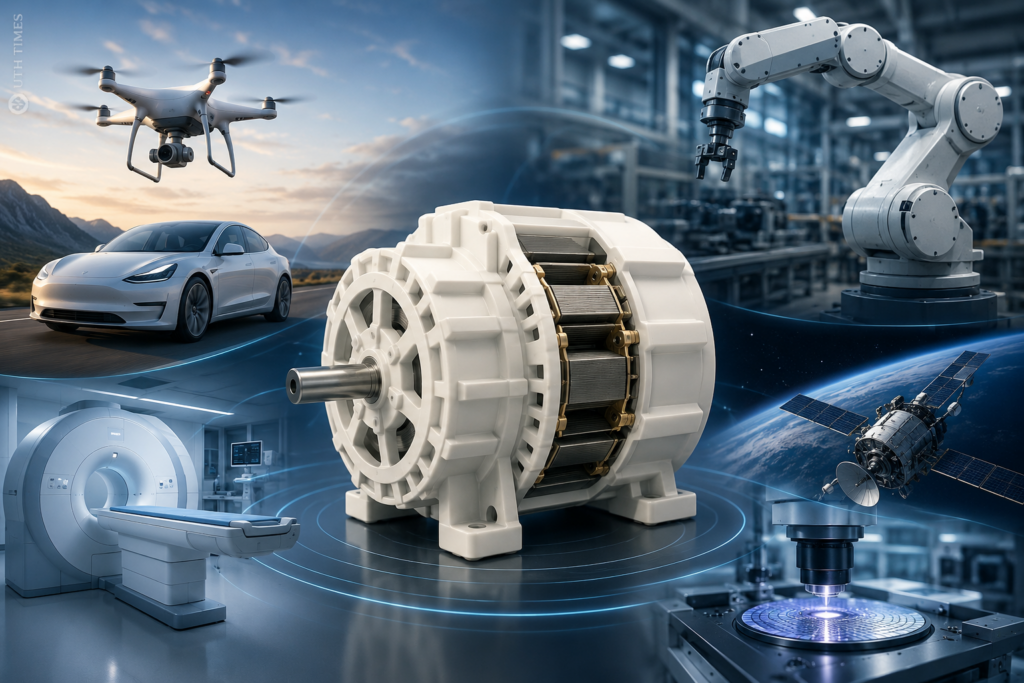
Today’s electric motors power nearly everything—from smartphones and drones to electric vehicles and industrial robots.
However, conventional motors face significant challenges:
🔸 Dependence on rare earth magnets
🔸 Environmentally damaging mining operations
🔸 Geopolitical supply chain risks
🔸 Rising material costs
The new electrostatic motor could address many of these concerns.
🌟 Key advantages include:
🔹 No rare earth materials required
🔹 Lightweight plastic construction
🔹 Reduced manufacturing complexity
🔹 No magnetic interference
🔹 Potentially lower production costs
The absence of magnetic fields is especially significant for sensitive environments such as:
🏥 Medical equipment
🛰️ Aerospace electronics
🔬 Scientific instruments
💻 Precision semiconductor systems
🔮Could Electrostatic Motors Replace Traditional Motors?
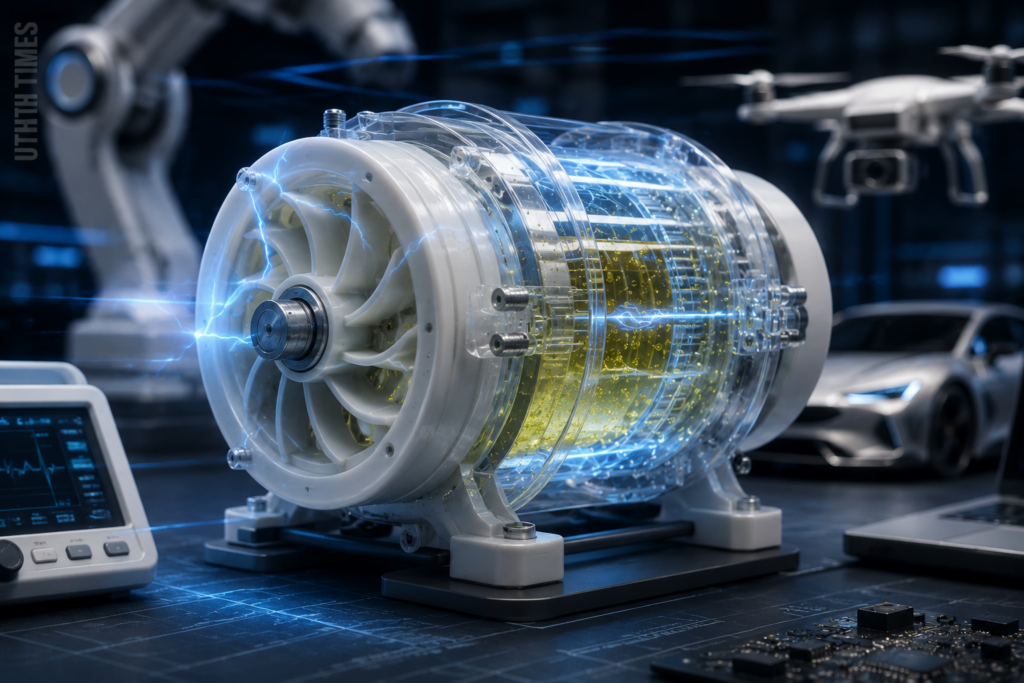
Researchers caution that this technology is still in its early stages. Present prototypes generate relatively modest power and remain largely experimental.
Nevertheless, the implications are profound.
Rather than completely replacing conventional magnetic motors, electrostatic motors may initially find specialized roles where weight, material availability, or electromagnetic compatibility are critical.
As materials science advances, these machines could evolve into an entirely new class of actuators and propulsion systems.
History occasionally rewards ideas long considered impossible. By resurrecting a neglected electrostatic force and transforming it into a functioning motor, scientists may have ignited one of the most unconventional engineering revolutions of the century.

