
Sometimes nature reveals something so unusual that it forces scientists to rethink what they know about life itself. Recently, researchers studying marine biodiversity along the coast of Kerala encountered one such marvel — a Vela carli crab that is literally half male and half female.
This extremely rare biological condition has fascinated marine scientists and could unlock new insights into genetics, evolution, and crustacean development.
🧬 A Crab Split by Biology
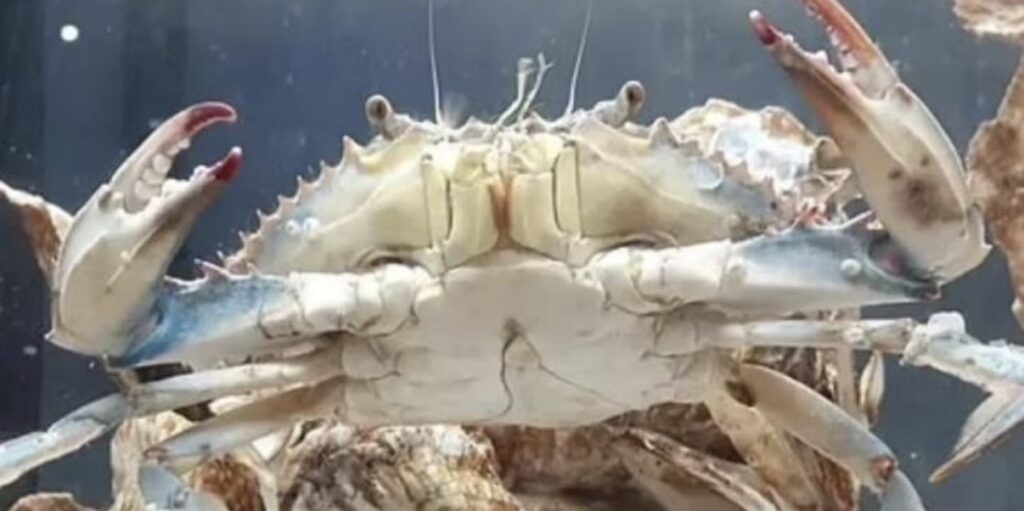
The unusual crab displays a condition known as gynandromorphism — a rare phenomenon where a single organism possesses both male and female characteristics.
Instead of having mixed reproductive traits internally, this crab shows a perfect external split.
🔬 Scientists observed striking differences on each side of its body:
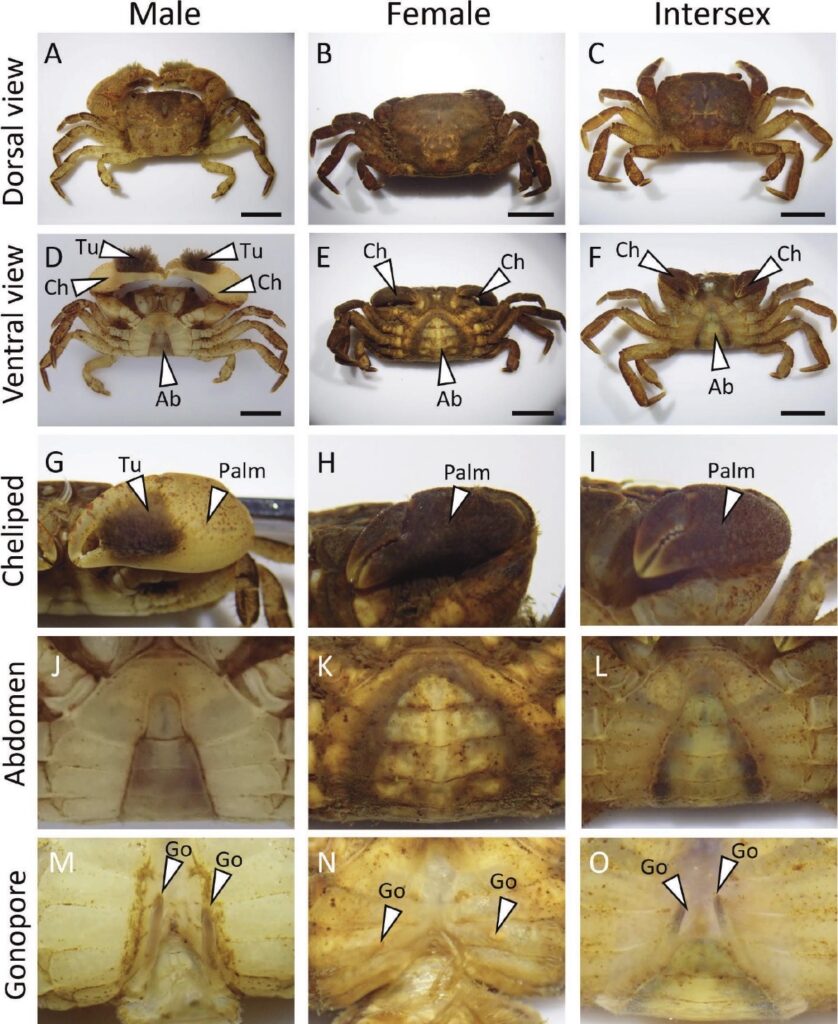
🔹 One half of the crab shows male features — including narrower abdominal plates and male reproductive structures.
🔹 The other half displays female characteristics, such as a broader abdomen designed for carrying eggs.
Even the crab’s claws, body shape, and coloration differ slightly between the two halves, making the division visibly clear.
This type of bilateral gynandromorphism is exceptionally rare in crustaceans and even rarer to observe in wild specimens.
🌊 Why This Discovery Is So Important
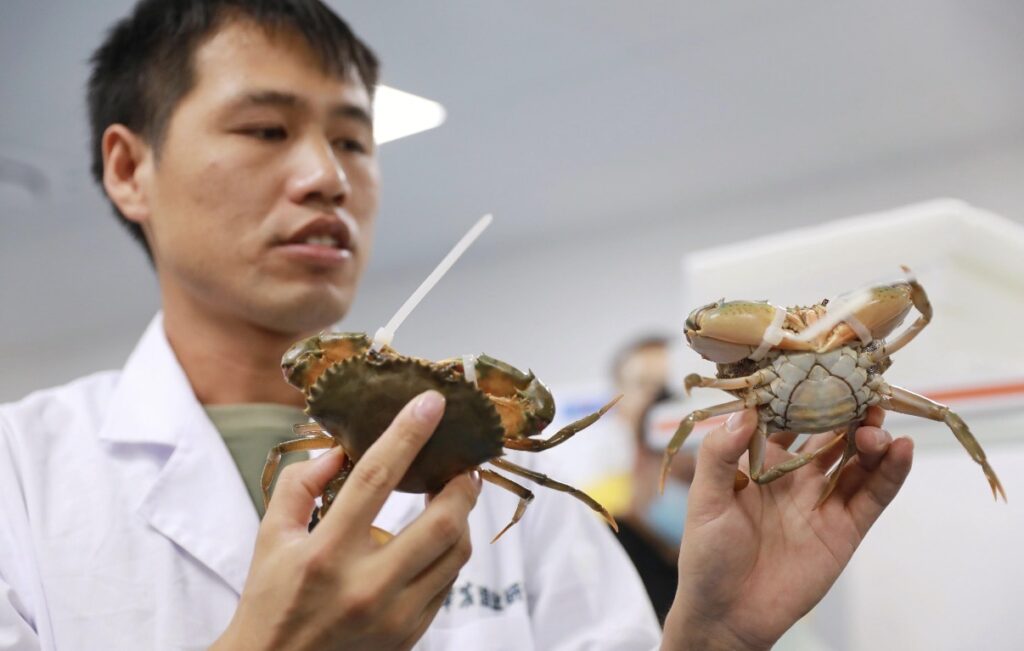
Discoveries like this are not just visually fascinating — they provide valuable scientific clues about how life develops.
Researchers believe gynandromorphism can occur due to errors during the earliest stages of cell division after fertilization.
🧠 This discovery could help scientists understand:
🔹 Sex determination in crustaceans – how organisms develop male or female traits.
🔹 Genetic mutation patterns in marine species.
🔹 Developmental biology and how early embryonic cells divide and specialize.
🔹 Evolutionary mechanisms that influence reproductive diversity in marine ecosystems.
For marine biologists, such organisms act as living case studies, revealing hidden biological processes that normally remain invisible.
🔎 How Rare Is a Half-Male, Half-Female Crab?
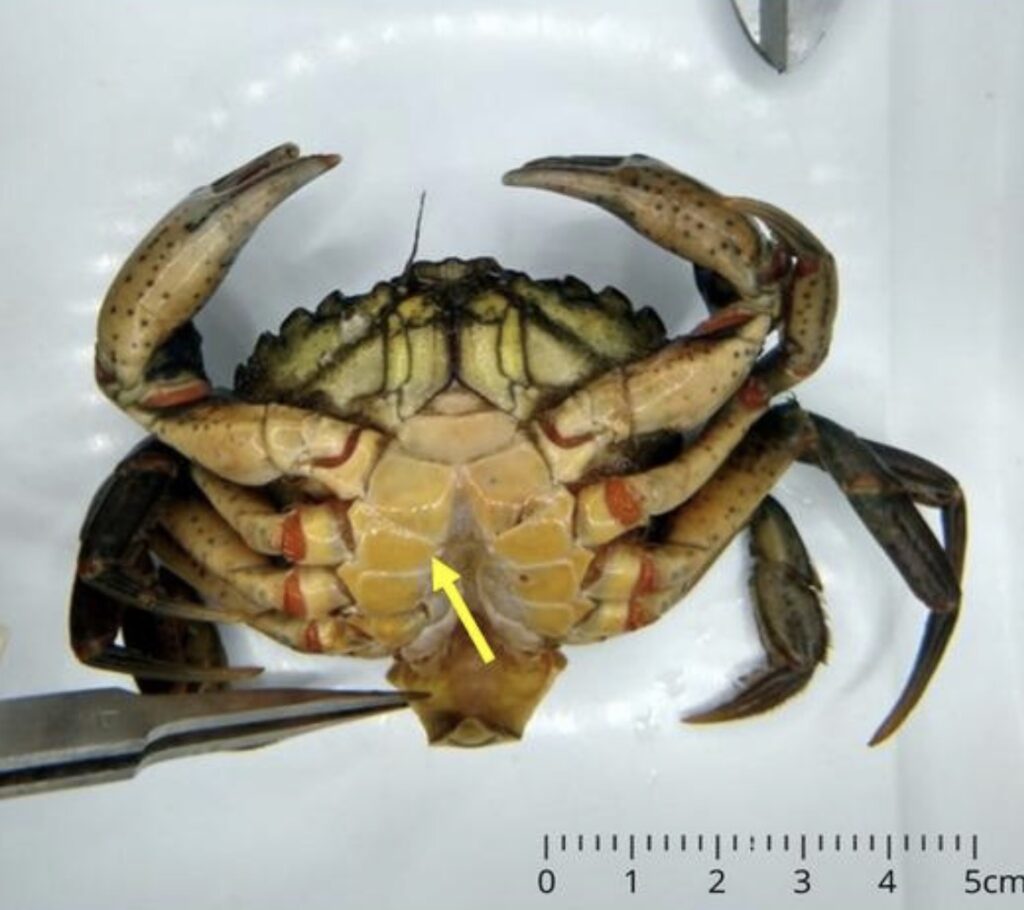
Gynandromorphism has been recorded in butterflies, birds, and insects, but it remains extremely uncommon in crabs.
Experts estimate that only a tiny fraction of crustaceans exhibit this condition, making each discovery scientifically valuable.
What makes the Kerala specimen even more fascinating is its clear bilateral symmetry — meaning the body is divided almost exactly down the middle between male and female traits.
Such precise divisions provide researchers with a natural model to compare the biology of both sexes within the same organism.
🌍 What This Means for Marine Science
The Vela carli crab is more than a biological curiosity. It reminds scientists that the ocean still holds countless mysteries waiting to be uncovered.
Each rare discovery adds another piece to the puzzle of how life evolves and adapts beneath the waves. For researchers, this unusual crab is not just strange — it’s a powerful scientific opportunity.
And in the vast and largely unexplored marine world, it may only be the beginning of many more astonishing discoveries.

