
🕰️ A Forgotten Beginning: The True Birthplace of Urban Design
The first organized city grid was not born in Mesopotamia or Greece — it was perfected in ancient India’s Indus–Sarasvati civilization.
Centuries before the world imagined cities, the Harappans had already built planned urban centers like Mohenjo-Daro, Harappa, Lothal, and Dholavira — each aligned precisely along north–south and east–west axes.
🧱 Streets ran in exact right angles, houses had private bathing areas, and covered drainage systems flowed beneath — an urban hygiene standard unmatched until modern times.
This was not coincidence; it was science, symmetry, and sustainability woven together — a civic code carved in baked bricks and geometry.
🌊 The Lost Port Before Troy: Poliochni’s Indian Connection
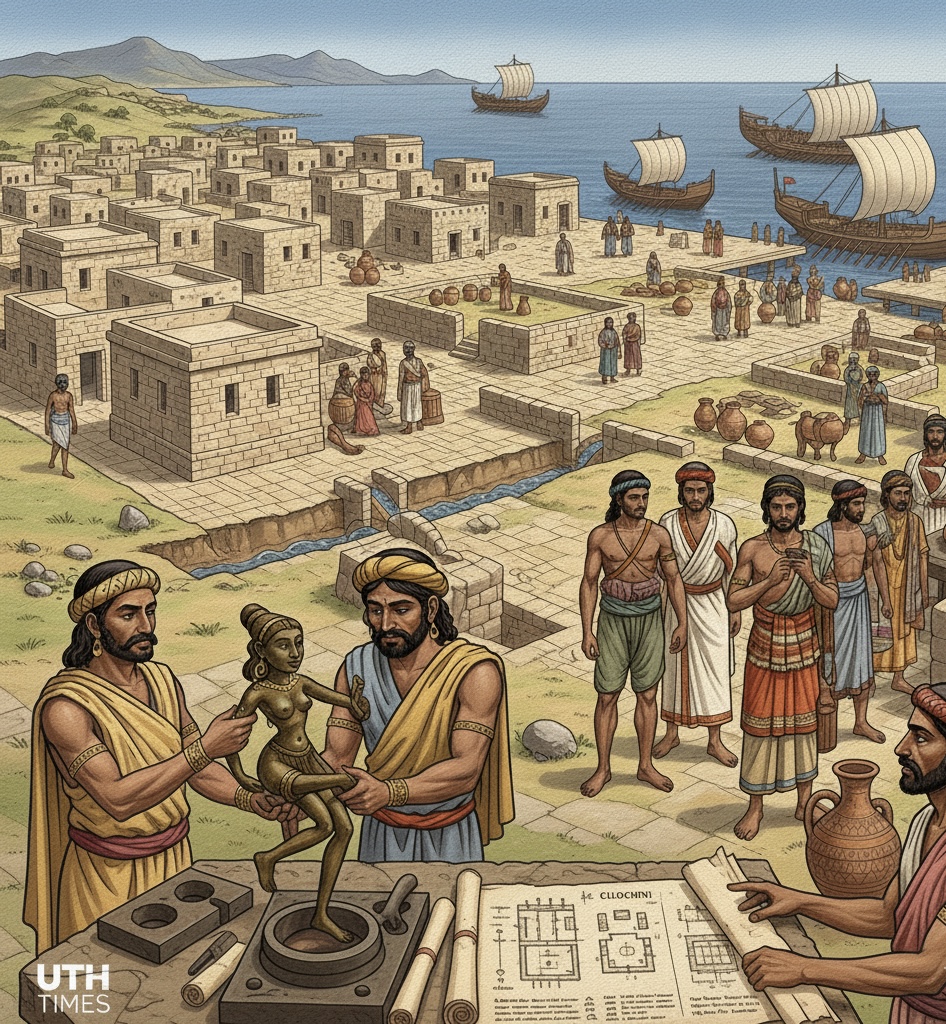
Far across the seas, around 4500 BC, stood Poliochni — a wealthy maritime port on Lemnos Island, off northwest Anatolia (present-day Turkey).
Long before Troy ruled the Aegean, Poliochni dominated the Mediterranean–Black Sea trade choke point, thriving on commerce and metallurgy.
What’s astonishing is its architectural DNA — grid-iron streets, wells, paved lanes, and an underground sewerage system.
Archaeologists note striking parallels with the Indus pattern — urban planning concepts that appeared in India millennia earlier.
Even more revealing, Poliochni practiced lost-wax casting — the same advanced technique used in the famed “Dancing Girl of Mohenjo-Daro” bronze figurine.
This method, believed to have originated in India, connects the technological dots between Indus metallurgists and Aegean artisans — a silent exchange across ancient seas.
⚔️ After the Sarasvati: The Great Migration That Redrew Empires
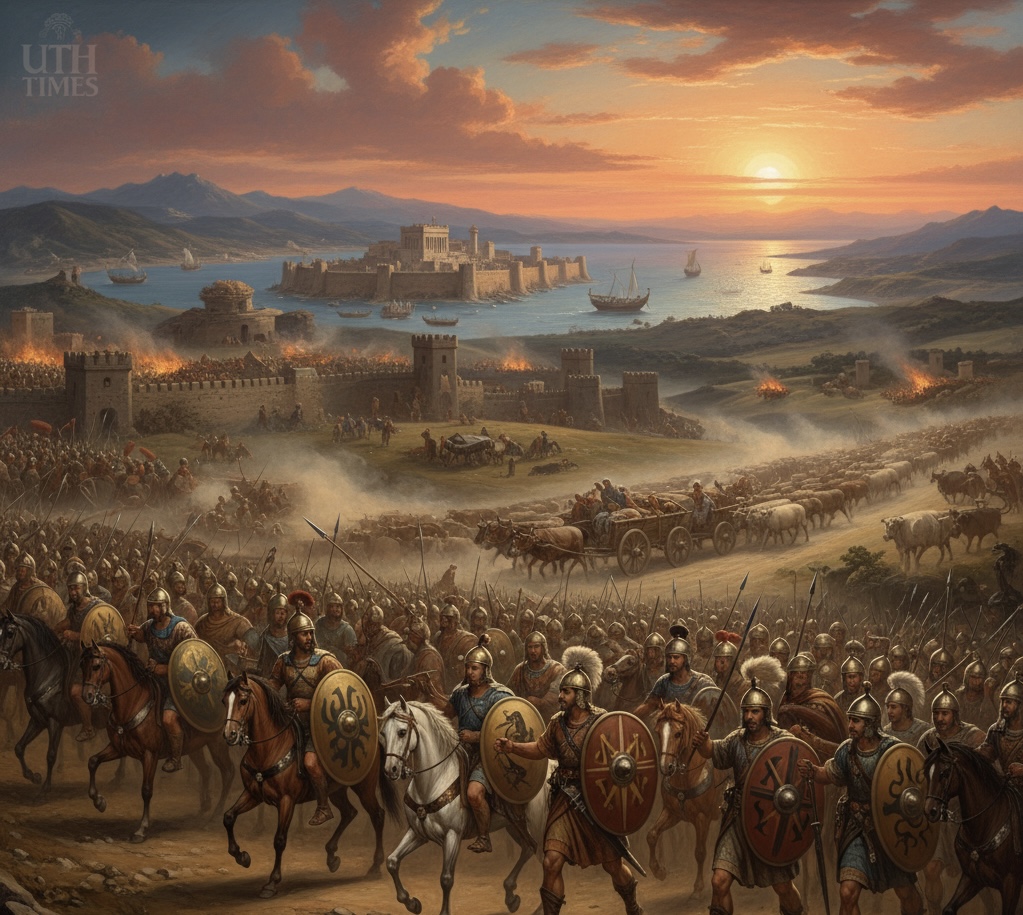
When the Sarasvati River began to dry (around 1900–1500 BC), it unleashed vast Indo-European migrations.
From India’s northwest emerged warriors and settlers who moved westward, influencing regions that would birth the Hittite, Mittanni, Phrygian, and early Greek dynasties.
By 1600–1500 BC, these Indo-European forces seized Troy, aiming to control the lucrative maritime chokepoint once held by Poliochni.
Behind these military shifts lay an echo of Indian migration, spreading technologies, myths, and governance structures across continents.
🌍 The Unwritten Legacy of Vedic Influence
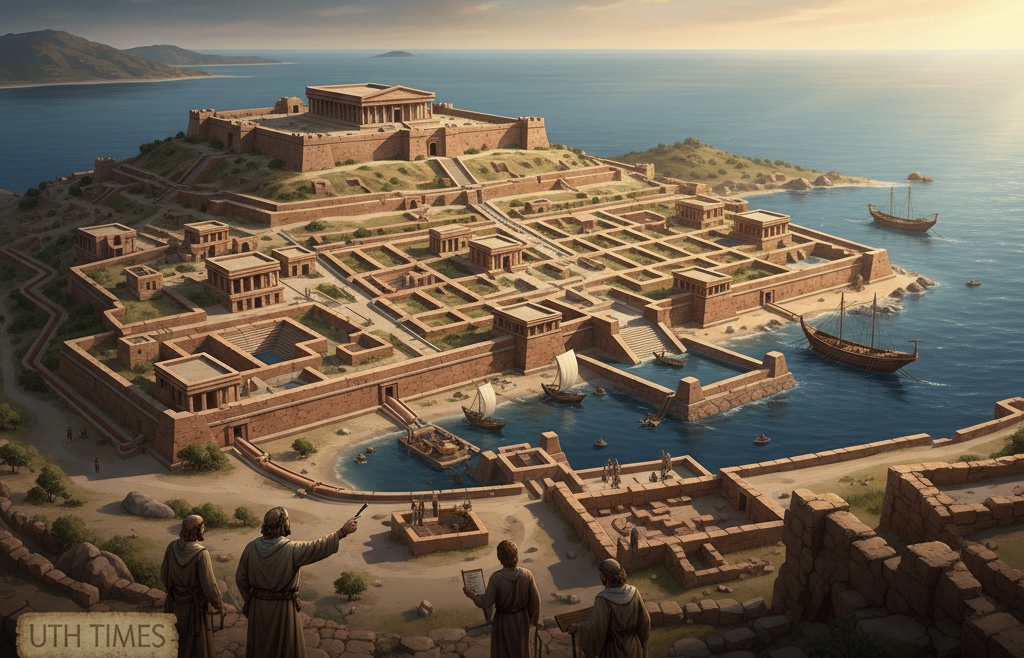
Poliochni’s civilization — organized, engineered, and seafaring — mirrors the essence of Vedic India’s urban and spiritual ethos.
Its resemblance is not accidental but ancestral — a reflection of how Indian innovation shaped early global urbanism.
While textbooks glorify Mesopotamia or Greece as cradles of civilization, the blueprint of city life — from drainage to symmetry — was first drawn in India.
🪔 Closing Thought
Before the world learned to build cities, India had already mastered the art of living in them.
From the grids of Harappa to the drains of Poliochni, the Indus idea of order shaped humanity’s first urban dream — an influence still visible beneath the bricks of time.

