
🌌 A New Twist in the Cosmic Story
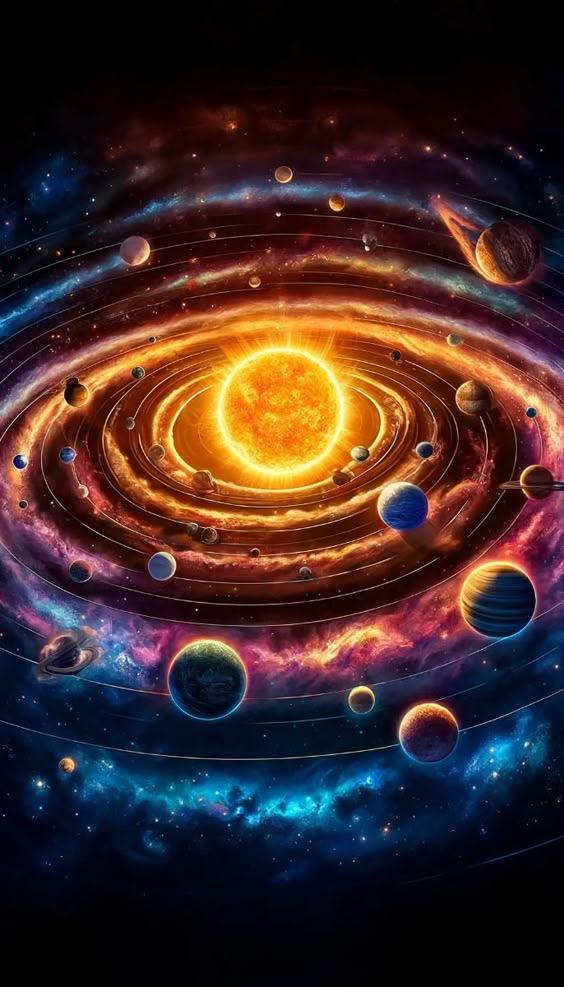
The Big Bang is often taught as the absolute beginning of everything — time, space, matter, and energy exploding from a single singularity. But what if we’ve misunderstood the greatest event in the universe’s history? What if the Big Bang was not a beginning, but an aftermath?
That’s exactly what a groundbreaking paper in Physical Review D suggests: our universe may have bounced out of a black hole.
🕳️ The Black Hole Universe Hypothesis
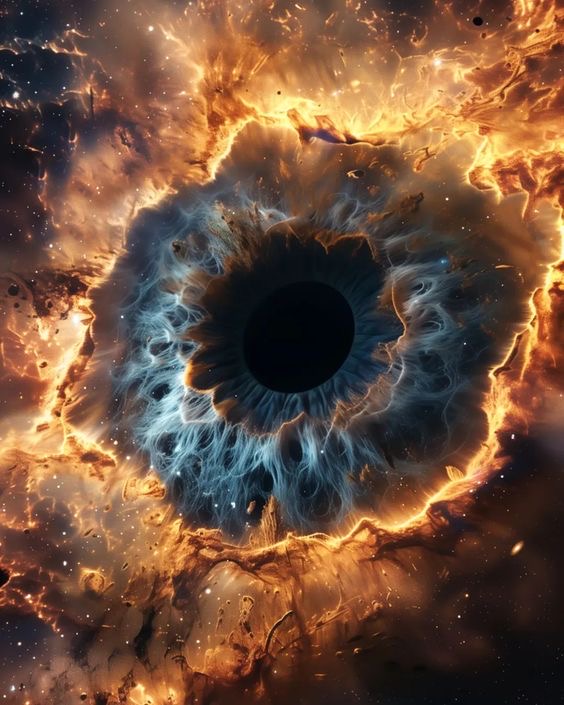
Instead of imagining the universe as born from nothing, researchers propose that it emerged from the collapse of a previous cosmic structure. When a massive star collapses, it forms a black hole. Now imagine that, but on a truly cosmic scale: a gravitational collapse so enormous that it doesn’t end with destruction but with rebirth.
- 🌠 Inside the black hole, matter and energy crunch down into a near-singularity.
- 🔄 Instead of remaining trapped forever, the intense density creates a “bounce” — like a compressed spring releasing.
- 🌍 The bounce manifests not as destruction, but as the expansion of a brand-new universe — ours.
In this picture, the Big Bang wasn’t the start of time, but the aftermath of a gravitational implosion.
🔬 The Science Behind the Bounce
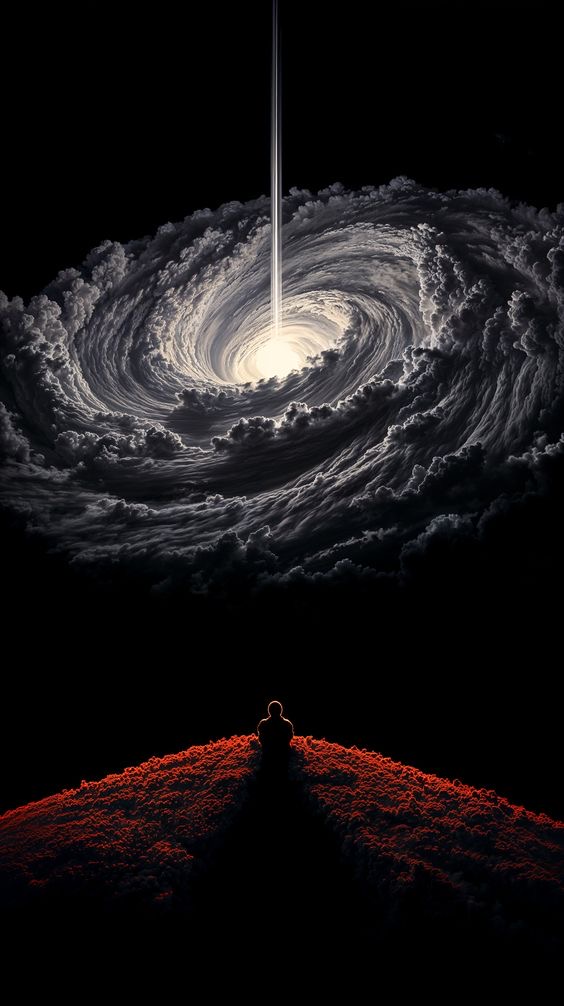
The mathematics behind this idea is grounded in general relativity and quantum physics. While Einstein’s equations predict singularities (infinite density), quantum corrections hint that nature avoids true infinities. Instead, at ultra-high densities, spacetime can rebound.
Researchers model this “quantum bounce” as the point where:
- 🌀 Gravitational collapse halts.
- 💥 Pressure and density trigger an explosive reversal.
- 🌌 The reversal creates an expanding space-time — which we perceive as the Big Bang.
This makes the Big Bang less of a birth and more of a cosmic metamorphosis.
🔭 Why This Changes Everything
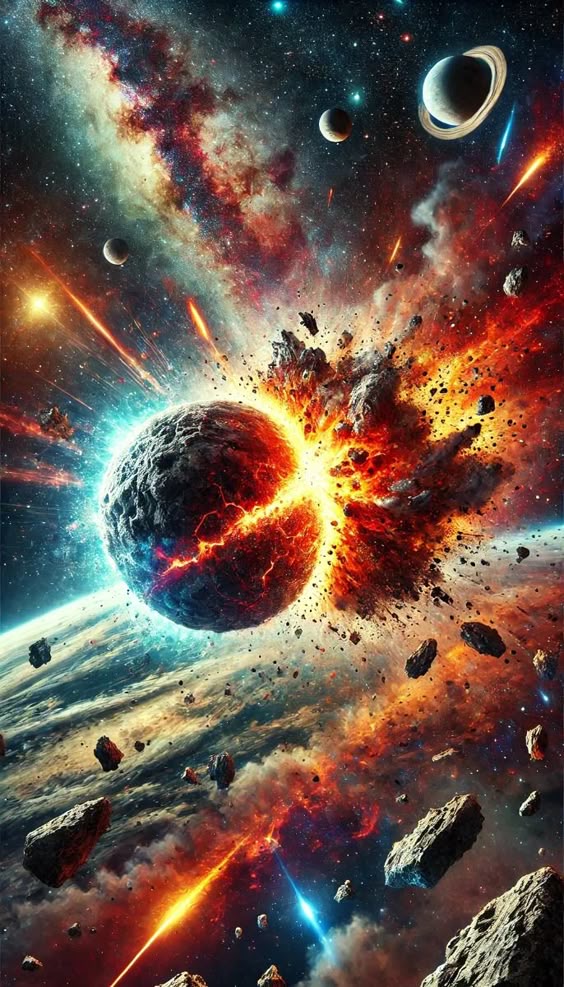
If true, this theory answers age-old mysteries:
- ✨ Why did the universe start so smooth yet slightly uneven? A bounce naturally seeds those patterns.
- ♾️ Could there be multiple universes, each born from collapses of older ones? Yes — this model allows an eternal chain of black-hole universes, a cosmic recycling.
- ❓What was “before” the Big Bang? According to this idea, a previous universe’s collapse.
This isn’t science fiction — it’s a framework rooted in observable physics, tested against cosmic microwave background data and gravitational models.
🚀 The Beginning Was an Ending
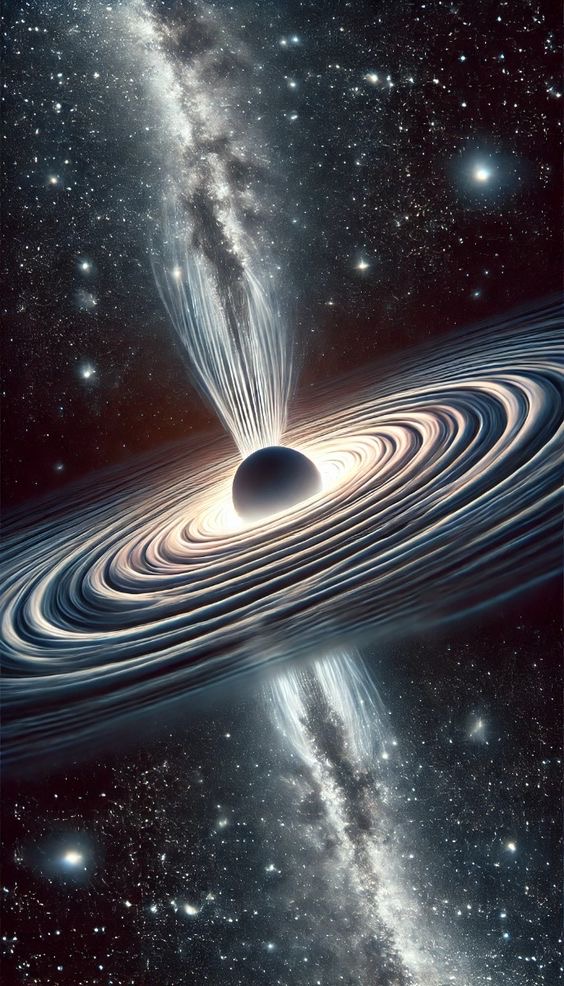
So maybe we’ve been asking the wrong question all along. Instead of “What came before the Big Bang?”, the answer might be: another universe collapsed into a black hole.
The Big Bang, then, is less a divine spark and more a phoenix moment — the universe rising from the ashes of another.
And if that’s true, our cosmos isn’t a lonely singular event — it’s part of a grand, endless cosmic cycle.

