
🔱 When Chariots Burned, But Devotion Didn’t
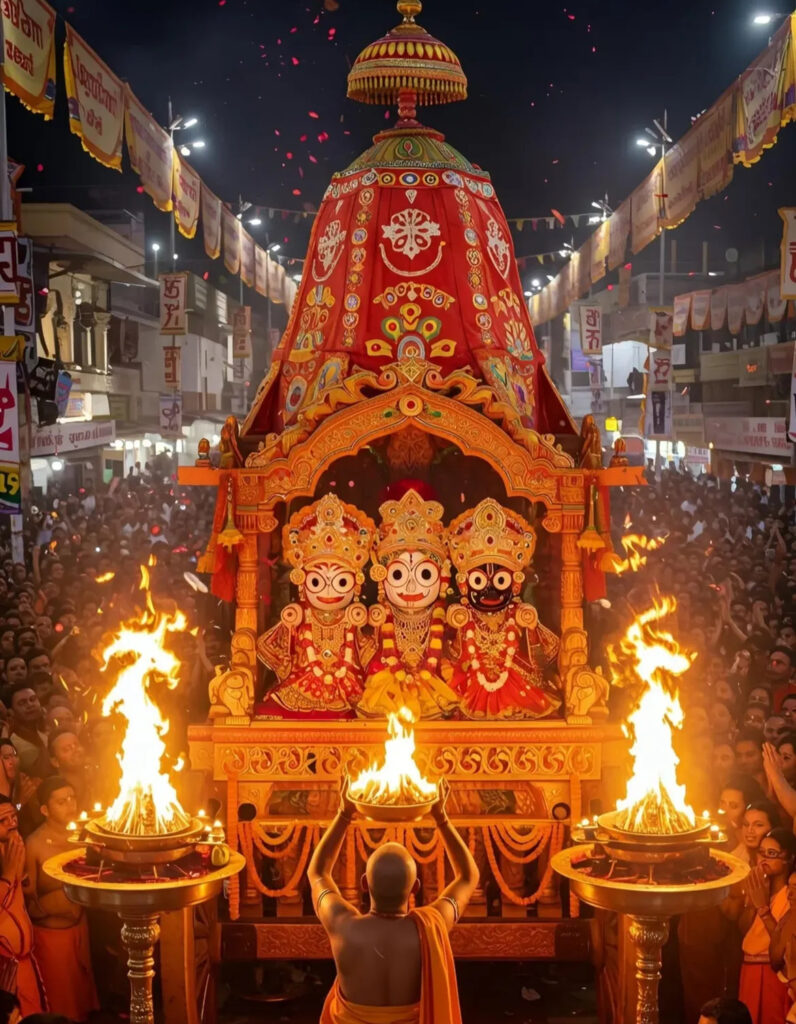
In the heart of Puri, where chants of Jai Jagannath echo across centuries, a forgotten chapter of resistance and faith lies buried beneath history books. In 1610, the grand Rath Yatra didn’t end in celebration—it ended in smoke, ashes, and silence.
⚔️ Mughal Deceit: Soldiers in Pilgrims’ Clothing
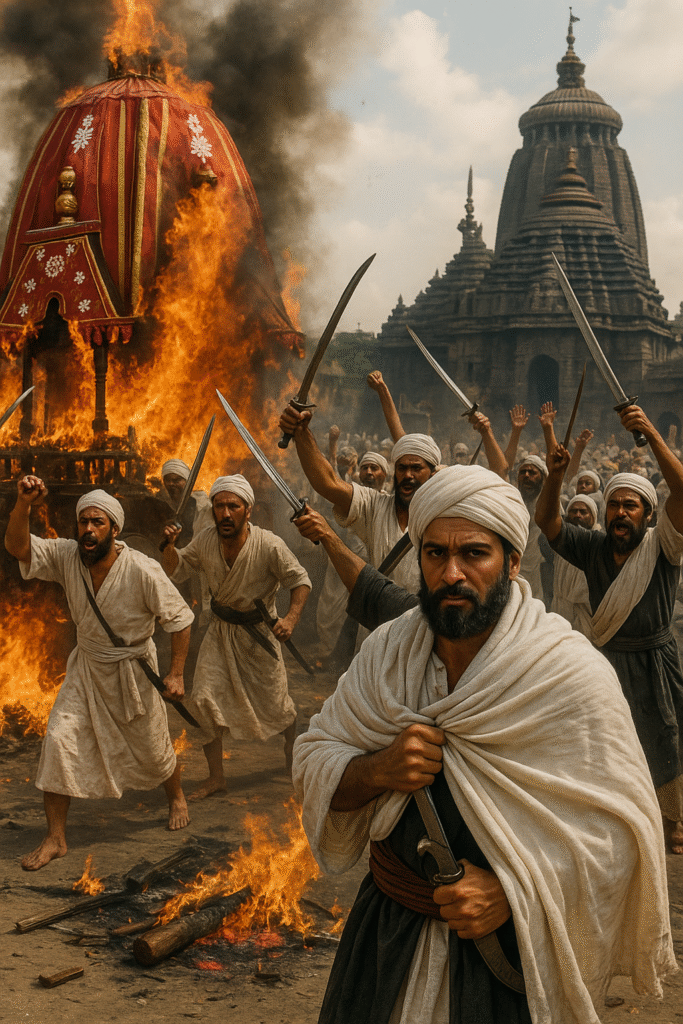
The year 1610 witnessed one of the darkest chapters in Odisha’s spiritual legacy. Subedar Hashim Khan, a Mughal officer under Jahangir’s regime, dispatched his soldiers disguised as devotees during the annual Rath Yatra. The deception was deadly.
- 🕌 The Mughal troops blended into the crowds, concealing weapons beneath traditional attire.
- 🔥 Once the Rath Yatra commenced, they attacked the chariots, setting them ablaze.
- 💰 The sacred Jagannath Temple was partially looted, and Mughal soldiers attempted to seize it.
The deities were fortunately safe—they had already reached the Gundicha Temple, where Lord Jagannath stays during the Yatra period.
🛑 Eight Months of Silence: The Halt of a Legacy
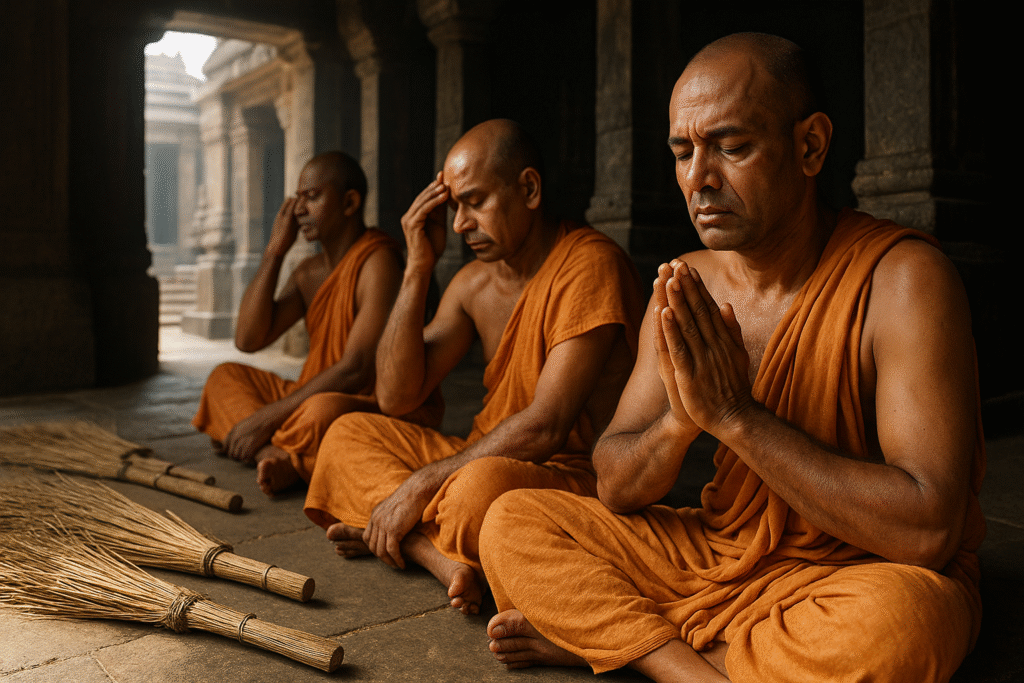
Following the attack, the festival that once drew lakhs into devotion came to a devastating halt. The sacred chariots were turned to ashes, and the idols could not return to the sanctum due to Mughal occupation.
- 🕰️ For 8 long months, the sanctum sanctorum of the temple remained desecrated.
- 🙏 The local kings, priests, and devout villagers refused to compromise on ritual purity.
- 🧹 Only after thorough cleansing and re-consecration, did the idols return.
This episode became one of the rare occasions in Jagannath’s history when the Rath Yatra was interrupted, but never extinguished.
✨ Why the Chariot Pauses Near a Muslim Saint’s Mazar
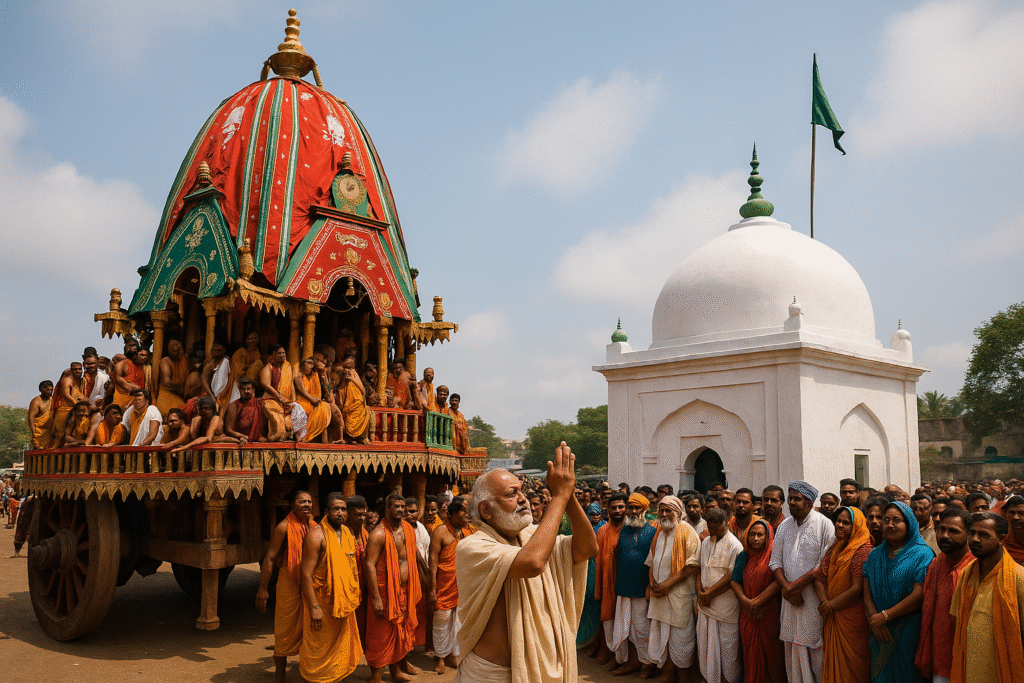
A spiritual twist in this tale is the customary pause of Lord Jagannath’s chariot near a Muslim man’s samadhi (mazar) on the Yatra route.
- 🕌 The legend speaks of a Muslim devotee, Salabega, whose unwavering love for Lord Jagannath was so pure that even the gods respected it.
- 🛑 To this day, the chariot halts near his mazar, a symbol of communal harmony—even after centuries of conflict.
🪔 What is Navakalebar? The Soul Renewal Ritual
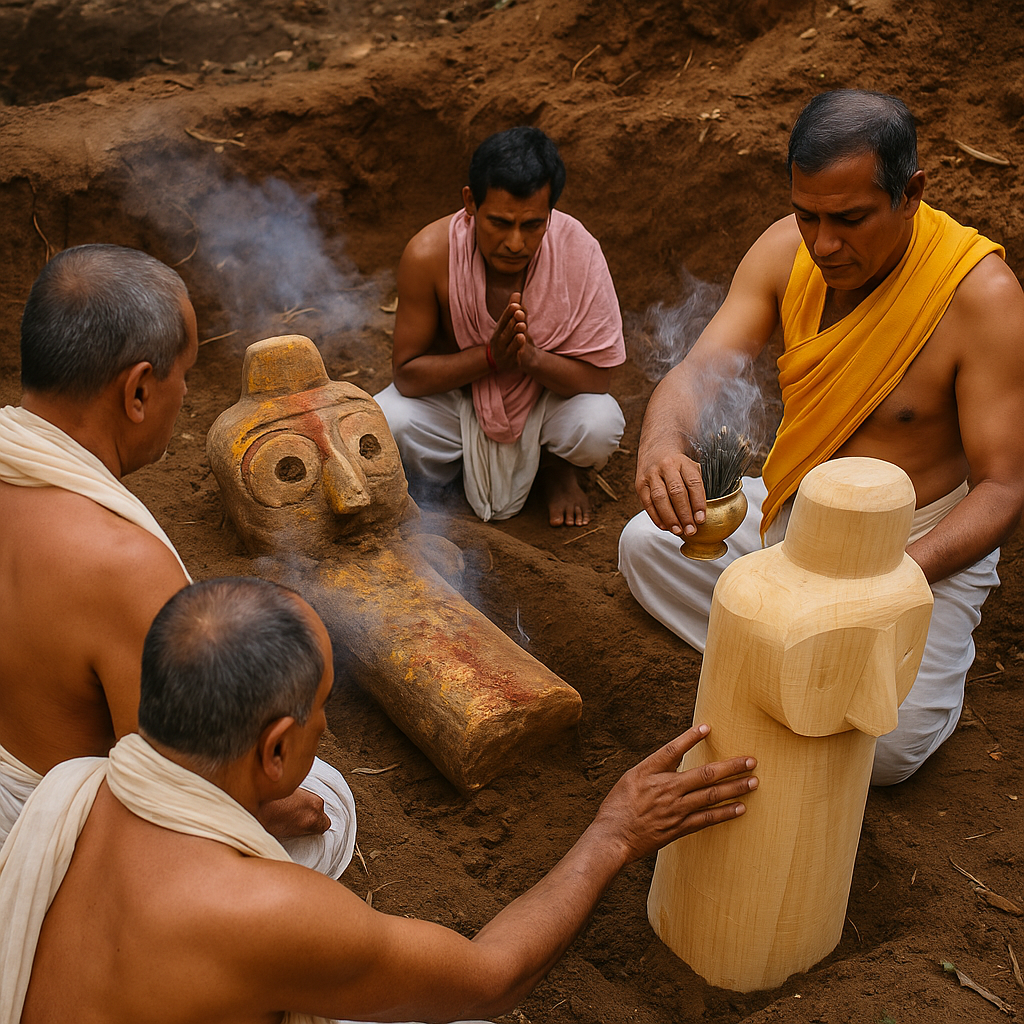
In contrast to the attack, Navakalebar is a festival of spiritual rebirth. It means “new body” and happens when the wooden deities of Jagannath, Balabhadra, Subhadra, and Sudarshan are replaced with new sacred neem wood every 12–19 years.
- 🌳 The event is marked by secret rituals, ritual burial of the old idols, and the transfer of the divine soul (Brahma padartha) to the new ones.
- 🔁 It signifies eternal continuity, much like how faith endured the Mughal tyranny.
🙌 Conclusion: The Chariot That Rolls Through Time and Tyranny
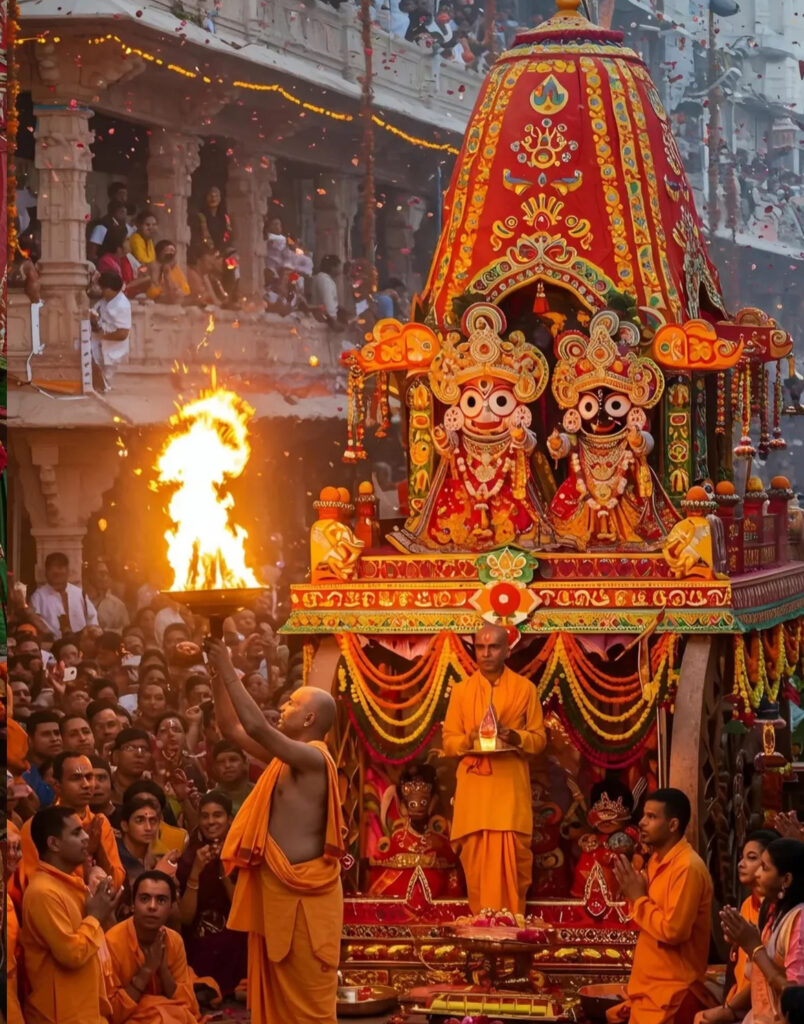
The 1610 Mughal attack may have charred the festival, but it couldn’t burn the spirit of millions. Rath Yatra rolled again—not just on wheels, but on the unbreakable devotion of those who believed that divine will always finds its way back home.

