
In the ritual heartland of North Kerala, divinity does not remain unseen or unheard. It descends, breathes, dances, and speaks. This sacred phenomenon is Theyyam—a moment when gods are believed to walk among humans.
A Ritual Where the Divine Becomes Present
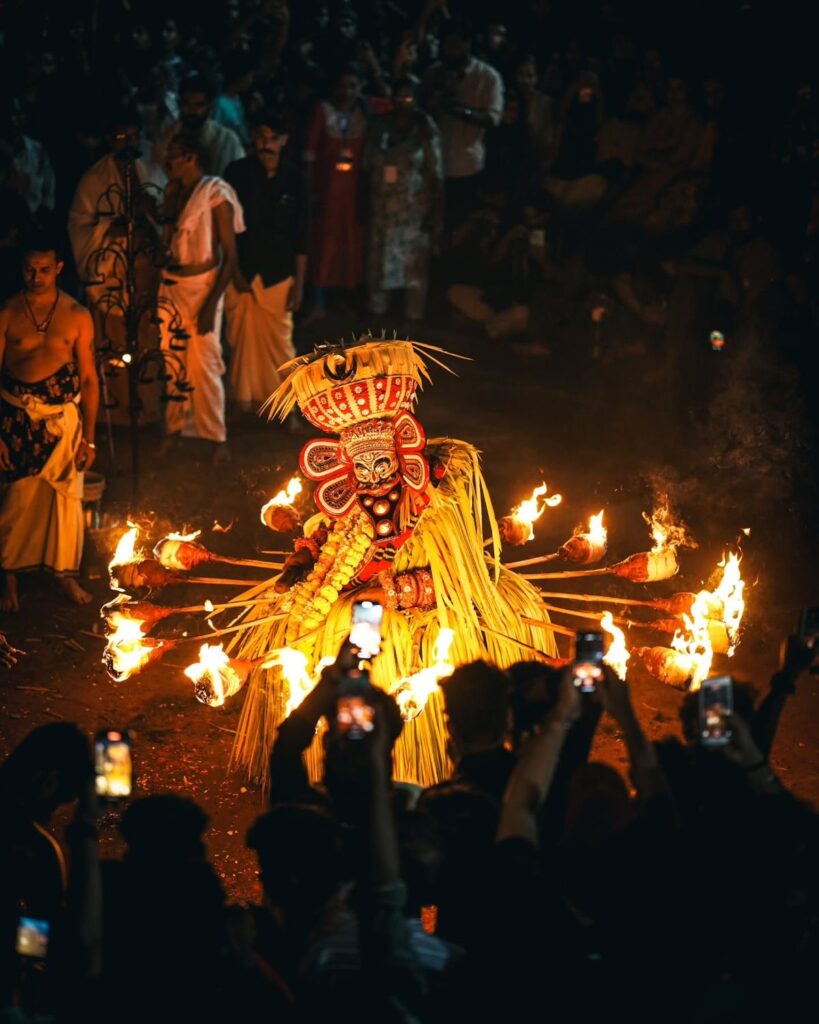
Theyyam is not symbolic worship; it is embodied divinity. The performer does not act as a deity—he is believed to be possessed by it. Once adorned and ritually invoked, the human self dissolves, and the divine consciousness takes over.
Devotees approach not as spectators but as seekers—asking questions, confessing fears, seeking justice, healing, and blessings. The deity listens, advises, blesses, and sometimes rebukes. In that sacred window, the boundary between mortal and immortal disappears.
Many Forms, One Sacred Truth
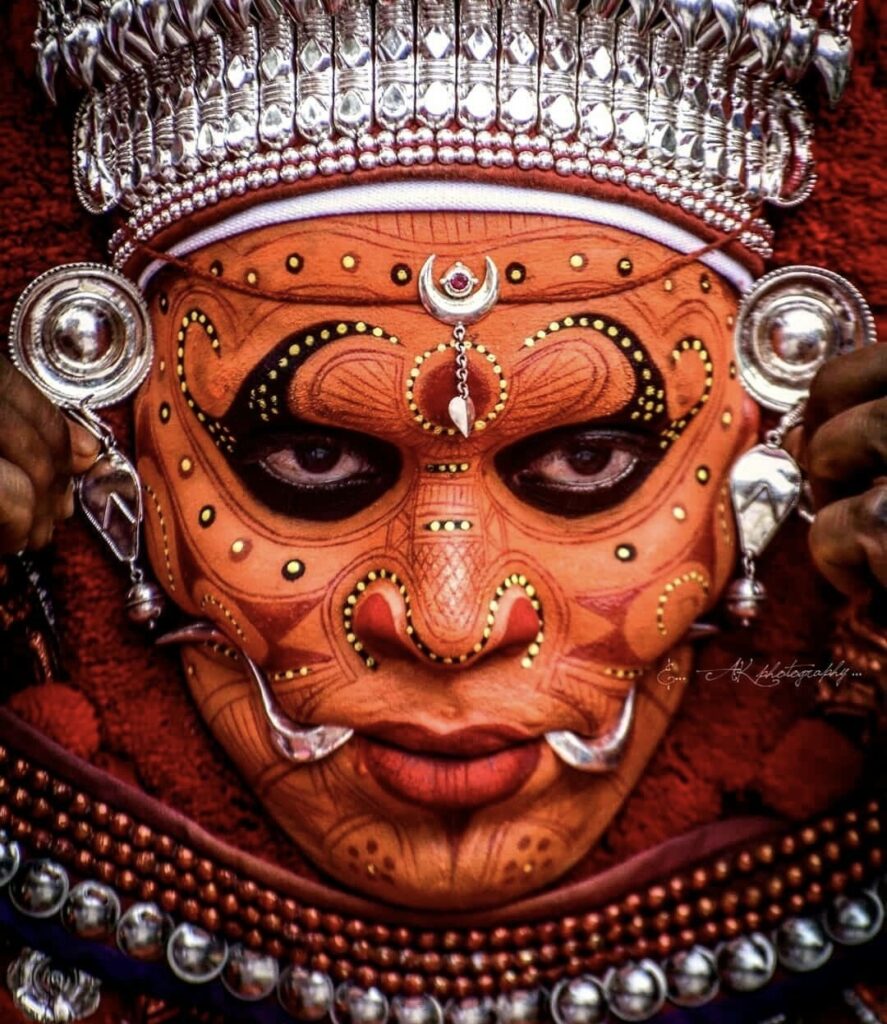
Each Theyyam represents a distinct cosmic energy, rooted in folklore, tribal memory, and local legends:
🔥 Fierce Guardian Deities
Manifestations like Gulikan and Vishnumoorthi appear terrifying, symbolizing cosmic balance, destruction of evil, and moral accountability.
🌺 Compassionate Mother Goddesses
Deities such as Muchilottu Bhagavathi embody nurturing power—protecting villages, granting fertility, health, and emotional solace.
🪔 Deified Ancestors and Folk Heroes
Many Theyyams are once-mortal humans—warriors, martyrs, and oppressed figures—elevated to divine status, preserving stories of resistance, sacrifice, and justice.
The Sacred Alchemy of Transformation
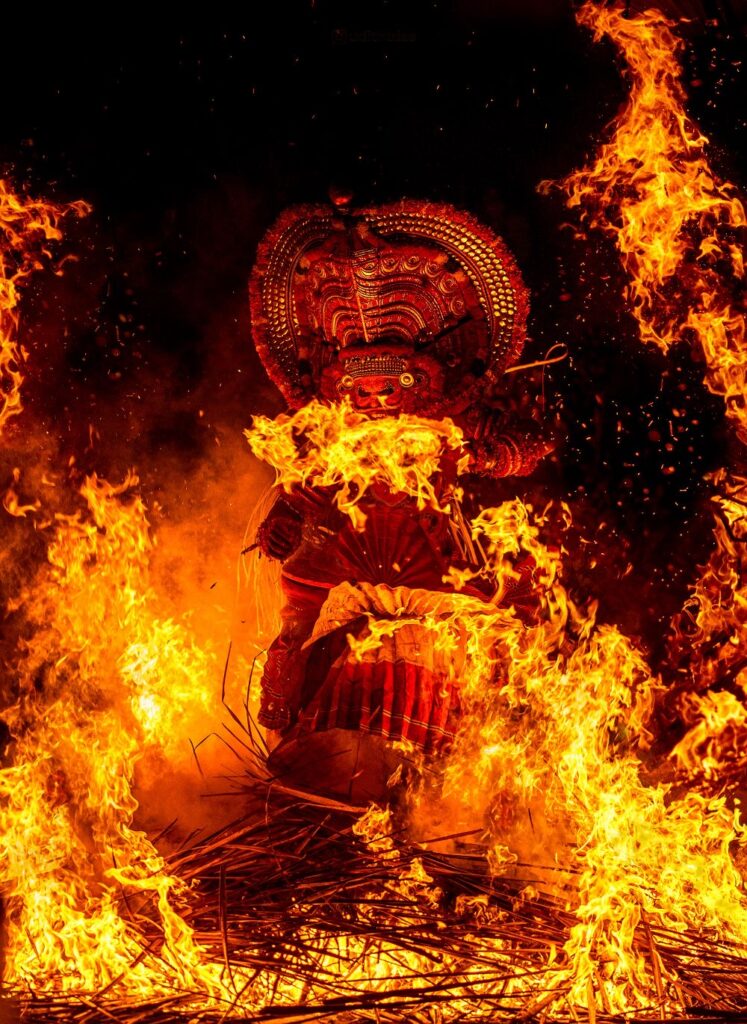
The making of a Theyyam is itself a ritual journey:
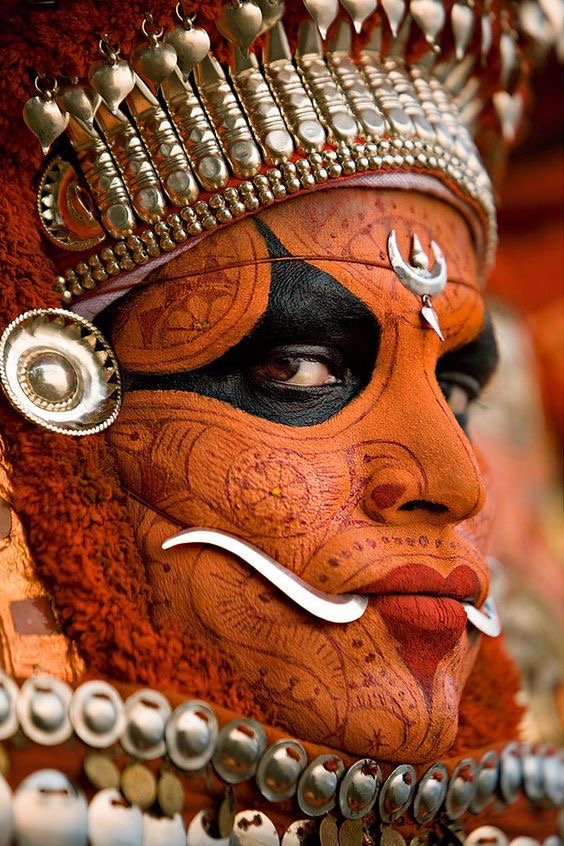
🎭 Iconic Costumes & Face Art – Massive headgears, intricate facial designs using natural pigments, and symbolic ornaments transform the body into a living shrine.
🥁 Rhythmic Invocation – The pounding drums are not music but calls—summoning the deity into the performer.
🔥 Trance & Possession – At the peak, the performer enters a divine trance, believed to channel the god’s will directly.
A Radical Space of Equality
One of Theyyam’s most powerful aspects is its social philosophy. Traditionally performed by communities from marginalized castes, Theyyam dissolves hierarchy. Kings bow, priests listen, and devotees kneel—because before the deity, all humans are equal.
Living Tradition, Eternal Spirit
Despite modernity, Theyyam remains fiercely alive—passed orally, guarded by ritual discipline, and renewed every season. It is history, theology, performance, and resistance merged into one sacred act.
When the drums fade and the crown is removed, the god departs. But for those who witnessed Theyyam, faith is no longer abstract—it has walked, spoken, and looked them in the eye.

