
Imagine a world where no patient dies waiting for a blood match.
Japan is moving that vision closer to reality with the development of universal artificial blood—a lab-engineered solution designed to be compatible with all blood types. This is not science fiction. This is frontier biotechnology redefining emergency medicine.
🧬 What Exactly Is Universal Artificial Blood?
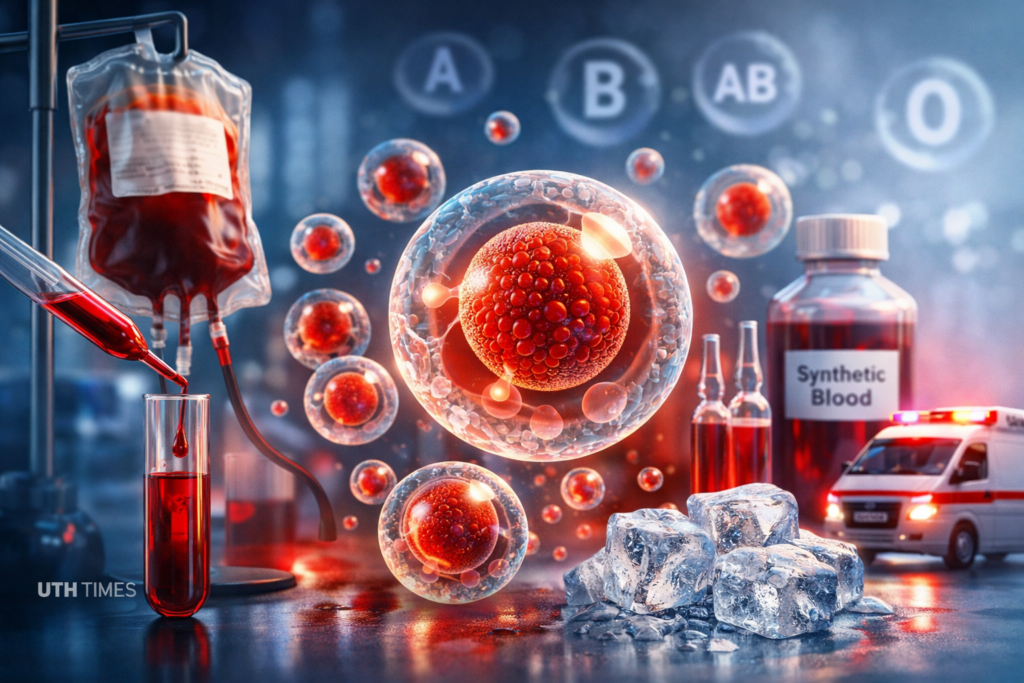
Unlike donated human blood, Japan’s artificial blood is created using hemoglobin extracted from expired donor blood, encapsulated inside microscopic lipid membranes to form hemoglobin vesicles (HbVs).
🔬 Core Features:
- 🩸 No ABO blood type markers
- 🧪 Encapsulated hemoglobin to prevent immune rejection
- 🧊 Shelf life of up to 2 years at room temperature
- 🚑 Immediate usability in emergencies
Because the outer membrane hides blood-type antigens, the body does not recognize it as A, B, AB, or O. This eliminates the need for cross-matching—one of the most time-sensitive challenges in trauma care.
🏥 Why This Changes Emergency Medicine

In accidents, natural disasters, and war zones, time is the difference between life and death.
⚡ Game-Changing Advantages:
- 🚨 No compatibility testing required
- 🌍 Ideal for remote or disaster-struck areas
- 🛡️ Reduced risk of viral transmission
- 🕒 Rapid deployment in ambulances and helicopters
Japan, being disaster-prone due to earthquakes and typhoons, has a pressing need for portable and durable blood supplies. Traditional blood expires within 42 days and requires refrigeration. Artificial blood removes these constraints.
🔬 The Science Behind the Innovation
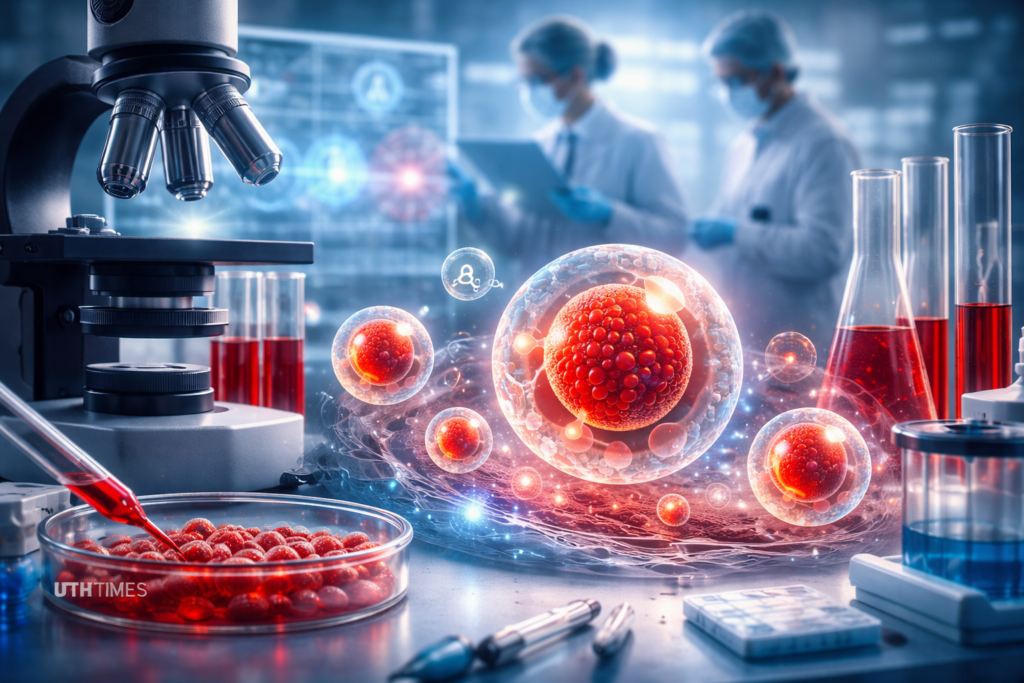
The development has been led by researchers at institutions like Nara Medical University.
🧠 How It Works:
- 🧫 Hemoglobin molecules carry oxygen just like natural red blood cells.
- 🧊 Lipid membranes act as artificial cell walls.
- 💉 Once transfused, they circulate and deliver oxygen to tissues.
Crucially, these vesicles are small and flexible, allowing smooth passage through capillaries. The body eventually metabolizes them safely.
Clinical trials have already begun to evaluate safety and oxygen-carrying efficiency in humans. Early results suggest strong tolerance without major adverse immune reactions.
🌍 Global Implications
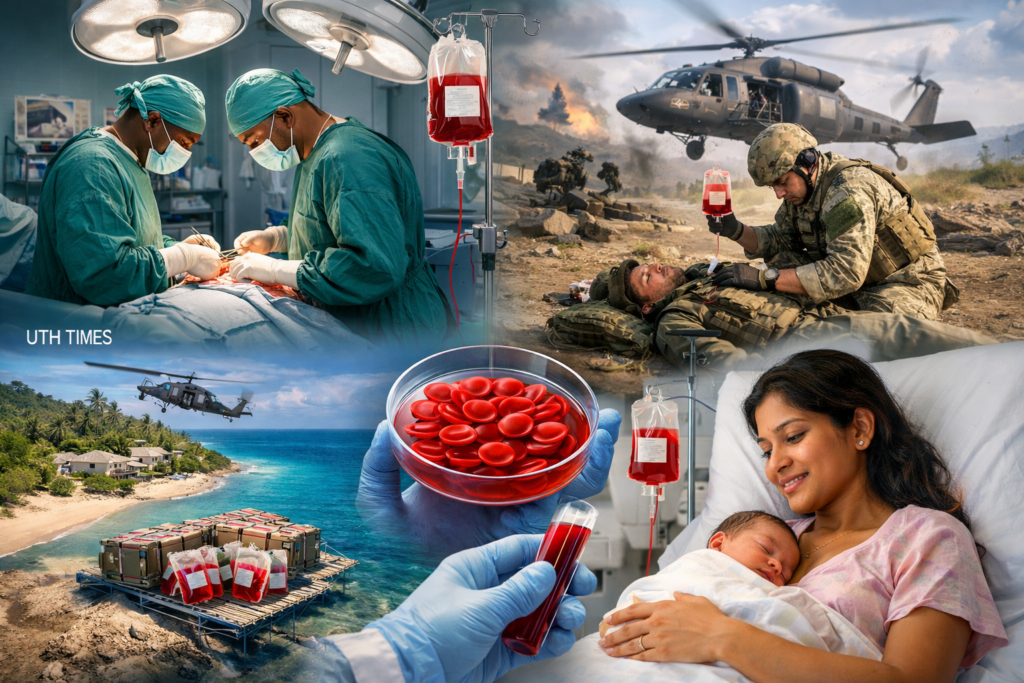
This innovation could reshape healthcare systems worldwide.
🌐 Potential Impact:
- 🩺 Safer surgeries in developing countries
- 🚁 Military battlefield stabilization
- 🏝️ Emergency stockpiles for island nations
- 👶 Reduced maternal mortality from hemorrhage
If scaled successfully, universal artificial blood could solve chronic shortages—especially in aging societies like Japan, where donor numbers are declining.
Regulatory approvals and large-scale production remain challenges. But the trajectory is clear: medicine is shifting from donor dependency to bioengineered precision. This isn’t just about replacing blood.
It’s about replacing uncertainty.

