
India has just rewritten the global hypersonic rulebook — quietly, decisively, and ahead of the world’s most advanced powers. In a landmark technological breakthrough, scientists at Defence Research and Development Laboratory (DRDL) under Defence Research and Development Organisation (DRDO) have successfully operated a full-scale scramjet combustor for 12 continuous minutes — a feat no nation, including the United States, has publicly demonstrated at this operational depth.
This is not a lab curiosity.
This is the hardest problem in hypersonic warfare — solved.
🔥 Why Scramjets Are the Final Boss of Hypersonics
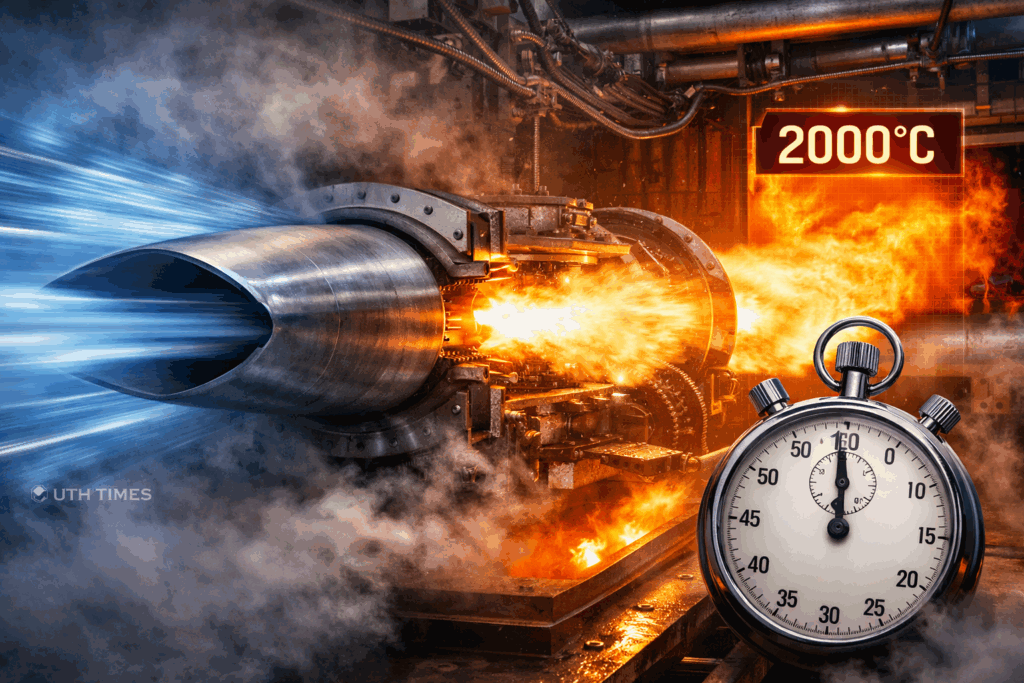
Scramjet (Supersonic Combustion Ramjet) engines don’t just push boundaries — they defy physics at the edge of control.
🚀 Air enters the engine at supersonic speed
🔥 Fuel must ignite and burn without slowing airflow
⚙️ Temperatures cross 2,000°C
⏱️ Stability must be maintained for mission-relevant durations
Most programs globally collapse at seconds.
India sustained it for 12 uninterrupted minutes — long enough for real combat missions.
This single success clears the largest technological bottleneck in building hypersonic cruise missiles.
⚡ What This Unlocks for India
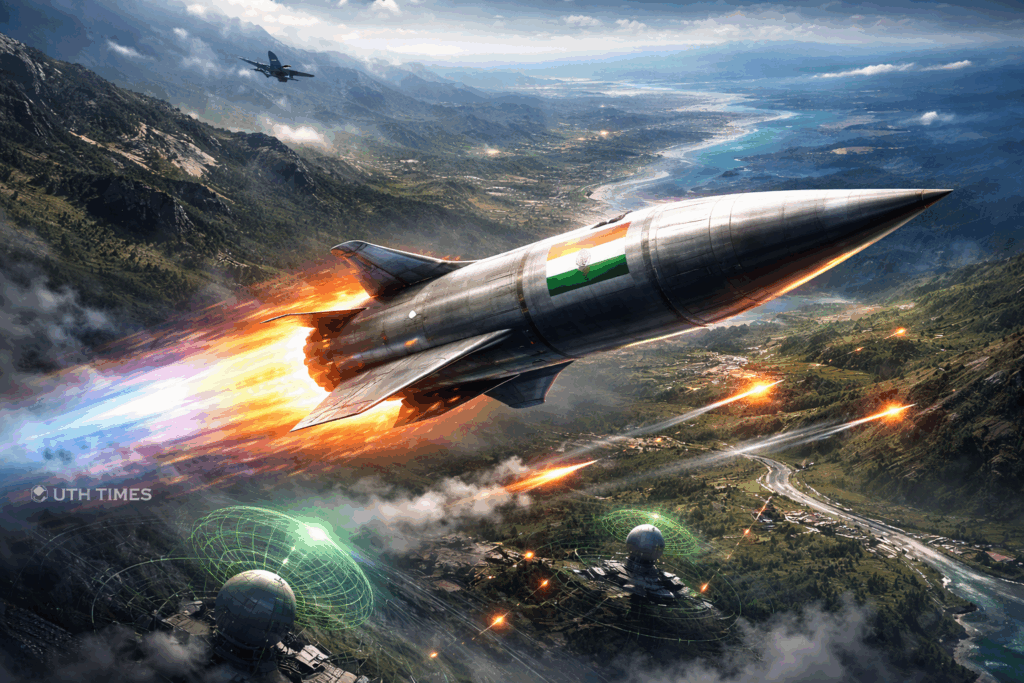
With sustained combustion achieved, India now stands at the threshold of an entirely new weapons class.
🛰️ Mach 5+ cruise missiles (≈6,100 km/h)
🧭 Low-altitude, terrain-hugging flight
🎯 Extreme maneuverability mid-course
🛡️ Near-immunity to all known air-defence systems
Unlike ballistic missiles, hypersonic cruise weapons can think, turn, and strike unpredictably.
This is why scramjets matter.
And this is why this test changes everything.
🌍 Global Context: Why the World Is Watching
The U.S., France, and others have invested decades into scramjet research — with partial, short-duration successes.
India has now publicly crossed a threshold many believed was a decade away.
Not through shortcuts.
Not through imports.
But through indigenous combustion physics, materials science, and thermal control.
This isn’t catching up.
This is overtaking silently.
🧠 What Comes Next
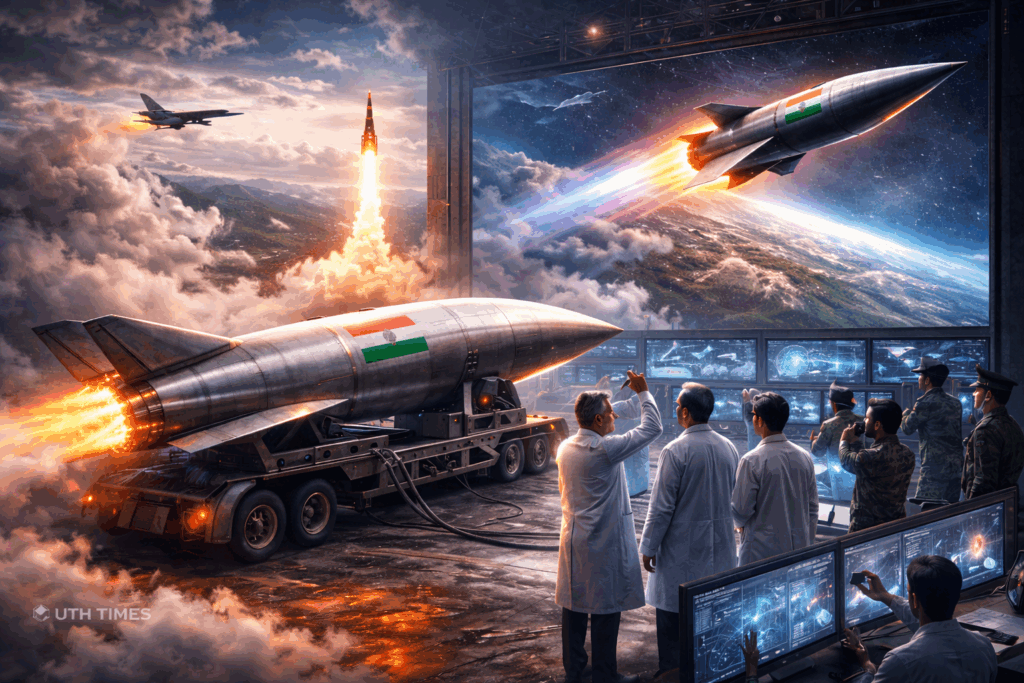
With the engine problem cracked, India moves into:
🔧 Flight integration
✈️ Prototype testing
🧪 Operational trials
Strategically, this marks India’s entry into the rarest tier of future warfare — alongside only a handful of nations, and in some aspects, ahead of them.
This wasn’t just a test.
It was a statement.
India didn’t chase the hypersonic future —
It arrived there first.

