
What if Mars was no longer a months-long endurance test—but a fast, strategic sprint? 🚀 Russia may have just nudged that future closer.
The Big Reveal: Rosatom’s Plasma Leap
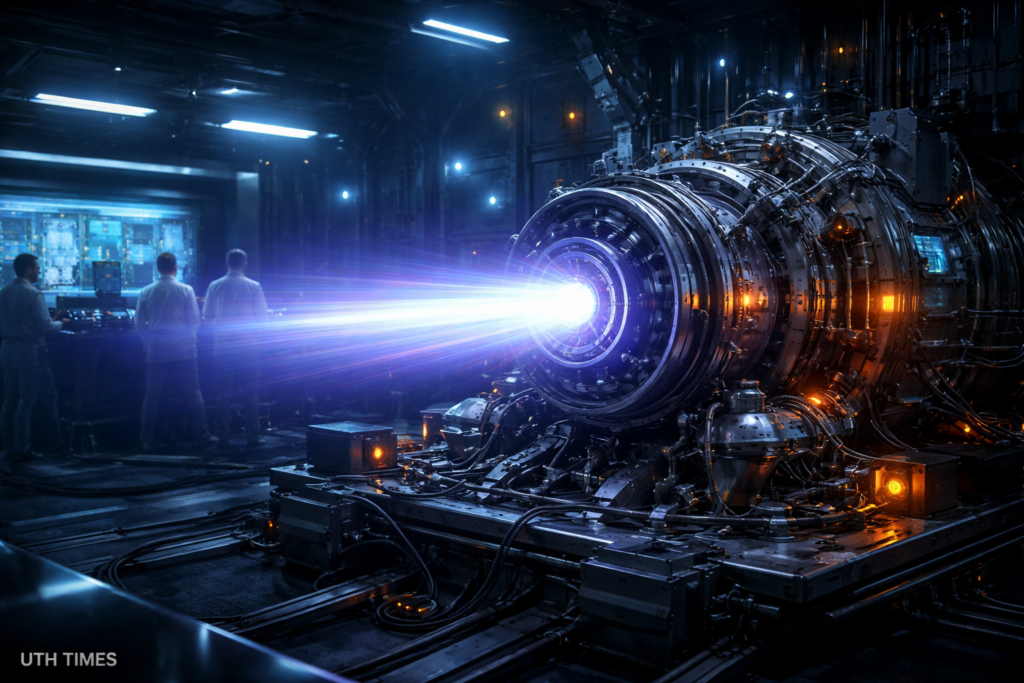
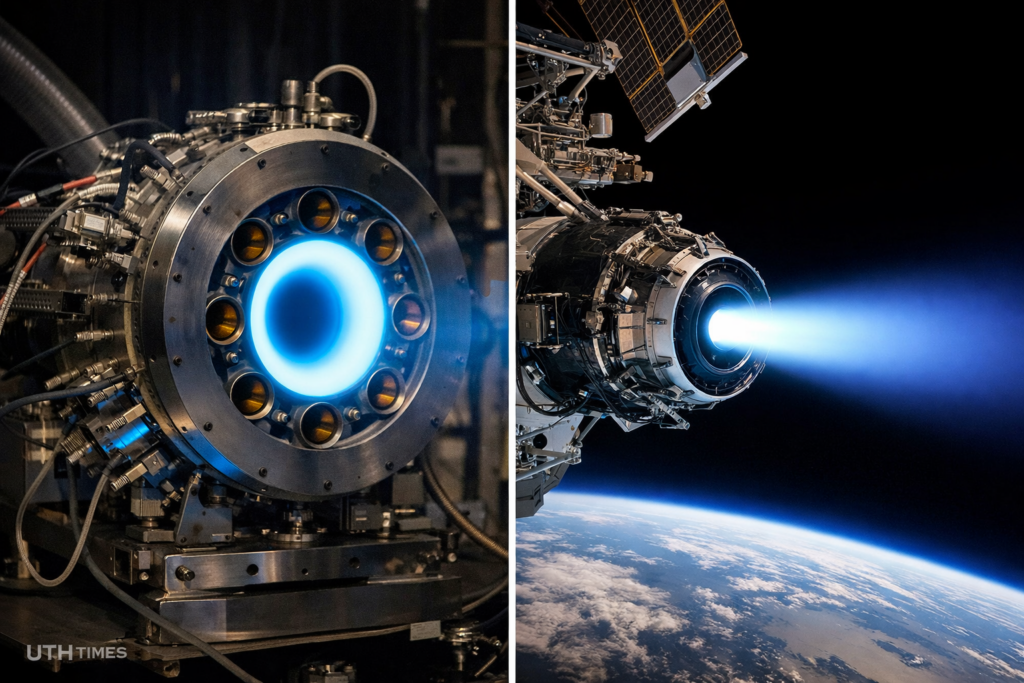
Rosatom has unveiled a plasma propulsion prototype that’s already stirring global attention. Unlike chemical rockets that burn fuel explosively, this engine accelerates charged particles (plasma) to ~100 km/s, delivering sustained thrust over long durations. In testing, the system has reportedly achieved up to 2,400 hours of continuous operation, a key benchmark for deep-space credibility.
🔹 Why it matters: Endurance + velocity = interplanetary feasibility.
How the Plasma Engine Works
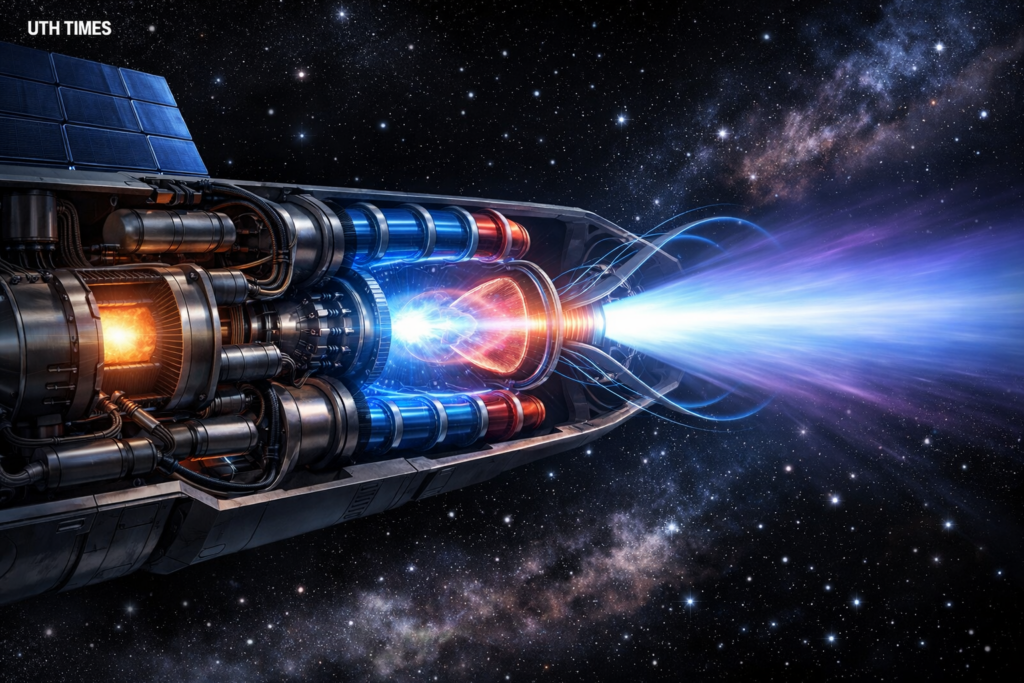
This isn’t sci-fi—it’s applied plasma physics.
⚡ Electromagnetic acceleration pushes ionized particles to extreme velocities
🧲 Electric and magnetic fields control exhaust direction and thrust
🔋 Nuclear-electric compatibility allows long-duration power supply
🧪 Low propellant consumption compared to chemical engines
The result? High specific impulse—meaning far more efficiency per kilogram of fuel, which is the holy grail of space propulsion.
Speed That Rewrites the Map
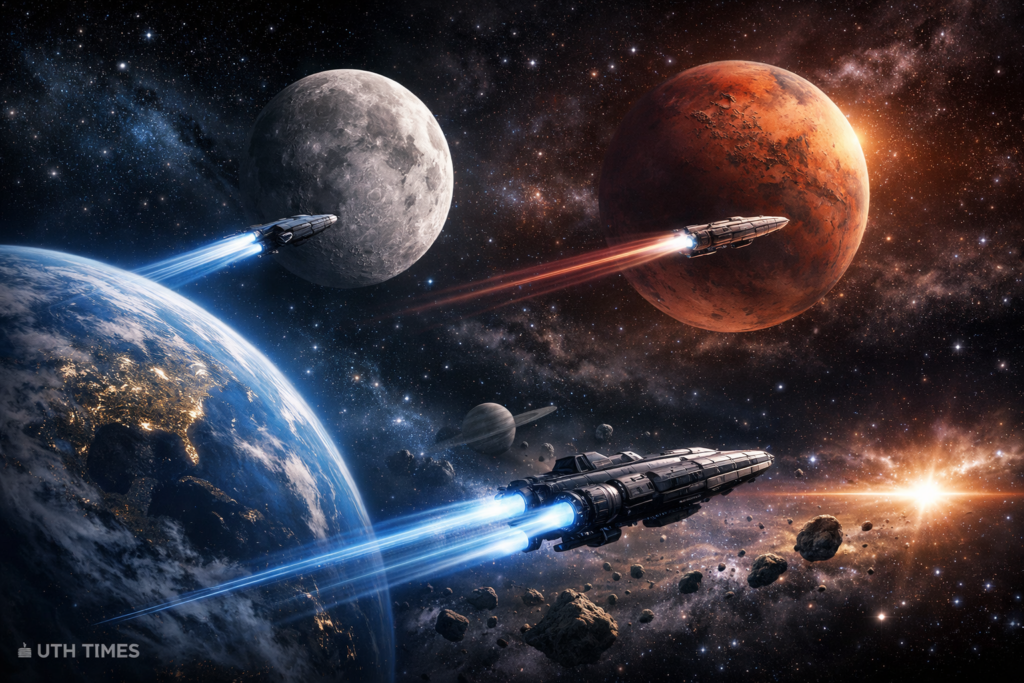
The headline-grabber is travel time.
🌕 Earth → Moon: Theoretical ~12 hours
🔴 Earth → Mars: ~30–60 days (down from 6–9 months)
🛰️ Deep-space missions: Faster transits with reduced exposure to radiation
Shorter journeys don’t just save time—they protect astronauts by minimizing cosmic radiation and microgravity stress.
Why This Is Strategically Massive
This engine isn’t just about speed—it’s about space dominance.
🛡️ Crewed missions become safer and more practical
🧭 Military & satellite maneuverability increases dramatically
🌍 Scientific payloads can be heavier and more frequent
🏁 Geopolitical signaling: Leadership in next-gen propulsion
If scaled and space-qualified, plasma propulsion could redefine how power is projected beyond Earth.
The Catch: Prototype vs. Reality
Let’s be precise.
⚠️ Still a ground-tested prototype
⚠️ Requires robust space-grade power systems
⚠️ Full integration timelines remain undisclosed
But breakthroughs begin exactly here—at the prototype stage.
This isn’t about one engine. It’s about a shift—from explosive launches to electric endurance, from months to days, from limits to momentum.
If space is the next frontier of influence, plasma engines may be the new clock—and Russia just reset the time. ⏱️🚀

