
🚉 A Living Monument of Movement
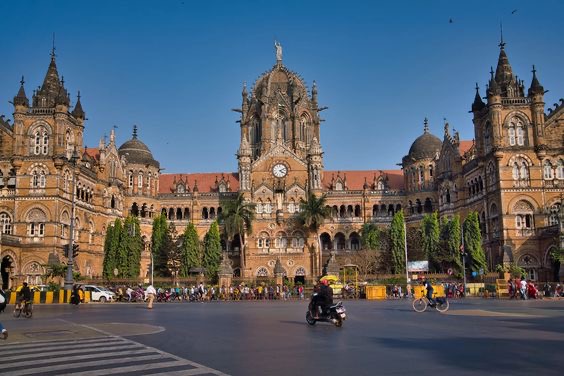
The Chhatrapati Shivaji Maharaj Terminus (CSMT) isn’t just a railway station — it’s a palace where steel rails kiss stone heritage. Once known as Victoria Terminus, this Mumbai marvel became the first standalone railway station in the world to be recognized as a UNESCO World Heritage Site in 2004 — not part of a group, but celebrated in singular glory.
A fusion of functionality and fine art, CSMT embodies the rhythm of a city and the soul of a nation.
🏛️ Born from the British Raj, Inspired by India
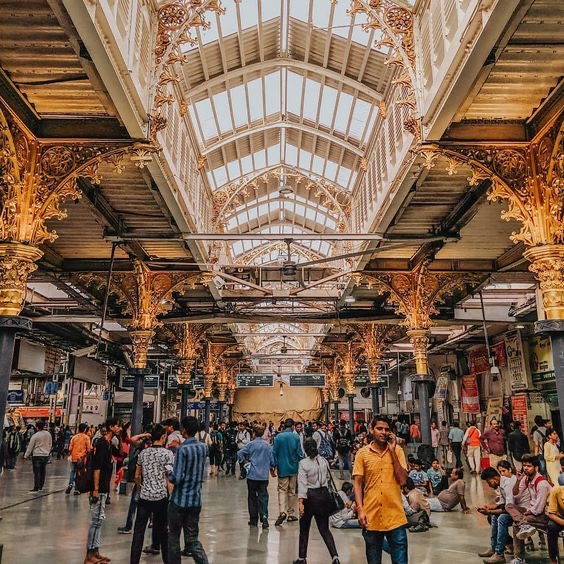
Designed by the brilliant British architect Frederick William Stevens, the station was constructed over 10 years (1878–1888) at a then-staggering cost of ₹16.14 lakh.
🎨 Architectural Brilliance
- 🏰 Victorian Gothic Revival: Soaring pointed arches, turrets, ribbed vaults, and flying buttresses — echoing European cathedrals
- 🕌 Traditional Indian Craftsmanship: Carved stone screens (jaalis), peacocks, elephants, and intricate woodwork — all deeply Indian
- 🧱 Locally sourced sandstone and limestone created a proud Indian foundation for a colonial dream
CSMT became the architectural icon of British colonial railways, combining Western aesthetics with Indian storytelling.
🛤️ More Than Just A Terminal — A Timeline in Itself
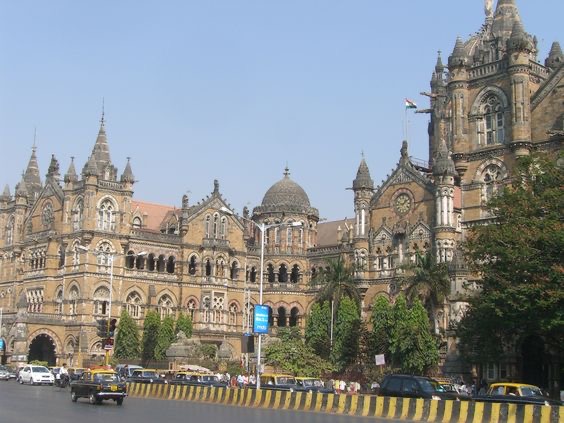
While the terminus bustles with over 3 million daily commuters, it also guards the memory of the first passenger train in India — which ran from Bori Bunder (old name of CSMT) to Thane on 16 April 1853.
🕰️ A Station Frozen in Motion
- 📚 A 19th-century Italian marble lion flanks the entrance — symbolising power and vigilance
- 🕊️ A grand central dome (inspired by St. Pancras in London) stands over the main concourse — as if time itself watches over
- 🔔 The old mechanical railway clock still ticks — unbothered by tech, beating with legacy
🏆 A UNESCO Recognition Like No Other

Unlike other stations in a group listing, CSMT was recognized as a standalone heritage site — a rare honour. It was praised not just for architecture, but for its dual mastery of art and engineering. It wasn’t just beautiful; it worked — and still does.
UNESCO called it a “perfect blend of cultures”, where Gothic meets Mumbai, and tradition meets transport.
🔚 A Platform to the Past, Present & Future
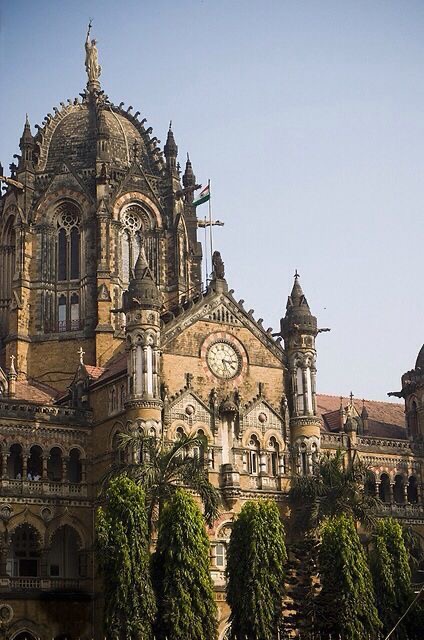
From steam to speed trains, CSMT has seen India change. And yet, it stands proud — not just as a place where journeys start and end, but as a journey in itself. A place where bricks breathe history, and platforms pulse with life.
Next time you pass through it, don’t just catch a train. Catch the story.

