
🌍 The Lie That Keeps You Calm
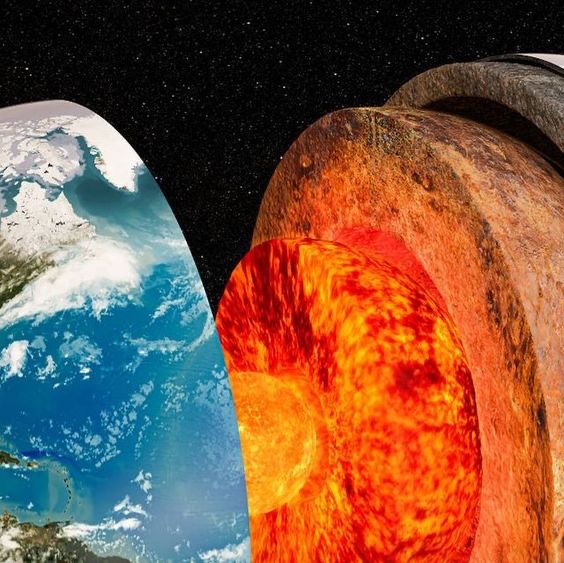
A meteor didn’t end the Younger Dryas. That’s the bedtime story they tell you so you can sleep. The truth? Earth’s greatest disasters share a hidden, recurring trigger — and it’s unfolding again today.
🧲 Laschamp Event — When Earth’s Shield Vanished
42,000 years ago, the Laschamp Geomagnetic Excursion almost erased humanity. Evidence from ancient kauri trees in New Zealand shows a massive spike in ^14C, revealing our magnetic field had collapsed to 6% of its strength.
- 🌌 Auroras blazed over the equator.
- ❄ Wind patterns flipped, ice sheets surged.
- 🪓 Neanderthals disappeared.
- 🏞 Humans hid in caves, painting with red ochre to protect against UV radiation.
📜 The Pattern of Catastrophes
History is scarred with magnetic upheavals that align with climate chaos and mass extinctions:
- 🧊 Lake Mungo (26,000 years ago): Last Glacial Maximum’s deep freeze.
- ❄ Gothenburg (12,000 years ago): Younger Dryas cold snap — falsely pinned on a meteor.
- 🌵 Solovki (6,000 years ago): Sahara’s sudden desertification, collapse of male genetic lines.
- ⚔ Sterno-Etrussia (3,000 years ago): Bronze Age collapse — wars, migrations, societal ruin.
⚠ Today — History Is Repeating
Since 1995, the magnetic poles have been sprinting at 30–55 km/year, the fastest since Laschamp. The field has weakened for 200 years, accelerating sharply.
- 🌡 Extreme weather, migrations, and conflict are on the rise.
- ☢ Weak shielding means more cosmic radiation, possibly triggering earthquakes and volcanic eruptions.
- 🌞 A Grand Solar Minimum (2030–2040) could make cosmic rays deadlier than ever.
🎯 The Meteor Myth — A Trojan Horse

The meteor theory is deliberate misdirection. It tells you humans control the climate through taxes and tech, while elites quietly prepare underground for the true threat — magnetic field collapse and cosmic radiation.
🔚 Conclusion — The Clock Is Ticking
This isn’t superstition. The science is written in tree rings, ice cores, and the ruins of fallen civilizations. Earth’s magnetic field is shifting fast — and this time, we’re here to witness it.

