
Most festivals are remembered by dates.
Makar Sankranti is remembered by direction.
That single difference is what makes it extraordinary.
While most Indian festivals follow the lunar calendar and shift every year, Makar Sankranti is fixed—because it is not tied to belief, mythology, or tradition alone. It is tied to the Sun itself.
This is not just celebration.
This is celestial alignment.
☀️ A Festival Written in Astronomy
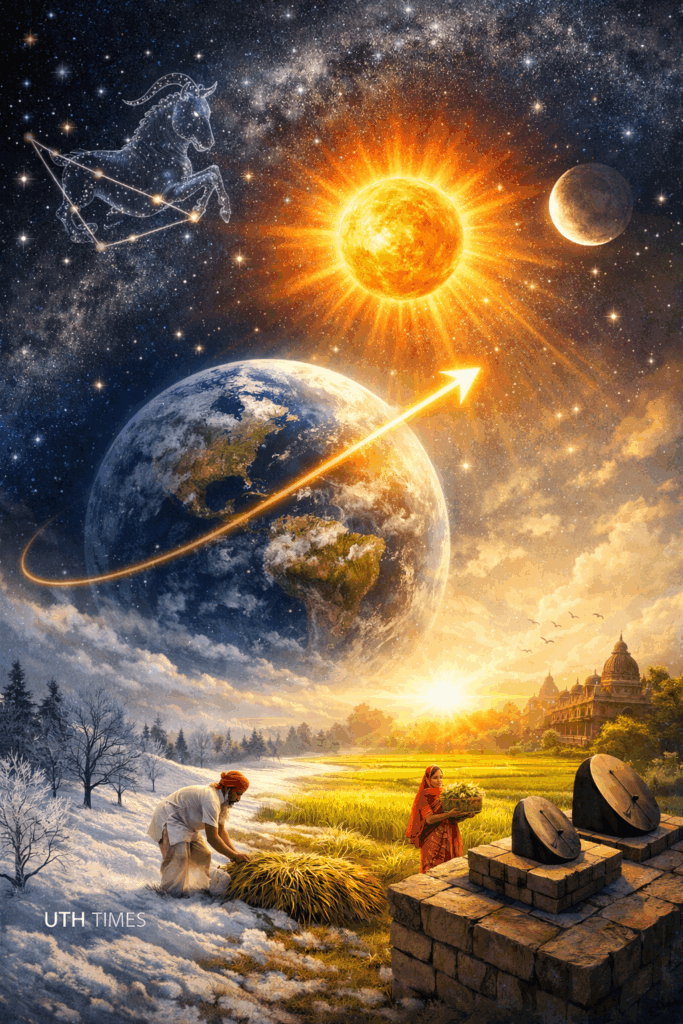
Makar Sankranti marks the moment when the Sun enters the zodiac sign of Capricorn (Makara) and begins its northward journey, known as Uttarayan.
This transition is not symbolic—it is measurable.
- 🌍 The Earth’s tilt changes how sunlight falls on the Northern Hemisphere
- ☀️ Days begin to lengthen
- 🌱 Solar energy slowly intensifies, impacting climate and agriculture
Ancient Indian astronomers observed this shift thousands of years ago—without telescopes, satellites, or software—and marked it as a turning point of the year.
That observation still holds true today.
🧭 Why Uttarayan Matters More Than We Think
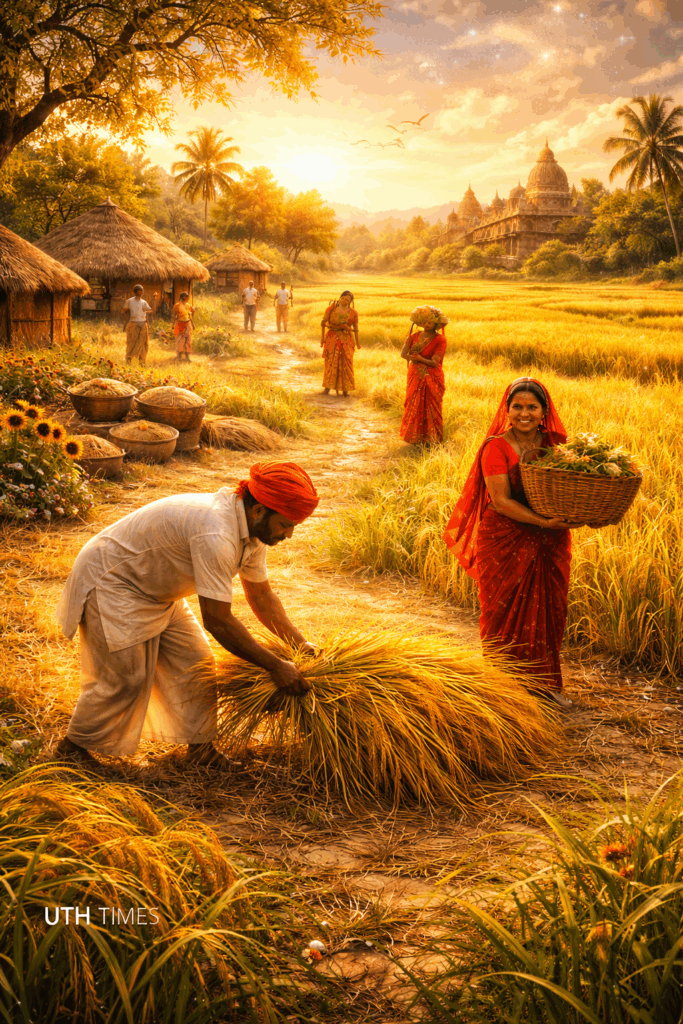
Uttarayan literally means “the Sun moving north.”
But culturally, it meant much more:
- 🔄 A shift from dormancy to activity
- 🌾 The end of the harsh winter cycle for crops
- 🧠 A rise in physical and mental vitality
That is why Makar Sankranti was seen as a reset point, not a ritual day.
Even the Bhagavad Gita mentions Uttarayan as a spiritually significant phase—because ancient India understood one thing clearly:
Human life is deeply affected by solar movement.
🪁 Kites, Til, and the Science Behind Rituals
Nothing about Makar Sankranti is random.
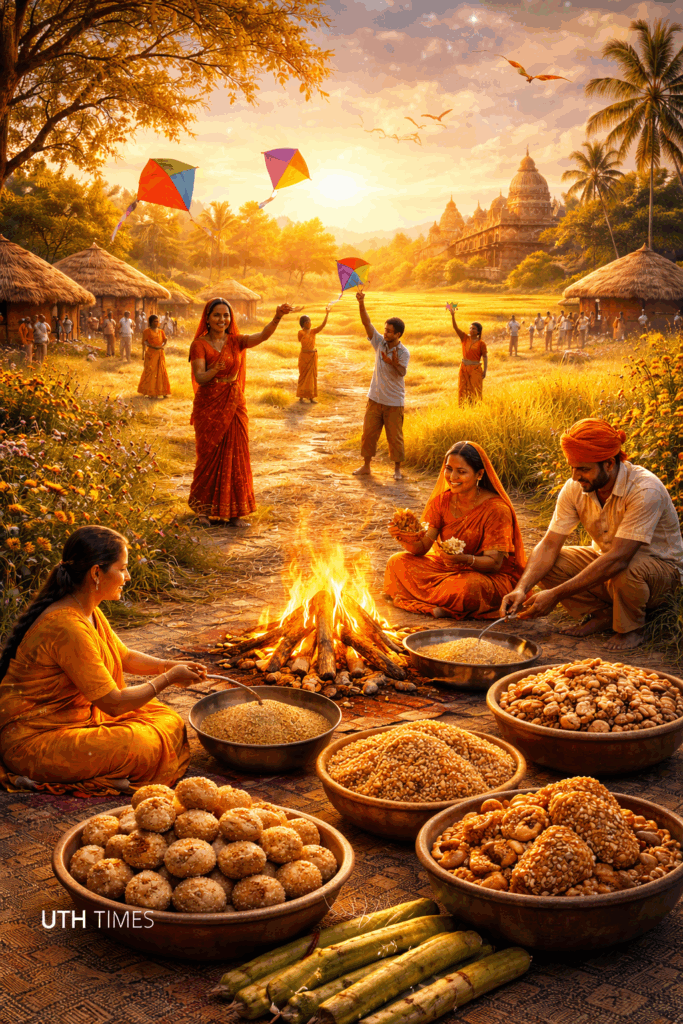
- 🪁 Flying kites puts people under direct sunlight, boosting Vitamin D after winter
- 🌾 Sesame (til) and jaggery generate heat and energy in the body
- 🔥 Bonfires symbolize the shedding of old inertia and cold
What looks like culture is actually climate-adaptive science, disguised as tradition.
🌍 A Pan-Indian Solar Celebration
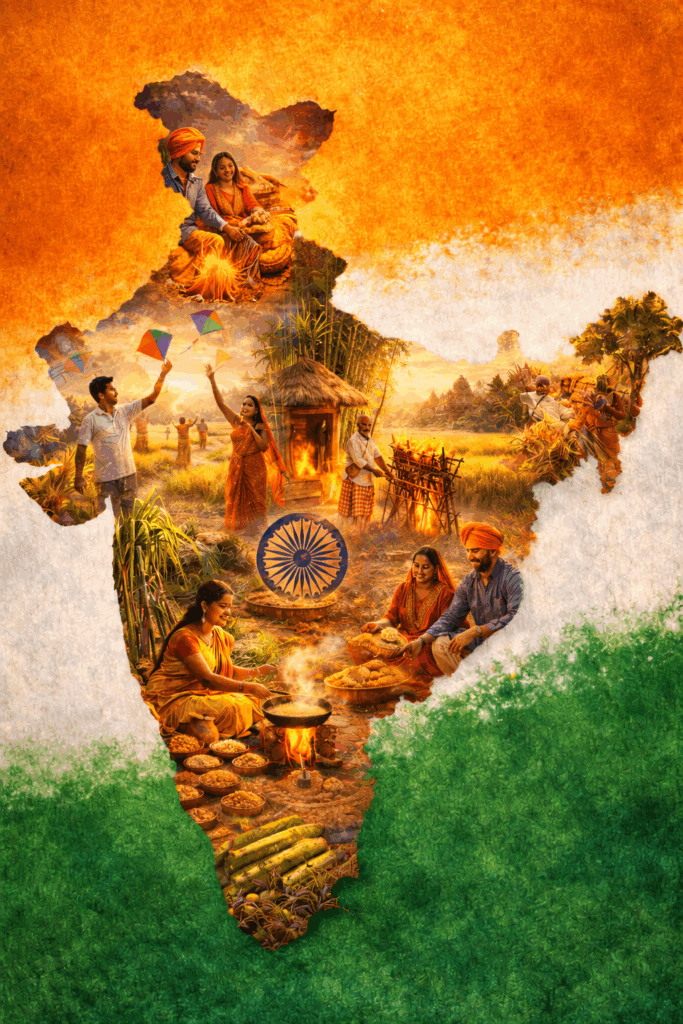
Different names, same Sun:
- Pongal in Tamil Nadu
- Uttarayan in Gujarat
- Magh Bihu in Assam
- Lohri in Punjab
India didn’t celebrate one festival—it celebrated one solar moment, in many languages.
That’s not coincidence.
That’s civilizational coordination.
✨ More Than Faith—A Fact of Nature
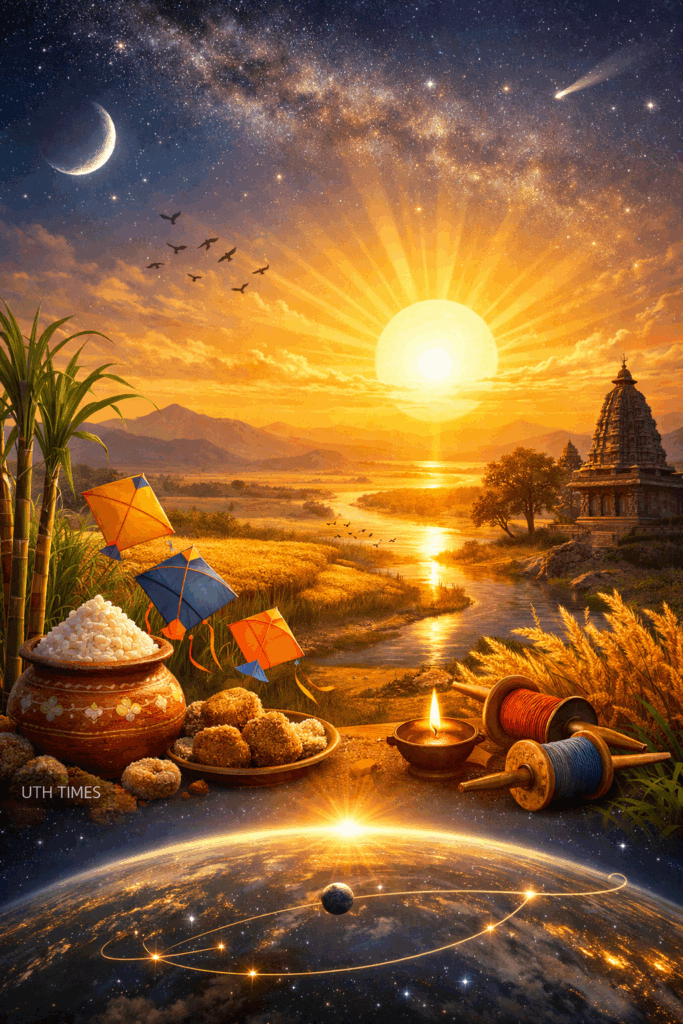
Makar Sankranti doesn’t ask you what you believe.
It happens whether you celebrate it or not.
The Sun still changes direction.
The light still increases.
The Earth still responds.
And that is why Makar Sankranti stands apart.
It is not just a festival marked on a calendar—
it is a cosmic event marked in the sky.
A reminder that long before modern science,
India was already living in sync with the universe. 🌞

