
In the 14th century, a Vedic scholar penned something so precise, it would take modern science over 500 years to confirm. Was it pure chance—or proof of ancient India’s hidden scientific mastery?
📜 The Rig Veda’s Hidden Equation
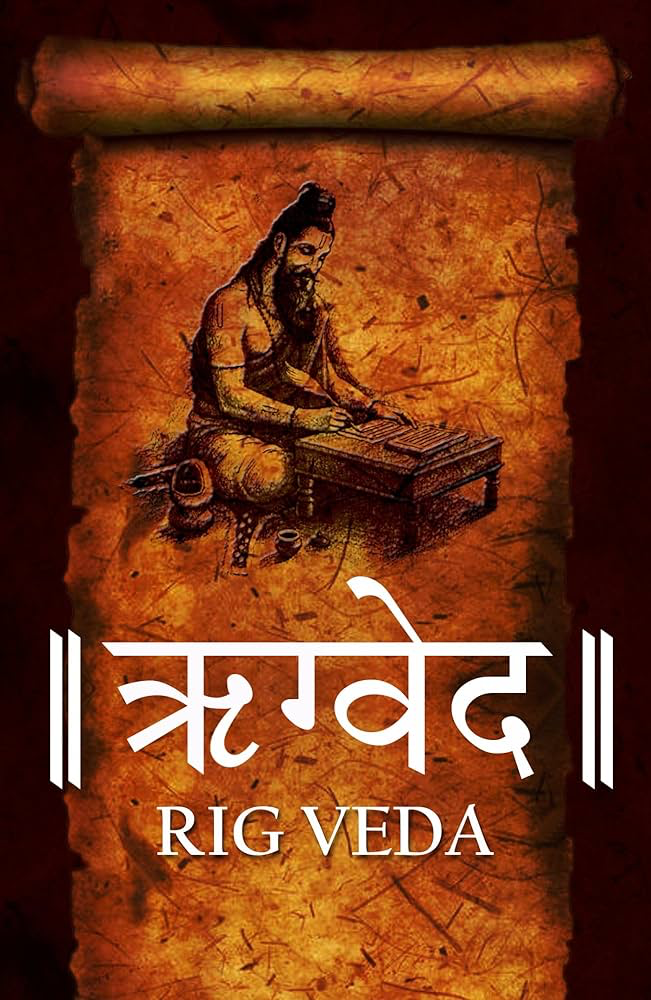
The Rig Veda Samhita (1.50) contains a verse in Sayana Bhashya stating:
“The Sun traverses 2,202 yojanas in half a nimisha.”
Breaking it down:
- 1 Yojana ≈ 8 miles
- 1 Nimisha ≈ 16/75 seconds (~0.2133 sec)
- Half Nimisha ≈ 0.1067 sec
The calculation:
- 2,202 yojanas × 8 miles = 17,616 miles
- 17,616 miles ÷ 0.1067 sec ≈ 164,000+ miles/sec
With historical variations in the “yojana,” this figure can reach ~185,793 miles/sec, eerily close to the modern value of light speed (186,282 miles/sec).
🔍 Possible Explanations
Was Sayana’s number a fluke? Or does it hint at a deeper scientific heritage?
- 📖 Symbolic Interpretation: Some scholars believe it’s allegorical—using cosmic distances to describe divine brilliance.
- 🔭 Advanced Observation: Ancient Indian astronomers were masters of geometry, timekeeping, and celestial tracking—perhaps they had ways to infer cosmic speeds.
- 🕉 Lost Knowledge: The Vedas often encoded complex astronomical data in poetic hymns, suggesting a fusion of spirituality and science.
🌏 Science Meets Spirituality
The brilliance of this discovery lies in India’s holistic approach to knowledge. For ancient scholars, studying the cosmos wasn’t just a scientific pursuit—it was a spiritual journey. Light was not merely a physical phenomenon; it was a metaphor for truth, consciousness, and cosmic order.
From Rig Veda hymns to Aryabhata’s astronomical calculations, India’s intellectual tradition consistently blurred the line between metaphysics and mathematics.
⏳ Conclusion
Whether Sayana’s figure was the result of precise observation, intuitive genius, or symbolic insight, it reminds us that humanity’s fascination with light transcends time.
From the Rig Veda to Einstein, the quest to understand light connects us across centuries. Sometimes, the past doesn’t just echo the future—it illuminates it. ✨

