
In a dramatic archaeological breakthrough, the Archaeological Survey of India (ASI) has unveiled a set of five ancient copper-plate charters at Kalahasti (in Tirupati district, Andhra Pradesh) — dating back to 3 November 1576 CE under the reign of Srirangadevaraya‑I of the Vijayanagara Empire.
These modest copper sheets now shine as powerful windows to a bygone era — a time when kings sealed their devotion and political power in metal, ensuring survival of ritual, memory and law for centuries to come.
🏺 The Charter: Script, Date & Context
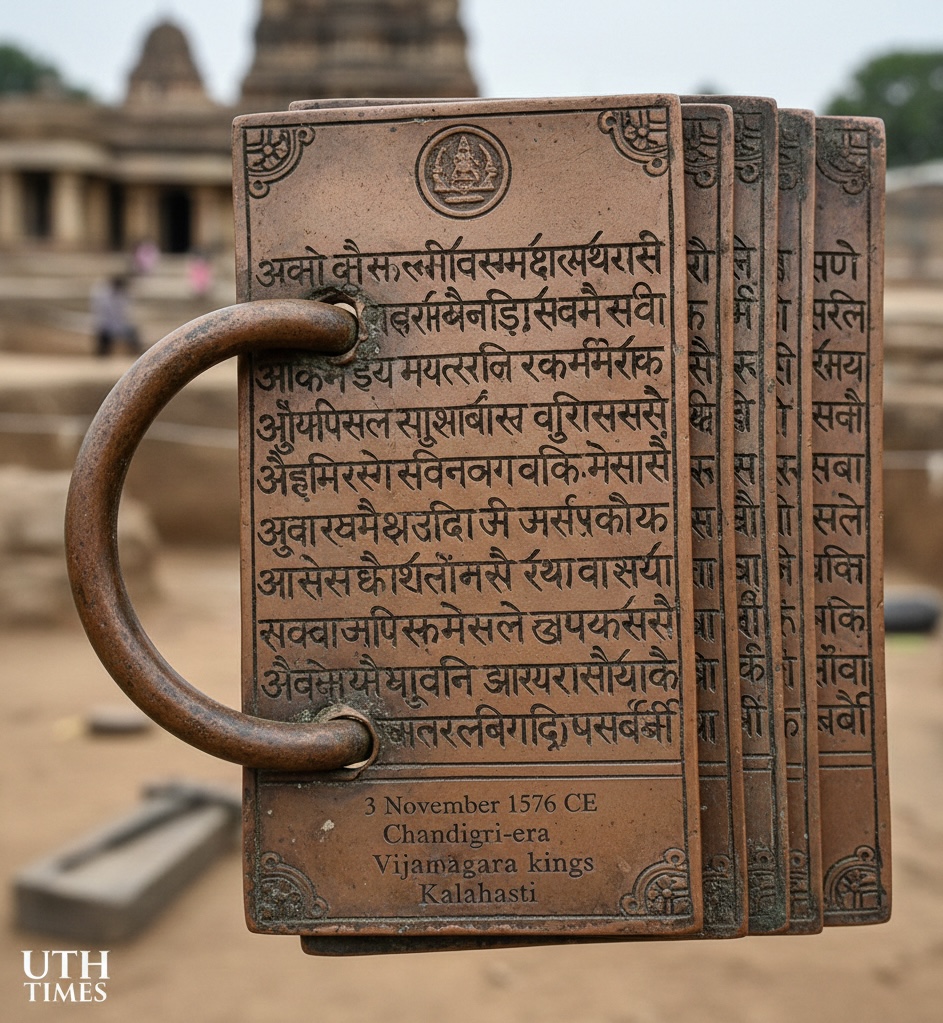
- The five plates are engraved in Sanskrit, using the elegant Nandināgari script — a choice reflecting the scholarly and pan-Indian administrative culture of the Vijayanagara realm.
- The charter is precisely dated: 3 November 1576 CE, anchoring this grant firmly in the late sixteenth century, decades after the golden age of the empire.
- The discovery at Kalahasti — a major temple town — underscores the continued religious and civic vitality of the region under Chandragiri-era Vijayanagara kings.
📜 What the Grant Records — Villages, Recipients & Purpose
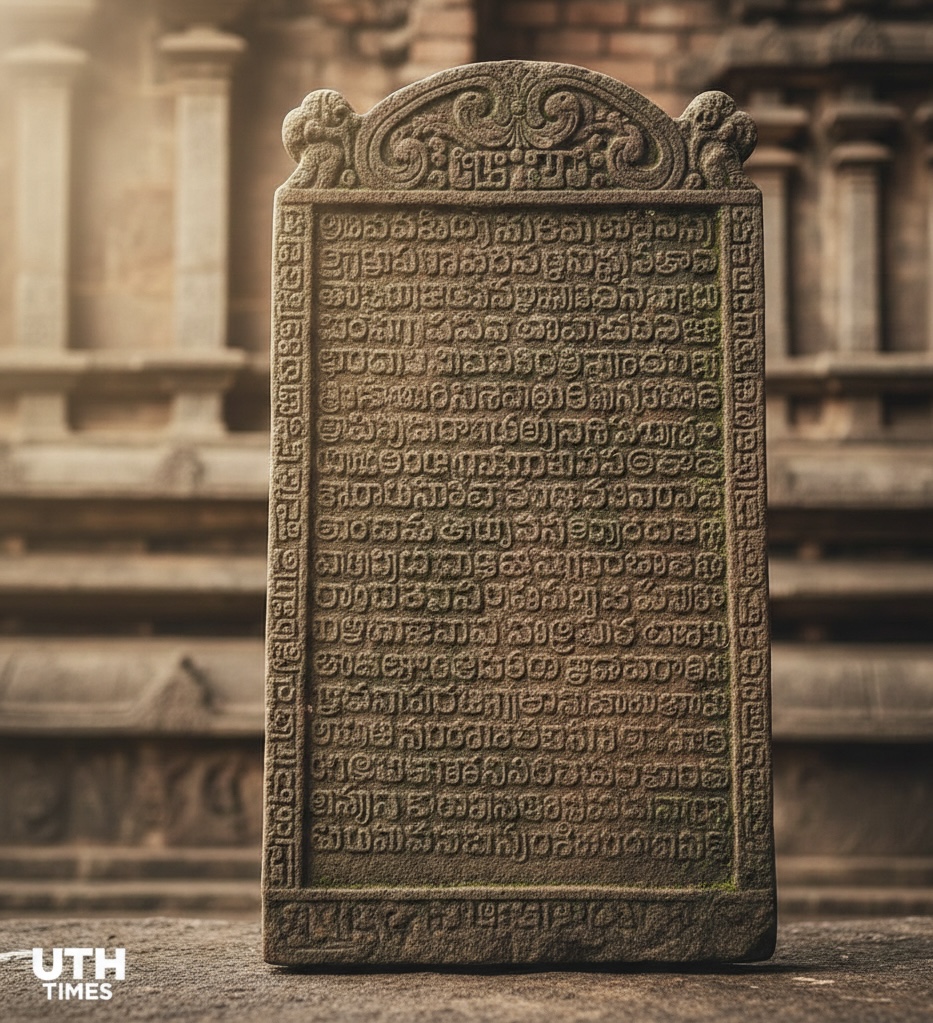
The inscription solemnly documents the grant of eight villages to a Brahmana beneficiary:
- Villages named in the charter: Nadukadu, Kampilli, Andalamala, Upateru, Dugarajapattana, Piligunchalapotu, Chimalapadu, and Tirumuru (renamed Vengalambapura).
- The beneficiary is Lakshmipati Bhatta, son of Timmavadhani, and grandson of Yadati Narasabhupala of Pedanadusima, belonging to the domain of Chandragiri Rajya.
The grant was not mere largesse — it carried a sacred directive. The villages were endowed for sustaining ritual services, daily food-offerings (prasada), and renovation works at the temple — specifically at the Sri Kalahastisvara Temple.
The charter further names the official scribe/composer of the grant: Ganapayacharya, son of Virana — highlighting the bureaucratic precision and ritual sanctity binding such grants.
🕌 Significance: Politics, Religion & Continuity

- Temple patronage in the twilight of Vijayanagara glory: Although centuries after the empire’s peak, this charter reveals that the royal tradition of temple-endowment and religious stewardship remained active.
- Integration of land, lineage and liturgy: By granting villages to a Brahmana lineage, the king ensured that rituals — feeding pilgrims, maintaining lamp-lit sanctums, repairing temple structures — would be sustained across generations.
- Administrative sophistication and epigraphic culture: The use of Sanskrit + Nandināgari, formal naming of donees, and a dated charter reflects a high degree of bureaucratic and ritual standardization.
- Local history & identity for Kalahasti: The find enriches our understanding of the deeper history of Kalahasti, its temples, and its socio-religious fabric under Vijayanagara-Chandragiri rule.
🔍 Why This Discovery Matters

- Such copper-plate grants are among the most durable records of medieval Indian polity — they survive rust, decay and time, preserving royal decrees for centuries.
- Each such discovery helps reconstruct the network of land grants, temple economies and religious patronage that underpinned social stability in medieval South India.
- They also fill historical gaps: this 1576 charter shows that even after political upheavals, local temple patronage and Brahmana-land grants endured.
🎯 End — A Legacy in Copper
This remarkable set of copper-plate charters from 1576 is far more than an archaeological artefact — it is a testament to a world where kings ruled as custodians of religious tradition, where villages served deities as much as they served rulers, and where faith, politics and community were deeply intertwined. In the charred shine of copper, the whispers of temple-bells, the hum of rituals, and the memory of land once donated echo across centuries — and now reclaimed into the light of history once again.

