
India’s ambition to become a global semiconductor powerhouse is no longer a distant policy dream—it is unfolding at remarkable speed. Under the India Semiconductor Mission (ISM), the country has successfully trained 85,000 semiconductor design engineers in just four years, achieving a target originally planned for a decade. This milestone signals a decisive shift in India’s technological trajectory, placing the nation firmly on the map of global chip innovation.
🚀 The Mission That Fast-Tracked India’s Chip Ambitions
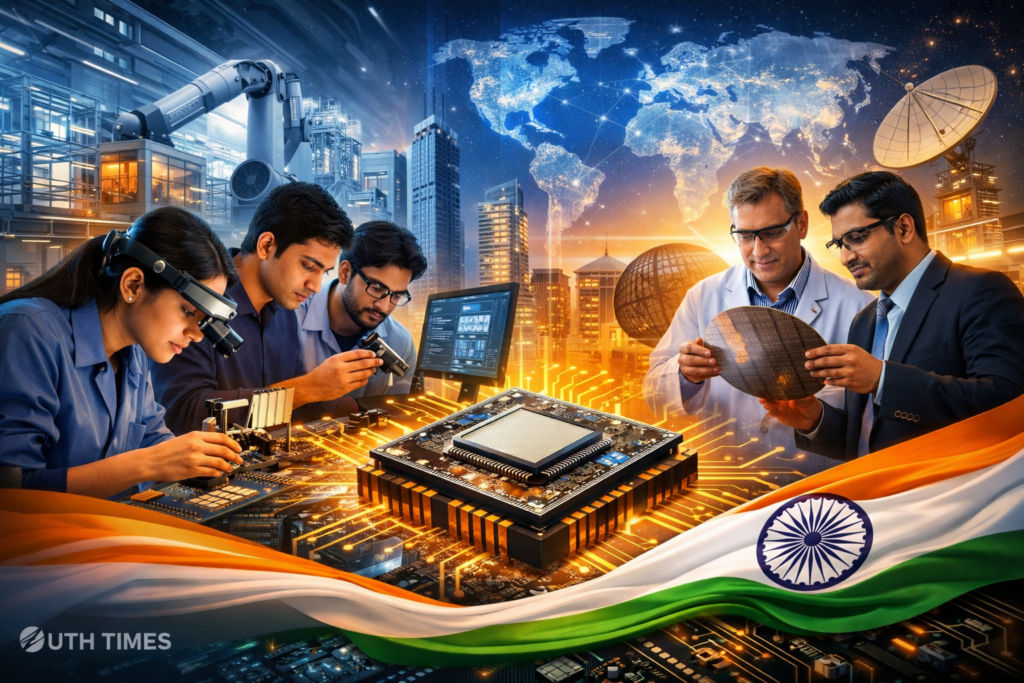
The India Semiconductor Mission, launched in 2021, was designed to build a complete semiconductor ecosystem—from fabrication to design and research. While fabrication plants often dominate headlines, chip design talent forms the intellectual backbone of the semiconductor industry.
🔹 The mission initially aimed to train 85,000 semiconductor design engineers within 10 years.
🔹 Through accelerated academic collaborations and industry partnerships, the goal was achieved in less than half the planned time.
🔹 Engineering institutions across India integrated specialized semiconductor courses, chip architecture training, and VLSI programs into their curricula.
This rapid capacity building has created one of the largest pools of semiconductor design talent in the world, strengthening India’s position as a critical contributor to global chip development.
🧠 Why Semiconductor Design Talent Matters

Semiconductors power everything—from smartphones and electric vehicles to AI systems and defense technologies. However, design expertise is where the real value lies.
🔹 Nearly 20% of the world’s semiconductor design engineers already come from India.
🔹 Major global companies rely heavily on Indian engineers for chip architecture, verification, and system design.
🔹 Training 85,000 additional engineers significantly expands India’s capability to design next-generation chips domestically.
Instead of remaining merely a consumer of semiconductor technologies, India is now positioning itself as a creator of high-value intellectual property in chip design.
🏫 Universities, Industry & Government: A Strategic Alliance

This milestone was made possible through a three-way collaboration involving academia, government, and the semiconductor industry.
🔹 Over 300 universities and engineering institutions introduced semiconductor-focused programs.
🔹 Partnerships with global chip leaders enabled hands-on training in advanced design tools and fabrication simulations.
🔹 Government initiatives funded labs, research centers, and skill development programs dedicated to semiconductor engineering.
The result is a new generation of engineers capable of working on cutting-edge technologies like AI chips, advanced processors, and automotive semiconductors.
🌍 What This Means for India’s Tech Future

India’s early achievement of this target reflects more than just educational progress—it signals a strategic shift in technological sovereignty.
🔹 A larger talent pool attracts global semiconductor investments.
🔹 It strengthens India’s role in the global supply chain of critical technologies.
🔹 It lays the groundwork for homegrown chip startups and innovation ecosystems.
As the world races to secure semiconductor dominance, India’s rapid talent expansion could become the country’s most powerful competitive advantage.
🔮 Conclusion: The Blueprint for a Silicon Future
Training 85,000 semiconductor design engineers in four years is more than a milestone—it is a declaration that India is ready to lead in the technology that powers the modern world. With talent now scaling faster than expected, India’s semiconductor story is no longer about catching up. It is about shaping the future of global chip innovation.

