
India’s export story in 2025 is evolving — fast. According to a fresh State Bank of India (SBI) report, the country’s merchandise exports during April–September 2025 climbed to USD 220 billion, up from USD 214 billion in the same period last year.
What’s striking is not just this modest overall growth — but the clear shift away from over-reliance on the US.
📦 Exports Up, But US Share Slides
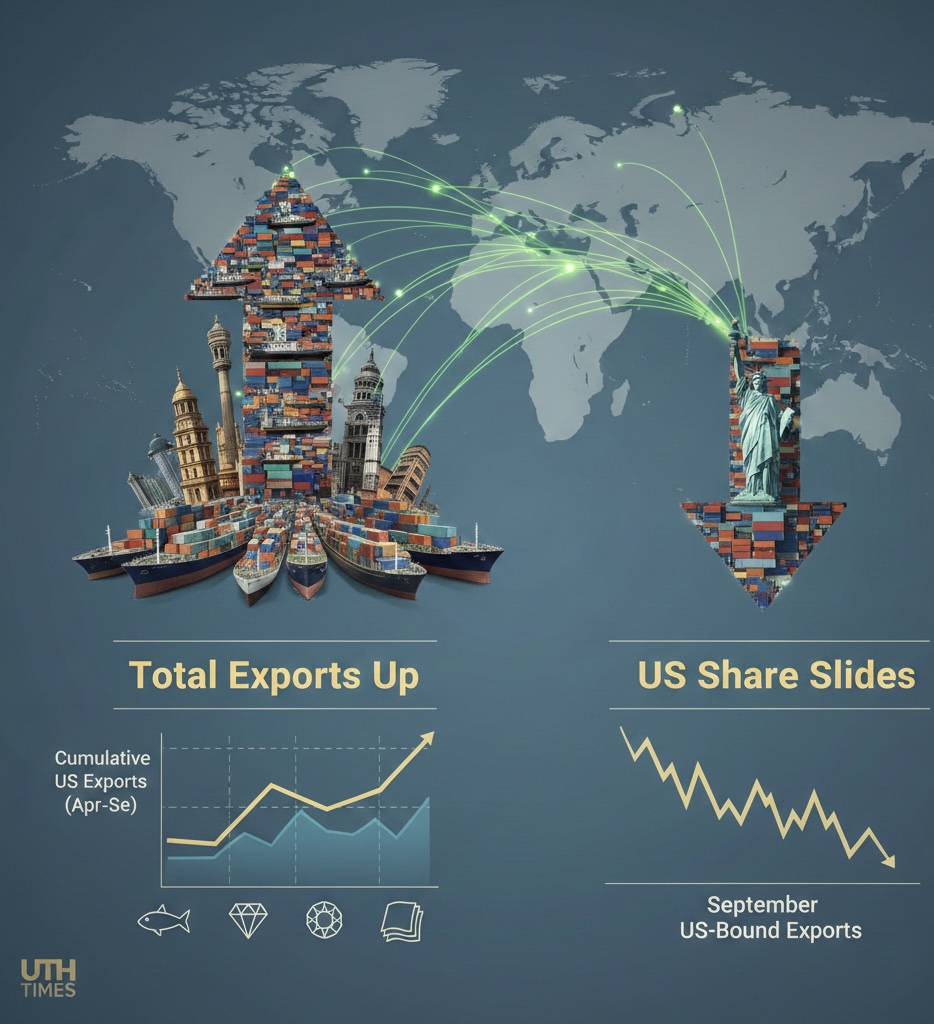
- While total merchandise exports rose 2.9%, the share destined for the United States has been shrinking since July 2025, sliding to about 15% by September.
- In absolute terms, shipments to the US still grew: cumulative US exports in Apr–Sep rose ~13% (from USD 40 bn to ~USD 45 bn).
- But September saw a sharp drop: US-bound exports fell nearly 12% compared to a year ago, especially hitting sectors like marine products, precious/semi-precious stones, ready-made garments and cotton fabrics.
This contrast — overall export growth despite a slump in US shipments — points to a deliberate diversification strategy.
🌍 A Global Spread: New Markets Taking Centre Stage
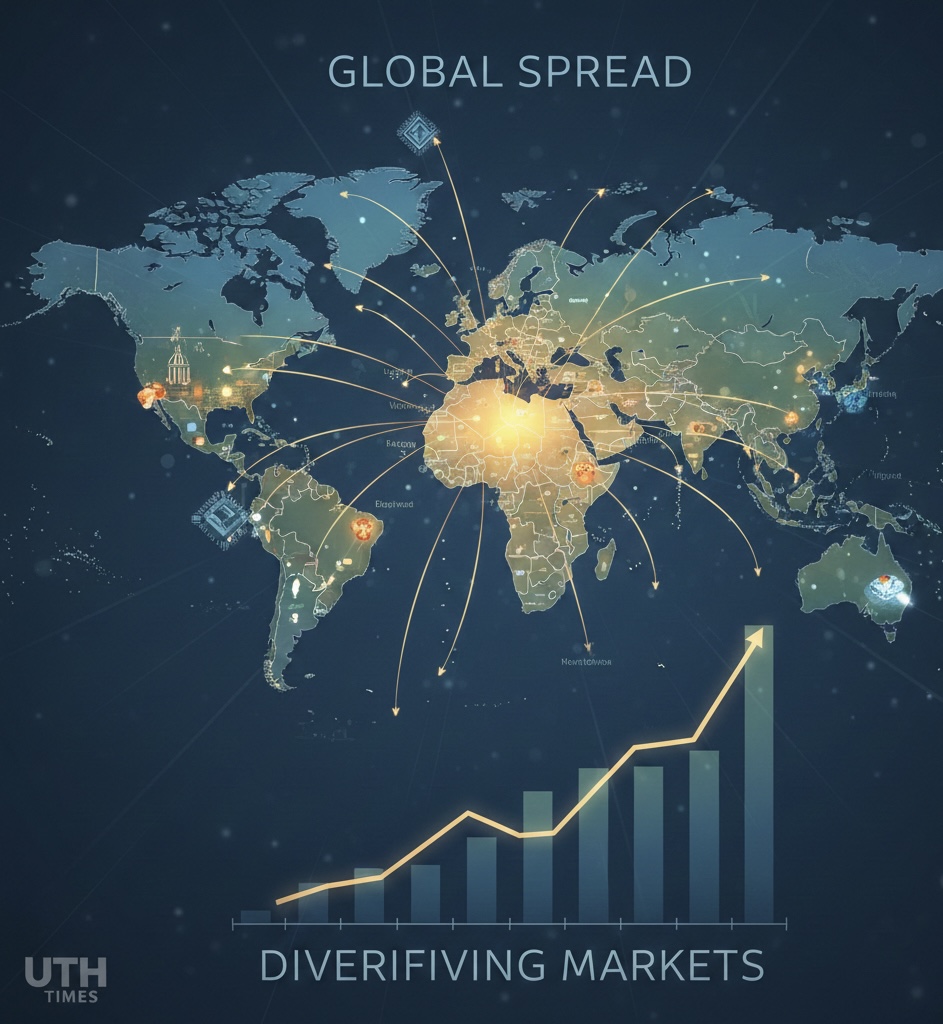
The SBI report notes that export destinations are diversifying fast. Besides the US, top growth is coming from United Arab Emirates (UAE), China, Vietnam, Japan, Hong Kong, Bangladesh, Sri Lanka, Nigeria and many more.
- In fact, exporters recorded positive growth across 24 countries, collectively accounting for about 59% of India’s exports in H1 FY26.
- This growth spans across a broad mix of sectors — not just traditional garments or jewels — signalling a structural shift rather than a short-term blip.
This transformation reduces concentration risk: instead of depending on one big buyer (US), India now seems to be building a diversified network of buyers globally.
⚠️ What Prompted the Shift? Tariffs, Strategy & Survival
Why this pivot? A few big drivers:
- The US imposed high tariffs on many Indian exports, especially labour-intensive items like garments, textiles, gems & jewellery, and marine products — squeezing margins dramatically.
- In response, exporters seemed to have recalibrated: instead of fighting tariff headwinds in one country, they broadened their reach — tapping new demand centers across Middle East, Asia, Africa and beyond.
- Meanwhile, government support — including credit guarantees — also appears to have cushioned exporters and helped them adjust.
🚀 What This Means for India’s Trade Future
- The diversification trend builds resilience: global demand shocks, tariff wars, or geopolitical issues hit one country less hard if trade is more spread out.
- For Indian exporters, this could mean more stability — less dependency on a single market, and more incentive to scale up production and diversify product lines.
- On a macro level, India’s export architecture is evolving — from “US-heavy” to “global-spread,” which could reshape trade strategy, logistics, and even how trade agreements are approached.
🔚 Closing Thought
India’s trade story in 2025 isn’t about wild growth or record-breaking numbers. It’s smarter, craftier, and more resilient. By diversifying exports beyond the US — reaching across continents — India seems to be crafting a globally balanced export portfolio. The message is loud and clear: the world is now India’s customer base.

