
🕉️ The Silent Symphony of Dharma
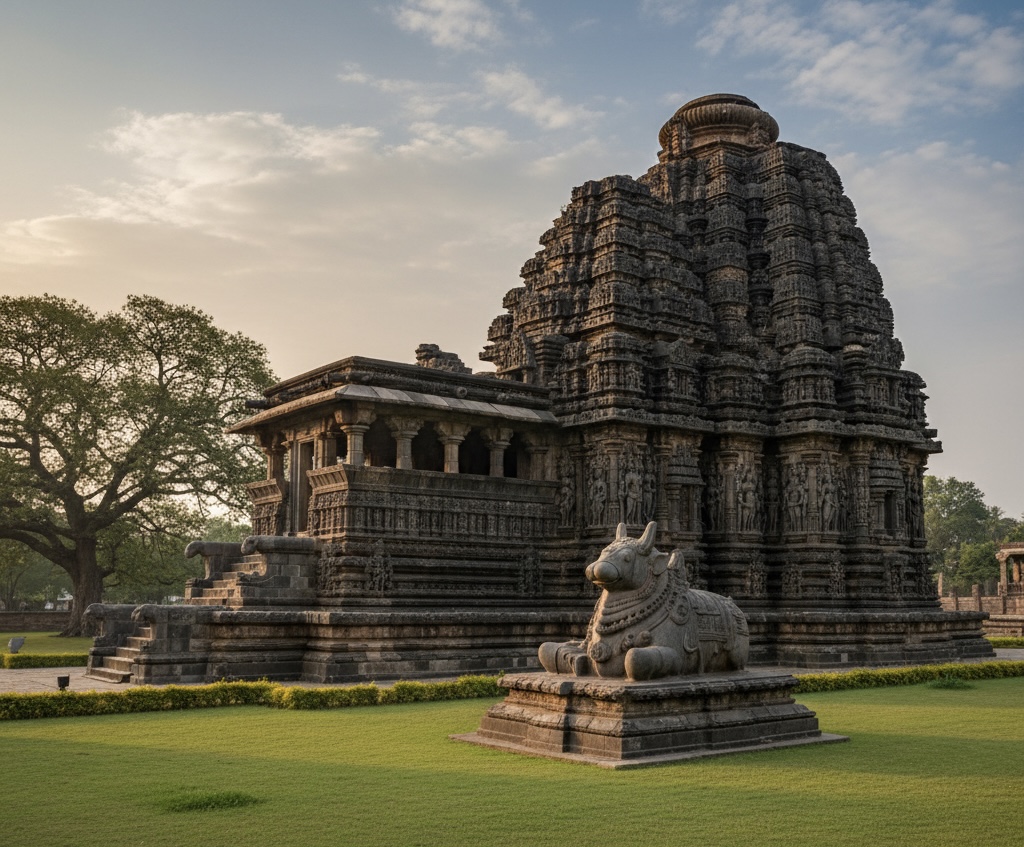
Nine centuries ago, in the heart of Karnataka, artisans didn’t just build temples — they built philosophies in stone. Halebidu, the imperial capital of the Hoysala dynasty, houses the Hoysaleswara Temple, a shrine that doesn’t preach — it vibrates with the sound of Dharma. Every inch of its black soapstone exterior is carved with purpose: gods, goddesses, dancers, demons — all locked in an eternal cosmic rhythm.
The Hoysala sculptors were not mere craftsmen. They were philosopher-artisans, translating Sanskrit verses into stone geometry. What they created wasn’t decoration; it was devotion crystallized in architecture.
🔱 The Sudarshana Chakra: The Universe in Motion
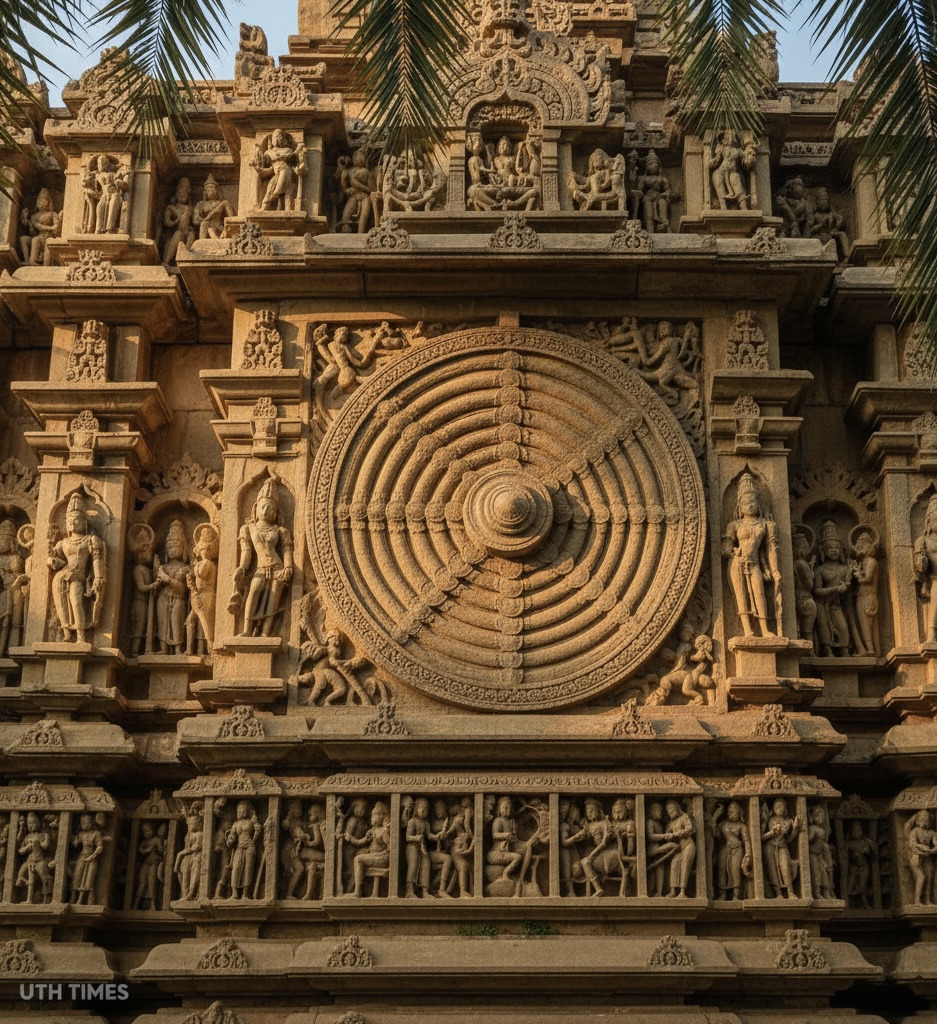
Walk along the temple’s friezes and your eyes meet something extraordinary — the Sudarshana Chakra, Vishnu’s divine discus, carved in perpetual spin. Each spoke of this celestial wheel symbolizes cosmic balance — the cycle of time, life, and consciousness.
But the genius lies in how it’s carved. The sculptors designed it to appear as if it’s spinning in motion when sunlight shifts through the day — a kinetic illusion born centuries before the concept of optical art. This wasn’t ornamentation; it was the Vedic principle of eternal dynamism, brought to life through mathematical precision and spiritual intent.
The Chakra, set amidst scenes from the Mahabharata and Ramayana, serves as a reminder: even divinity obeys the geometry of Dharma.
🪶 Cosmic Architecture, Not Decoration
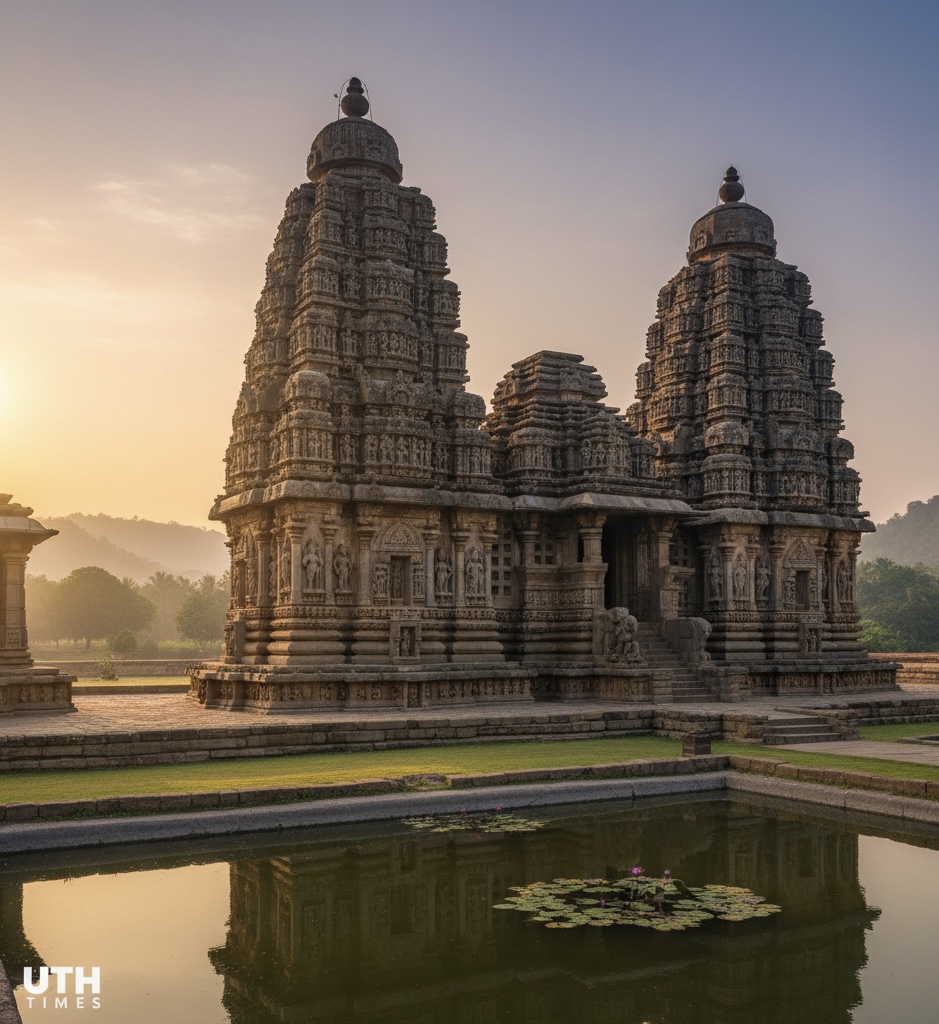
Halebidu’s architecture reads like a sacred text. Each wall tells a coded story — a dialogue between chaos and order. The base friezes narrate elephants (strength), lions (courage), horses (speed), and swans (purity), each band representing a layer of the cosmic order.
The temple’s twin shrines — dedicated to Hoysaleswara and Shantaleswara — stand as metaphors of Shiva and Shakti, masculine and feminine, energy and stillness. It’s the universe mapped into architecture, each sculpture a verse from a lost Veda of stone.
🌸 Where Time Still Breathes
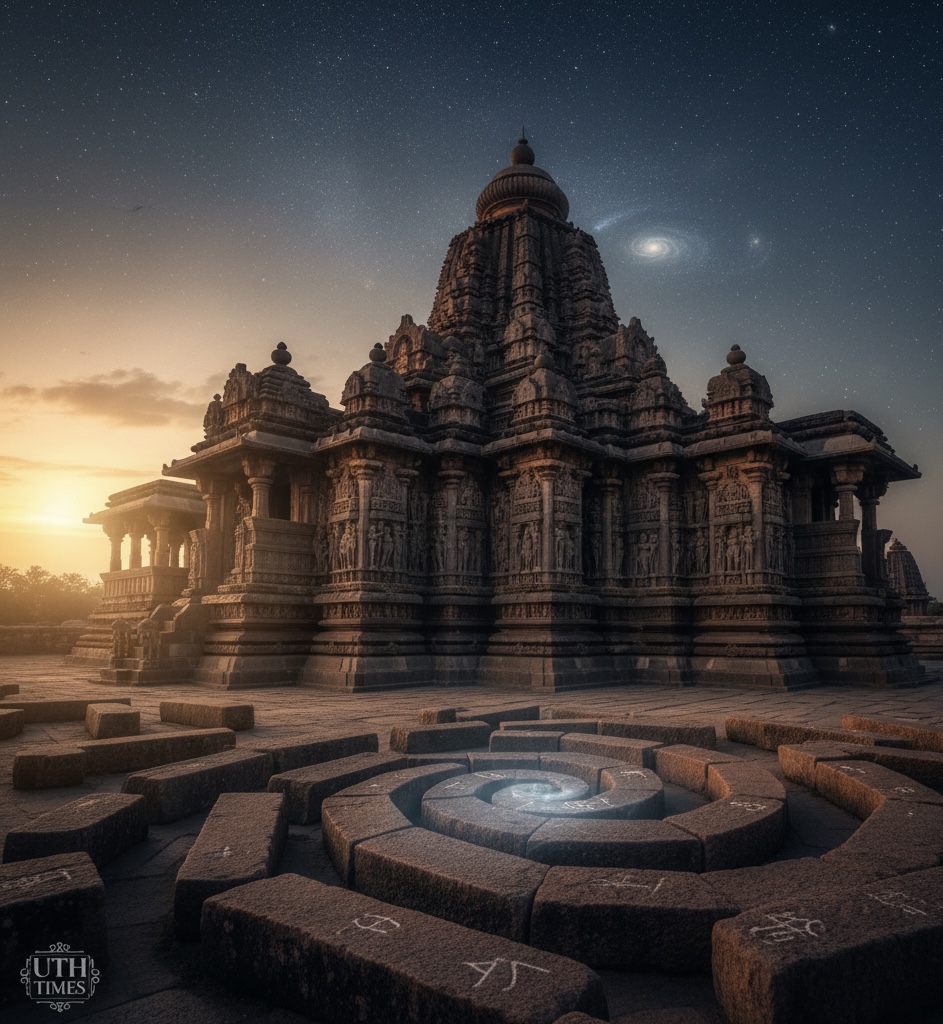
Halebidu doesn’t whisper history — it chants eternity. In every shadow and chisel mark lies the hum of the cosmos. The Hoysala artisans didn’t build for kings; they built for Kaal (Time) itself. Even after 900 years, the stones still spin — decoding the infinite.

