
🌌 The Secret Beneath the Waves
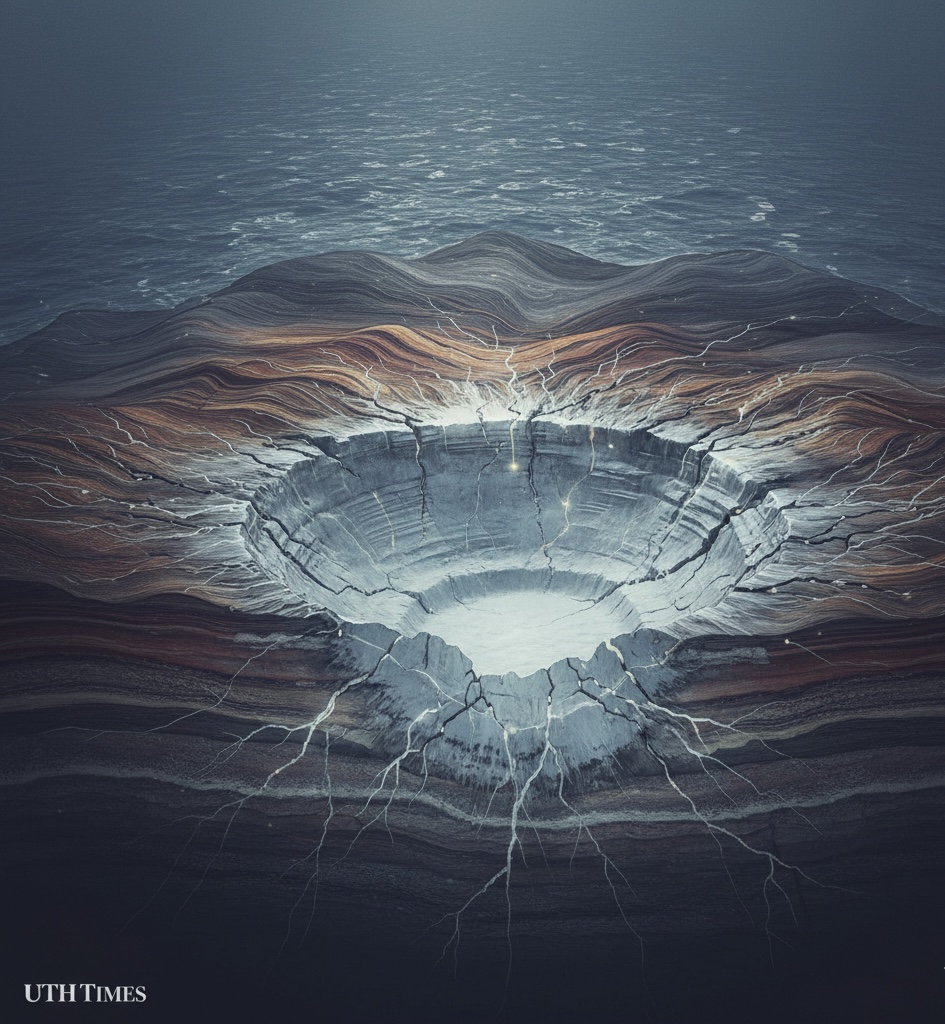
Deep below the Atlantic seafloor, just off the coast of West Africa, lies a colossal scar from Earth’s violent past — the Nadir Crater. Hidden under 1,000 feet (300 meters) of sediment, this 66-million-year-old impact site has stunned scientists with its scale and preservation. Recently, researchers from Heriot-Watt University used advanced 3D seismic imaging to reveal the crater’s full, pristine anatomy — a ghostly reminder of the day an asteroid forever altered life on Earth.
☄️ The Asteroid That Struck Twice
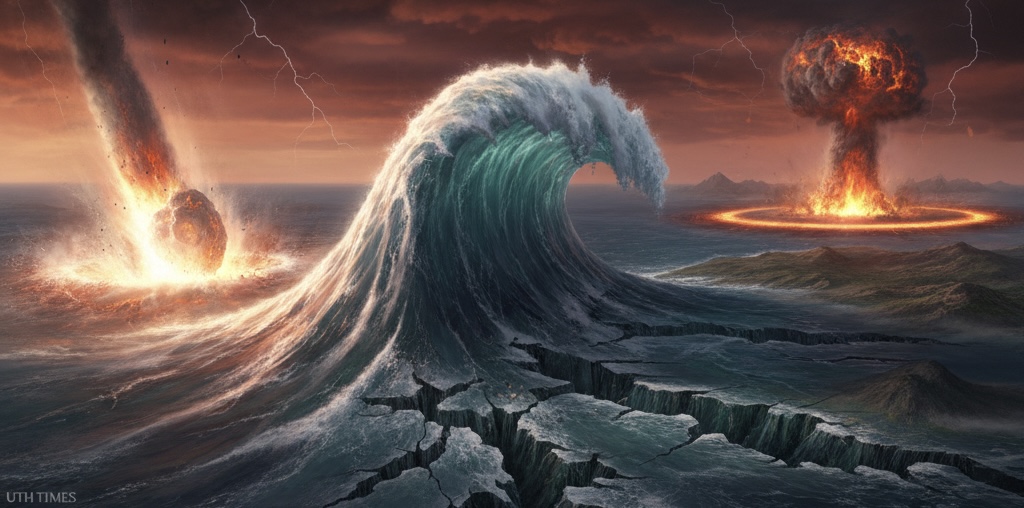
Imagine a 500-meter-wide asteroid, rocketing toward Earth at a jaw-dropping 72,000 km/h (45,000 mph). When it slammed into the ocean, the devastation was apocalyptic. The impact unleashed a tsunami taller than 2,600 feet (800 meters) — waves that tore across the proto-Atlantic. Molten rock exploded upward. The seafloor liquefied from shockwaves, triggering underwater landslides that reshaped the ocean basin.
But the most chilling revelation? The Nadir strike happened around the same time as the Chicxulub event in Mexico — the asteroid that wiped out the dinosaurs. Scientists now suspect Earth may have faced a double impact, a catastrophic “one-two punch” that marked the true end of the Cretaceous.
🧠 A 3D Glimpse into Ancient Chaos
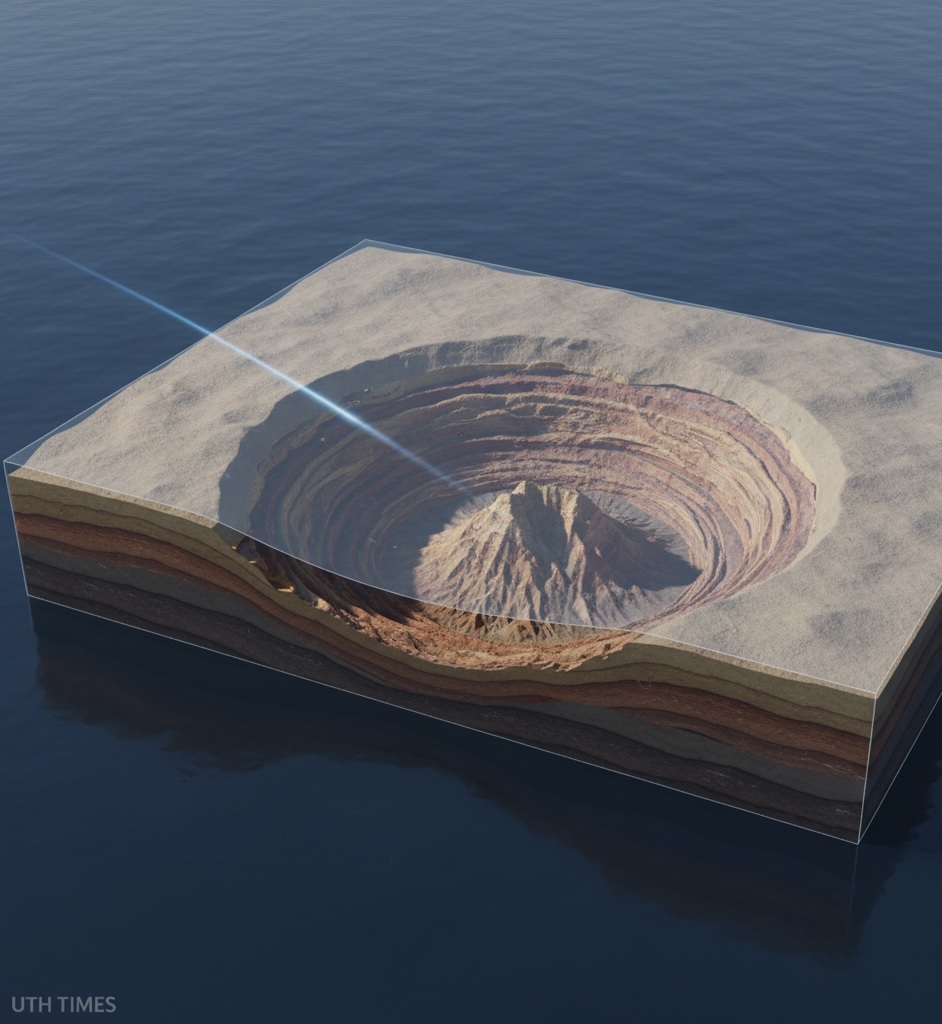
What sets Nadir apart is its immaculate preservation. Unlike land craters eroded by weather and time, Nadir lies entombed beneath protective layers of ocean sediment — frozen in geological time. “It’s like upgrading from a fuzzy ultrasound to vivid 3D,” says Dr. Uisdean Nicholson, lead researcher of the study. The scans reveal a shallow-angle hit from the northeast, leaving spiral ridges and a central uplift — telltale signatures of a marine asteroid impact.
🔬 Unlocking Earth’s Forgotten Fury
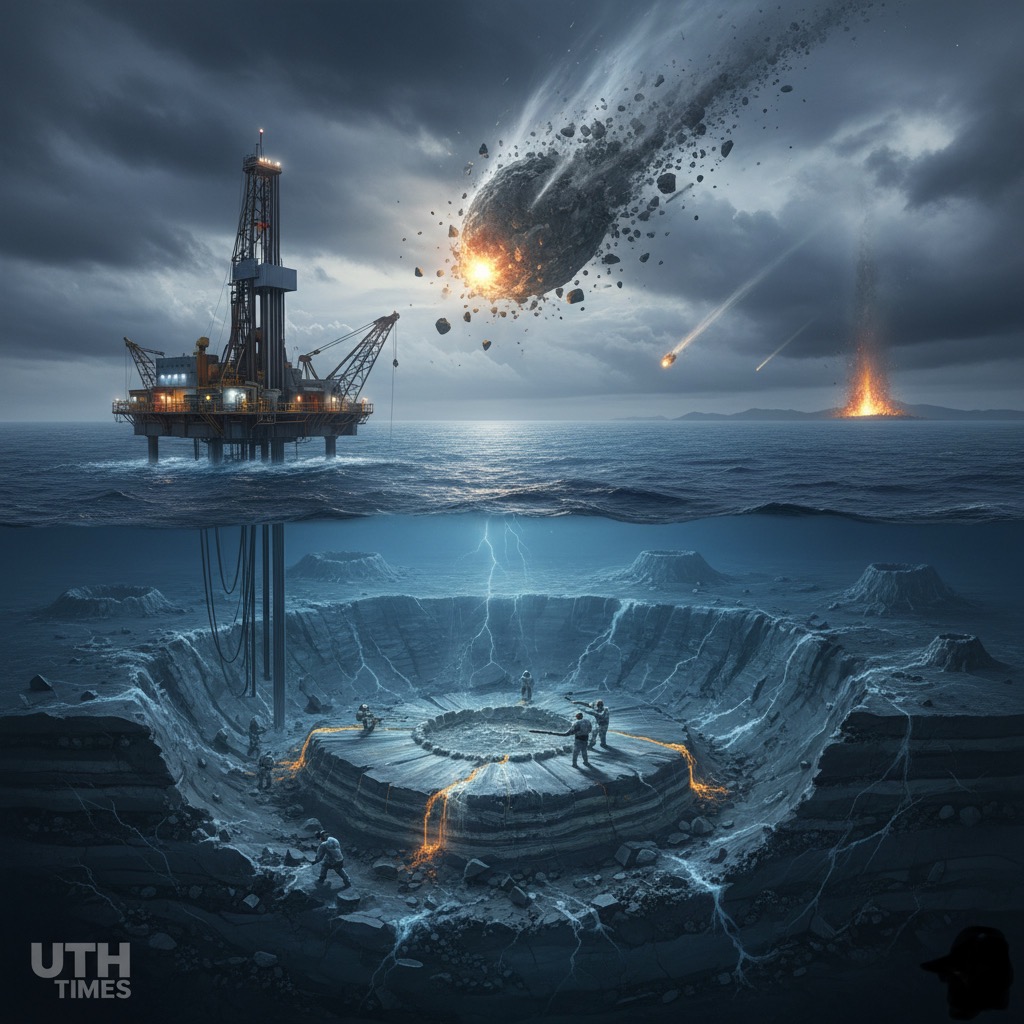
Next, scientists plan to drill core samples from the crater to analyze shock pressures, rock melts, and impact debris. These clues could help pinpoint whether Nadir struck within hours, days, or even years of Chicxulub — rewriting the story of Earth’s most famous extinction.
🌍 The Final Echo
Buried in silence for 66 million years, the Nadir Crater is more than just a hole in the ocean floor — it’s a time capsule of cosmic violence, offering a haunting look at how fragile life can be when the universe decides to knock twice.

