
Rising silently beside the Nile, the Colossi of Memnon appear like guardians frozen in time—yet every stone whispers a saga of power, myth, and ancient engineering genius.
THE COLOSSI OF MEMNON: EGYPT’S STONE TITANS
🏛️ Titans of a Lost Kingdom
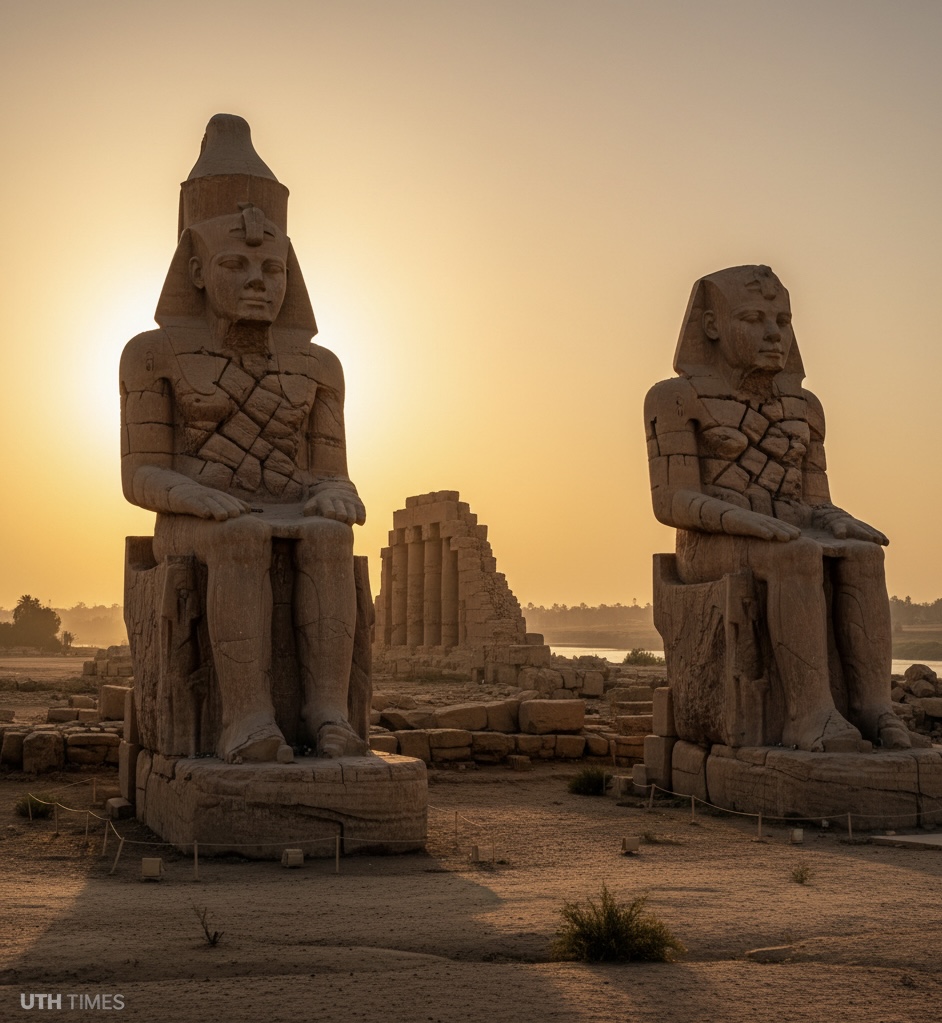
The Colossi of Memnon are not merely statues; they are 3,400-year-old sentinels of Pharaoh Amenhotep III’s vanished mortuary temple in Thebes (modern-day Luxor).
Each statue stands about 60 feet tall and weighs an astonishing 720 tons, carved from single blocks of quartzite sandstone—a feat so grand that even modern engineers pause in awe.
These giants depict Amenhotep III seated in regal stillness, hands resting on his knees, gazing eternally toward the rising sun as if overseeing the rebirth of Egypt every dawn.
🪨 Carved From Mountains, Carried Across Egypt
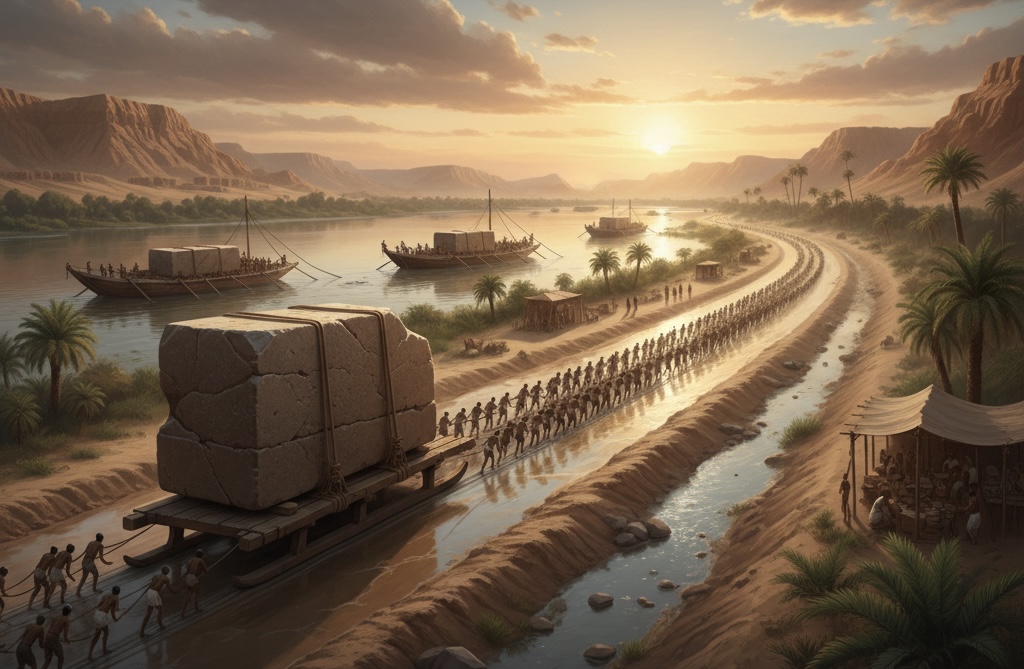
An engineering marvel unfolds when one learns that the quartzite used wasn’t local.
✨ The blocks came from quarries near Cairo—nearly 675 kilometers away.
Transporting stones of this magnitude across desert and river in the 14th century BCE required:
- ⭐ Massive wooden sledges
- ⭐ Teams of hundreds of workers
- ⭐ Irrigated pathways to reduce friction
- ⭐ Barge transport along the Nile during seasonal floods
The logistics alone place the Colossi among the greatest monuments ever attempted in antiquity.
🎭 Legends, Earthquakes & the Singing Statue
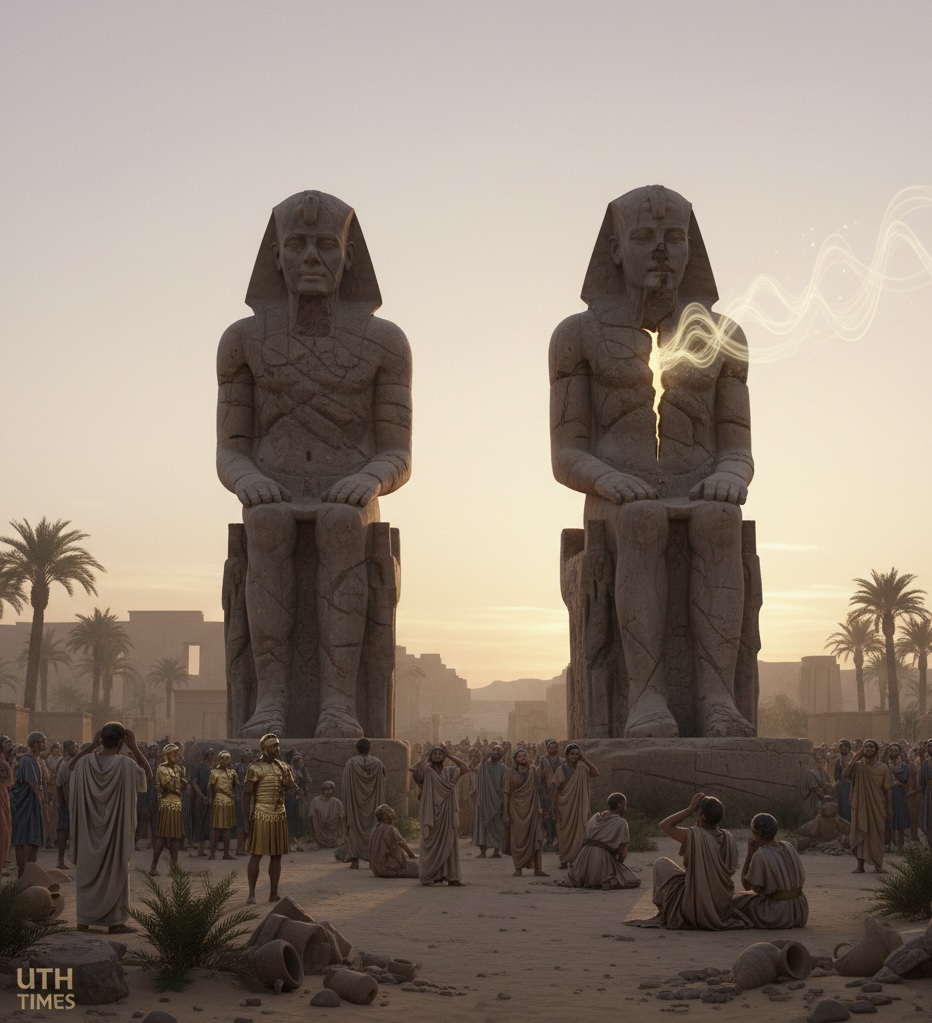
The Colossi earned global fame when one statue began to “sing” after a massive earthquake in 27 BCE cracked it.
Travellers reported a haunting, flute-like morning whistle, said to be the voice of the Greek hero Memnon, calling to his mother Eos, the goddess of dawn.
This mysterious sound:
- 🌬️ Occurred at sunrise
- 🌬️ Was likely caused by heat expansion in the cracked stone
- 🌬️ Attracted Roman emperors, Greek poets, and curious pilgrims
The phenomenon faded when the Romans repaired the statue in 199 CE—ending the world’s most ancient acoustic marvel.
🧱 The Vanished Temple They Guarded
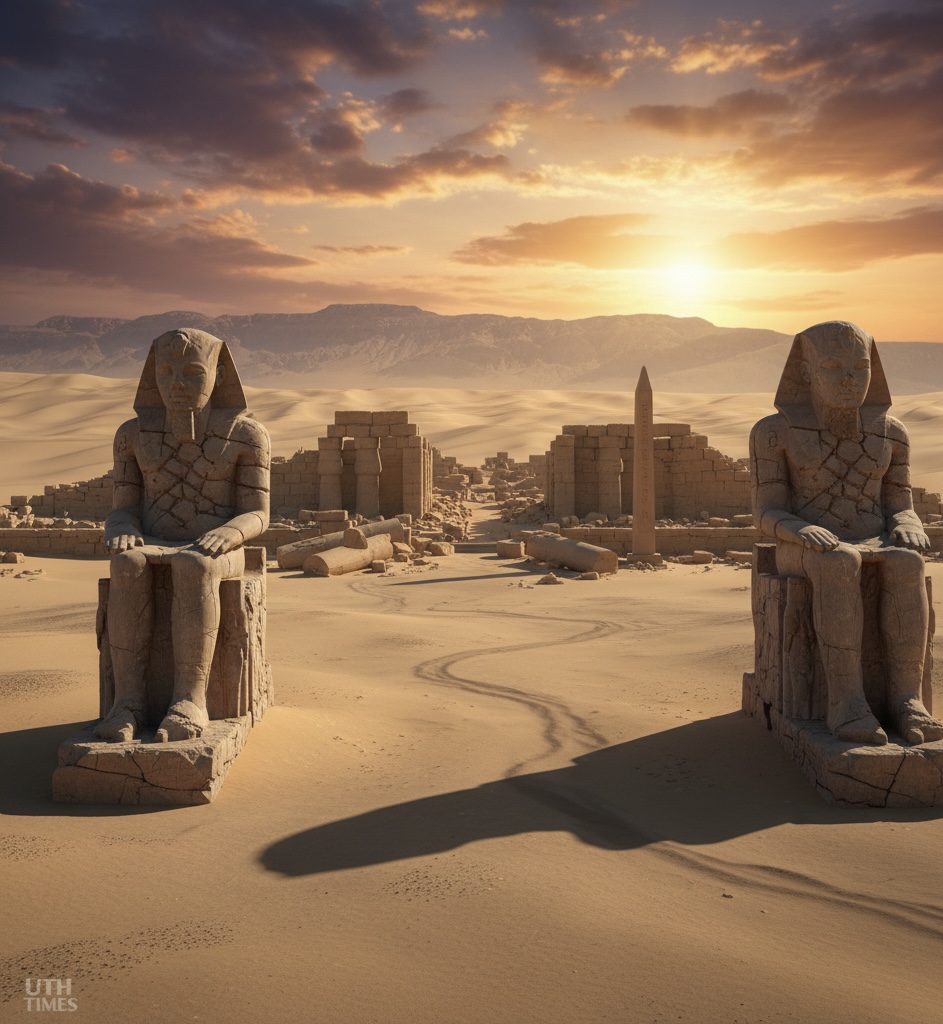
Behind the colossi once stood the largest mortuary temple ever built in Egypt—even bigger than Karnak’s current halls.
Floods and time destroyed almost everything, leaving only the two giants as anchors of memory, marking where a sprawling ceremonial complex once dominated Thebes.
🌄 ENDING
Silent yet powerful, the Colossi of Memnon remain Egypt’s most enduring symbols of resilience—timeless storytellers carved in stone, watching over the Nile for eternity.

