
Not all stories are told in textbooks.
Some are hidden in medals.
Some are buried in metal.
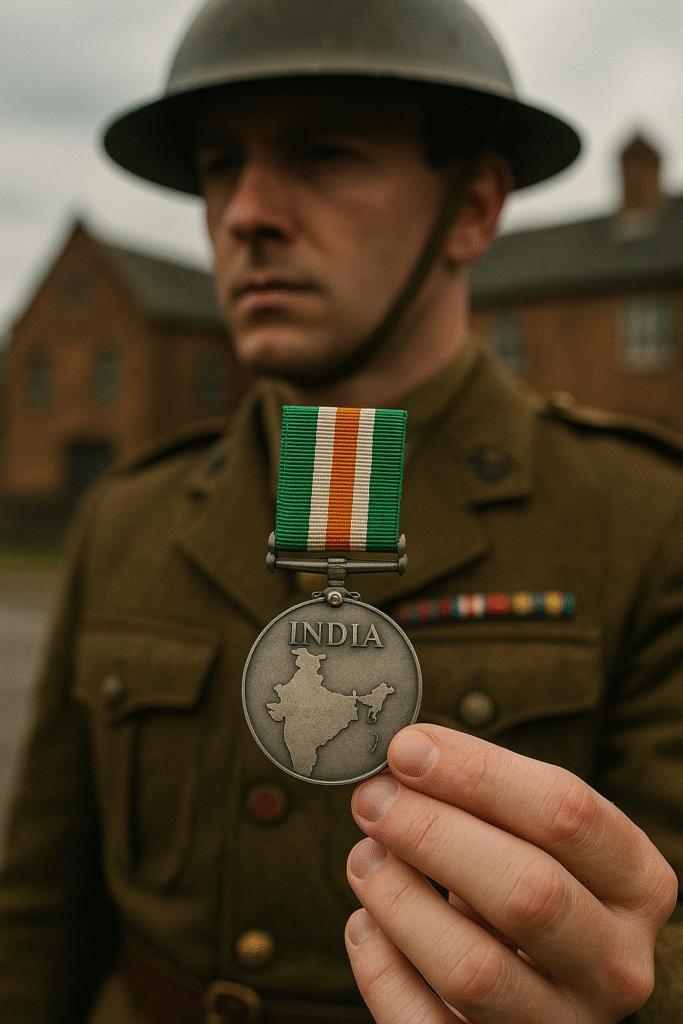
One such forgotten artifact—the India Service Medal from World War II—carries more than honor.
It carries a map.
Not just any map—the map of Akhand Bharat—a vision of undivided civilizational unity, long before borders carved us apart.
🥇 The Medal Born from War, Not Battle
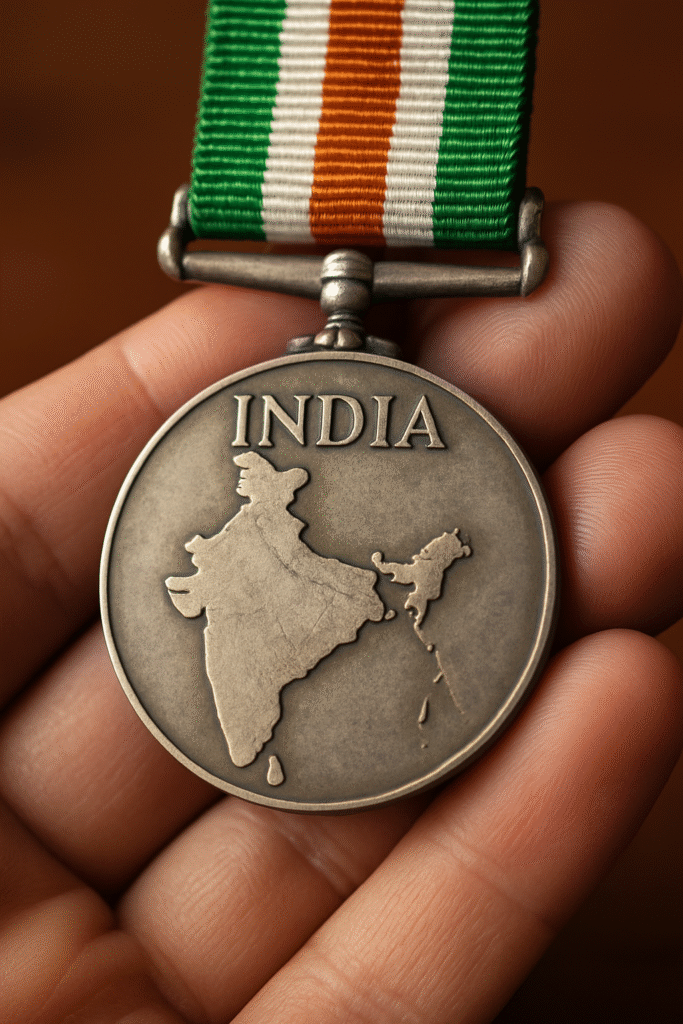
During the chaos of World War II (1939–1945), the British Empire mobilized Indian soldiers across continents.
But not every warrior went to the frontlines. Some stayed back—working behind the scenes to keep the massive war machinery running.
To honor them, the British instituted the India Service Medal, awarded to:
- 🎖️ Indian military personnel
- ⏳ With 3+ years of non-operational service within India
- 🕰️ Between 3 September 1939 and 2 September 1945
It was meant to reward duty.
But unknowingly, it preserved something far greater: a snapshot of an undivided India.
🗺️ Etched in Metal: A Map of Akhand Bharat
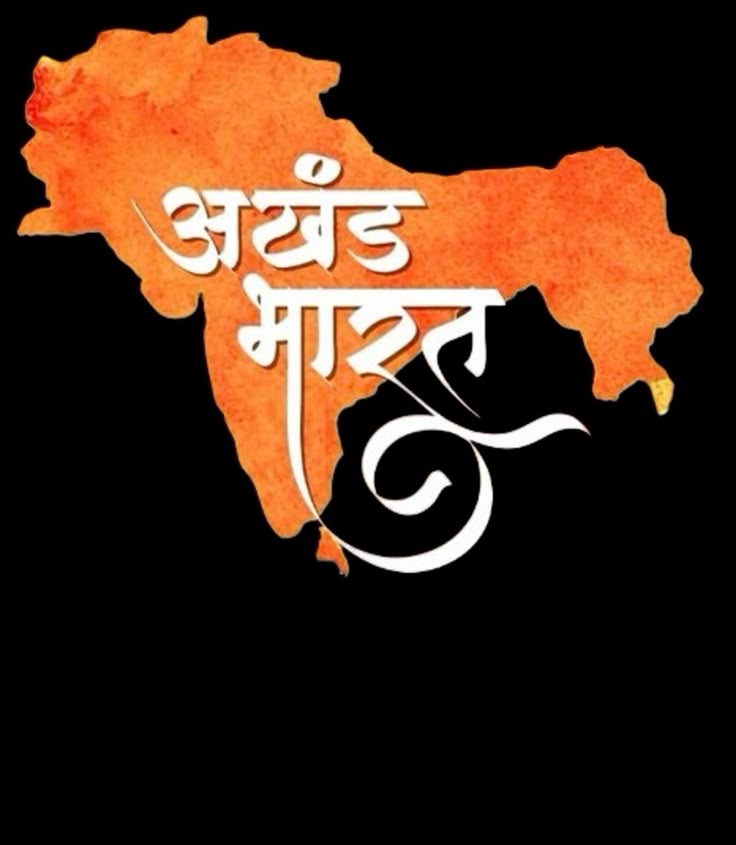
On the reverse of this silver medal lies a map.
Look closer.
It’s not the modern Republic of India.
It’s Akhand Bharat — the subcontinent as it stood before 1947, united under one geopolitical and civilizational frame.
The medal shows:
- 🇮🇳 Present-day India
- 🇵🇰 Pakistan
- 🇧🇩 Bangladesh
- 🏞️ Parts of Afghanistan, Nepal & Burma (Myanmar)
All under one landmass, without borders, cuts, or divisions.
Above the map is boldly inscribed: “INDIA”.
No prefixes. No suffixes. Just one, whole name—for one, whole civilization.
🕉️ More Than Geography: A Civilizational Unity
This wasn’t just a colonial administrative zone.
It was a living, breathing cultural ecosystem bound together by:
- 🕊️ Shared philosophies and dharmic roots
- 📖 Common scriptures, from the Vedas to Sufi texts
- 🏔️ Sacred geography—the Himalayas, Sindhu, Ganga, Bodh Gaya
- 🎨 Syncretic traditions, from Bengal to Balochistan
This was civilizational India—Akhand Bharat as envisioned by sages, rulers, and revolutionaries—from Chanakya to Ashoka, from Guru Nanak to Swami Vivekananda.
The medal, though issued by colonial hands, unknowingly captured the essence of a land united in soul, even if ruled in parts.
🩸 From Metal to Memory: The Fall of Unity
Within just a few years of its issuance, Partition struck.
Borders were drawn. Lines were etched in blood.
And the map on that medal turned from present reality to a painful memory.
Thousands who wore that medal with pride…
…never imagined the land they served would be carved up into three nations.
That unified India, once inscribed in silver, now existed only in memory—and in metal.
📿 Not Just a Medal—A Mandala of Oneness
For modern generations, the India Service Medal is more than a relic.
It is a mandala—a symbol of sacred wholeness.
It tells us:
- Akhand Bharat was not a myth.
- It was not propaganda.
- It was once visible, mappable, lived, and even medaled.
This medal proves that the dream of unity predates Partition, politics, and polemics.
It echoes the truth that India was once Akhand—not just by land, but by life.
🔚 Closing: A Metal That Still Speaks
History often fades with time.
But metal remembers.
The India Service Medal—stamped with Akhand Bharat—is a silent sentinel from the past, reminding us that before the bloodshed, there was oneness.
Not just in empire, but in essence.
And maybe—just maybe—that unity can still be remembered, honored, and one day, reimagined.

