
🌊 A Hidden World Below the Surface
Beneath the dusty plains and sunlit courtyards of western India lies a forgotten world — a world carved not upwards, but downwards. These are the stepwells, known locally as baolis or vavs, where every staircase, arch, and pillar tells the story of a civilization that revered both water and aesthetics.
Dating back over a thousand years, stepwells were more than water reservoirs — they were social sanctuaries, architectural wonders, and spiritual retreats. Built mainly in Gujarat, Rajasthan, and parts of Delhi, they stood as testaments to India’s ancient mastery over water management in arid climates.
🏛️ The Science Beneath the Art
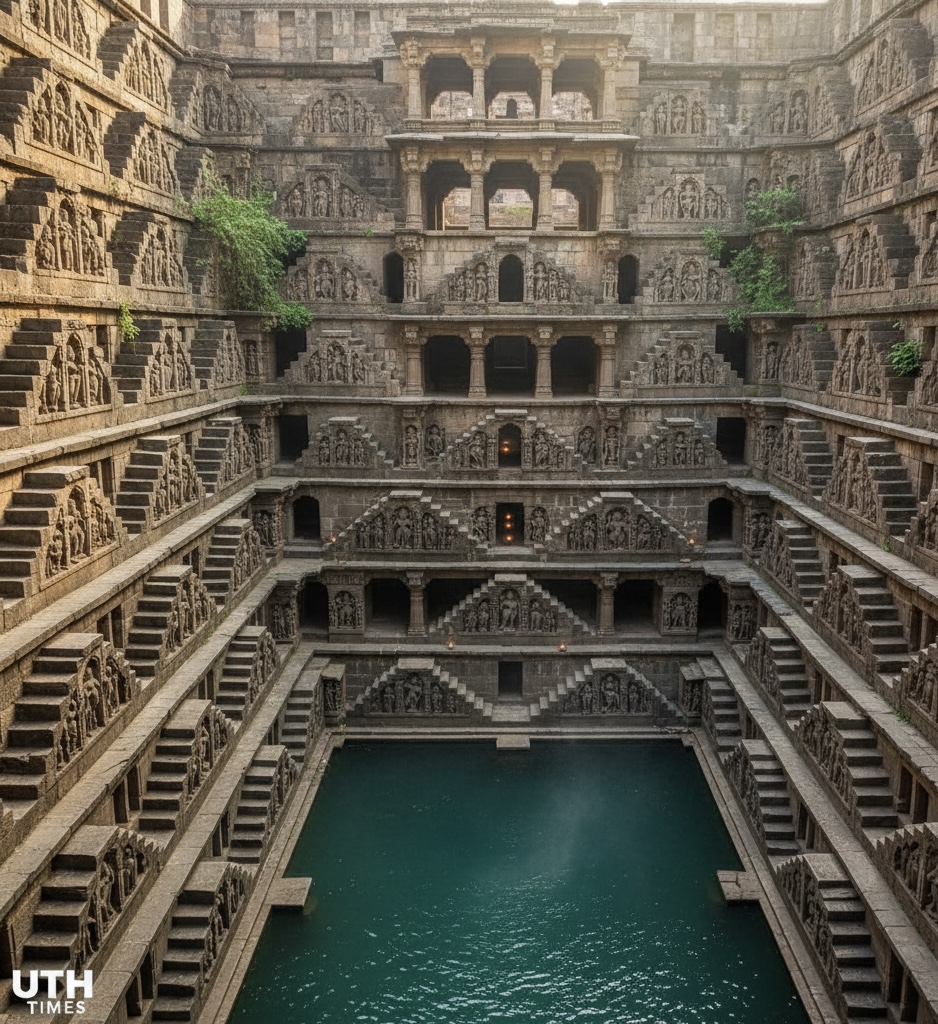
Each stepwell was designed with mathematical precision. Engineers of the time studied the monsoon flow, groundwater levels, and soil composition before laying the first stone. Descending floors allowed people to access water year-round — deeper steps led to cooler, darker chambers as one moved closer to the water table.
🪔 The walls weren’t plain — they were adorned with intricate carvings of deities, dancers, and geometric motifs, turning a utility space into a sacred art gallery. The design not only preserved water but also created natural air-cooling systems, maintaining a soothing climate even in scorching summers.
👑 Rani ki Vav: The Queen of Stepwells
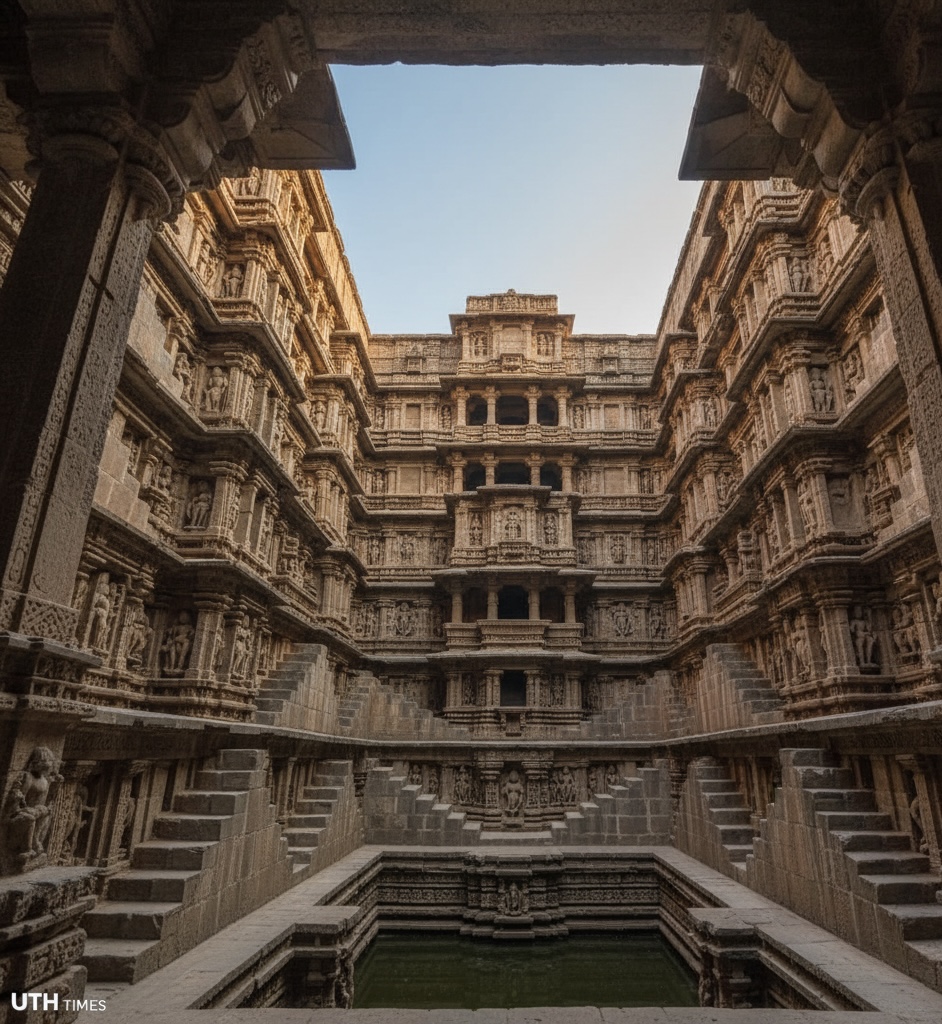
Among all, the Rani ki Vav in Patan, Gujarat, reigns supreme. Built in the 11th century by Queen Udayamati in memory of King Bhimdev I, it is a UNESCO World Heritage Site and a marvel of inverted architecture — seven levels deep and nearly 65 meters long.
Every tier of this subterranean palace is lined with more than 800 sculptures, many depicting Lord Vishnu in his divine forms. As one descends, it feels like entering the womb of the Earth, where the divine and the elemental meet.
🕰️ Echoes of Water and Time
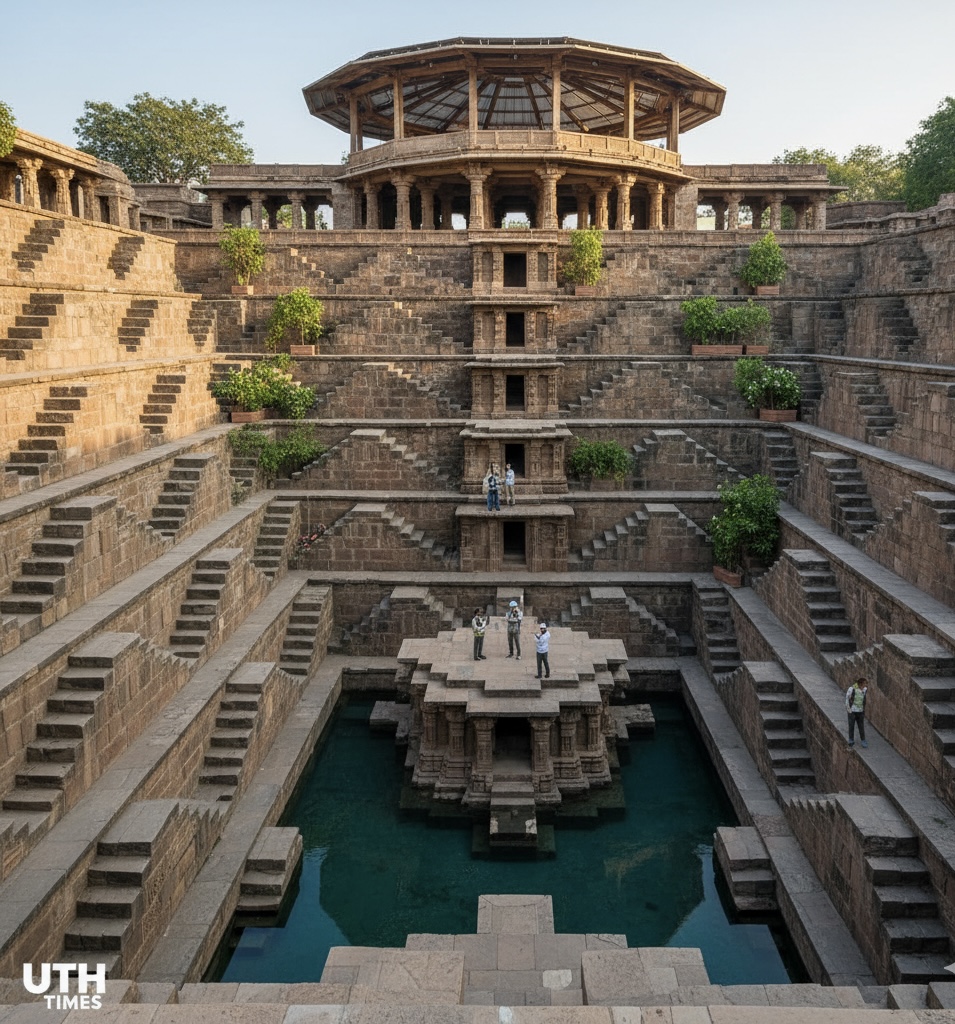
Today, many stepwells lie silent, their waters gone, but their grandeur endures. Modern architects and environmentalists now revisit these designs, learning how ancient India achieved sustainability without machines.
💧 Stepwells remind us that true progress is not just about technology — it’s about harmony between human need and nature’s rhythm.
Beneath the earth, India’s ancient engineers built not just wells, but temples of life itself.

