
🕉️ Introduction: When War Became a Sacred Science
The Mahabharata was not just a tale of valor—it was a chronicle of extraordinary military engineering and cosmic intelligence. Ancient Indian warriors didn’t simply fight battles; they designed them, weaving strategy with sacred geometry. The Vyuhas—intricate battle formations—stood as proof that war, too, could be an art guided by dharma, symmetry, and divine order.
⚔️ 1️⃣ Chakra Vyuha — The Spiral of Death
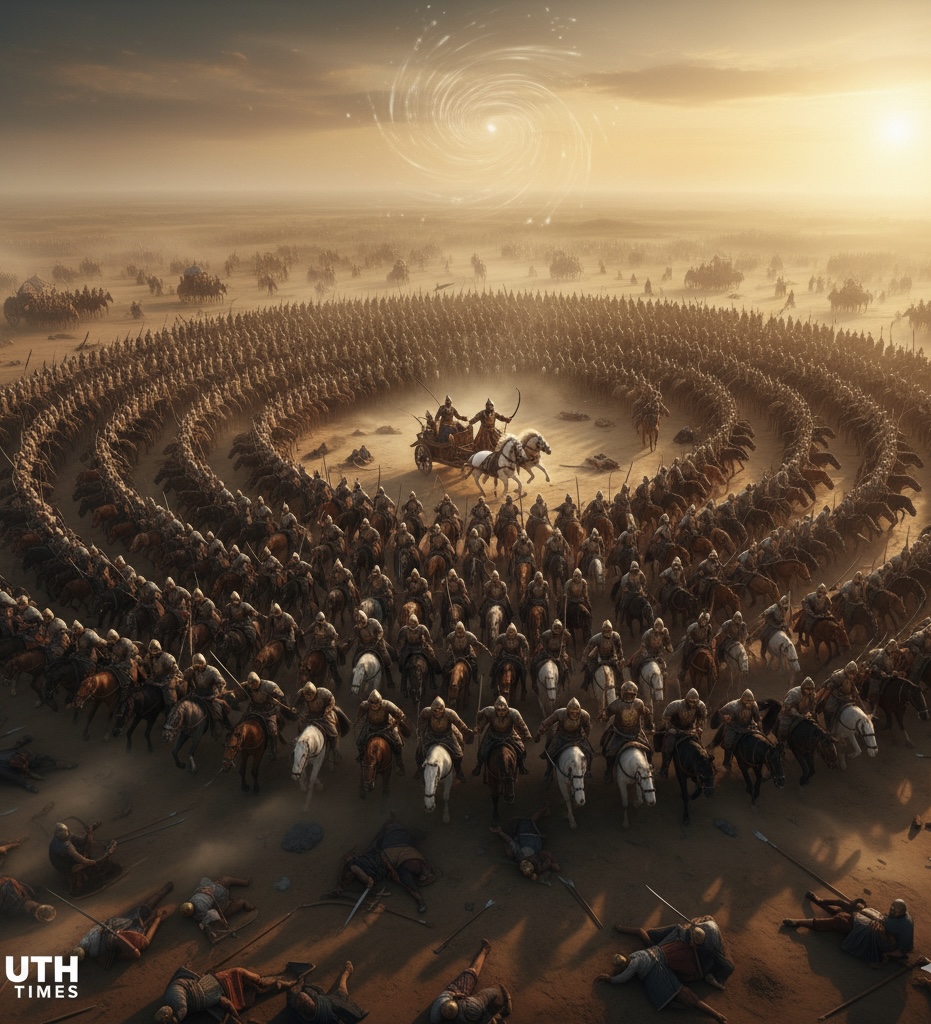
A masterpiece of tactical entrapment, the Chakra Vyuha resembled a revolving wheel or spiral—each rotation bringing new warriors forward and pushing intruders deeper into confusion.
- 🌀 Every layer of this formation was manned by elite fighters.
- 🛡️ Abhimanyu’s legendary entry and martyrdom within this deadly spiral remain one of the epic’s most emotional and heroic chapters.
- 🔱 It symbolized courage and self-sacrifice, showing how one warrior’s valor could echo through eternity.
This wasn’t merely a trap; it was a test of will, intellect, and endurance—where strategy met destiny.
🦅 2️⃣ Garuda Vyuha — The Eagle in Flight
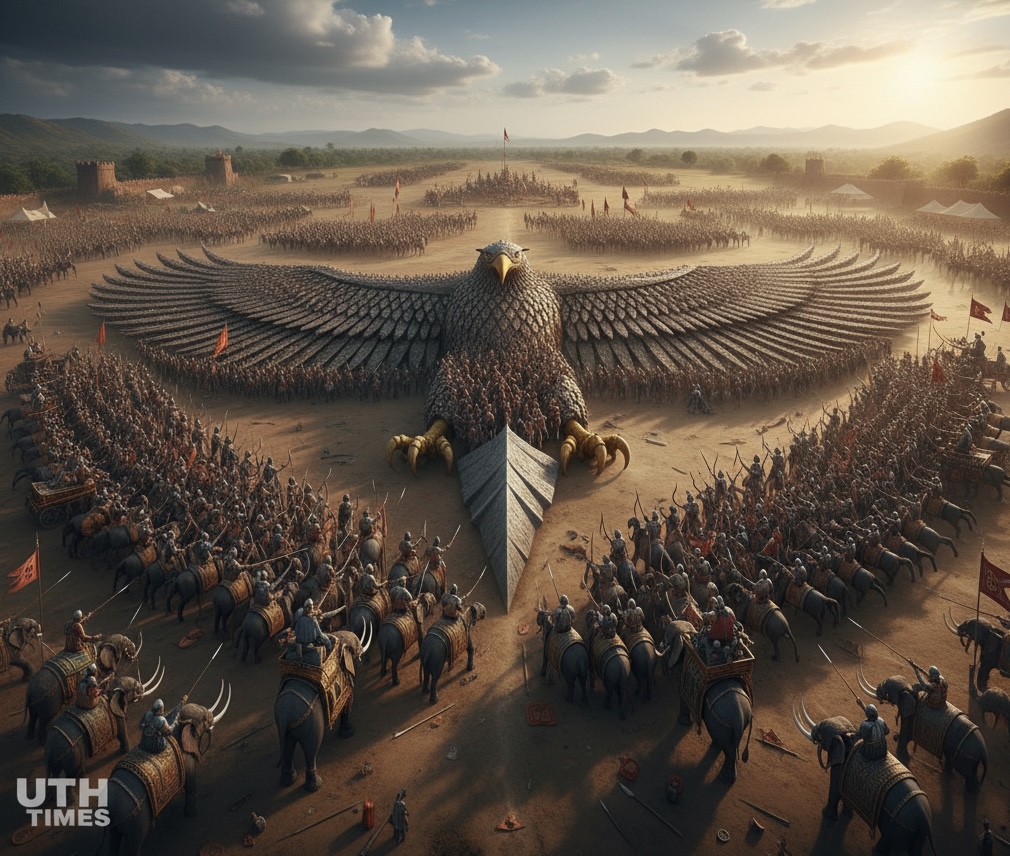
Majestic and lethal, the Garuda Vyuha took the shape of an eagle spreading its wings across the battlefield.
- 🪶 The wings were designed to encircle and crush the enemy flanks.
- ⚔️ The beak, commanded by elite charioteers, delivered precise, devastating strikes.
- 🌠 Used effectively by the Pandavas under Drona’s leadership, it embodied divine coordination and lightning speed.
This Vyuha wasn’t just a structure—it was a living, breathing organism of war, soaring over the battlefield with deadly grace.
🌸 3️⃣ Padma Vyuha — The Lotus of Illusion
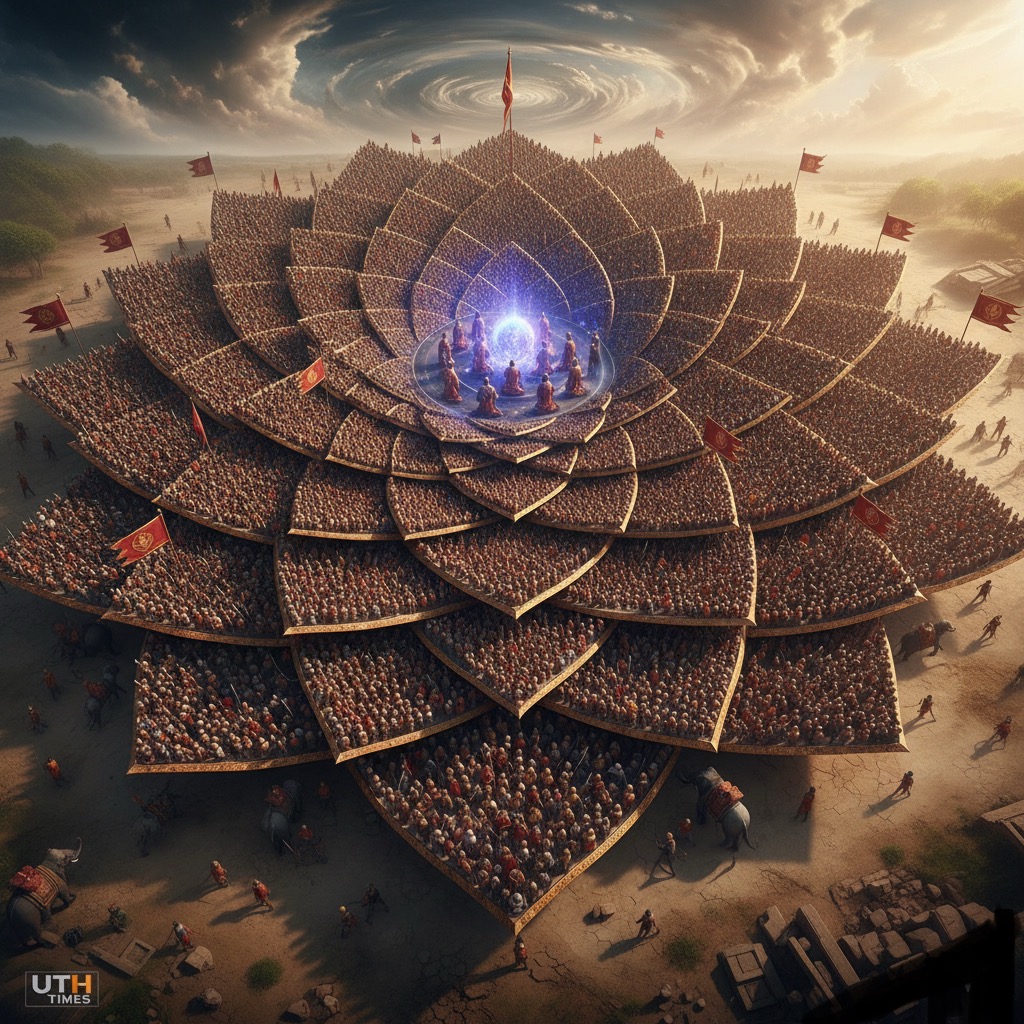
The Padma Vyuha unfolded like a blooming lotus—each petal concealing new waves of warriors.
- 🌺 The layered symmetry created illusions of movement and numbers.
- 🔮 It was said to be formed through mantras and cosmic geometry, merging the spiritual with the strategic.
- 🧘 It represented expansion, purity, and the eternal unfolding of wisdom—even in battle.
An army caught within it often couldn’t distinguish its beginning from its end—a true marvel of ancient military design.
🔱 4️⃣ Trishula Vyuha — The Trident of Destruction
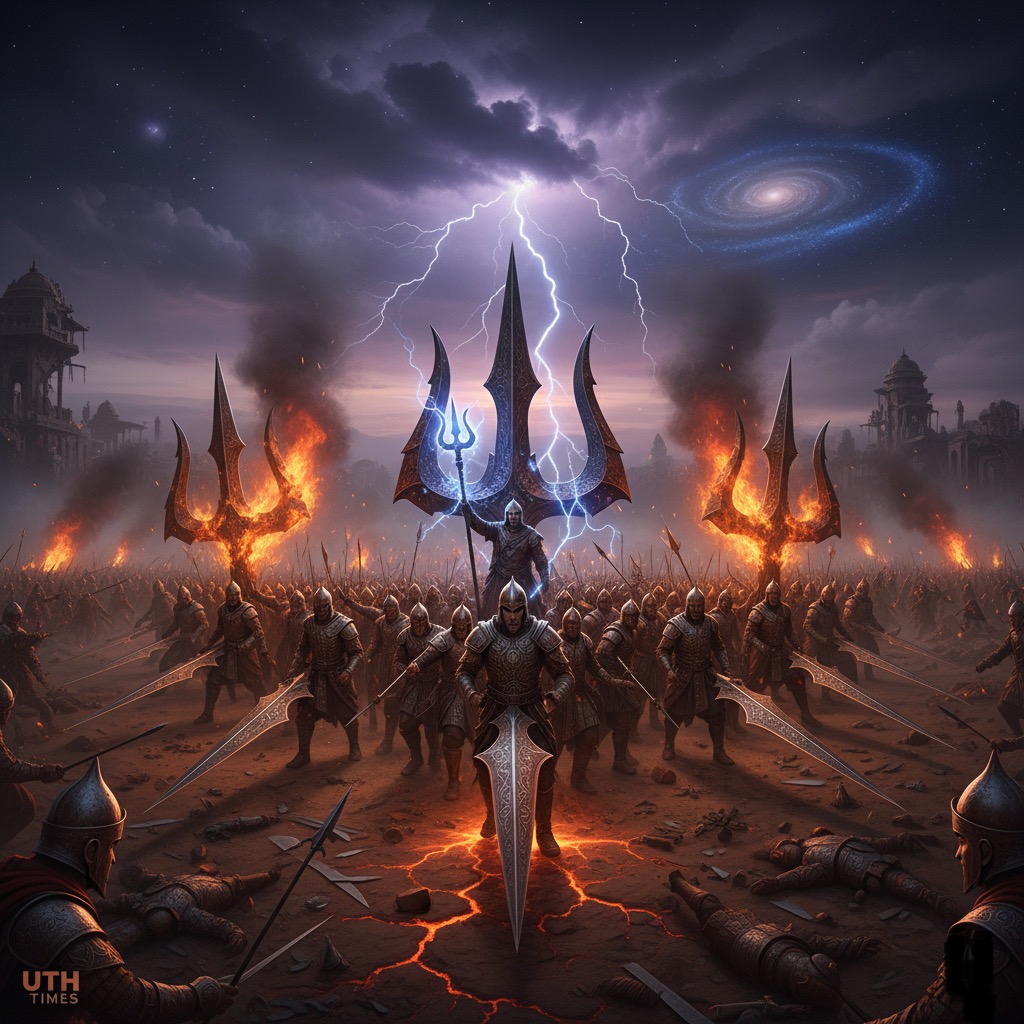
Forged in the image of Lord Shiva’s weapon, the Trishula Vyuha was built to destroy adharma (unrighteousness).
- ⚡ Three spear-like divisions struck simultaneously—center, left, and right.
- 🔥 It caused chaos and fragmentation within enemy ranks, breaking discipline and morale.
- 💀 Symbolically, it represented divine retribution—swift, precise, and unstoppable.
This formation turned warfare into a cosmic act of cleansing, aligning soldiers with the divine purpose of restoring balance.
🌟 5️⃣ Deva Vyuha — The Divine Shield
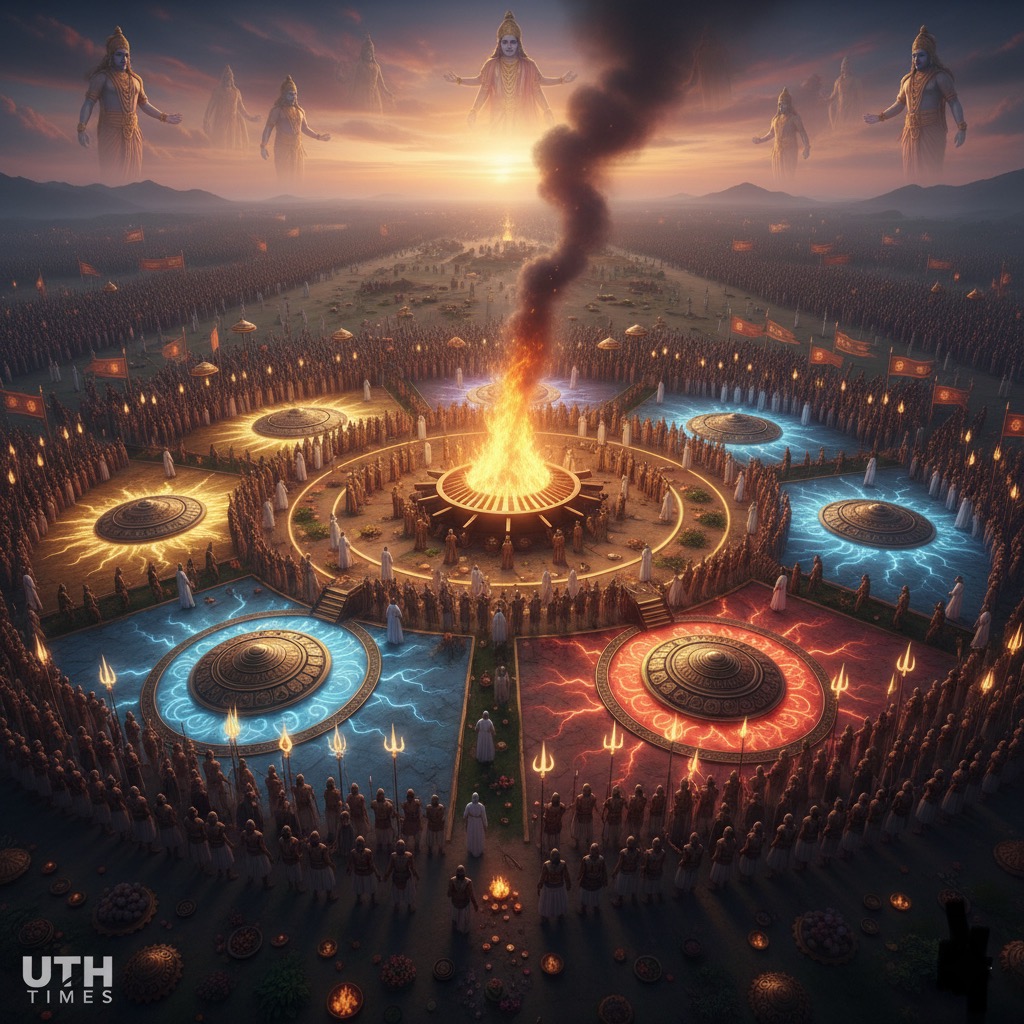
The Deva Vyuha was a spiritual masterpiece—formed when armies invoked divine protection before combat.
- 🕯️ Each position corresponded to a deity, transforming the battlefield into a yajna (sacred offering).
- 🌞 Warriors drew strength from celestial alignment, merging faith and formation.
- 🛡️ It was both a strategy and a prayer—a balance between aggression and surrender to divine will.
This was the pinnacle of ancient war ethics, where dharma guided every sword.
🪔 Conclusion: The Forgotten Genius of Kurukshetra
The Vyuhas weren’t just formations—they were philosophies in motion. They turned the chaos of war into a precise dance of energy, devotion, and geometry. Today, as we marvel at modern strategy and AI warfare, the Vyuhas remind us that ancient India had already mastered the art of merging mind, spirit, and science on the battlefield.
✨ Ancient wisdom wasn’t lost—it’s merely waiting to be rediscovered.

