
For years, the global electric vehicle industry has depended on a handful of rare-earth minerals hidden deep beneath the earth’s surface. Today, India is preparing to change that equation.
In a breakthrough that could redefine the future of electric mobility, Indian engineers have developed a software-defined electric motor technology that eliminates the need for expensive rare-earth permanent magnets — one of the most critical and geopolitically sensitive components inside modern EVs.
🔹 The Rare-Earth Problem Behind Every EV
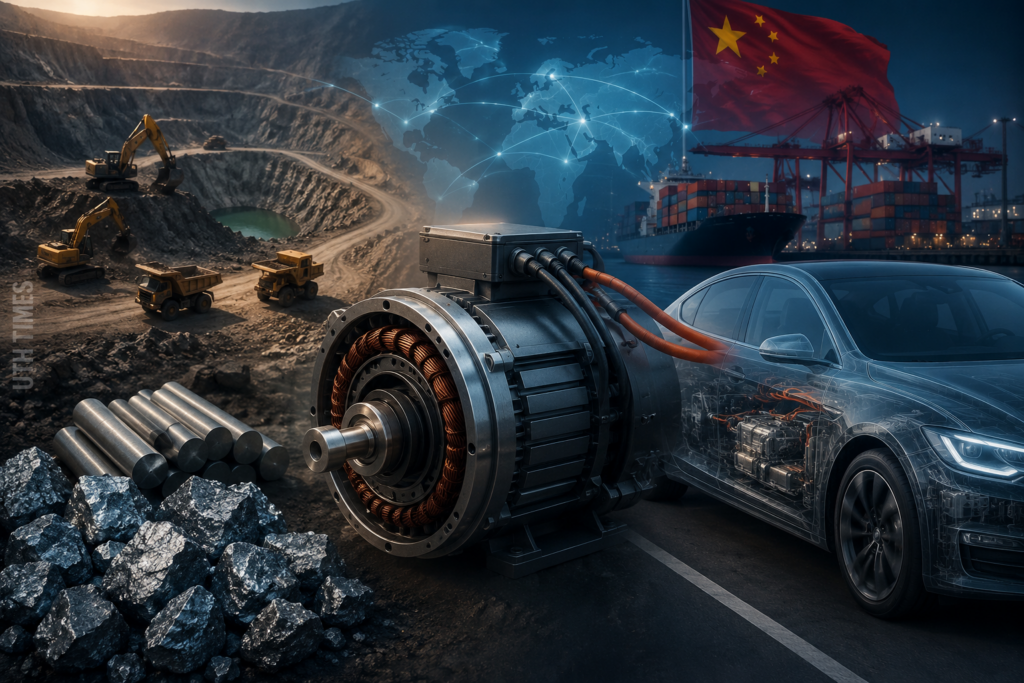
Most electric vehicles use permanent magnets made from rare-earth elements such as neodymium and dysprosium.
🌍 These materials are difficult and environmentally expensive to mine.
🌍 China controls the overwhelming majority of global rare-earth processing and supply.
🌍 Any disruption in exports can immediately affect EV production worldwide.
For countries rapidly expanding electric mobility, dependence on imported minerals has become a strategic vulnerability rather than merely a supply-chain issue.
🔹 Replacing Magnets With Software
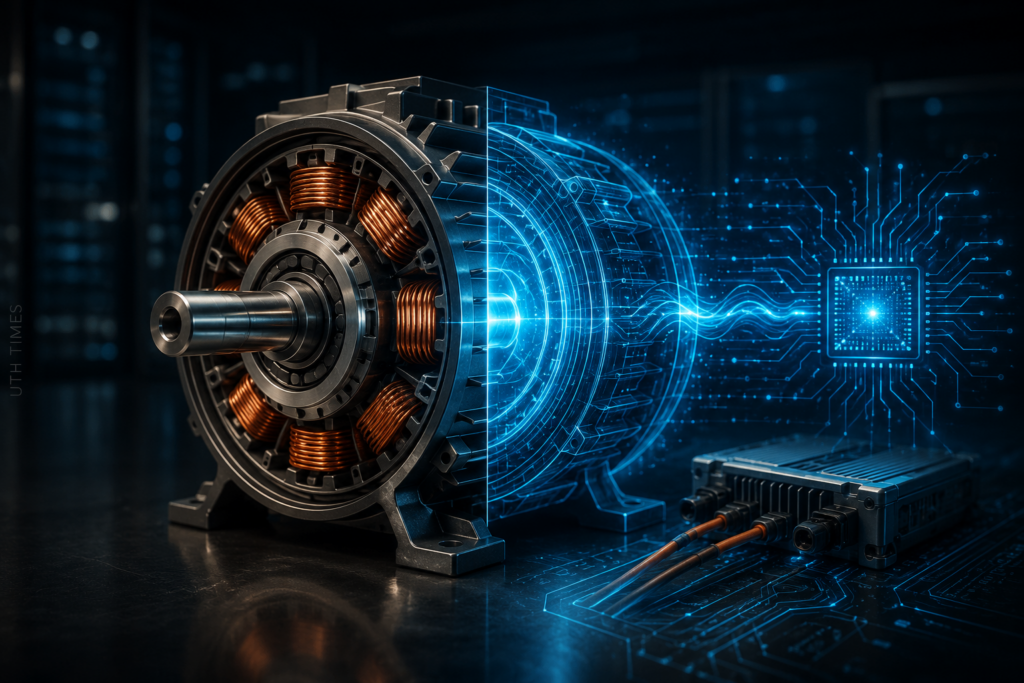
India’s new approach turns traditional motor design upside down.
Instead of relying on permanent magnets to generate rotational force, the motor uses advanced software algorithms, precision control systems, and intelligent power electronics to create the required magnetic fields dynamically.
The result is what engineers describe as a software-defined motor or a Virtual Magnet Synchronous Motor (VMSM).
⚡ Magnets are replaced by software intelligence.
⚡ Performance is controlled digitally rather than mechanically.
⚡ The motor can adapt in real time to changing driving conditions.
This transforms software from a supporting feature into the heart of the electric motor itself.
🔹 Why This Could Be A Game Changer
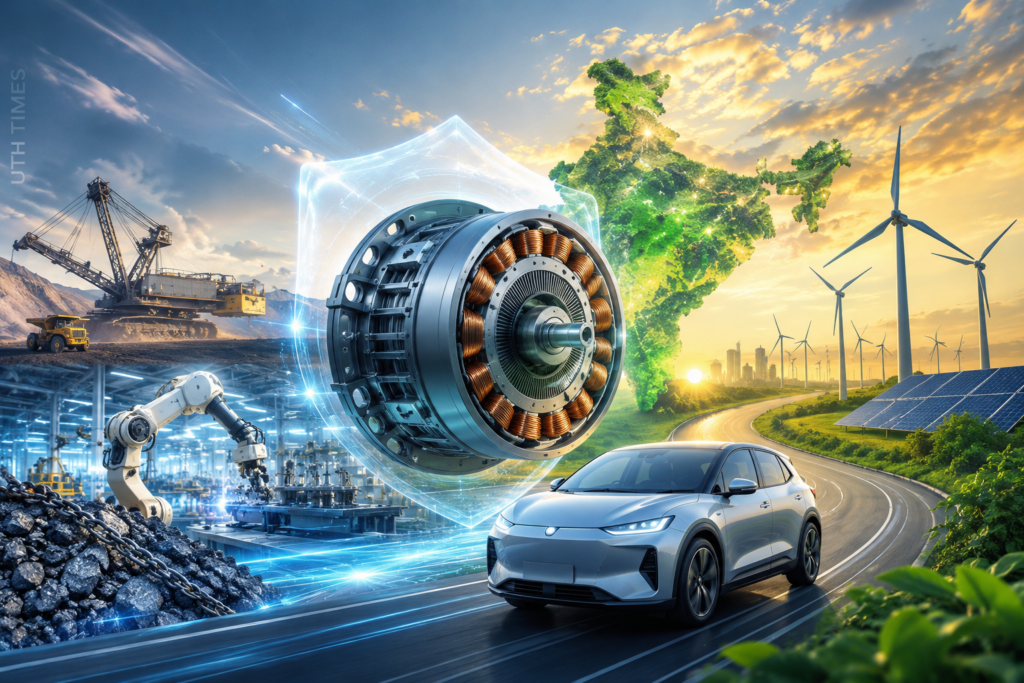
The implications stretch far beyond electric cars.
🚗 Lower dependence on imported raw materials.
🚗 Reduced manufacturing costs over time.
🚗 Greater protection from geopolitical supply shocks.
🚗 Easier domestic production and localisation.
🚗 Smaller environmental footprint by avoiding rare-earth mining.
For India, this represents a major step toward technological self-reliance in one of the world’s fastest-growing EV markets.
🔹 More Than An Engineering Achievement
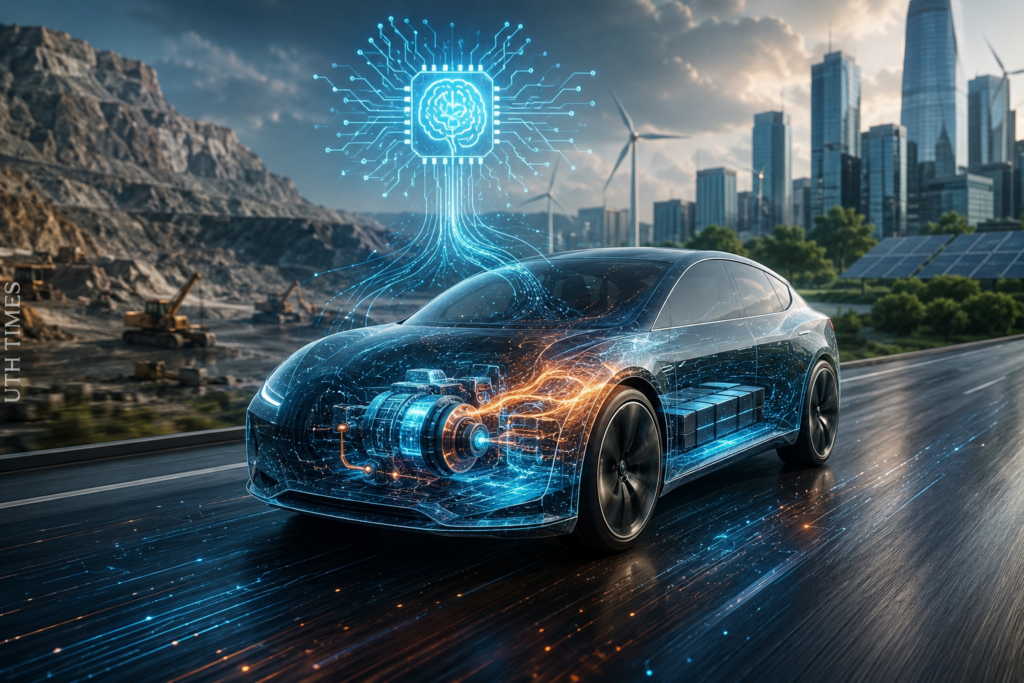
The innovation arrives at a crucial moment as nations race to secure critical minerals for batteries, semiconductors, defence systems, and renewable energy technologies.
By shifting dependence from geology to software, India is attempting something much larger than building a better motor — it is rewriting the rules of electric mobility itself.
The technology still requires large-scale commercial deployment and long-term validation under real-world conditions.
But if successful, future electric vehicles may no longer run on rare-earth magnets buried underground.
They may run on code written in India. 🇮🇳⚡

