
India is preparing for one of its most ambitious infrastructure transformations ever. The Narendra Modi government has unveiled a comprehensive roadmap for the ₹81,000+ crore Great Nicobar Project—an initiative that aims to redefine India’s maritime strength, strategic influence, and economic future in the Indo-Pacific region. With construction of the Galathea Bay International Transshipment Port scheduled to begin in 2028, the island is set to emerge as India’s gateway to global shipping.
🌊 A Mega Infrastructure Vision for the 21st Century
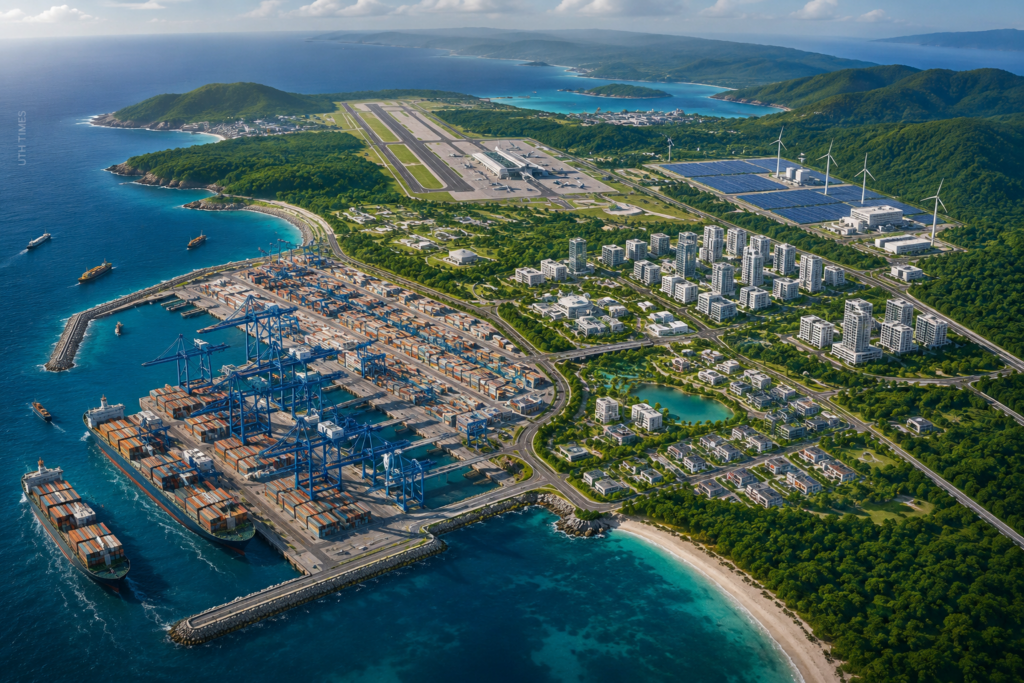
The Great Nicobar Project is not merely an infrastructure plan; it is a long-term national vision extending until 2047. The development will take place in three phases and seeks to transform the southernmost island of India into a world-class economic and strategic hub.
Key components of the mega project include:
🔹 A state-of-the-art International Container Transshipment Port at Galathea Bay.
🔹 A greenfield international airport capable of handling both civilian and strategic operations.
🔹 A modern township designed to support future economic activities and population growth.
🔹 A 450 MW hybrid power plant based on renewable and conventional energy sources.
Together, these projects are expected to create an integrated ecosystem of trade, logistics, connectivity, and energy security.
⚓ Galathea Bay Port: India’s Bid for Global Maritime Dominance
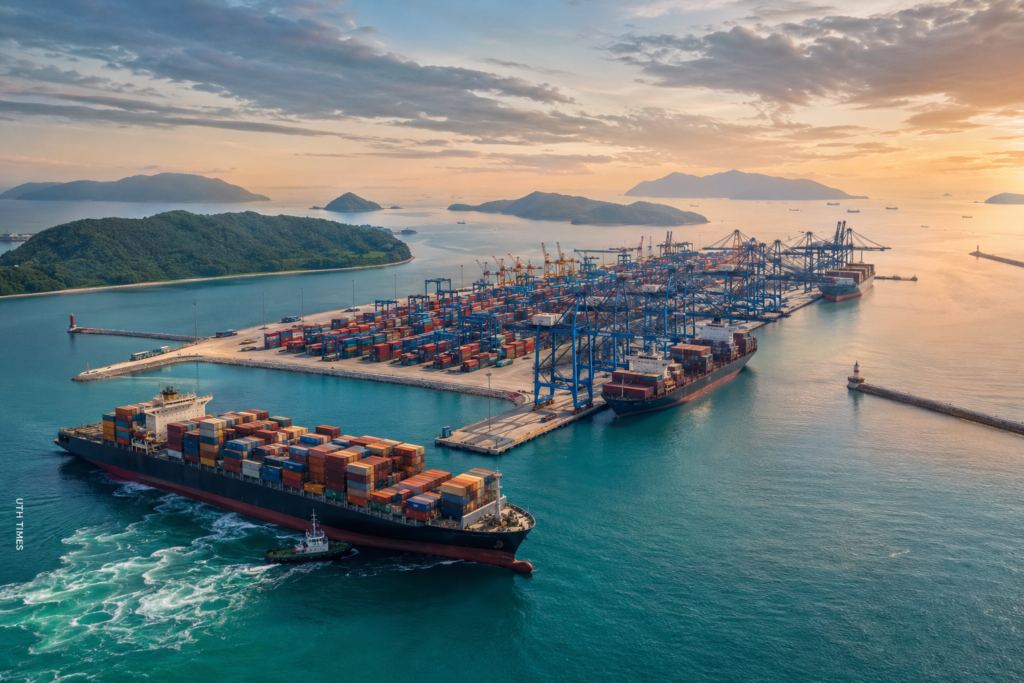
The centerpiece of the project is the Galathea Bay International Transshipment Port. Strategically located near the Malacca Strait—one of the world’s busiest shipping corridors—the port is expected to significantly reduce India’s dependence on foreign ports such as Singapore and Colombo for cargo transshipment.
🌟 The deep-draft port will be capable of handling some of the world’s largest container vessels.
🌟 It is expected to emerge as a major logistics hub connecting Asia, Europe, and Africa.
🌟 The facility will strengthen India’s aspiration to become a leading maritime power.
The first phase of the port is targeted for commissioning from 2028 onwards. The overall development will continue in stages until 2047. (Press Information Bureau)
🌏 Strategic Significance in the Indo-Pacific

Beyond economics, the Great Nicobar Project carries immense geopolitical importance.
🛡️ Located close to the Malacca Strait, through which a substantial portion of global trade passes, the island occupies a strategically vital position.
🛡️ Enhanced infrastructure will strengthen India’s naval presence and surveillance capabilities in the Indo-Pacific.
🛡️ The project is expected to improve India’s ability to safeguard critical sea lanes and counter emerging regional challenges.
This development aligns with India’s broader Indo-Pacific strategy and its vision of becoming a key security provider in the region.
🌱 Development with Environmental Challenges
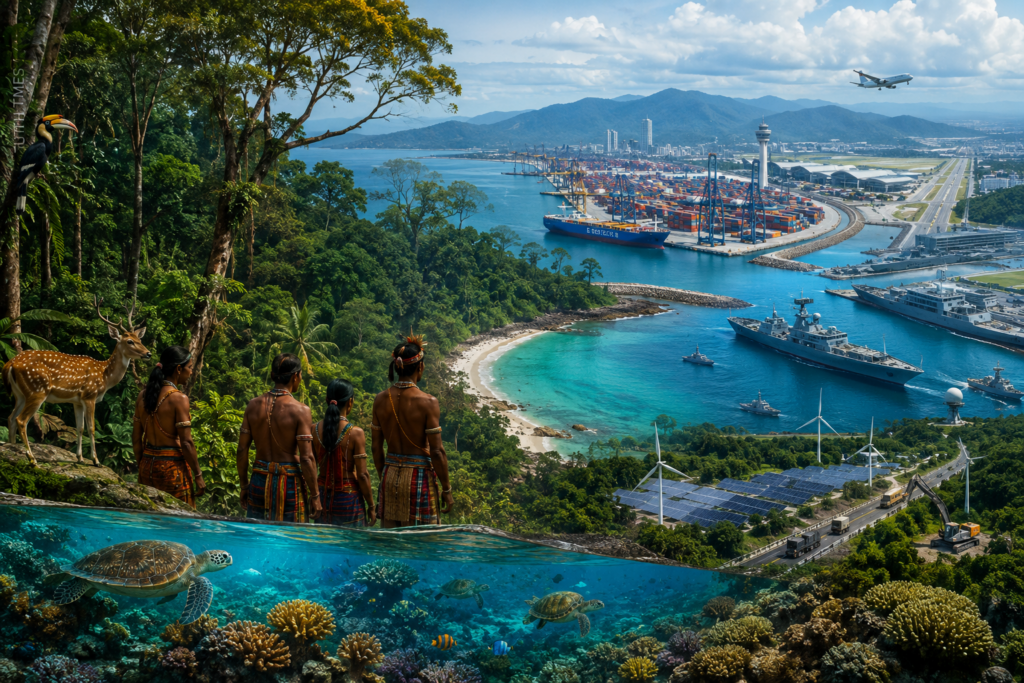
While the project promises immense economic gains, it has also generated debates regarding ecological sustainability. Great Nicobar is home to rich biodiversity, coral ecosystems, and indigenous tribal communities.
The government has stated that development will proceed alongside environmental safeguards and measures aimed at protecting local communities and fragile ecosystems.
The Great Nicobar Project represents far more than an infrastructure investment. It is India’s declaration of intent—to emerge as a maritime powerhouse, strengthen national security, and secure a greater role in shaping the future of the Indo-Pacific.

