
What if the smoke choking cities could become the fuel powering tomorrow’s cars, ships, and industries? China has reportedly developed an advanced technology that converts air pollution—especially carbon dioxide (CO₂)—into usable fuel. If scaled successfully, this could transform one of the world’s biggest environmental threats into a valuable energy source.
🌍 What Exactly Has China Developed?
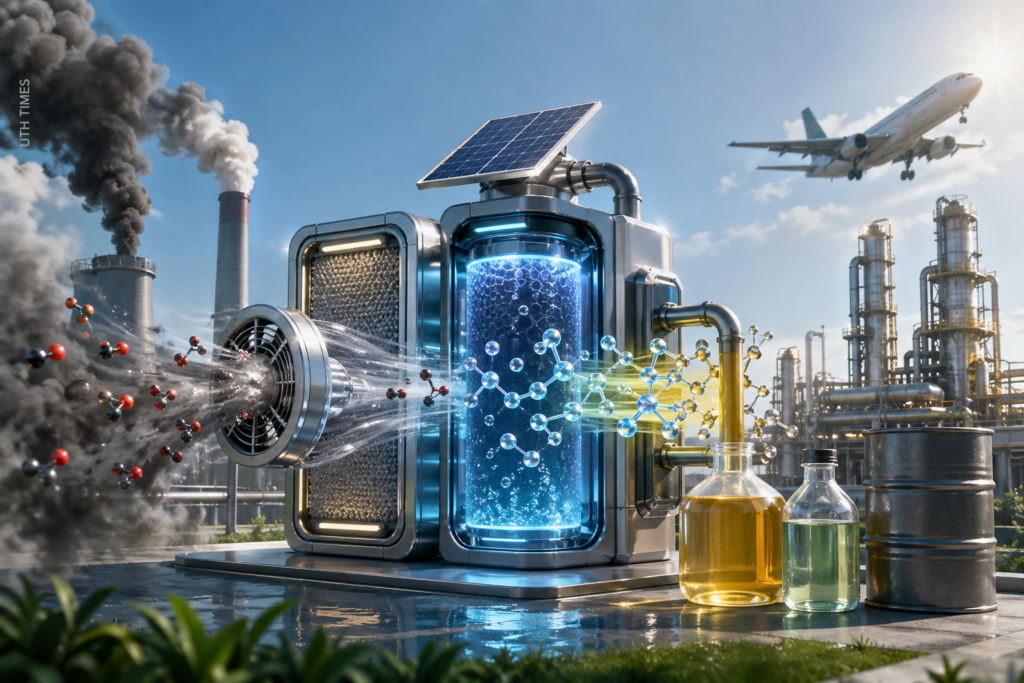
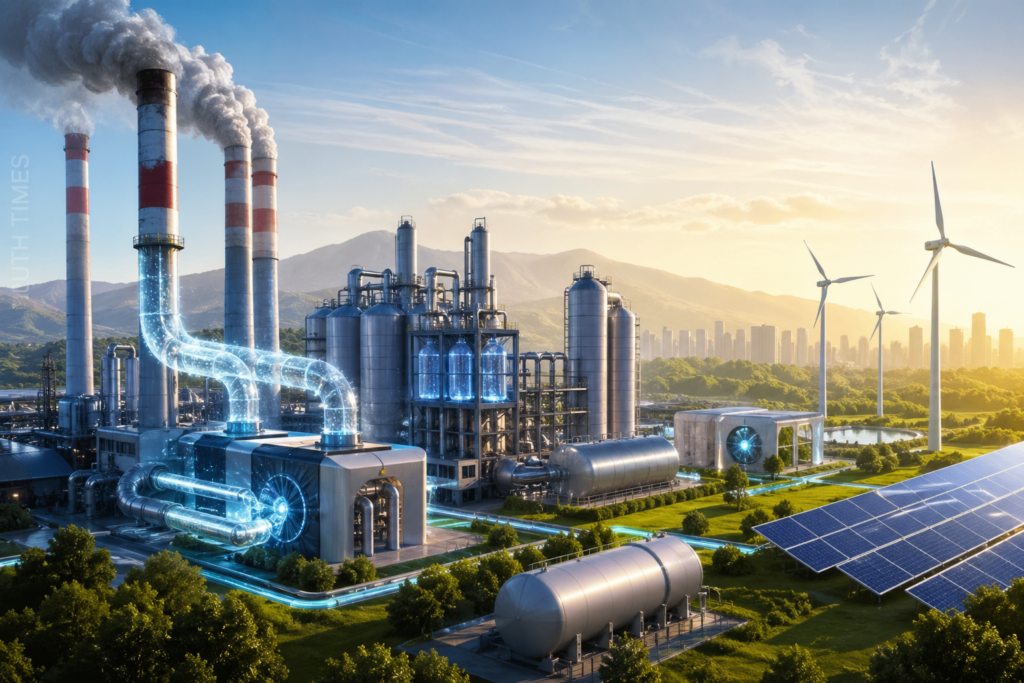
Chinese researchers have introduced a system inspired by artificial photosynthesis—a process that mimics how plants use sunlight, water, and carbon dioxide to create energy. Instead of leaves, the new technology uses engineered materials and catalysts to capture CO₂ and convert it into fuel ingredients.
🔹 It absorbs carbon dioxide from polluted air or industrial emissions.
🔹 It combines CO₂ with water.
🔹 It uses sunlight or renewable electricity to trigger chemical reactions.
🔹 It produces compounds that can later become petrol, methanol, aviation fuel, or industrial chemicals.
This means pollution is no longer just waste—it becomes raw material.
⚙️ How Does It Work?
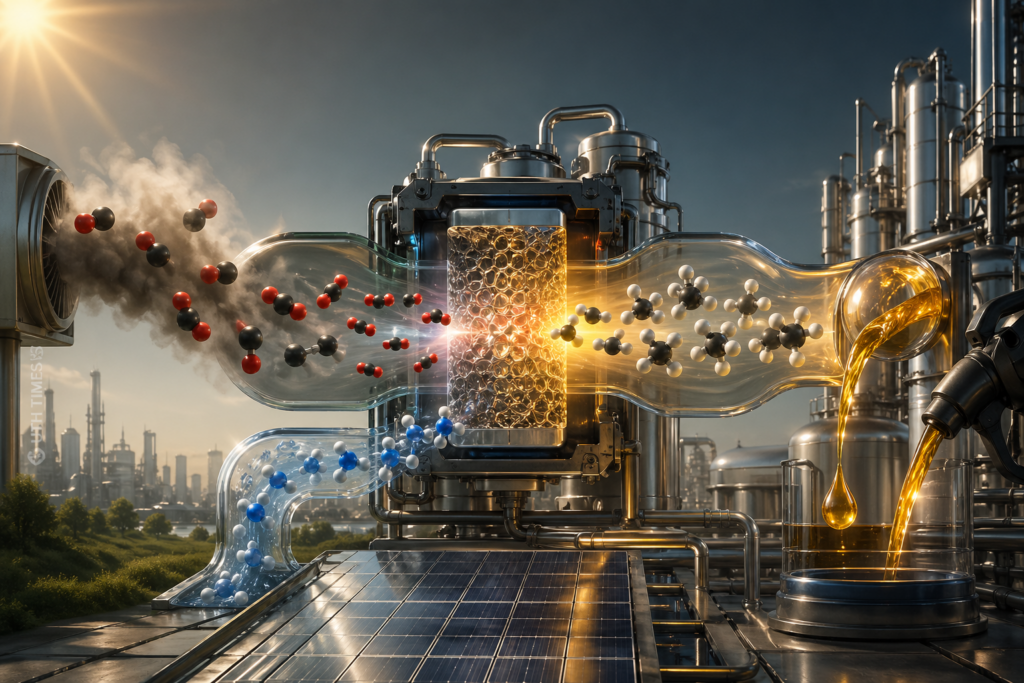
At the heart of the system is a specially designed material that stores tiny amounts of energy and helps accelerate conversion reactions.
🔹 CO₂ molecules are broken down.
🔹 Hydrogen from water is introduced.
🔹 New hydrocarbon molecules are formed.
🔹 These molecules can be refined into fuel.
Think of it as a futuristic refinery that runs on sunlight and dirty air.
🚗 Why This Could Change the World
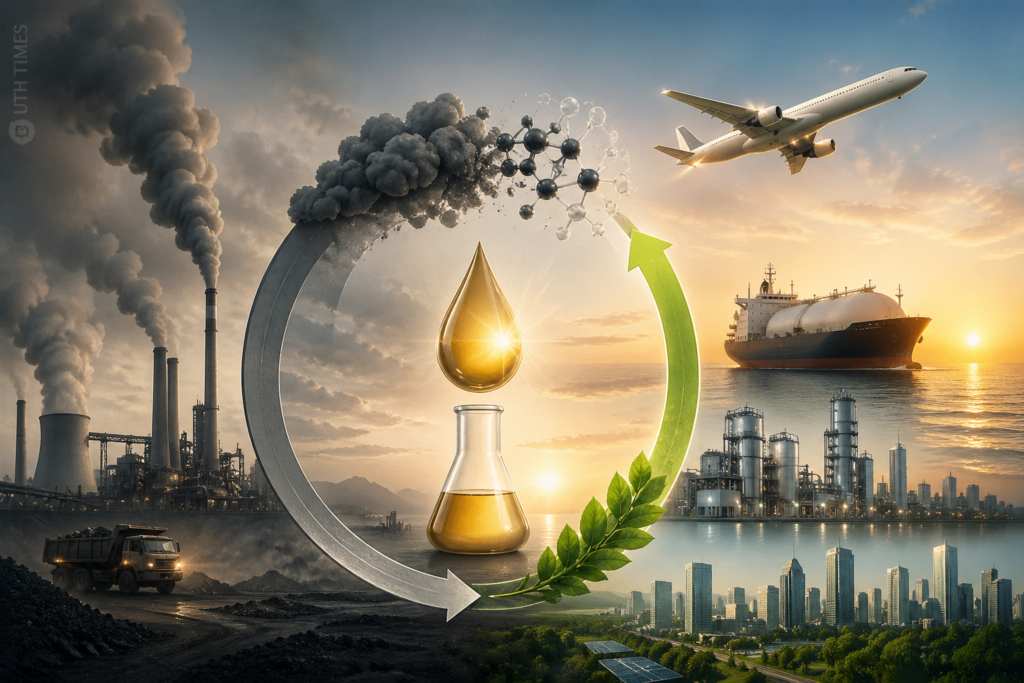
This innovation matters because some sectors are hard to electrify completely.
🔹 Aviation needs high-energy liquid fuels.
🔹 Shipping still depends on heavy fuel oils.
🔹 Factories need chemical feedstocks.
🔹 Cities need ways to reduce carbon emissions fast.
Turning pollution into fuel creates a circular carbon economy—where carbon is reused instead of endlessly released.
🇨🇳 Why China Is Leading This Race
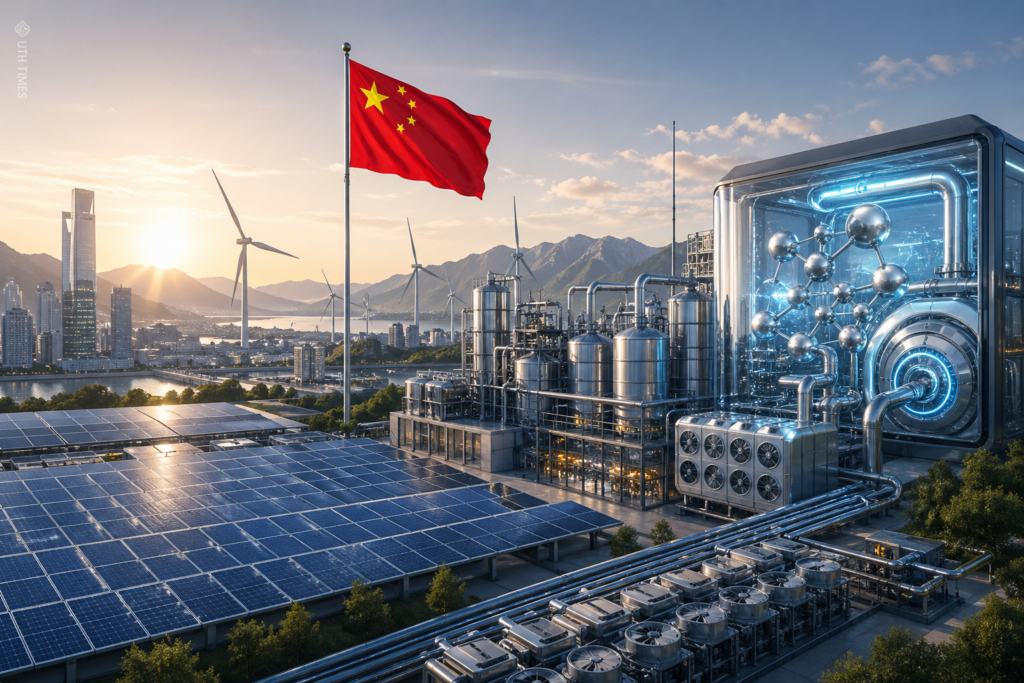
China faces both huge industrial emissions and massive energy demand. That pressure has pushed heavy investment into clean technology, solar power, batteries, hydrogen, and now carbon-to-fuel systems.
If commercialized at scale, China could become a global leader in synthetic fuels and carbon recycling technology.
⚠️ The Real Challenge Ahead
The science is promising, but success depends on:
🔹 Lower production costs
🔹 Large-scale deployment
🔹 Renewable energy supply
🔹 Efficient carbon capture systems
Without cheap clean electricity, such fuel can remain expensive.
For decades, pollution symbolized damage. China’s new technology suggests it could also become opportunity. If this breakthrough reaches mass scale, the future may run not despite pollution—but by eliminating it and turning it into power.

