
India’s lunar mission has delivered another surprise. A new scientific study using data from Chandrayaan-3 has revealed that the Moon’s surface near the south pole is not uniform. Instead, the top few centimetres contain two distinct underground layers — a finding that could reshape future searches for lunar water ice.
This is not just geology. It could influence where humans land, build bases, and extract resources in the future.
🌕 What Exactly Did Scientists Discover?
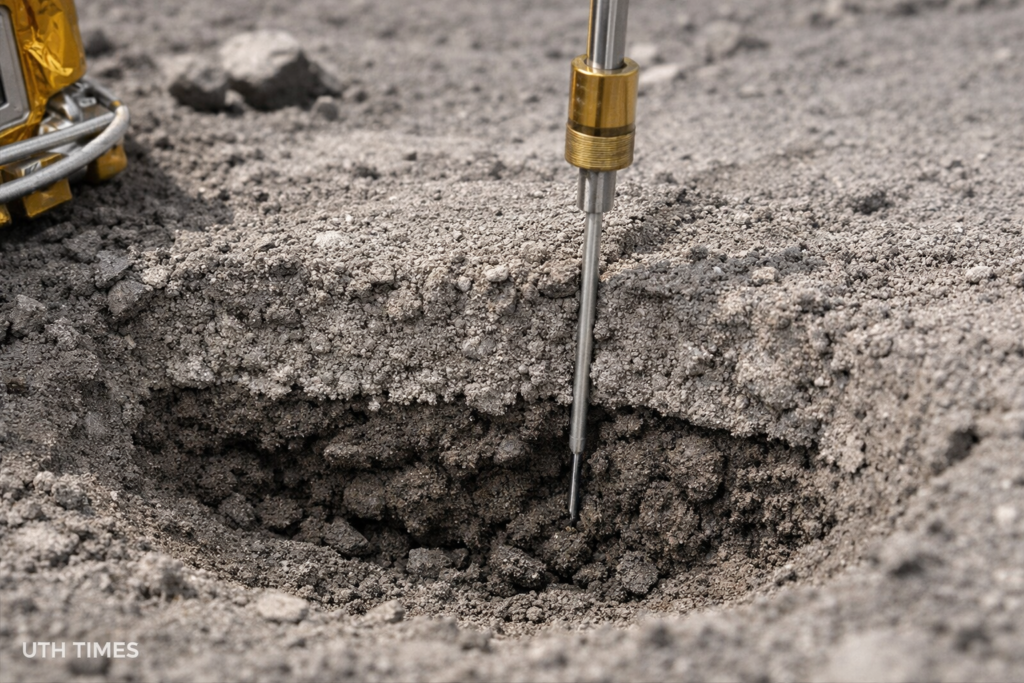
Using data collected by the Vikram lander’s ChaSTE instrument, researchers studied the temperature and thermal behaviour of lunar soil after the lander’s famous “hop experiment.”
They found that the upper about 3 cm of soil behaves differently from the lower layer beneath it, extending to around 6.5 cm.
🔹 Top Layer: More compact and transfers heat faster
🔹 Lower Layer: Less conductive, looser, and thermally different
🔹 This suggests the Moon’s surface is layered rather than one uniform dust blanket
That may sound technical, but it is a major clue about how lunar soil evolved over time.
💧 Why This Matters for Water Ice
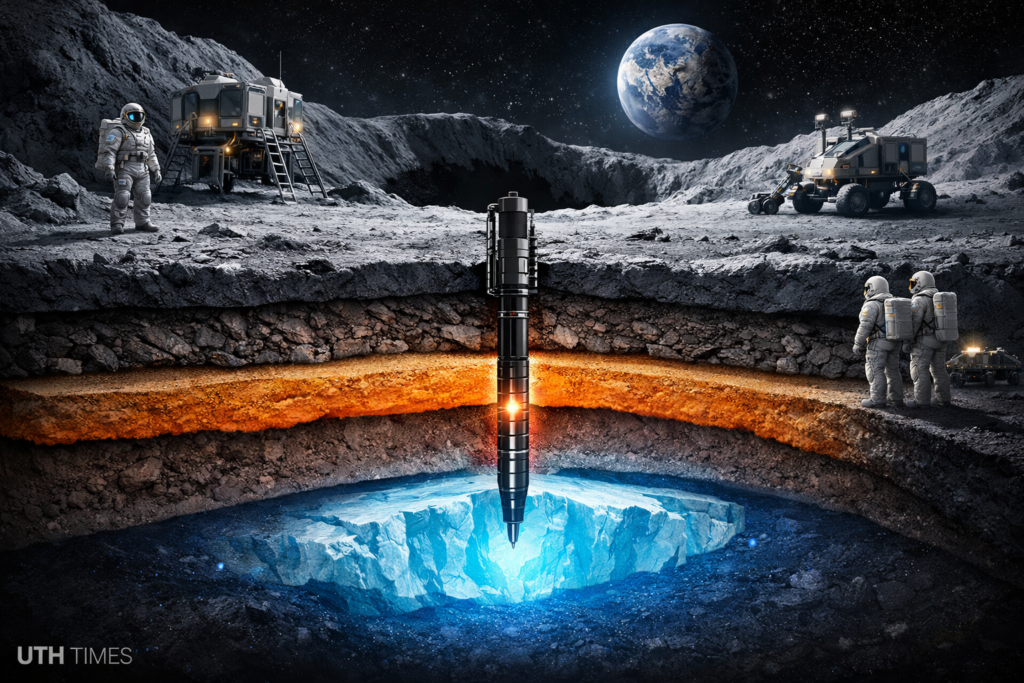
The Moon’s south pole is one of the most valuable locations in space because many scientists believe water ice may exist in permanently shadowed craters there.
But ice survival depends heavily on temperature below the surface.
🔹 If heat moves differently through layers, ice may stay trapped deeper underground
🔹 Some layers may act like insulation, protecting frozen water
🔹 It helps scientists identify the best drilling zones for future missions
🔹 Better models can guide astronauts and robotic miners
This means India’s data could help future explorers locate hidden water reserves more efficiently.
🚀 Why the Vikram “Hop” Became Historic
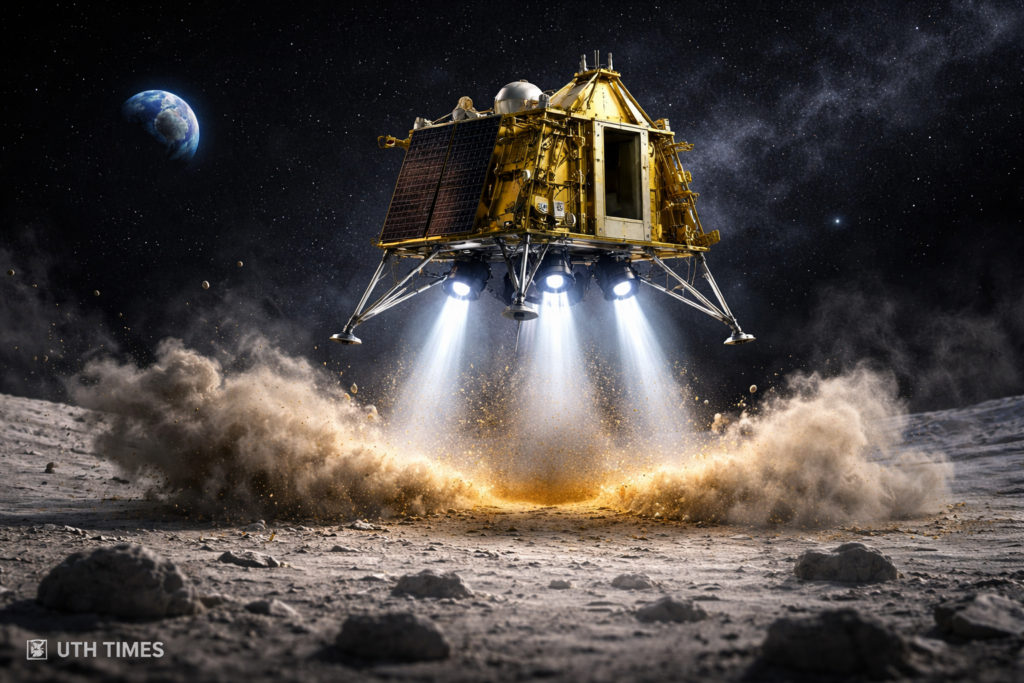
After landing, the Vikram lander performed a short jump or “hop” to test mobility. That small move disturbed the surface and exposed fresh soil.
Scientists then used those new readings to compare soil behaviour before and after movement — unlocking clues impossible to get from a static landing alone.
Sometimes a tiny jump creates a giant scientific leap.
🇮🇳 India’s Growing Lunar Leadership
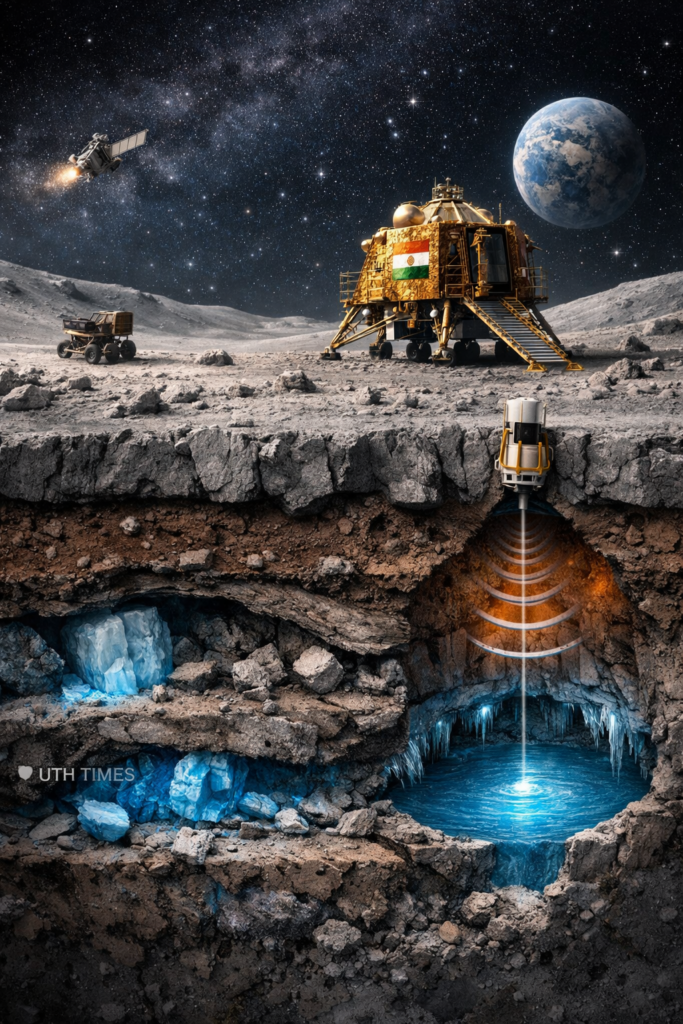
This discovery strengthens ISRO’s role in global Moon science. Chandrayaan-3 is no longer remembered only for landing near the lunar south pole — it is now helping decode what lies beneath it.
As nations race back to the Moon, India already has something priceless: real data from the ground.
The Moon may look silent and dusty, but beneath those few centimetres lies a complex world. Thanks to Chandrayaan-3, humanity now knows the lunar surface hides more secrets than expected — and perhaps, the water needed for the next space age.

