
In a remarkable blend of archaeology, faith, and history, a 900-year-old idol of Lord Vishnu has been discovered in a forest stream near Chinthakani village in early March 2026. The discovery has quickly attracted historians, archaeologists, and devotees alike, opening a new chapter in understanding Telangana’s medieval heritage.
🌿 A Discovery Hidden in Nature
The idol was reportedly found in a shallow forest stream by local villagers while they were collecting water and exploring the area. The stream flows through dense forest terrain in the Jayashankar Bhupalpally district, a region known for its historical temples and ancient cultural roots.
According to preliminary assessments by experts, the sculpture is believed to be nearly 900 years old, dating back to the medieval period when powerful South Indian dynasties shaped the region’s religious architecture.
🔎 Key observations from the discovery:
✨ The idol was partially buried under stones and river sediment.
✨ Despite centuries of exposure to water, the carving remains remarkably intact.
✨ The sculpture is made of dark granite, a material commonly used in medieval temple art.
Villagers immediately informed local authorities and temple committees, after which officials secured the site to prevent damage or theft.
🛕 Artistic Details That Reveal Its Age
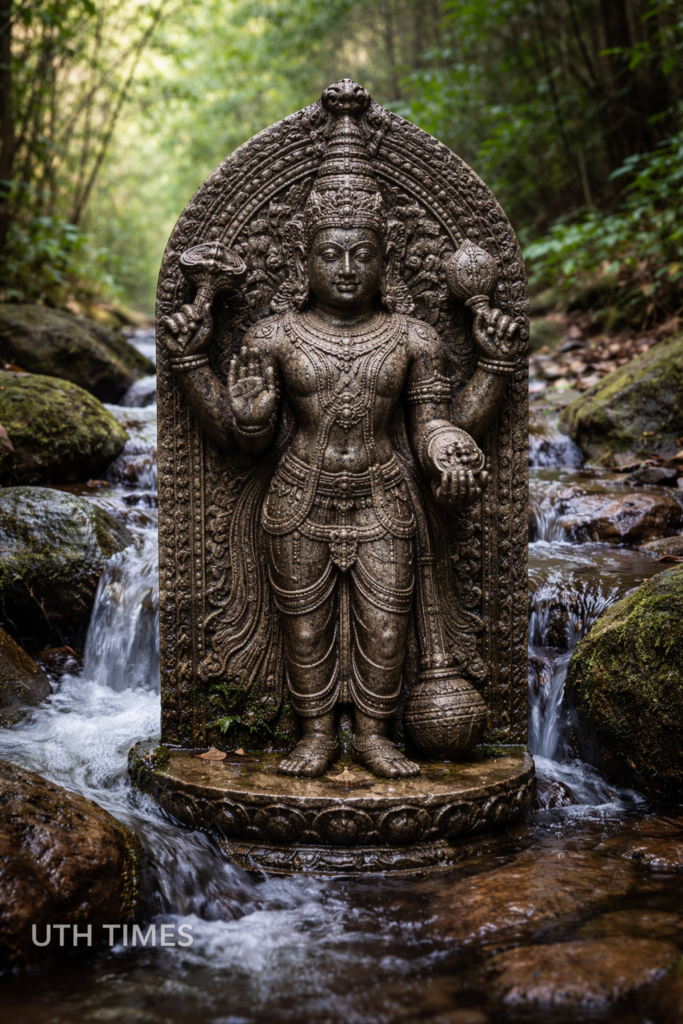
Experts studying the idol say the sculpture reflects stylistic elements associated with the Kakatiya dynasty, which ruled large parts of present-day Telangana between the 12th and 14th centuries.
The idol depicts Vishnu, the preserver in the Hindu trinity, standing in a classical posture.
🔱 Notable features of the idol:
🪔 Four-armed representation – Symbolizing Vishnu’s divine attributes.
🪔 Sacred ornaments and crown – Intricate carvings typical of temple sculptures.
🪔 Symbolic weapons – Conch (Shankha), discus (Chakra), mace (Gada), and lotus (Padma).
🪔 Graceful stone detailing – Suggesting it was originally part of a temple complex.
Historians believe the idol might have belonged to a medieval temple that either collapsed, was destroyed, or was lost to time, eventually being carried by water currents into the forest stream.
🧭 Why This Discovery Matters
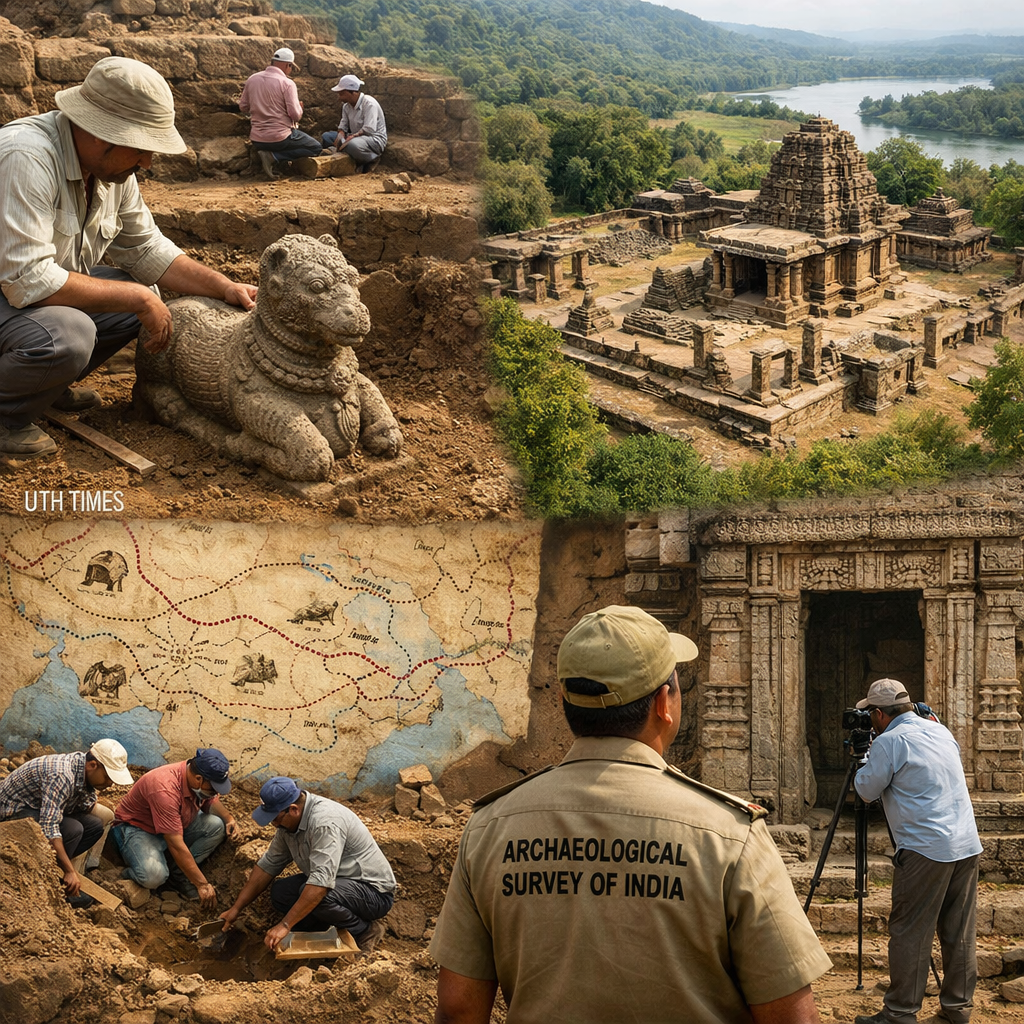
Archaeologists say this finding could help reveal forgotten temple networks and trade routes that once existed in this region of Telangana.
🌏 Possible implications:
📜 It may lead to archaeological excavation in nearby areas.
📜 The discovery strengthens evidence of Kakatiya-era temple culture.
📜 It highlights how natural landscapes can preserve centuries-old heritage.
Local authorities are expected to involve the Archaeological Survey of India to conduct further examination and conservation.
✨ Faith, History, and Mystery

While historians see an invaluable archaeological artifact, local villagers see something deeper — a divine presence rediscovered after centuries. Devotees have already begun visiting the site to offer prayers.
In many ways, the idol’s reappearance from a quiet forest stream is more than a discovery. It is a reminder that India’s ancient past often lies hidden in its landscapes, waiting patiently to be found again.

